VS

Peugeot 3008 vs Nissan Qashqai comparison

Compare performance (325 HP vs 205 HP), boot space and price (35,100 £ vs 29,600 £ ) at a glance. Find out which car is the better choice for you – Peugeot 3008 or Nissan Qashqai?

Peugeot 3008 vs Nissan Qashqai: Key differences

Peugeot 3008

3.4 (4 Reviews)
rate
  • noticeably more power
  • substantially more efficient
  • visibly quicker 0–100 km/h
  • barely more trunk space

Nissan Qashqai

4.9 (3 Reviews)
rate
  • a bit cheaper
  • somewhat lighter

All details on performance, efficiency, range and trunk space can be found in the technical comparison below – including user reviews for both models.

3008

In the competitive world of compact SUVs, the Nissan Qashqai and Peugeot 3008 have emerged as popular contenders, each offering a unique blend of style, technology, and performance. This article delves into the technical specifications, innovative features, and overall driving experience of both vehicles to help you determine which one might be the right fit for you.
Qashqai

Design and Dimensions

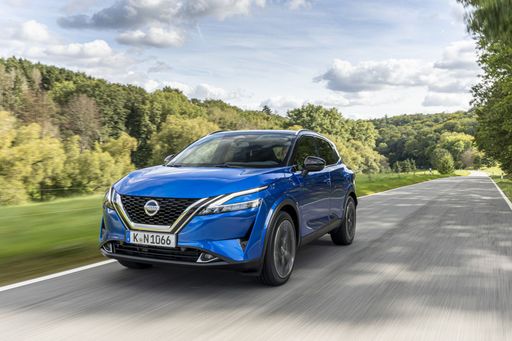
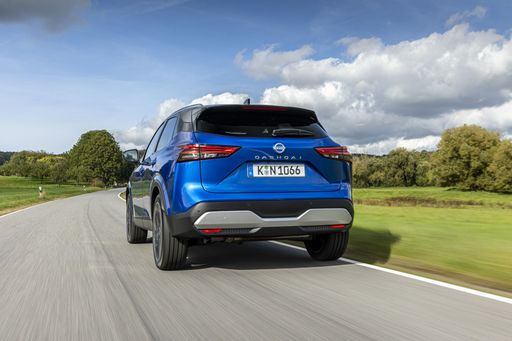
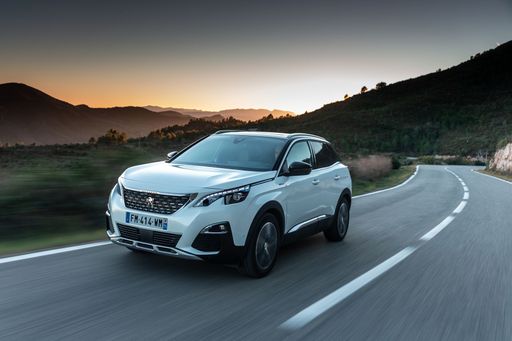
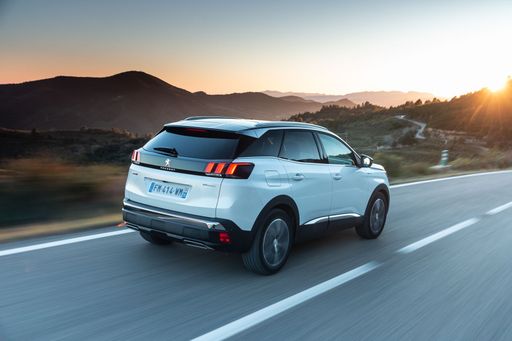
Both the Nissan Qashqai and Peugeot 3008 showcase modern, attractive designs that cater to the taste of contemporary SUV buyers. The Qashqai measures 4425 mm in length, 1835 mm in width, and stands 1625 mm high. In contrast, the 3008 is slightly larger, with dimensions of 4542 mm in length, 1895 mm in width, and 1641 mm in height. This size difference offers an edge to the Peugeot when it comes to cabin space and comfort.

3008

Powertrains and Performance

The Nissan Qashqai offers a range of engine choices, including petrol MHEV and full hybrid configurations, boasting power outputs ranging from 140 HP to 190 HP. With a variety of transmission options such as manual, automatic CVT, and reduction gearbox, it caters to various driving preferences. The Qashqai achieves remarkable fuel consumption, with figures reaching as low as 5.1 L/100 km.

On the other hand, the Peugeot 3008 introduces an impressive lineup that includes petrol MHEV, plug-in hybrid, and fully electric options, making it a versatile choice for eco-conscious drivers. Power outputs range from 136 HP to a robust 231 HP. The 3008’s cutting-edge electric range reaches up to 698 km with its largest battery, allowing for extended journeys without the need for frequent charging.

Qashqai

Driving Dynamics

When it comes to acceleration, the Qashqai impressively goes from 0-100 km/h in as little as 7.9 seconds, while the 3008 matches this with acceleration figures ranging from 8.4 to 10.2 seconds depending on the variant. Both models offer front-wheel drive, with the Qashqai additionally providing all-wheel drive for those who seek enhanced traction and stability.

3008

Interior and Technology

Inside the cabin, the Qashqai presents a driver-focused environment with spacious seating for five and a trunk capacity of 504 L. The interior styling is modern, and the infotainment system includes a suite of connectivity options that cater to tech-savvy drivers.

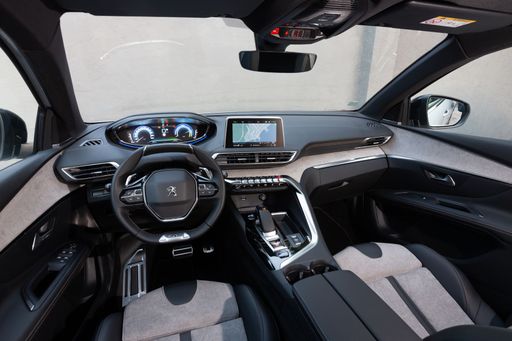
The Peugeot 3008, however, takes the interior experience a notch higher with its 'i-Cockpit' design that features a small steering wheel and high-mounted instrument panel for improved visibility. The 3008 also offers a slightly larger trunk capacity of 520 L, allowing for more storage space. Both vehicles are equipped with advanced safety features, but Peugeot's offering has consistently received high ratings in safety assessments.

Qashqai

Innovation and Efficiency

One of the standout features of the Qashqai is its mild hybrid technology, which helps to enhance fuel efficiency and reduce emissions. The Qashqai's CO2 emissions range from 116 g/km to 154 g/km, placing it in efficiency classes E and D.

The Peugeot 3008 shines in this area as well, with CO2 emissions as low as 0 g/km for the electric variant, making it an attractive option for environmentally conscious consumers. Its efficiency classes range from A to D, highlighting its commitment to sustainability.

3008

Conclusion: Which One to Choose?

Both the Nissan Qashqai and Peugeot 3008 have a lot to offer in the compact SUV market. If you prefer a sportier drive with robust hybrid options, the Qashqai might be your choice. However, if you seek advanced technology, a touch of luxury, and diverse powertrain offerings—including fully electric—then the Peugeot 3008 could be the better fit.

Ultimately, your decision may depend on personal preferences regarding driving dynamics, interior features, and environmental impact. Test-driving both vehicles is the best way to experience their differences firsthand.

Here’s where it gets real: The technical differences in detail

3008

Costs and Efficiency:

Price and efficiency are often the first things buyers look at. Here it becomes clear which model has the long-term edge – whether at the pump, the plug, or in purchase price.

Nissan Qashqai is a bit cheaper – starting at 29,600 £ , while the Peugeot 3008 costs 35,100 £ . That’s a price difference of around 5,537 £.

Fuel consumption also shows a difference: the Peugeot 3008 uses 2.4 L/100km and is substantially more efficient than the Nissan Qashqai with 4.5 L/100km. The difference is about 2.1 L/100km.

Qashqai

Engine and Performance:

Power, torque and acceleration say a lot about how a car feels on the road. This is where you see which model delivers more driving dynamics.

When it comes to engine power, the Peugeot 3008 offers noticeably more power – delivering 325 HP compared to 205 HP. That’s roughly 120 HP more horsepower.

When accelerating from 0 to 100 km/h, the Peugeot 3008 is visibly quicker – completing the sprint in 6 s, while the Nissan Qashqai takes 7.6 s. That’s about 1.6 s quicker.

Looking at top speed, the Nissan Qashqai is very slightly faster – reaching 206 km/h, while the Peugeot 3008 tops out at 201 km/h. The difference is around 5 km/h.

There’s also a difference in torque: the Peugeot 3008 delivers clearly more torque with 511 Nm compared to 330 Nm. That’s about 181 Nm more.

3008

Space and Everyday Use:

Beyond pure performance, interior space and usability matter most in daily life. This is where you see which car is more practical and versatile.

Both vehicles offer seating for 5 people.

In terms of curb weight, Nissan Qashqai is somewhat lighter – 1,420 kg compared to 1,648 kg. The difference is around 228 kg.

Looking at boot space, the Peugeot 3008 offers barely more boot space – 520 L compared to 504 L. That’s a difference of about 16 L.

For maximum load capacity, the Peugeot 3008 offers marginally more capacity – up to 1,480 L, about 33 L more than the Nissan Qashqai.

When it comes to payload, the Nissan Qashqai carries a bit more – 520 kg compared to 467 kg. That’s a difference of about 53 kg.

Who wins the race in the data check?

The Peugeot 3008 is decisively ahead in the objective data comparison.
This result only shows which model scores more points on paper – not which of the two cars feels right for you.

from £35,100
3008

Peugeot 3008

  • Engine Type : Electric, Petrol MHEV, Plugin Hybrid
  • Transmission : Automatic
  • Drive Type : Front-Wheel Drive, All-Wheel Drive
  • Power HP : 145 - 325 HP
  • Consumption L/100km : 2.4 - 5.4 L/100km
  • Consumption kWh/100km : 16.9 - 17.6 kWh/100km
  • Electric Range : 81 - 698 km
Peugeot 3008
Nissan Qashqai

Costs and Consumption

View detailed analysis

Engine and Performance

View detailed analysis

Dimensions and Body

View detailed analysis

Peugeot 3008

The Peugeot 3008 blends bold French styling with a surprisingly grown-up interior that makes even dull commutes feel a little bit special. Practical enough for family life yet lively to drive, it’s a clever all‑rounder that stands out from the crossover crowd without shouting for attention.

details

Nissan Qashqai

The Nissan Qashqai blends practical, family-friendly packaging with SUV styling that refuses to shout, making it a sensible and dependable choice for everyday life. It’s comfortable to live with, economical on the road, and neatly equipped enough to feel modern without ever feeling precious — perfect if you want crossover versatility without the drama.

details
Peugeot 3008
Nissan Qashqai

Costs and Consumption

Price
35,100 - 52,000 £
Price
29,600 - 39,900 £
Consumption L/100km
2.4 - 5.4 L/100km
Consumption L/100km
4.5 - 6.8 L/100km
Consumption kWh/100km
16.9 - 17.6 kWh/100km
Consumption kWh/100km
-
Electric Range
81 - 698 km
Electric Range
-
Battery Capacity
0.4 - 96.9 kWh
Battery Capacity
-
co2
0 - 121 g/km
co2
102 - 154 g/km
Fuel tank capacity
55 L
Fuel tank capacity
55 L

Dimensions and Body

Body Type
SUV
Body Type
SUV
Seats
5
Seats
5
Doors
5
Doors
5
Curb weight
1,648 - 2,266 kg
Curb weight
1,420 - 1,665 kg
Trunk capacity
470 - 520 L
Trunk capacity
479 - 504 L
Length
4,542 mm
Length
4,425 mm
Width
1,895 mm
Width
1,835 mm
Height
1,641 mm
Height
1,625 mm
Max trunk capacity
1,430 - 1,480 L
Max trunk capacity
1,422 - 1,447 L
Payload
432 - 467 kg
Payload
466 - 520 kg

Engine and Performance

Engine Type
Electric, Petrol MHEV, Plugin Hybrid
Engine Type
Petrol MHEV, Full Hybrid
Transmission
Automatic
Transmission
Manuel, Automatic
Transmission Detail
Reduction Gearbox, Dual-Clutch Automatic
Transmission Detail
Manual Gearbox, CVT, Reduction Gearbox
Drive Type
Front-Wheel Drive, All-Wheel Drive
Drive Type
Front-Wheel Drive, All-Wheel Drive
Power HP
145 - 325 HP
Power HP
140 - 205 HP
Acceleration 0-100km/h
6 - 10.2 s
Acceleration 0-100km/h
7.6 - 10.2 s
Max Speed
170 - 201 km/h
Max Speed
170 - 206 km/h
Torque
230 - 511 Nm
Torque
240 - 330 Nm
Number of Cylinders
3 - 4
Number of Cylinders
3 - 4
Power kW
107 - 239 kW
Power kW
103 - 151 kW
Engine capacity
1,199 - 1,598 cm3
Engine capacity
1,332 - 1,498 cm3

General

Model Year
2,024 - 2,026
Model Year
2,025 - 2,026
CO2 Efficiency Class
A, D, B
CO2 Efficiency Class
E, C
Brand
Peugeot
Brand
Nissan
DriveDuel uses data analysis and artificial intelligence to evaluate vehicle data and create content. Content is regularly reviewed and improved. The displayed prices are estimates based on German list prices, adjusted to the respective country’s VAT. Country-specific registration taxes are not included. This information is not legally binding.