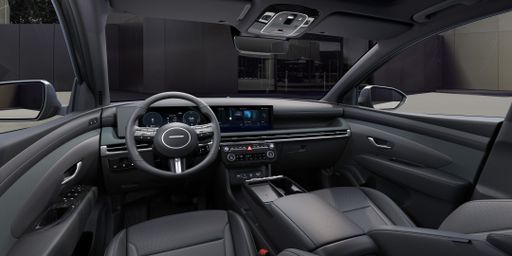
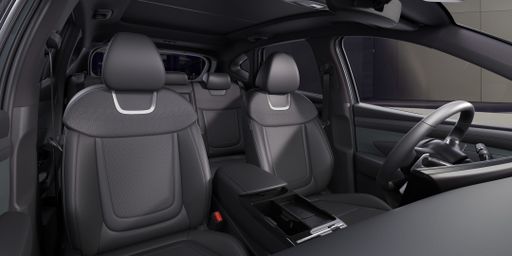
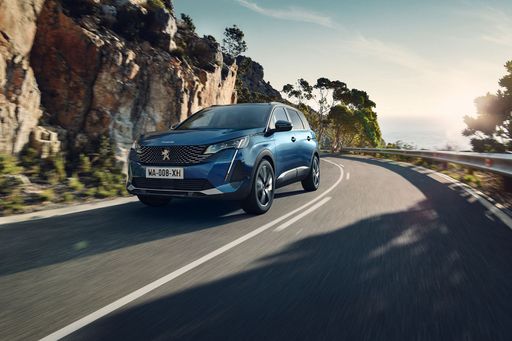
VS

Peugeot 5008 vs Hyundai Tucson comparison

Compare performance (325 HP vs 288 HP), boot space and price (37,600 £ vs 20,900 £ ) at a glance. Find out which car is the better choice for you – Peugeot 5008 or Hyundai Tucson?

Peugeot 5008 vs Hyundai Tucson: Key differences

Peugeot 5008

4.7 (1 Reviews)
rate
  • slightly more power
  • significantly more electric range
  • moderately quicker 0–100 km/h

Hyundai Tucson

4.6 (4 Reviews)
rate
  • substantially cheaper
  • somewhat lighter
  • significantly more trunk space

All details on performance, efficiency, range and trunk space can be found in the technical comparison below – including user reviews for both models.

5008

Hyundai Tucson vs. Peugeot 5008: Battle of the SUVs

The compact SUV segment is bustling with numerous choices catering to different consumer needs. Among the heated contenders in 2024 are the Hyundai Tucson and the Peugeot 5008. Both SUVs come packed with innovations and distinct features designed to meet diverse preferences, whether you're looking for versatility, power efficiency, or cutting-edge technology. Let's delve into the technical aspects and innovations that set these two apart.
Tucson

Engine and Performance

The Hyundai Tucson presents a versatile engine lineup that includes Diesel MHEV, Petrol MHEV, Petrol, Full Hybrid, and Plugin Hybrid options. This variety puts power outputs ranging from 136 HP to 252 HP at your disposal. Notably, the Tucson achieves a balanced power-efficiency dynamic with consumption as low as 1.2 L/100km for the plugin hybrid version. With an impressive torque range of up to 367 Nm and a maximum speed of 194 km/h, the Tucson demonstrates robust performance capabilities.

On the other side, the Peugeot 5008 offers Petrol MHEV, Plugin Hybrid, and Electric engine types. With power ranging from 136 HP to 231 HP, it provides an efficient consumption palette, highlighting a mere 1 L/100km for the plugin hybrid. Similarly, the electric version delivers a notable range, offering up to 664 km on a single charge. Torque delivery peaks at 345 Nm, and it reaches a top speed of 220 km/h, favoring efficiency with flair.

5008

Drive and Transmission

The Tucson offers varied drive types, including Front-Wheel Drive and All-Wheel Drive, paired with either automatic or manual transmission options. The detailed options range from Dual-Clutch Automatic, Manual Gearbox, and Automatic Gearbox, ensuring a driving style for every need.

Peugeot, however, emphasizes simplicity and efficiency by offering an automatic Front-Wheel Drive system. The 5008's transmission options include Dual-Clutch Automatic and Reduction Gearbox, focusing on sleek gear shifts and energy conservation without compromising drive quality.

Tucson

Dimensions and Capacity

In terms of size, the Tucson stands with a length of up to 4520 mm, a width of 1865 mm, and a height of 1650 mm. It comfortably seats five passengers and offers an ample trunk capacity ranging from 546 to 620 liters.

Meanwhile, the 5008 stretches to a length of 4791 mm, a width of 1895 mm, and a height of 1694 mm, accommodating up to seven passengers. This additional passenger capacity doesn’t diminish its trunk space, boasting a generous 748 liters, making it an ideal choice for larger families or group adventures.

5008

Safety and Innovations

The Hyundai Tucson's robust construction and innovative safety technologies, coupled with multiple engine configurations, demonstrate Hyundai's focus on adaptability and innovation. CO2 efficiencies ranging from B to D show commitment to cleaner driving options.

The Peugeot 5008 doesn't fall short in technological advancements, offering the best of new eco-friendly innovations. With a focus on electrification and reduced emissions, its CO2 efficiency ranges from A to D. Peugeot’s integrated driver assistance systems show a keen insight into modern driving demands emphasizing safety without overshadowing style.

Tucson

Conclusion

Both the Hyundai Tucson and the Peugeot 5008 bring exciting propositions to the SUV market. The Tucson caters to those who seek variety and robust performance, with a penchant for hybrid versatility. Conversely, the 5008 stands out with its family-friendly design, eco-conscious electric options, and additional space. Depending on your priorities—whether it's environmental impact, space, or choice diversity—both models offer compelling choices for 2024.

Here’s where it gets real: The technical differences in detail

5008

Costs and Efficiency:

Looking at overall running costs, both models reveal some interesting differences in everyday economy.

Hyundai Tucson is substantially cheaper – starting at 20,900 £ , while the Peugeot 5008 costs 37,600 £ . That’s a price difference of around 16,697 £.

Both cars consume an average of 2.7 L/100km – no difference here.

As for electric range, the Peugeot 5008 offers significantly more range – reaching up to 669 km, about 599 km more than the Hyundai Tucson.

Tucson

Engine and Performance:

Under the bonnet, it becomes clear which model is tuned for sportiness and which one takes the lead when you hit the accelerator.

When it comes to engine power, the Peugeot 5008 offers slightly more power – delivering 325 HP compared to 288 HP. That’s roughly 37 HP more horsepower.

When accelerating from 0 to 100 km/h, the Peugeot 5008 is moderately quicker – completing the sprint in 6.5 s, while the Hyundai Tucson takes 7.5 s. That’s about 1 s quicker.

Looking at top speed, the Hyundai Tucson is only slightly faster – reaching 204 km/h, while the Peugeot 5008 tops out at 198 km/h. The difference is around 6 km/h.

There’s also a difference in torque: the Peugeot 5008 delivers markedly more torque with 511 Nm compared to 379 Nm. That’s about 132 Nm more.

5008

Space and Everyday Use:

Whether family car or daily driver – which one offers more room, flexibility and comfort?

Seats: Peugeot 5008 offers more seats – 7 vs 5.

In terms of curb weight, Hyundai Tucson is somewhat lighter – 1,542 kg compared to 1,700 kg. The difference is around 158 kg.

Looking at boot space, the Hyundai Tucson offers significantly more boot space – 620 L compared to 348 L. That’s a difference of about 272 L.

For maximum load capacity, the Peugeot 5008 offers slightly more capacity – up to 2,232 L, about 433 L more than the Hyundai Tucson.

When it comes to payload, the Peugeot 5008 carries slightly more – 640 kg compared to 545 kg. That’s a difference of about 95 kg.

Who wins the race in the data check?

The Peugeot 5008 is decisively ahead in the objective data comparison.
This result only shows which model scores more points on paper – not which of the two cars feels right for you.

from £37,600
5008

Peugeot 5008

  • Engine Type : Electric, Petrol MHEV, Plugin Hybrid
  • Transmission : Automatic
  • Drive Type : Front-Wheel Drive, All-Wheel Drive
  • Power HP : 145 - 325 HP
  • Consumption L/100km : 2.7 - 5.6 L/100km
  • Consumption kWh/100km : 17.8 - 18.6 kWh/100km
  • Electric Range : 78 - 669 km
Peugeot 5008
Hyundai Tucson

Costs and Consumption

View detailed analysis

Engine and Performance

View detailed analysis

Dimensions and Body

View detailed analysis

Peugeot 5008

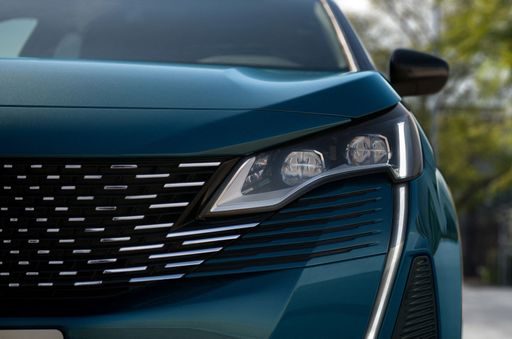
The Peugeot 5008 blends Peugeot's sharp design with the space and versatility families actually need, wrapping clever packaging and a premium-feeling cabin in a crisp, SUV-like silhouette. It drives with more poise than you'd expect from a people carrier, serves up practical touches and flexible seating for everyday chaos, and still looks good when parked outside the school gates.

details

Hyundai Tucson

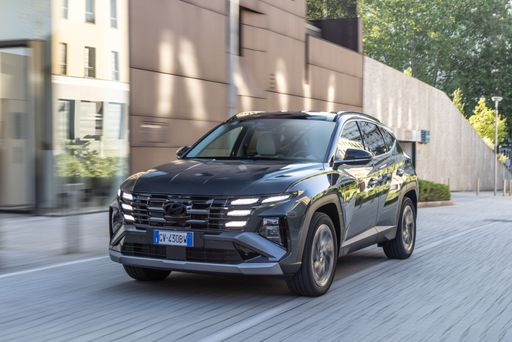
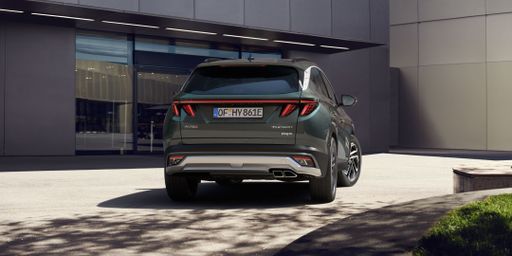
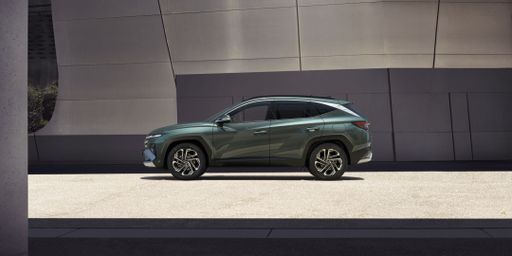
Hyundai Tucson marries bold, sculpted looks with a clever, roomy cabin that feels smarter than its price tag suggests. It's composed on the road, easy to live with day-to-day, and a sensible choice for buyers who want SUV style without the showroom theatrics.

details
Peugeot 5008
Hyundai Tucson

Costs and Consumption

Price
37,600 - 54,200 £
Price
20,900 - 47,900 £
Consumption L/100km
2.7 - 5.6 L/100km
Consumption L/100km
2.7 - 7.6 L/100km
Consumption kWh/100km
17.8 - 18.6 kWh/100km
Consumption kWh/100km
-
Electric Range
78 - 669 km
Electric Range
63 - 70 km
Battery Capacity
0.4 - 96.9 kWh
Battery Capacity
-
co2
0 - 127 g/km
co2
62 - 172 g/km
Fuel tank capacity
55 L
Fuel tank capacity
52 - 54 L

Dimensions and Body

Body Type
SUV
Body Type
SUV
Seats
7
Seats
5
Doors
5
Doors
5
Curb weight
1,700 - 2,344 kg
Curb weight
1,542 - 1,893 kg
Trunk capacity
294 - 348 L
Trunk capacity
546 - 620 L
Length
4,791 mm
Length
4,525 - 4,535 mm
Width
1,895 mm
Width
1,865 mm
Height
1,694 mm
Height
1,650 mm
Max trunk capacity
2,178 - 2,232 L
Max trunk capacity
1,795 - 1,799 L
Payload
596 - 640 kg
Payload
518 - 545 kg

Engine and Performance

Engine Type
Electric, Petrol MHEV, Plugin Hybrid
Engine Type
Petrol, Full Hybrid, Plugin Hybrid, Diesel MHEV
Transmission
Automatic
Transmission
Manuel, Automatic
Transmission Detail
Reduction Gearbox, Dual-Clutch Automatic
Transmission Detail
Manual Gearbox, Dual-Clutch Automatic, Automatic Gearbox
Drive Type
Front-Wheel Drive, All-Wheel Drive
Drive Type
Front-Wheel Drive, All-Wheel Drive
Power HP
145 - 325 HP
Power HP
136 - 288 HP
Acceleration 0-100km/h
6.5 - 10.2 s
Acceleration 0-100km/h
7.5 - 11.6 s
Max Speed
170 - 198 km/h
Max Speed
196 - 204 km/h
Torque
230 - 511 Nm
Torque
250 - 379 Nm
Number of Cylinders
3 - 4
Number of Cylinders
4
Power kW
107 - 239 kW
Power kW
100 - 212 kW
Engine capacity
1,199 - 1,598 cm3
Engine capacity
1,598 cm3

General

Model Year
2,024 - 2,026
Model Year
2,025
CO2 Efficiency Class
A, D, B
CO2 Efficiency Class
F, D, E, B
Brand
Peugeot
Brand
Hyundai
DriveDuel uses data analysis and artificial intelligence to evaluate vehicle data and create content. Content is regularly reviewed and improved. The displayed prices are estimates based on German list prices, adjusted to the respective country’s VAT. Country-specific registration taxes are not included. This information is not legally binding.