
VS

Peugeot Boxer vs Mercedes Sprinter Transporter comparison

Compare performance (279 HP vs 204 HP), boot space and price (35,500 £ vs 26,900 £ ) at a glance. Find out which car is the better choice for you – Peugeot Boxer or Mercedes Sprinter Transporter?

Peugeot Boxer vs Mercedes Sprinter Transporter: Key differences

Peugeot Boxer

  • markedly more power
  • barely more efficient
  • only slightly more efficient

Mercedes Sprinter Transporter

  • markedly cheaper
  • very slightly more electric range
  • marginally lighter
Boxer

In the ever-evolving landscape of commercial vehicles, choosing between the Mercedes Sprinter Transporter and the Peugeot Boxer can be quite the challenge for businesses and individual users alike. Both vehicles boast impressive features and innovations, tailored for the modern transport needs. In this comparison, we glimpse into the intricacies of each model, evaluating their technical specifications, performance, and cutting-edge technologies.
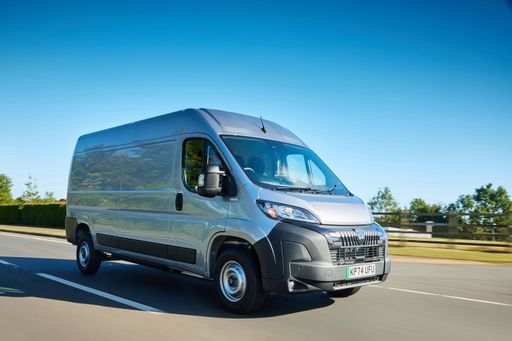
Sprinter Transporter

Performance and Powertrains

The Mercedes Sprinter Transporter offers a versatility in powertrains including options for electric and diesel engines. With a range of horsepower from 114 to a staggering 204 hp, it caters to various driving demands. Its engine options also boast impressive torque figures, ranging from 300 to 450 Nm, ensuring robust highway performance and excellent payload handling.

On the other hand, the Peugeot Boxer is powered primarily by diesel engines, featuring power outputs from 120 hp up to an impressive 279 hp for the high-performance variants. The Boxer also exhibits respectable torque capabilities, delivering between 260 and 450 Nm. This makes it a powerful contender, particularly for heavier loads.

Fuel Efficiency and Consumption

When it comes to fuel efficiency, the Mercedes Sprinter Transporter leads the charge with consumption figures ranging between 7.9 to 12.3 L/100km for diesel variants. Its electric models shine with consumption ratings of about 26.3 kWh/100km, showcasing advancements in electric vehicle technology. The electric range is equally impressive, with some models achieving up to 453 km on a single charge.

The Peugeot Boxer, while slightly behind, generally offers better fuel efficiency with diesel consumption ranging from 7.5 to 9 L/100km. Its electric variant has a higher energy consumption rate of 31.7 kWh/100km, but can achieve an electric range of up to 424 km. The Boxer's diesel engines are praised for their economical operation, ideal for lengthy routes and city driving alike.

Interior and Cargo Capacity

Both the Sprinter and Boxer prioritize driver comfort and functionality. The Mercedes Sprinter boasts an ergonomic cabin designed for long hours on the road, offering features such as intuitive infotainment systems, ample storage solutions, and a seating capacity of three. Its cargo space excels with a payload capacity of up to 1,505 kg, making it perfect for larger deliveries.

The Boxer also offers a three-seat configuration and a spacious cargo area. It provides a payload capacity ranging from approximately 560 kg to 2,020 kg, depending on the variant. The interior design is focused on practicality, equipping drivers with essential controls and storage for a convenient experience.

Technological Innovations

As a leader in automotive innovation, the Mercedes Sprinter is loaded with technology to enhance safety and driving efficiency. Features such as Active Brake Assist, Rear-View Camera, Blind Spot Assist, and Adaptive Cruise Control make the driving experience not only safer but also more enjoyable. Its MBUX infotainment system allows for seamless connectivity and navigation, elevating the Sprinter’s profile in the commercial market.

The Peugeot Boxer does not lag behind in technology; it is equipped with features such as a touchscreen infotainment system, reverse parking sensors, and a range of driver assistance systems. While perhaps not as feature-rich as the Sprinter, the Boxer focuses on delivering essential technologies that enhance usability and support the driver in various conditions.

Verdict: Which One to Choose?

Choosing between the Mercedes Sprinter Transporter and Peugeot Boxer ultimately depends on specific business needs and preferences. The Sprinter excels in technological features, powerful engine options, and electric efficiency, making it ideal for businesses focused on innovation and long-term sustainability.

Conversely, the Peugeot Boxer offers excellent fuel efficiency and payload capacity at a typically lower price point, appealing to budget-conscious buyers without compromising on quality and performance. Each of these vans has its strengths and weaknesses, and understanding individual needs will guide potential buyers to the right choice for their operations.

Here’s where it gets real: The technical differences in detail

Boxer

Costs and Efficiency:

Price and efficiency are often the first things buyers look at. Here it becomes clear which model has the long-term edge – whether at the pump, the plug, or in purchase price.

Mercedes Sprinter Transporter is markedly cheaper – starting at 26,900 £ , while the Peugeot Boxer costs 35,500 £ . That’s a price difference of around 8,599 £.

Fuel consumption also shows a difference: the Peugeot Boxer uses 7.5 L/100km and is barely more efficient than the Mercedes Sprinter Transporter with 7.9 L/100km. The difference is about 0.4 L/100km.

In terms of energy consumption, the Peugeot Boxer is only slightly more efficient: consuming 26.2 kWh/100km compared to 27.1 kWh/100km for the Mercedes Sprinter Transporter. That’s a difference of about 0.9 kWh/100km.

As for electric range, the Mercedes Sprinter Transporter offers very slightly more range – reaching up to 444 km, about 20 km more than the Peugeot Boxer.

Sprinter Transporter

Engine and Performance:

Under the bonnet, it becomes clear which model is tuned for sportiness and which one takes the lead when you hit the accelerator.

When it comes to engine power, the Peugeot Boxer offers markedly more power – delivering 279 HP compared to 204 HP. That’s roughly 75 HP more horsepower.

Both models offer the same torque – 450 Nm.

Space and Everyday Use:

Whether family car or daily driver – which one offers more room, flexibility and comfort?

Seats: Peugeot Boxer offers more seats – 7 vs 3.

In terms of curb weight, Mercedes Sprinter Transporter is marginally lighter – 2,052 kg compared to 2,075 kg. The difference is around 23 kg.

When it comes to payload, the Mercedes Sprinter Transporter carries markedly more – 2,641 kg compared to 2,080 kg. That’s a difference of about 561 kg.

Who wins the race in the data check?

The Peugeot Boxer is far ahead overall in the objective data comparison.
This result only shows which model scores more points on paper – not which of the two cars feels right for you.

from £35,500
Boxer

Peugeot Boxer

  • Engine Type : Diesel, Electric
  • Transmission : Manuel, Automatic
  • Drive Type : Front-Wheel Drive
  • Power HP : 120 - 279 HP
  • Consumption L/100km : 7.5 - 9 L/100km
  • Consumption kWh/100km : 26.2 kWh/100km
  • Electric Range : 424 km
Peugeot Boxer
Mercedes Sprinter Transporter

Costs and Consumption

View detailed analysis

Engine and Performance

View detailed analysis

Dimensions and Body

View detailed analysis

Peugeot Boxer

The Peugeot Boxer wears its workmanlike practicality with a surprising amount of style, offering an interior that’s easy to live with for tradespeople and small businesses. It’s a sensible, no-nonsense choice if you need reliable load space and low running costs, with clever details that make daily life easier and an exterior that won’t embarrass when you arrive on site.

details

Mercedes Sprinter Transporter

The Mercedes Sprinter is the dependable workhorse that makes light of heavy loads, blending smart practicality with a surprisingly carlike cabin that keeps drivers sane on long runs. With a range of configurations and a reputation for durability, it’s the van buyers turn to when they need something tough, clever and oddly enjoyable to drive.

details
Peugeot Boxer
Mercedes Sprinter Transporter

Costs and Consumption

Price
35,500 - 57,800 £
Price
26,900 - 72,900 £
Consumption L/100km
7.5 - 9 L/100km
Consumption L/100km
7.9 - 12.7 L/100km
Consumption kWh/100km
26.2 kWh/100km
Consumption kWh/100km
27.1 - 31.5 kWh/100km
Electric Range
424 km
Electric Range
194 - 444 km
Battery Capacity
-
Battery Capacity
56 - 113 kWh
co2
0 - 233 g/km
co2
0 - 333 g/km
Fuel tank capacity
-
Fuel tank capacity
71 L

Dimensions and Body

Body Type
Cargo Van
Body Type
Cargo Van
Seats
3 - 7
Seats
3
Doors
-
Doors
4
Curb weight
2,075 - 2,940 kg
Curb weight
2,052 - 3,166 kg
Trunk capacity
-
Trunk capacity
-
Length
-
Length
5,932 - 7,367 mm
Width
2,050 mm
Width
1,993 mm
Height
-
Height
2,331 - 2,663 mm
Max trunk capacity
-
Max trunk capacity
9,000 - 15,500 L
Payload
560 - 2,080 kg
Payload
577 - 2,641 kg

Engine and Performance

Engine Type
Diesel, Electric
Engine Type
Electric, Diesel
Transmission
Manuel, Automatic
Transmission
Automatic, Manuel
Transmission Detail
Manual Gearbox, Automatic Gearbox, Reduction Gearbox
Transmission Detail
Reduction Gearbox, Manual Gearbox, Automatic Gearbox
Drive Type
Front-Wheel Drive
Drive Type
Rear-Wheel Drive, All-Wheel Drive
Power HP
120 - 279 HP
Power HP
114 - 204 HP
Acceleration 0-100km/h
-
Acceleration 0-100km/h
-
Max Speed
-
Max Speed
90 km/h
Torque
320 - 450 Nm
Torque
300 - 450 Nm
Number of Cylinders
4
Number of Cylinders
4
Power kW
88 - 205 kW
Power kW
84 - 150 kW
Engine capacity
2,184 cm3
Engine capacity
1,950 cm3

General

Model Year
2,024 - 2,025
Model Year
2,024 - 2,025
CO2 Efficiency Class
G, A
CO2 Efficiency Class
A, G
Brand
Peugeot
Brand
Mercedes-Benz
DriveDuel uses data analysis and artificial intelligence to evaluate vehicle data and create content. Content is regularly reviewed and improved. The displayed prices are estimates based on German list prices, adjusted to the respective country’s VAT. Country-specific registration taxes are not included. This information is not legally binding.








