VS

Peugeot Rifter vs Peugeot Partner comparison

Compare performance (130 HP vs 136 HP), boot space and price (22,900 £ vs 26,100 £ ) at a glance. Find out which car is the better choice for you – Peugeot Rifter or Peugeot Partner?

Peugeot Rifter vs Peugeot Partner: Key differences

Peugeot Rifter

4.7 (1 Reviews)
rate
  • moderately cheaper
details

Peugeot Partner

  • only slightly more power
  • marginally more efficient
  • barely quicker 0–100 km/h
  • marginally lighter
details

By Achim Sedelmaier

Rifter

Peugeot Socio vs Peugeot Rifter: A Comprehensive Comparison

As the automotive market continues to evolve, Peugeot has made significant strides with its two versatile models: the Peugeot Socio and the Peugeot Rifter. These cars cater to different customer needs while sharing some of the same technological DNA. In this article, we will delve deep into the technical aspects and innovations of both vehicles, showcasing their strengths and capabilities.
Partner

Body Type: Versatility in Design

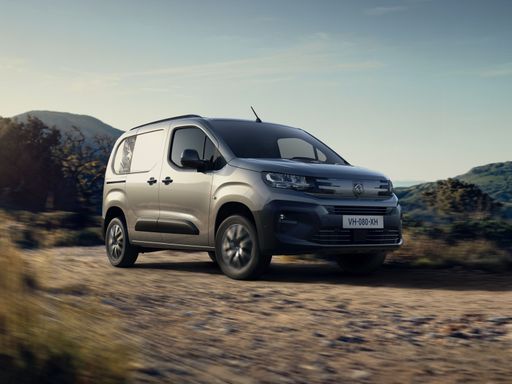
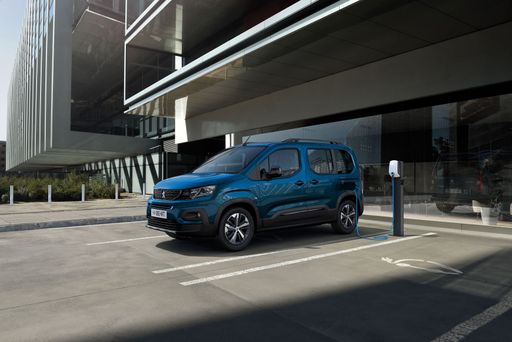
The Peugeot Socio is designed as a cargo van, focusing primarily on practicality and utility. Its spacious interior offers a trunk capacity of 1800 liters, making it perfect for transporting goods or tools. On the other hand, the Peugeot Rifter is a high roof wagon, emphasizing user comfort and passenger space with seating options for up to seven people and a trunk capacity ranging from 322 liters to 1050 liters depending on the configuration.

Rifter

Engine and Performance: Power Options

When it comes to engine types, both the Socio and Rifter offer a range of options. The Socio showcases three engine types: electric, diesel, and petrol, delivering power outputs between 102 to 136 hp. Its electric variant features a robust range of 354 km, making it an ideal choice for eco-conscious consumers. With a 0-100 km/h acceleration time of 11.2 seconds in its most powerful diesel configuration, the Socio is no slouch in performance.

Conversely, the Rifter also offers electric, petrol, and diesel options but with a slightly lower maximum power output ranging from 102 to 136 hp. It has a fast acceleration time of 10.8 seconds in its more powerful configurations, and an electric range of up to 340 km. This model strikes a balance between efficiency and power, making it a great option for family outings and daily commutes alike.

Partner

Transmission and Driving Experience

Both vehicles come equipped with front-wheel drive and various transmission options, including automatic and manual gearboxes. The Socio features a reduction gearbox alongside its manual and automatic gearboxes, optimizing it for heavy loads and varying terrains. Its power torque ranges from 205 to 300 Nm, providing added flexibility and control during operation.

The Rifter also shares similar transmission details and performance parameters but focuses more on comfort during city driving, thanks to its smooth automatic transmission options. Its torque ranges from 205 to 300 Nm as well, allowing for an engaging driving experience whether you’re navigating through city traffic or heading out of town.

Rifter

Fuel Efficiency and Environmental Impact

In an age where fuel efficiency is paramount, both Peugeot models hold their ground. The Socio's fuel consumption is impressive, particularly with its diesel engines averaging between 5.2 to 6.3 liters per 100 km. The electric version consumes 17.4 kWh per 100 km, offering a sustainable choice for long-term use.

The Rifter, while slightly less efficient than the Socio, still provides commendable petrol and diesel options averaging between 5.4 to 6.9 liters per 100 km. For electric variants, it registers consumption at approximately 19.1 kWh per 100 km. Both models are available in CO2 efficiency class A, showcasing their environmentally friendly credentials.

Partner

Dimensions and Usability

Size plays a critical role in usability. The Peugeot Socio has a length of 4751 mm and a height of 1812 mm, providing ample space without compromising on maneuverability. The Rifter, comparatively, offers two lengths: 4405 mm and 4755 mm. With a height of up to 1837 mm, it has a high-roof design that maximizes interior space for passengers and cargo alike.

Rifter

Conclusion: Choosing the Right Peugeot for You

Ultimately, the choice between the Peugeot Socio and Peugeot Rifter boils down to your individual needs. The Socio is an excellent choice for professionals seeking a practical, spacious cargo van that excels in utility and energy efficiency. In contrast, the Rifter appeals to families and individuals looking for a more comfortable ride with ample passenger capacity and modern amenities.

With their unique features and capabilities, both models underline Peugeot's commitment to quality, performance, and innovation in the automotive industry. Whether you choose the Socio or the Rifter, you can be assured of a reliable driving experience that fits your lifestyle.

Here’s where it gets real: The technical differences in detail

Rifter

Costs and Efficiency:

Price and efficiency are often the first things buyers look at. Here it becomes clear which model has the long-term edge – whether at the pump, the plug, or in purchase price.

Peugeot Rifter is moderately cheaper – starting at 22,900 £ , while the Peugeot Partner costs 26,100 £ . That’s a price difference of around 3,252 £.

Fuel consumption also shows a difference: the Peugeot Partner uses 5.2 L/100km and is marginally more efficient than the Peugeot Rifter with 5.4 L/100km. The difference is about 0.2 L/100km.

Partner

Engine and Performance:

Power, torque and acceleration say a lot about how a car feels on the road. This is where you see which model delivers more driving dynamics.

When it comes to engine power, the Peugeot Partner offers only slightly more power – delivering 136 HP compared to 130 HP. That’s roughly 6 HP more horsepower.

When accelerating from 0 to 100 km/h, the Peugeot Partner is barely quicker – completing the sprint in 11.2 s, while the Peugeot Rifter takes 11.3 s. That’s about 0.1 s quicker.

Both models offer the same torque – 300 Nm.

Rifter

Space and Everyday Use:

Beyond pure performance, interior space and usability matter most in daily life. This is where you see which car is more practical and versatile.

Seats: Peugeot Rifter offers more seats – 7 vs 3.

In terms of curb weight, Peugeot Partner is marginally lighter – 1,371 kg compared to 1,498 kg. The difference is around 127 kg.

When it comes to payload, the Peugeot Rifter carries marginally more – 814 kg compared to 781 kg. That’s a difference of about 33 kg.

Who wins the race in the data check?

The Peugeot Partner stands out in the key areas in the objective data comparison.
This result only shows which model scores more points on paper – not which of the two cars feels right for you.

from £26,100
Partner

Peugeot Partner

  • Engine Type : Electric, Diesel
  • Transmission : Automatic, Manuel
  • Drive Type : Front-Wheel Drive
  • Power HP : 102 - 136 HP
  • Consumption L/100km : 5.2 - 5.4 L/100km
  • Consumption kWh/100km : 17.4 kWh/100km
  • Electric Range : 354 km
Peugeot Rifter
Peugeot Partner

Costs and Consumption

View detailed analysis

Engine and Performance

View detailed analysis

Dimensions and Body

View detailed analysis

Peugeot Rifter

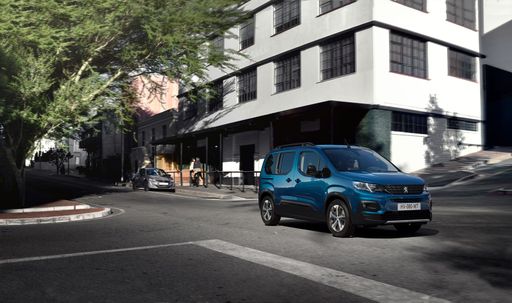
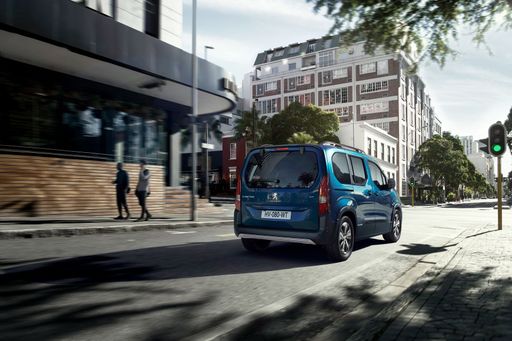
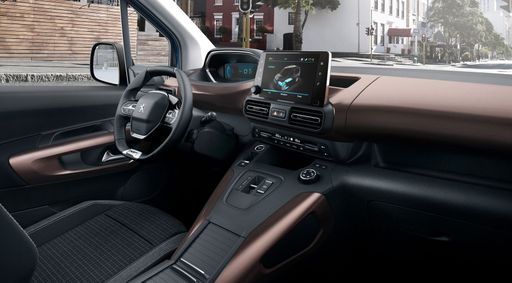
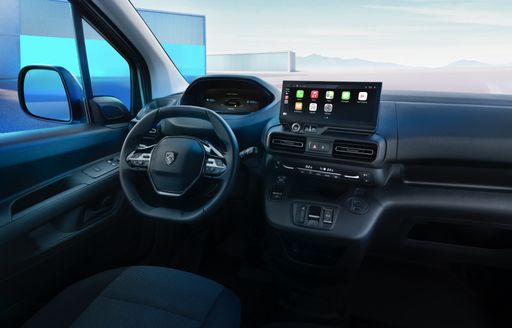
The Peugeot Rifter is a practical, family-friendly people carrier that makes everyday errands and weekend escapes feel effortless thanks to its airy cabin and clever, flexible interior. With chunky, purposeful styling and storage solutions everywhere, the Rifter manages to be both unashamedly useful and unexpectedly likeable.

details

Peugeot Partner

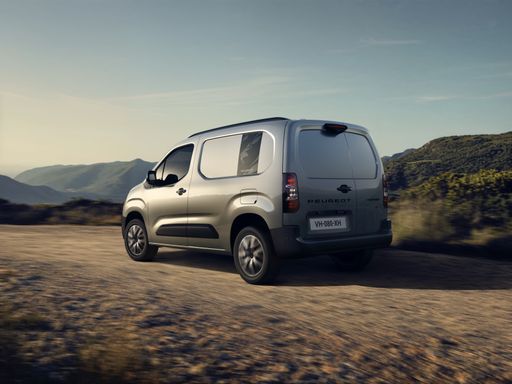
The Peugeot Partner is a no-nonsense workhorse that doubles as a surprisingly comfy family mover, combining clever storage solutions with an easy-to-live-in cabin. It won’t win any beauty contests, but for small businesses and active families it’s practical, economical and utterly reliable when the day gets busy.

details
Peugeot Rifter
Peugeot Partner

Costs and Consumption

Price
22,900 - 30,100 £
Price
26,100 - 33,500 £
Consumption L/100km
5.4 - 6.5 L/100km
Consumption L/100km
5.2 - 5.4 L/100km
Consumption kWh/100km
-
Consumption kWh/100km
17.4 kWh/100km
Electric Range
-
Electric Range
354 km
Battery Capacity
-
Battery Capacity
-
co2
142 - 157 g/km
co2
0 - 143 g/km
Fuel tank capacity
-
Fuel tank capacity
-

Dimensions and Body

Body Type
High Roof Estate
Body Type
Cargo Van
Seats
5 - 7
Seats
3
Doors
-
Doors
-
Curb weight
1,498 - 1,694 kg
Curb weight
1,371 - 1,674 kg
Trunk capacity
-
Trunk capacity
-
Length
-
Length
-
Width
1,848 mm
Width
1,848 mm
Height
-
Height
-
Max trunk capacity
-
Max trunk capacity
-
Payload
518 - 814 kg
Payload
645 - 781 kg

Engine and Performance

Engine Type
Petrol, Diesel
Engine Type
Electric, Diesel
Transmission
Manuel, Automatic
Transmission
Automatic, Manuel
Transmission Detail
Manual Gearbox, Automatic Gearbox
Transmission Detail
Reduction Gearbox, Manual Gearbox, Automatic Gearbox
Drive Type
Front-Wheel Drive
Drive Type
Front-Wheel Drive
Power HP
102 - 130 HP
Power HP
102 - 136 HP
Acceleration 0-100km/h
11.3 - 13.5 s
Acceleration 0-100km/h
11.2 s
Max Speed
-
Max Speed
-
Torque
205 - 300 Nm
Torque
250 - 300 Nm
Number of Cylinders
3 - 4
Number of Cylinders
4
Power kW
75 - 96 kW
Power kW
75 - 100 kW
Engine capacity
1,199 - 1,499 cm3
Engine capacity
1,499 cm3

General

Model Year
2026
Model Year
2025
CO2 Efficiency Class
E, F
CO2 Efficiency Class
A, E
Brand
Peugeot
Brand
Peugeot
DriveDuel uses data analysis and artificial intelligence to evaluate vehicle data and create content. Content is regularly reviewed and improved. The displayed prices are estimates based on German list prices, adjusted to the respective country’s VAT. Country-specific registration taxes are not included. This information is not legally binding.