VS

Renault Arkana vs Nissan Qashqai comparison

Compare performance (143 HP vs 205 HP), boot space and price (28,500 £ vs 29,600 £ ) at a glance. Find out which car is the better choice for you – Renault Arkana or Nissan Qashqai?

Renault Arkana vs Nissan Qashqai: Key differences

Renault Arkana

4 (7 Reviews)
rate
  • very slightly cheaper
details

Nissan Qashqai

4.9 (4 Reviews)
rate
  • markedly more power
  • only slightly more efficient
  • considerably quicker 0–100 km/h
  • only slightly lighter
details

All details on performance, efficiency, range and trunk space can be found in the technical comparison below – including user reviews for both models.

By Achim Sedelmaier

Arkana

Introduction to the Showdown: Nissan Qashqai vs Renault Arkana

In the ever-evolving world of SUVs, the Nissan Qashqai and Renault Arkana have made significant impressions with their unique blend of practicality and performance. As consumers gravitate towards vehicles that boast stylish designs, innovative features, and efficient engines, this comparison examines the technical aspects and cutting-edge innovations of both models to help you decide which SUV fits the bill.

Qashqai

Design and Dimensions

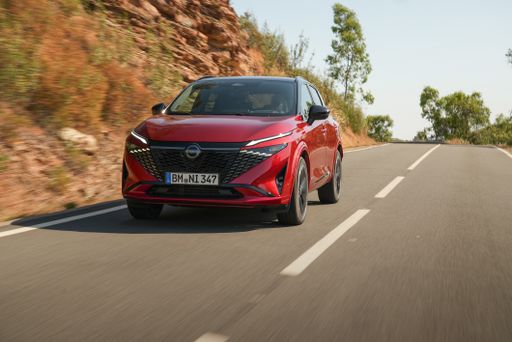
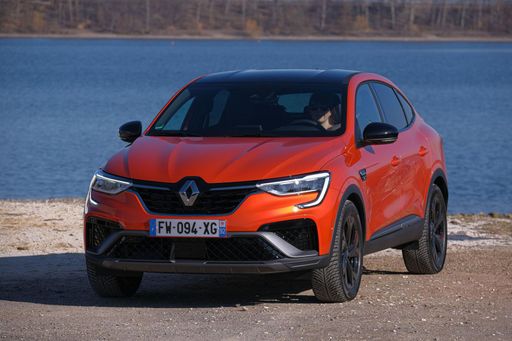
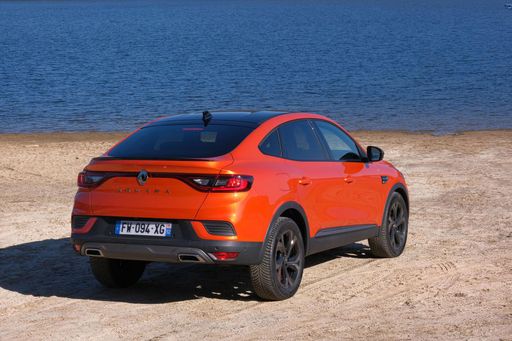
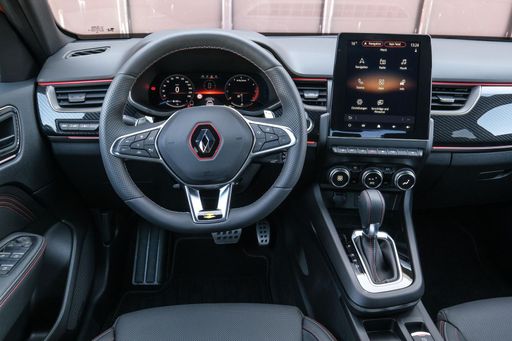
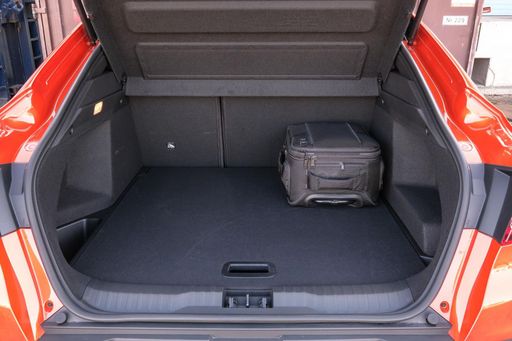
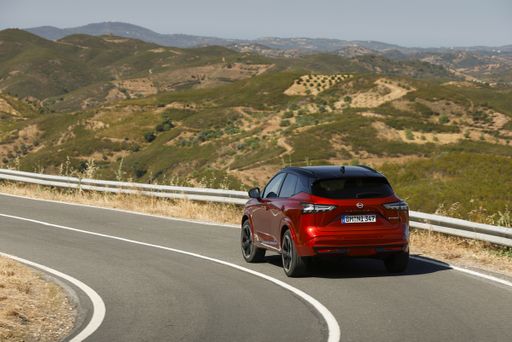
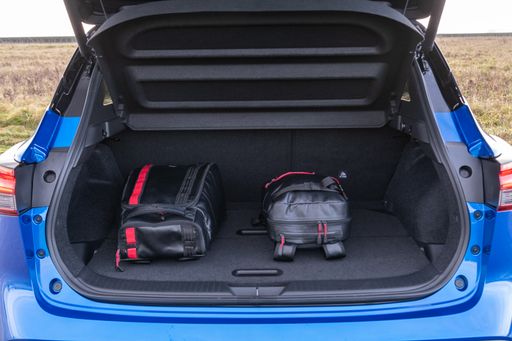
Both the Nissan Qashqai and Renault Arkana embody the sporty yet practical aesthetic that modern drivers crave. The Qashqai measures 4425 mm in length, 1835 mm in width, and stands 1625 mm tall, offering a robust presence on the road. On the other hand, the Arkana is slightly larger, spanning 4568 mm in length, 1821 mm in width, and a height of 1576 mm. This dimensional advantage translates to a more spacious cabin and trunk, with the Arkana featuring a trunk capacity of 513 liters compared to Qashqai's 504 liters.

Arkana

Engine Performance and Options

Engine performance is where these two models start to diverge. The Qashqai offers a range of engine choices, including petrol MHEV and full hybrid options, producing horsepower ranging from 140 to 190 HP. In contrast, the Arkana also delivers a competitive lineup with full hybrid and petrol MHEV engines, providing a power output between 140 and 158 HP. The Qashqai edges ahead with a maximum torque of 330 Nm, compared to Arkana's top torque of 270 Nm, which is crucial for acceleration and performance.

Qashqai

Transmission and Drive Type

The Qashqai caters to diverse driving preferences with options for both manual and automatic transmissions, including a CVT and reduction gearbox, while also offering front-wheel drive and all-wheel drive configurations. Conversely, the Arkana limits its offerings to an automatic transmission and front-wheel drive. This limitation may appeal to those prioritizing ease of driving but might not satisfy enthusiasts looking for a more engaging experience.

Arkana

Fuel Efficiency

Fuel efficiency is a critical factor for many SUV buyers, and here, the Arkana shines with an impressive consumption rate as low as 4.7 L/100km, thanks to its hybrid technology. The Qashqai, although slightly thirstier with a maximum consumption of 6.8 L/100km, still provides respectable efficiency, especially considering its performance capabilities. In terms of CO2 emissions, the Arkana also has an advantage, producing as low as 106 g/km, while the Qashqai ranges between 116 and 154 g/km.

Qashqai

Acceleration and Speed

When it comes to acceleration, the Qashqai showcases its muscle with a 0-100 km/h time as quick as 7.9 seconds for its most powerful variant. The Arkana, while competitive, offers a top acceleration time of 9.1 seconds. Furthermore, the Qashqai's top speed can reach up to 206 km/h, compared to the Arkana's maximum of 174 km/h, making the Qashqai a more exhilarating option for those who enjoy a spirited drive.

Arkana

Technological Innovations

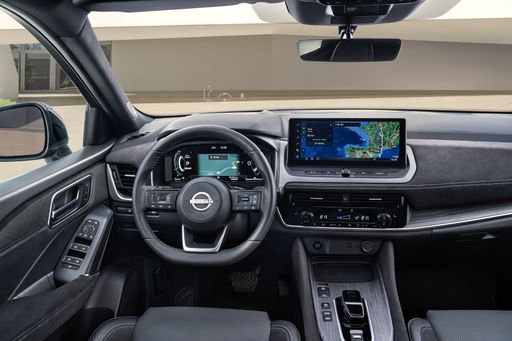
Both vehicles are equipped with modern technology to enhance the driving experience. The Qashqai features Nissan's ProPILOT Assist, a semi-autonomous driving aid that makes highway drives feel fluid and efficient. The Arkana, meanwhile, boasts a comprehensive infotainment system that integrates well with smartphones via Apple CarPlay and Android Auto. Both models offer advanced safety features, but the Qashqai's additional driver assistance technology slightly tilts the scale in its favor.

Qashqai

Conclusion: Which SUV Reigns Supreme?

Deciding between the Nissan Qashqai and Renault Arkana ultimately boils down to individual preferences and driving needs. The Qashqai emerges as a well-rounded vehicle with superior performance metrics, diverse engine options, and advanced technological innovations. However, the Arkana offers remarkable fuel efficiency and a stylish design that may resonate better with urban drivers concerned about eco-friendliness. Both models represent their respective brands well, catering to a growing market that values both functionality and flair.

Here’s where it gets real: The technical differences in detail

Arkana

Costs and Efficiency:

Price and efficiency are key factors when choosing a car – and this is often where the real differences emerge.

Renault Arkana is very slightly cheaper – starting at 28,500 £ , while the Nissan Qashqai costs 29,600 £ . That’s a price difference of around 1,148 £.

Fuel consumption also shows a difference: the Nissan Qashqai uses 4.3 L/100km and is only slightly more efficient than the Renault Arkana with 4.7 L/100km. The difference is about 0.4 L/100km.

Qashqai

Engine and Performance:

Power, torque and acceleration are the classic benchmarks for car enthusiasts – and here, some clear differences start to show.

When it comes to engine power, the Nissan Qashqai offers markedly more power – delivering 205 HP compared to 143 HP. That’s roughly 62 HP more horsepower.

When accelerating from 0 to 100 km/h, the Nissan Qashqai is considerably quicker – completing the sprint in 7.6 s, while the Renault Arkana takes 10.8 s. That’s about 3.2 s quicker.

There’s also a difference in torque: the Nissan Qashqai delivers noticeably more torque with 330 Nm compared to 205 Nm. That’s about 125 Nm more.

Arkana

Space and Everyday Use:

Beyond pure performance, interior space and usability matter most in daily life. This is where you see which car is more practical and versatile.

Both vehicles offer seating for 5 people.

In terms of curb weight, Nissan Qashqai is only slightly lighter – 1,420 kg compared to 1,510 kg. The difference is around 90 kg.

When it comes to payload, the Nissan Qashqai carries somewhat more – 516 kg compared to 451 kg. That’s a difference of about 65 kg.

Who wins the race in the data check?

The Nissan Qashqai holds a decisive overall lead in the objective data comparison.
This result only shows which model scores more points on paper – not which of the two cars feels right for you.

from £29,600
Qashqai

Nissan Qashqai

  • Engine Type Petrol MHEV, Full Hybrid
  • Transmission Manuel, Automatic
  • Drive Type Front-Wheel Drive, All-Wheel Drive
  • Power HP 158 - 205 HP
  • Consumption L/100km 4.3 - 6.8 L/100km
Renault Arkana
Nissan Qashqai

Costs and Consumption

View detailed analysis

Engine and Performance

View detailed analysis

Dimensions and Body

View detailed analysis

Renault Arkana

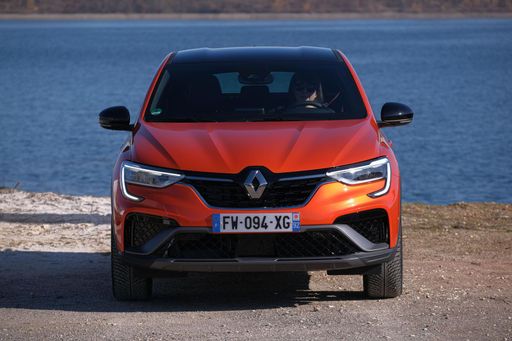
The Renault Arkana turns heads with its coupe-like roofline and SUV practicality, offering stylish presence without pretending to be a supercar. It feels composed and economical on everyday roads, making it a savvy choice for buyers who want flair and sensible running costs with a wink rather than a roar.

details

Nissan Qashqai

The Nissan Qashqai is a compact crossover that blends everyday practicality with a comfortable, composed driving experience and a smart, well finished interior. It feels sensible and versatile for city life and longer trips, appealing to buyers who want a reliable, low fuss family car.

details
Renault Arkana
Nissan Qashqai

Costs and Consumption

Price
28,500 - 31,900 £
Price
29,600 - 39,900 £
Consumption L/100km
4.7 L/100km
Consumption L/100km
4.3 - 6.8 L/100km
Consumption kWh/100km
-
Consumption kWh/100km
-
Electric Range
-
Electric Range
-
Battery Capacity
-
Battery Capacity
-
co2
106 g/km
co2
98 - 152 g/km
Fuel tank capacity
-
Fuel tank capacity
-

Dimensions and Body

Body Type
SUV
Body Type
SUV
Seats
5
Seats
5
Doors
-
Doors
-
Curb weight
1,510 kg
Curb weight
1,420 - 1,624 kg
Trunk capacity
-
Trunk capacity
479 - 504 L
Length
-
Length
-
Width
1,821 mm
Width
1,835 mm
Height
-
Height
-
Max trunk capacity
-
Max trunk capacity
-
Payload
451 kg
Payload
446 - 516 kg

Engine and Performance

Engine Type
Full Hybrid
Engine Type
Petrol MHEV, Full Hybrid
Transmission
Automatic
Transmission
Manuel, Automatic
Transmission Detail
Automatic Gearbox
Transmission Detail
Manual Gearbox, CVT, Reduction Gearbox
Drive Type
Front-Wheel Drive
Drive Type
Front-Wheel Drive, All-Wheel Drive
Power HP
143 HP
Power HP
158 - 205 HP
Acceleration 0-100km/h
10.8 s
Acceleration 0-100km/h
7.6 - 9.9 s
Max Speed
-
Max Speed
-
Torque
205 Nm
Torque
260 - 330 Nm
Number of Cylinders
4
Number of Cylinders
3 - 4
Power kW
105 kW
Power kW
116 - 151 kW
Engine capacity
1,598 cm3
Engine capacity
1,332 - 1,498 cm3

General

Model Year
2025
Model Year
2,025 - 2,026
CO2 Efficiency Class
C
CO2 Efficiency Class
E, C
Brand
Renault
Brand
Nissan
DriveDuel uses data analysis and artificial intelligence to evaluate vehicle data and create content. Content is regularly reviewed and improved. The displayed prices are estimates based on German list prices, adjusted to the respective country’s VAT. Country-specific registration taxes are not included. This information is not legally binding.