VS

Renault Captur vs Fiat 600 comparison

Compare performance (158 HP vs 156 HP), boot space and price (21,400 £ vs 21,000 £ ) at a glance. Find out which car is the better choice for you – Renault Captur or Fiat 600?

Renault Captur vs Fiat 600: Key differences

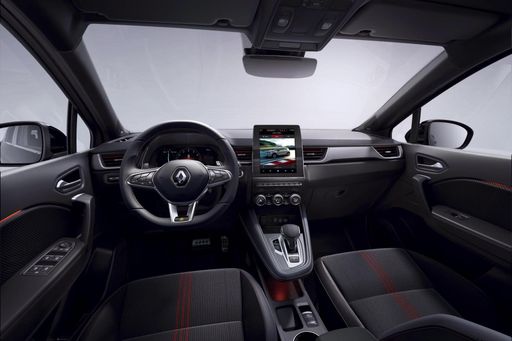
Renault Captur

4.8 (7 Reviews)
rate
  • barely more power
  • barely more efficient
  • barely more trunk space
details

Fiat 600

4.8 (3 Reviews)
rate
  • very slightly cheaper
  • very slightly quicker 0–100 km/h
  • barely lighter
details

All details on performance, efficiency, range and trunk space can be found in the technical comparison below – including user reviews for both models.

By Achim Sedelmaier

Captur

Fiat 600 vs Renault Captur: A Modern SUV Showdown

The SUV segment has been bustling with activity and innovation, catching the eye of both seasoned car aficionados and new drivers alike. Today, we are diving into a head-to-head comparison of two formidable contenders: the Fiat 600 and the Renault Captur. Both models bring a mix of traditional prowess and modern technological updates, making them appealing options in the increasingly competitive SUV market.

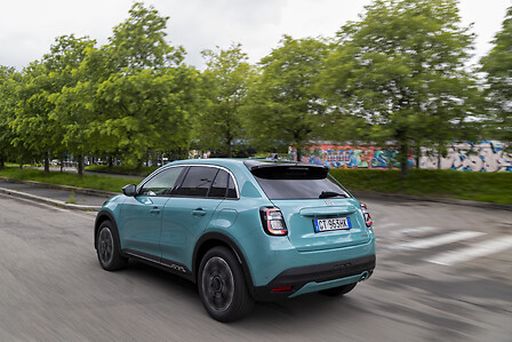
600

Engine Options and Performance

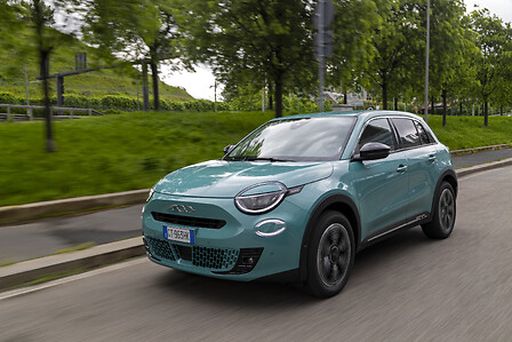
The Fiat 600 offers an intriguing balance of powertrain configurations, available in both petrol mild hybrid (MHEV) and electric variants. The petrol powertrain delivers up to 156 horsepower, capitalizing on a 1.2-liter, three-cylinder engine that offers a respectable torque range between 205 and 260 Nm. Acceleration is smooth, taking drivers from 0 to 100 km/h in just 8.5 to 10.5 seconds, depending on the variant. Those opting for electric can enjoy a 409-kilometer range, making it an attractive choice for eco-conscious drivers.

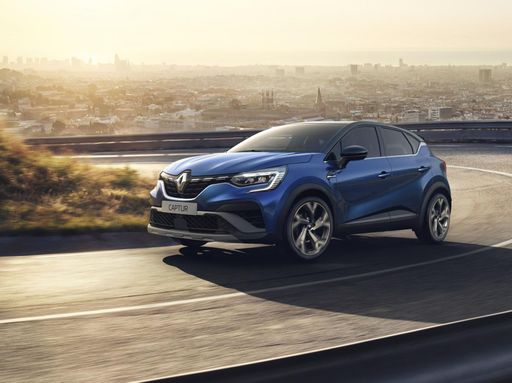
On the flip side, the Renault Captur presents a selection of engines, including full hybrid, petrol MHEV, LPG, and standard petrol variants, staggering up to 158 horsepower. This model relies mostly on a 1.6-liter engine, with torque maxing out at 270 Nm. Acceleration hits a sweet spot with competitive speeds from 0 to 100 km/h in 8.5 to 14.3 seconds, depending on the engine choice. Its range of engines allows a tailored driving experience with diverse fuel consumption patterns.


Captur

Transmission and Driving Dynamics

The Fiat 600 relies on a dual-clutch automatic transmission or a reduction gearbox for its electric models—showcasing modern transmission technology suited for ease of driving in urban settings. The standard front-wheel-drive configuration ensures stability and control on a variety of terrains.

Renault Captur offers flexibility with both manual and automatic transmission options, including a dual-clutch system for smoother gear shifts. The Captur maintains a similar front-wheel-drive set-up, focusing on offering a balanced driving experience across its diverse engine lineup.

600

Design and Practicality

When it comes to dimensions, the Fiat 600 stands at 4178 mm in length, offering a trunk space between 360 and 385 liters. Its payload capacity reaches up to 430 kg, making it an adaptable choice for everyday needs and short getaways. Standing at a height of 1525 mm, the Fiat 600 combines compact design with a robust SUV stance.

The Renault Captur edges slightly ahead in physical presence with a length of 4239 mm and a width of 1797 mm. Its trunk capacity varies from 326 to a generous 422 liters, ideal for family outings or larger cargo. The Captur's taller height at 1575 mm adds a bit more to the SUV appeal, providing ample headroom and passenger comfort.

Captur

Economy and Environmental Impact

Fiat 600's petrol variant records a fuel consumption of 4.8 L/100km, whereas the electric version consumes 15.1 kWh/100km, reflecting significant innovations in reducing emissions. The CO2 efficiency classes range between A to C, with its electric model achieving zero emissions.

The Renault Captur reflects its versatile engine lineup with fuel consumption figures ranging from 4.7 to 7.8 L/100km. Its CO2 emissions are rated from 106 to 139 g/km, accompanied by efficiency classes from C to D, offering a wide spectrum of environmental impacts depending on the choice of engine.

Conclusion

The Fiat 600 and Renault Captur are compelling options in the SUV market, each offering distinct advantages. Whether seeking hybrid innovation, pure electric efficiency, or multi-fuel versatility, these models present something for every driver, making the decision rest largely on individual needs and lifestyle preferences. For those prioritizing a future-oriented drive, the Fiat 600's electric variant shines, while the Renault Captur remains a versatile option for those valuing engine variety and pragmatic design. The choice ultimately hinges on how these features align with one's driving demands and ecological considerations.

Here’s where it gets real: The technical differences in detail

Captur

Costs and Efficiency:

When it comes to price and running costs, the biggest differences usually appear. This is often where you see which car fits your budget better in the long run.

Fiat 600 is very slightly cheaper – starting at 21,000 £ , while the Renault Captur costs 21,400 £ . That’s a price difference of around 394 £.

Fuel consumption also shows a difference: the Renault Captur uses 4.4 L/100km and is barely more efficient than the Fiat 600 with 4.8 L/100km. The difference is about 0.4 L/100km.

600

Engine and Performance:

Power, torque and acceleration are the classic benchmarks for car enthusiasts – and here, some clear differences start to show.

When it comes to engine power, the Renault Captur offers barely more power – delivering 158 HP compared to 156 HP. That’s roughly 2 HP more horsepower.

When accelerating from 0 to 100 km/h, the Fiat 600 is very slightly quicker – completing the sprint in 8.5 s, while the Renault Captur takes 8.9 s. That’s about 0.4 s quicker.

There’s also a difference in torque: the Renault Captur delivers very slightly more torque with 265 Nm compared to 260 Nm. That’s about 5 Nm more.

Captur

Space and Everyday Use:

Beyond pure performance, interior space and usability matter most in daily life. This is where you see which car is more practical and versatile.

Both vehicles offer seating for 5 people.

In terms of curb weight, Fiat 600 is barely lighter – 1,265 kg compared to 1,323 kg. The difference is around 58 kg.

Looking at boot space, the Renault Captur offers barely more boot space – 422 L compared to 385 L. That’s a difference of about 37 L.

When it comes to payload, the Fiat 600 carries slightly more – 517 kg compared to 453 kg. That’s a difference of about 64 kg.

Who wins the race in the data check?

The Fiat 600 stands out in the key areas in the objective data comparison.
This result only shows which model scores more points on paper – not which of the two cars feels right for you.

from £21,000
600

Fiat 600

  • Engine Type Petrol MHEV, Electric, Petrol
  • Transmission Automatic, Manuel
  • Drive Type Front-Wheel Drive
  • Power HP 100 - 156 HP
  • Consumption L/100km 4.8 - 5.7 L/100km
  • Consumption kWh/100km 15.1 kWh/100km
  • Electric Range 409 km
Renault Captur
Fiat 600

Costs and Consumption

View detailed analysis

Engine and Performance

View detailed analysis

Dimensions and Body

View detailed analysis

Renault Captur

The Renault Captur is a stylish and practical compact crossover that combines a high seating position and easy manoeuvrability with a comfortable, well‑equipped cabin. Its flexible interior layout and modern infotainment make it a sensible, polished choice for city drivers and small families.

details

Fiat 600

The Fiat 600 is small, cheeky and utterly charming, a pocket-sized Italian that packs more personality than its size suggests. Ideal for city buyers who want fuss-free motoring with a playful driving character, it puts smiles ahead of spreadsheets.

details
Renault Captur
Fiat 600

Costs and Consumption

Price
21,400 - 28,600 £
Price
21,000 - 31,300 £
Consumption L/100km
4.4 - 6 L/100km
Consumption L/100km
4.8 - 5.7 L/100km
Consumption kWh/100km
-
Consumption kWh/100km
15.1 kWh/100km
Electric Range
-
Electric Range
409 km
Battery Capacity
-
Battery Capacity
-
co2
100 - 137 g/km
co2
0 - 129 g/km
Fuel tank capacity
-
Fuel tank capacity
-

Dimensions and Body

Body Type
SUV
Body Type
SUV
Seats
5
Seats
5
Doors
-
Doors
-
Curb weight
1,323 - 1,441 kg
Curb weight
1,265 - 1,595 kg
Trunk capacity
326 - 422 L
Trunk capacity
360 - 385 L
Length
-
Length
-
Width
1,797 mm
Width
1,779 mm
Height
-
Height
-
Max trunk capacity
-
Max trunk capacity
-
Payload
447 - 453 kg
Payload
427 - 517 kg

Engine and Performance

Engine Type
Full Hybrid, Petrol, Petrol MHEV
Engine Type
Petrol MHEV, Electric, Petrol
Transmission
Automatic, Manuel
Transmission
Automatic, Manuel
Transmission Detail
Automatic Gearbox, Manual Gearbox, Dual-Clutch Automatic
Transmission Detail
Dual-Clutch Automatic, Reduction Gearbox, Manual Gearbox
Drive Type
Front-Wheel Drive
Drive Type
Front-Wheel Drive
Power HP
115 - 158 HP
Power HP
100 - 156 HP
Acceleration 0-100km/h
8.9 - 12.3 s
Acceleration 0-100km/h
8.5 - 10.6 s
Max Speed
-
Max Speed
-
Torque
160 - 265 Nm
Torque
205 - 260 Nm
Number of Cylinders
3 - 4
Number of Cylinders
3
Power kW
84 - 116 kW
Power kW
74 - 115 kW
Engine capacity
1,199 - 1,789 cm3
Engine capacity
1,199 cm3

General

Model Year
2025
Model Year
2,025 - 2,026
CO2 Efficiency Class
C, D, E
CO2 Efficiency Class
C, A, D
Brand
Renault
Brand
Fiat
DriveDuel uses data analysis and artificial intelligence to evaluate vehicle data and create content. Content is regularly reviewed and improved. The displayed prices are estimates based on German list prices, adjusted to the respective country’s VAT. Country-specific registration taxes are not included. This information is not legally binding.