VS

Renault Captur vs Hyundai Kona comparison

Compare performance (158 HP vs 218 HP), boot space and price (21,100 £ vs 23,100 £ ) at a glance. Find out which car is the better choice for you – Renault Captur or Hyundai Kona?

Renault Captur vs Hyundai Kona: Key differences

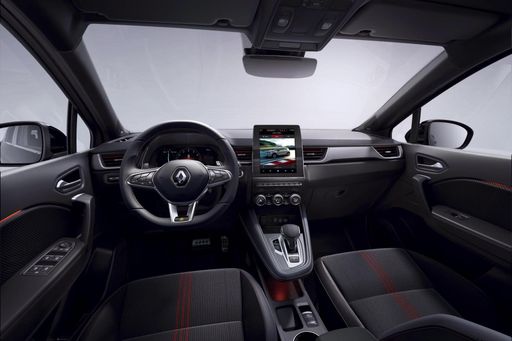
Renault Captur

4.8 (5 Reviews)
rate
  • only slightly cheaper
  • very slightly more efficient
  • barely lighter

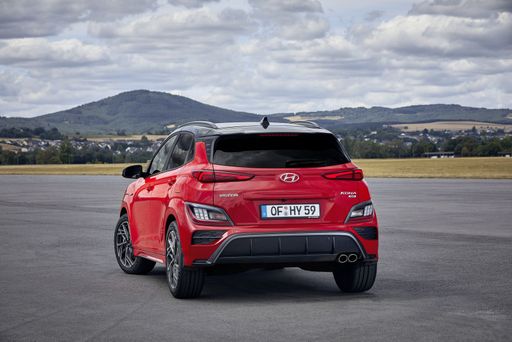
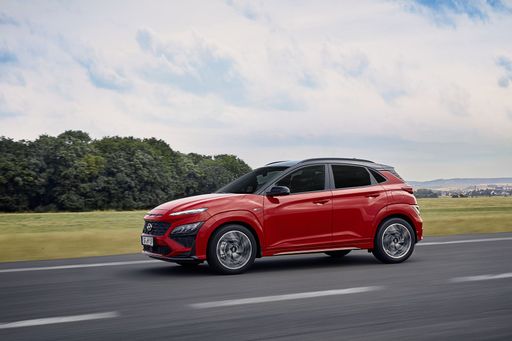
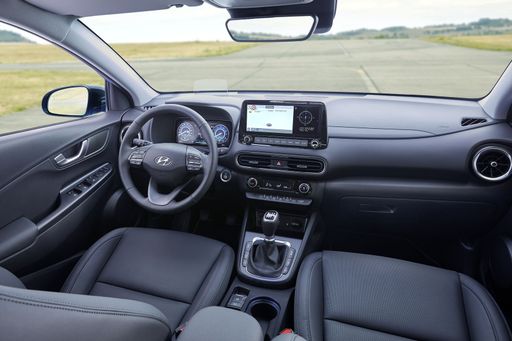
Hyundai Kona

5 (1 Reviews)
rate
  • noticeably more power
  • a bit quicker 0–100 km/h
  • barely more trunk space

All details on performance, efficiency, range and trunk space can be found in the technical comparison below – including user reviews for both models.

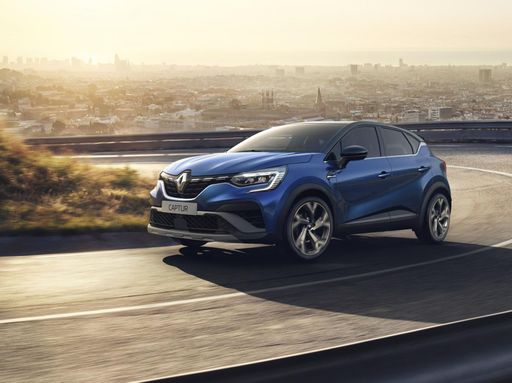
Captur

Compact SUVs Clash: Hyundai Kona vs Renault Captur

In the ever-evolving world of compact SUVs, the 2024 Hyundai Kona and the Renault Captur stand out as dynamic contenders. Both offer a blend of style, innovation, and technology, but how do they stack up against each other in terms of technical prowess and user preferences? Let's dive into the finer details.

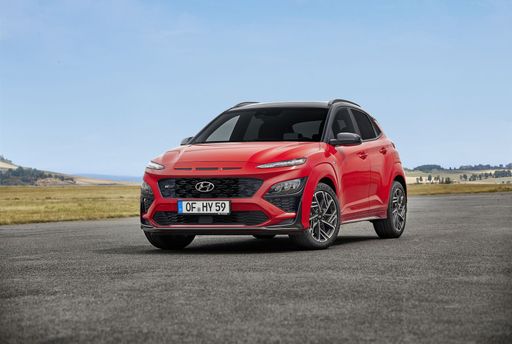
Kona

Powertrain Options: A Diverse Approach

Hyundai offers the Kona with multiple powertrains including petrol, a full hybrid, and electric options. The Kona's power output ranges from a modest 100 HP to a robust 218 HP, catering to a wide spectrum of driving preferences. The electric variant boasts an impressive range of up to 514 km, making it a viable option for eco-conscious drivers.

In contrast, the Renault Captur presents a more limited, yet practical range of engine options. The Captur is available with full hybrid, petrol mild hybrid (MHEV), LPG, and pure petrol offerings, with power outputs extending from 91 HP to 158 HP. While it lacks an all-electric variant, its 143 HP full hybrid offers competitive fuel efficiency at just 4.7 L/100km.

Captur

Performance and Handling

The performance metrics for both models reveal an intriguing contest. The Kona accelerates from 0-100 km/h in as fast as 7.8 seconds, supported by a range of transmission options like the manual gearbox, dual-clutch, and reduction gearbox, depending on the model. Its top speed stretches up to 208 km/h, showcasing its ability to satisfy thrill-seekers.

Renault Captur also performs admirably, with a top speed of 180 km/h and an acceleration capability of 8.5 seconds to 100 km/h. Its transmission offerings include manual and dual-clutch automatic options, promising smooth gear shifts and robust handling.

Kona

Dimensions and Practicality

Size and practicality are crucial in the compact SUV category. Measuring 4385 mm in length, the Kona provides a trunk capacity of 466 liters, making it a solid choice for family outings or road trips. Consistent with its SUV profile, it offers a choice between front-wheel drive and all-wheel-drive configurations.

The Renault Captur is slightly shorter at 4239 mm, offering a maximum of 422 liters in boot space. It features front-wheel drive across all models, reflecting its urban-oriented design. Despite its compact frame, the Captur provides sufficient room for passengers and their cargo.

Captur

Efficiency and Environmental Impact

For environmentally minded drivers, the Kona's electric version delivers zero emissions, while its hybrid model promises excellent fuel economy at 4.5 L/100km. The diverse CO2 efficiency classes from A to E demonstrate Hyundai's commitment to offering sustainability without sacrificing choice.

Renault Captur, with its hybrid and mild hybrid options, maintains commendable efficiency. The lowest CO2 emission rate stands at 106 g/km for its hybrid variant, placing it in class C for CO2 efficiency. This reflects Renault's efforts to harmonize performance with greener mobility.

Kona

Conclusion: A Question of Preferences

Ultimately, the choice between the Hyundai Kona and Renault Captur boils down to individual preferences and priorities. The Kona shines with its electric prowess and versatile powertrain options, catering to both thrill-seekers and environmentalists. The Captur, with its strong hybrid performance and urban suitability, appeals to those seeking efficiency and style without switching to an all-electric vehicle.

For consumers seeking cutting-edge technology paired with dynamic performance, both vehicles present compelling cases, making the Kona and the Captur worthy contenders in the compact SUV arena.

Here’s where it gets real: The technical differences in detail

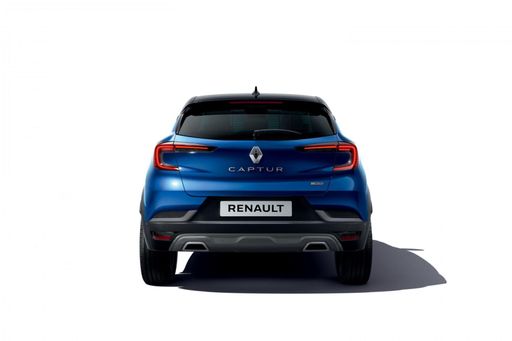
Captur

Costs and Efficiency:

Price and efficiency are often the first things buyers look at. Here it becomes clear which model has the long-term edge – whether at the pump, the plug, or in purchase price.

Renault Captur is only slightly cheaper – starting at 21,100 £ , while the Hyundai Kona costs 23,100 £ . That’s a price difference of around 1,929 £.

Fuel consumption also shows a difference: the Renault Captur uses 4.4 L/100km and is very slightly more efficient than the Hyundai Kona with 4.6 L/100km. The difference is about 0.2 L/100km.

Kona

Engine and Performance:

Power, torque and acceleration say a lot about how a car feels on the road. This is where you see which model delivers more driving dynamics.

When it comes to engine power, the Hyundai Kona offers noticeably more power – delivering 218 HP compared to 158 HP. That’s roughly 60 HP more horsepower.

When accelerating from 0 to 100 km/h, the Hyundai Kona is a bit quicker – completing the sprint in 7.8 s, while the Renault Captur takes 8.9 s. That’s about 1.1 s quicker.

Looking at top speed, the Renault Captur is barely faster – reaching 180 km/h, while the Hyundai Kona tops out at 172 km/h. The difference is around 8 km/h.

Both models offer the same torque – 265 Nm.

Captur

Space and Everyday Use:

Beyond pure performance, interior space and usability matter most in daily life. This is where you see which car is more practical and versatile.

Both vehicles offer seating for 5 people.

In terms of curb weight, Renault Captur is barely lighter – 1,323 kg compared to 1,370 kg. The difference is around 47 kg.

Looking at boot space, the Hyundai Kona offers barely more boot space – 466 L compared to 422 L. That’s a difference of about 44 L.

For maximum load capacity, the Renault Captur offers barely more capacity – up to 1,363 L, about 63 L more than the Hyundai Kona.

When it comes to payload, the Hyundai Kona carries barely more – 490 kg compared to 453 kg. That’s a difference of about 37 kg.

Who wins the race in the data check?

The Hyundai Kona is decisively ahead in the objective data comparison.
This result only shows which model scores more points on paper – not which of the two cars feels right for you.

from £23,100
Kona

Hyundai Kona

  • Engine Type : Electric, Petrol, Full Hybrid
  • Transmission : Automatic, Manuel
  • Drive Type : Front-Wheel Drive, All-Wheel Drive
  • Power HP : 115 - 218 HP
  • Consumption L/100km : 4.6 - 7 L/100km
  • Consumption kWh/100km : 14.6 - 16.8 kWh/100km
  • Electric Range : 377 - 514 km
Renault Captur
Hyundai Kona

Costs and Consumption

View detailed analysis

Engine and Performance

View detailed analysis

Dimensions and Body

View detailed analysis

Renault Captur

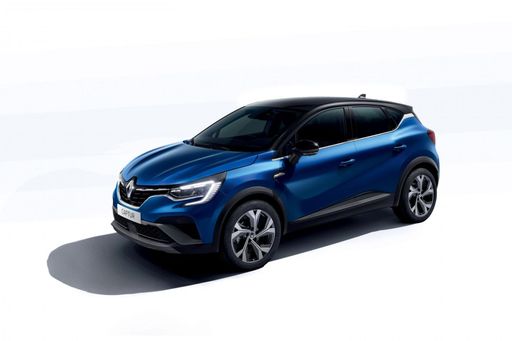
The Renault Captur is a cheeky little crossover that pairs city-friendly agility with a roomy, well-thought-out cabin and enough style to turn heads at the lights. It’s a sensible choice for buyers who want practical versatility and a dash of personality on their daily drives, without taking itself too seriously.

details

Hyundai Kona

The Hyundai Kona wears its personality on the outside with bold styling and sprightly handling that turns city driving into something a little more fun than a commute. It blends practical space, modern tech and sensible running costs into a compact, stylish package — a smart pick if you want flair without paying luxury prices.

details
Renault Captur
Hyundai Kona

Costs and Consumption

Price
21,100 - 28,400 £
Price
23,100 - 41,600 £
Consumption L/100km
4.4 - 6 L/100km
Consumption L/100km
4.6 - 7 L/100km
Consumption kWh/100km
-
Consumption kWh/100km
14.6 - 16.8 kWh/100km
Electric Range
-
Electric Range
377 - 514 km
Battery Capacity
-
Battery Capacity
48.4 - 65.4 kWh
co2
100 - 137 g/km
co2
0 - 163 g/km
Fuel tank capacity
48 L
Fuel tank capacity
-

Dimensions and Body

Body Type
SUV
Body Type
SUV
Seats
5
Seats
5
Doors
5
Doors
5
Curb weight
1,323 - 1,441 kg
Curb weight
1,370 - 1,773 kg
Trunk capacity
326 - 422 L
Trunk capacity
466 L
Length
4,239 mm
Length
4,355 - 4,385 mm
Width
1,797 mm
Width
1,825 mm
Height
1,575 mm
Height
1,580 mm
Max trunk capacity
1,363 L
Max trunk capacity
1,300 L
Payload
447 - 453 kg
Payload
420 - 490 kg

Engine and Performance

Engine Type
Full Hybrid, Petrol, Petrol MHEV
Engine Type
Electric, Petrol, Full Hybrid
Transmission
Automatic, Manuel
Transmission
Automatic, Manuel
Transmission Detail
Automatic Gearbox, Manual Gearbox, Dual-Clutch Automatic
Transmission Detail
Reduction Gearbox, Manual Gearbox, Dual-Clutch Automatic
Drive Type
Front-Wheel Drive
Drive Type
Front-Wheel Drive, All-Wheel Drive
Power HP
115 - 158 HP
Power HP
115 - 218 HP
Acceleration 0-100km/h
8.9 - 12.3 s
Acceleration 0-100km/h
7.8 - 11.9 s
Max Speed
180 km/h
Max Speed
162 - 172 km/h
Torque
160 - 265 Nm
Torque
200 - 265 Nm
Number of Cylinders
3 - 4
Number of Cylinders
3 - 4
Power kW
84 - 116 kW
Power kW
85 - 160 kW
Engine capacity
1,199 - 1,789 cm3
Engine capacity
998 - 1,598 cm3

General

Model Year
2,025
Model Year
2,024 - 2,025
CO2 Efficiency Class
C, D, E
CO2 Efficiency Class
A, D, C, E, F
Brand
Renault
Brand
Hyundai
DriveDuel uses data analysis and artificial intelligence to evaluate vehicle data and create content. Content is regularly reviewed and improved. The displayed prices are estimates based on German list prices, adjusted to the respective country’s VAT. Country-specific registration taxes are not included. This information is not legally binding.