VS

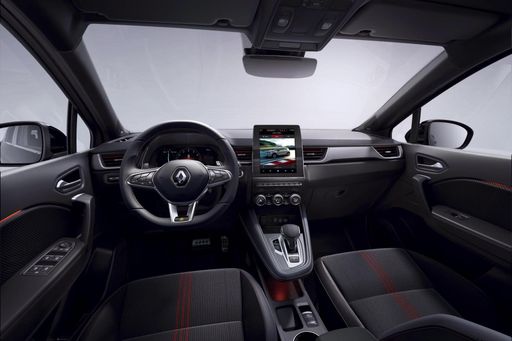
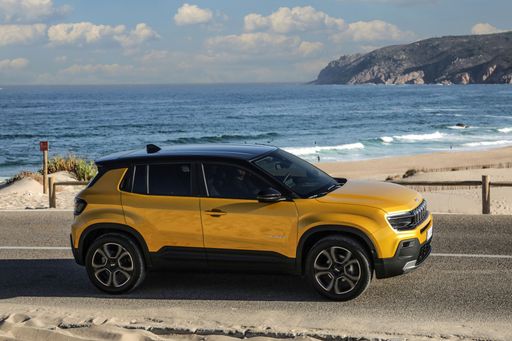
Renault Captur vs Jeep Avenger comparison

Compare performance (158 HP vs 156 HP), boot space and price (21,100 £ vs 22,500 £ ) at a glance. Find out which car is the better choice for you – Renault Captur or Jeep Avenger?

Renault Captur vs Jeep Avenger: Key differences

Renault Captur

4.8 (5 Reviews)
rate
  • marginally cheaper
  • very slightly more power
  • a bit more efficient
  • marginally quicker 0–100 km/h
  • very slightly more trunk space

Jeep Avenger

4.2 (4 Reviews)
rate
  • moderately lighter

All details on performance, efficiency, range and trunk space can be found in the technical comparison below – including user reviews for both models.

Captur

Jeep Avenger vs Renault Captur: Two Compact SUVs Battle for Supremacy

In the competitive world of compact SUVs, the Jeep Avenger and Renault Captur stand out as formidable contenders, each bringing unique offerings to the table. As consumer preferences shift towards sustainability and efficiency without compromising on style and performance, these vehicles cater to modern demands with a mix of traditional and innovative technology. Let's explore how these two SUVs stack up against each other in terms of design, performance, and technology.

Avenger

Powertrain Options and Performance

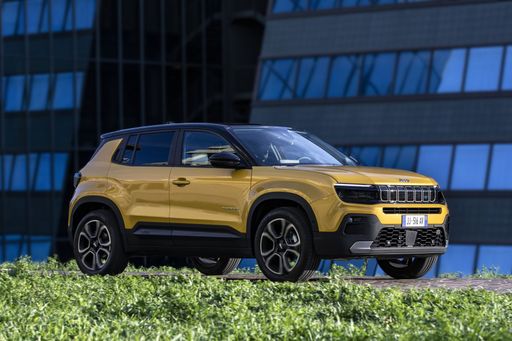
The Jeep Avenger offers a diverse range of powertrains, making it a versatile option for various driving preferences. Customers can choose from electric, petrol MHEV, or traditional petrol engines. The electric variant delivers an impressive 156 HP and a torque of 260 Nm, allowing it to accelerate from 0 to 100 km/h in just 9 seconds. With an electric range of 400 km and a consumption rate of 15.4 kWh/100 km, the Avenger positions itself as a strong candidate in the electric SUV market.

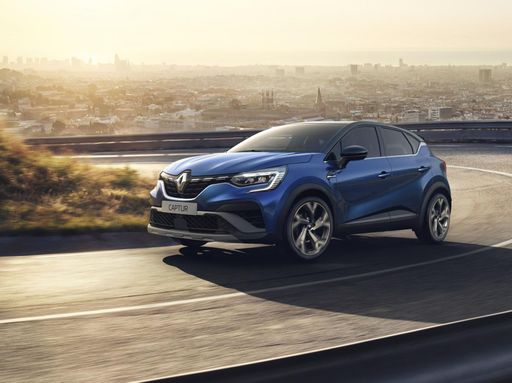
Meanwhile, the Renault Captur primarily focuses on petrol and full hybrid options. The hybrid variant provides a balanced 143 HP and a respectable torque of 205 Nm. It accelerates from 0 to 100 km/h in 9.9 seconds, with a fuel consumption of 4.7 L/100 km, presenting an efficient solution for those seeking hybrid technology.

Captur

Exterior Dimensions and Design

Striking a balance between compactness and practicality, both vehicles feature a stylish design with a utility-driven approach. The Jeep Avenger measures 4084 mm in length, 1776 mm in width, and stands at a height of 1528 mm, embodying the essence of a compact SUV while maintaining Jeep's quintessential rugged aesthetic.

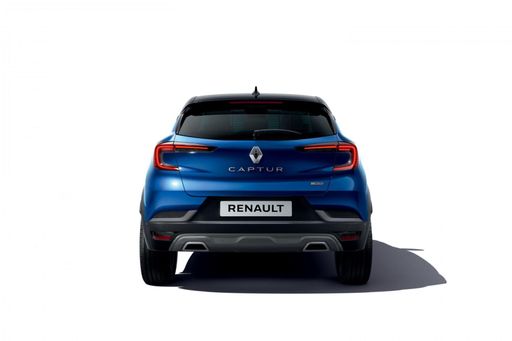
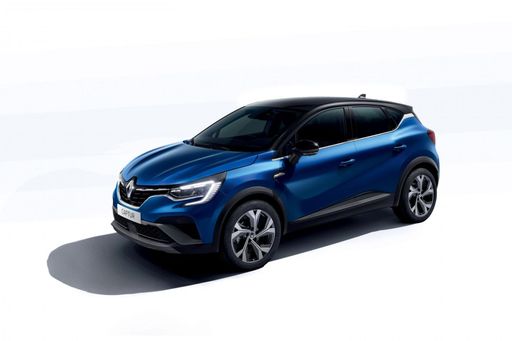
On the other hand, the Renault Captur offers slightly larger dimensions with a length of 4239 mm, a width of 1797 mm, and a height of 1575 mm, resulting in a bit more room for family adventures and cargo. Despite the increased size, the Captur maintains a sophisticated urban design, appealing to families and city-dwellers alike.

Avenger

Interior and Cargo Capacity

In terms of practicality, both SUVs can comfortably seat five passengers. The Jeep Avenger offers trunk capacities ranging between 325 to 380 liters, depending on the configuration. The Renault Captur, however, provides a more generous cargo space of up to 422 liters, which is advantageous for those requiring extra room on longer journeys.

Captur

Technology and Safety

Modern SUVs are expected to integrate the latest technology, and neither the Jeep Avenger nor the Renault Captur disappoints in this regard. Both vehicles come equipped with advanced safety and driver-assist features that are part of the standard package, ensuring a comfortable and secure driving experience.

The Captur's focus on technology extends into its infotainment, offering seamless connectivity options that incorporate the latest advancements in vehicle-user interaction. Meanwhile, the Jeep Avenger prioritizes connectivity and entertainment with a user-friendly interface, keeping passengers engaged on the road.

Avenger

Environmental Considerations

In the era of environmental awareness, both the Jeep Avenger and Renault Captur achieve noteworthy CO2 efficiency. The Avenger leads with an efficiency class ranging from A to C, largely due to its fully electric variant that boasts zero emissions. The Renault Captur also performs admirably, offering an efficiency class rated between C and D, emphasizing its commitment to reducing its carbon footprint through hybrid powertrains.

Captur

Conclusion: Choosing Your Ideal SUV

Choosing between the Jeep Avenger and the Renault Captur ultimately depends on the driver's priorities. If sustainability and cutting-edge electric performance are top of mind, the Jeep Avenger emerges as a strong choice with its electric variant. Conversely, if a balance between hybrid efficiency and greater cargo space is key, the Renault Captur may be better suited to those needs.

Whether prioritizing futuristic electric progress or hybrid flexibility, potential buyers will find capable companions in both the Jeep Avenger and Renault Captur—tailored to meet the demands of today's automotive landscape.

Here’s where it gets real: The technical differences in detail

Captur

Costs and Efficiency:

Price and efficiency are key factors when choosing a car – and this is often where the real differences emerge.

Renault Captur is marginally cheaper – starting at 21,100 £ , while the Jeep Avenger costs 22,500 £ . That’s a price difference of around 1,414 £.

Fuel consumption also shows a difference: the Renault Captur uses 4.4 L/100km and is a bit more efficient than the Jeep Avenger with 4.9 L/100km. The difference is about 0.5 L/100km.

Avenger

Engine and Performance:

Power, torque and acceleration say a lot about how a car feels on the road. This is where you see which model delivers more driving dynamics.

When it comes to engine power, the Renault Captur offers very slightly more power – delivering 158 HP compared to 156 HP. That’s roughly 2 HP more horsepower.

When accelerating from 0 to 100 km/h, the Renault Captur is marginally quicker – completing the sprint in 8.9 s, while the Jeep Avenger takes 9 s. That’s about 0.1 s quicker.

Looking at top speed, the Jeep Avenger is very slightly faster – reaching 194 km/h, while the Renault Captur tops out at 180 km/h. The difference is around 14 km/h.

There’s also a difference in torque: the Renault Captur delivers only slightly more torque with 265 Nm compared to 260 Nm. That’s about 5 Nm more.

Captur

Space and Everyday Use:

Whether family car or daily driver – which one offers more room, flexibility and comfort?

Both vehicles offer seating for 5 people.

In terms of curb weight, Jeep Avenger is moderately lighter – 1,180 kg compared to 1,323 kg. The difference is around 143 kg.

Looking at boot space, the Renault Captur offers very slightly more boot space – 422 L compared to 380 L. That’s a difference of about 42 L.

For maximum load capacity, the Renault Captur offers only slightly more capacity – up to 1,363 L, about 86 L more than the Jeep Avenger.

When it comes to payload, the Jeep Avenger carries marginally more – 502 kg compared to 453 kg. That’s a difference of about 49 kg.

Who wins the race in the data check?

The Jeep Avenger shows a few small advantages in the objective data comparison.
This result only shows which model scores more points on paper – not which of the two cars feels right for you.

from £22,500
Avenger

Jeep Avenger

  • Engine Type : Electric, Petrol MHEV, Petrol
  • Transmission : Automatic, Manuel
  • Drive Type : Front-Wheel Drive, All-Wheel Drive
  • Power HP : 100 - 156 HP
  • Consumption L/100km : 4.9 - 5.7 L/100km
  • Consumption kWh/100km : 15.5 kWh/100km
  • Electric Range : 400 km
Renault Captur
Jeep Avenger

Costs and Consumption

View detailed analysis

Engine and Performance

View detailed analysis

Dimensions and Body

View detailed analysis

Renault Captur

The Renault Captur is a cheeky little crossover that pairs city-friendly agility with a roomy, well-thought-out cabin and enough style to turn heads at the lights. It’s a sensible choice for buyers who want practical versatility and a dash of personality on their daily drives, without taking itself too seriously.

details

Jeep Avenger

The Jeep Avenger shrinks Jeep's boxy, adventurous styling into a city-friendly electric crossover that looks just as at home on tight streets as it does on muddy weekend lanes. It's a savvy pick for drivers who want go-anywhere attitude without the truck-size ego — practical inside, lively around town and ready to tackle a bit of rough stuff when the mood strikes.

details
Renault Captur
Jeep Avenger

Costs and Consumption

Price
21,100 - 28,400 £
Price
22,500 - 36,900 £
Consumption L/100km
4.4 - 6 L/100km
Consumption L/100km
4.9 - 5.7 L/100km
Consumption kWh/100km
-
Consumption kWh/100km
15.5 kWh/100km
Electric Range
-
Electric Range
400 km
Battery Capacity
-
Battery Capacity
51 kWh
co2
100 - 137 g/km
co2
0 - 129 g/km
Fuel tank capacity
48 L
Fuel tank capacity
44 L

Dimensions and Body

Body Type
SUV
Body Type
SUV
Seats
5
Seats
5
Doors
5
Doors
5
Curb weight
1,323 - 1,441 kg
Curb weight
1,180 - 1,520 kg
Trunk capacity
326 - 422 L
Trunk capacity
325 - 380 L
Length
4,239 mm
Length
4,084 - 4,088 mm
Width
1,797 mm
Width
1,776 mm
Height
1,575 mm
Height
1,527 - 1,541 mm
Max trunk capacity
1,363 L
Max trunk capacity
1,218 - 1,277 L
Payload
447 - 453 kg
Payload
494 - 502 kg

Engine and Performance

Engine Type
Full Hybrid, Petrol, Petrol MHEV
Engine Type
Electric, Petrol MHEV, Petrol
Transmission
Automatic, Manuel
Transmission
Automatic, Manuel
Transmission Detail
Automatic Gearbox, Manual Gearbox, Dual-Clutch Automatic
Transmission Detail
Reduction Gearbox, Dual-Clutch Automatic, Manual Gearbox
Drive Type
Front-Wheel Drive
Drive Type
Front-Wheel Drive, All-Wheel Drive
Power HP
115 - 158 HP
Power HP
100 - 156 HP
Acceleration 0-100km/h
8.9 - 12.3 s
Acceleration 0-100km/h
9 - 10.6 s
Max Speed
180 km/h
Max Speed
150 - 194 km/h
Torque
160 - 265 Nm
Torque
205 - 260 Nm
Number of Cylinders
3 - 4
Number of Cylinders
3
Power kW
84 - 116 kW
Power kW
74 - 115 kW
Engine capacity
1,199 - 1,789 cm3
Engine capacity
1,199 cm3

General

Model Year
2,025
Model Year
2,023 - 2,026
CO2 Efficiency Class
C, D, E
CO2 Efficiency Class
A, C, D
Brand
Renault
Brand
Jeep
DriveDuel uses data analysis and artificial intelligence to evaluate vehicle data and create content. Content is regularly reviewed and improved. The displayed prices are estimates based on German list prices, adjusted to the respective country’s VAT. Country-specific registration taxes are not included. This information is not legally binding.