VS

Renault Captur vs Nissan Juke comparison

Compare performance (158 HP vs 143 HP), boot space and price (21,100 £ vs 21,400 £ ) at a glance. Find out which car is the better choice for you – Renault Captur or Nissan Juke?

Renault Captur vs Nissan Juke: Key differences

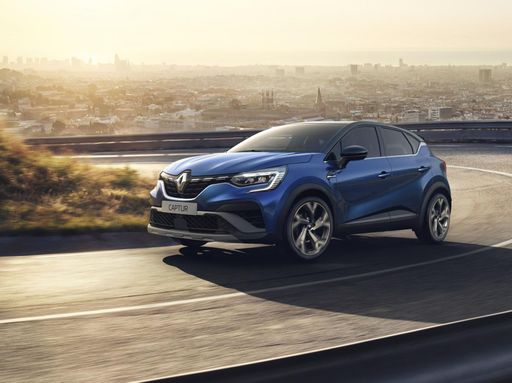
Renault Captur

4.8 (5 Reviews)
rate
  • very slightly cheaper
  • barely more power
  • marginally more efficient
  • slightly quicker 0–100 km/h

Nissan Juke

5 (1 Reviews)
rate
  • marginally lighter

All details on performance, efficiency, range and trunk space can be found in the technical comparison below – including user reviews for both models.

Captur

When it comes to compact SUVs, the Nissan Juke and Renault Captur are two standout contenders that have captured the hearts of automotive enthusiasts worldwide. Both vehicles embody a unique blend of style, technology, and performance, making them popular choices in their segment for 2024. In this article, we explore the key technical aspects, innovations, and features that set these two models apart.

Juke

Design and Dimensions

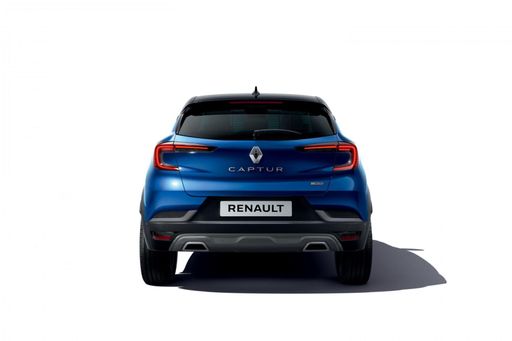
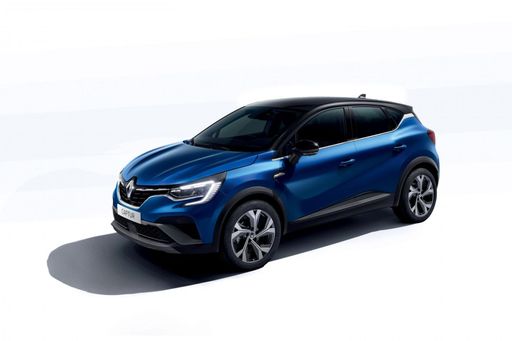
Both the Nissan Juke and Renault Captur showcase eye-catching designs that cater to a younger audience. The Juke measures 4210 mm in length, 1800 mm in width, and has a height of 1593 mm, giving it a robust and sporty stance. Meanwhile, the Captur is slightly longer at 4239 mm, with a width of 1797 mm and a height of 1575 mm, creating a more streamlined silhouette.

Both vehicles feature five doors and comfortably seat five passengers. The Juke boasts a trunk capacity of 422 liters, which is slightly more than the Captur's maximum of 422 liters, making it versatile for everyday use.

Captur

Engine Variants and Performance

The Nissan Juke offers a range of engine options, including a 1.0L three-cylinder and a 1.6L four-cylinder engine, delivering outputs of 114 HP and up to 143 HP. This model combines performance and efficiency, with fuel consumption figures ranging from 4.7 to 6 L/100 km. Additionally, the Juke can accelerate from 0-100 km/h in as little as 10.1 seconds, ensuring a spirited driving experience.

On the other hand, the Renault Captur presents a diverse lineup of engines, including full hybrid, petrol MHEV, LPG, and petrol options. With power outputs ranging from 91 HP to 158 HP, the Captur provides a versatile driving experience. Its acceleration is impressive, with the quickest variant reaching 0-100 km/h in just 8.5 seconds, thanks to its 1.3L engine variant. Fuel consumption can be quite competitive, hovering between 4.7 to 7.8 L/100 km, depending on the engine choice, providing efficiency for urban and highway driving.

Juke

Transmission and Drive

Both models offer a choice of manual or automatic transmission options, with the Juke featuring dual-clutch automatic gearboxes for smoother shifts. It has front-wheel drive as standard, ensuring nimble handling and a responsive driving experience.

The Captur also provides front-wheel drive, with choices like a manual gearbox and dual-clutch automatic options. This model’s enhances driving convenience and efficiency, especially in urban environments, where stop-and-go traffic is common.

Captur

Technology and Innovations

The Nissan Juke is equipped with an array of innovative features, including advanced safety systems, a user-friendly infotainment setup, and connectivity options like Apple CarPlay and Android Auto. Its interior is designed with modern aesthetics, featuring high-quality materials and ergonomically placed controls.

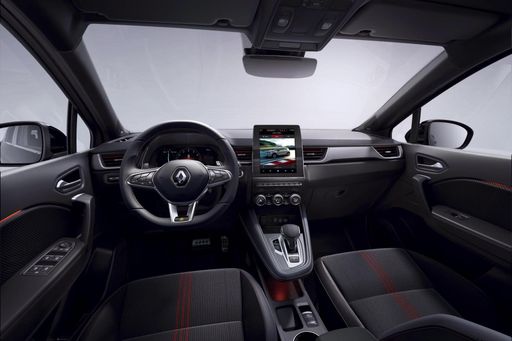
The Renault Captur does not lag in technology either, boasting a state-of-the-art multimedia system, customizable digital dashboard, and various driver assistance features. Notable innovations include enhanced driver safety features and impressive infotainment capabilities to keep passengers entertained and informed.

Juke

Conclusion: Which Should You Choose?

In conclusion, both the Nissan Juke and Renault Captur present compelling options for those in the market for a compact SUV in 2024. If you prioritize performance and sporty aesthetics, the Juke might be your ideal choice. However, if efficiency and a versatile engine lineup are more in your wheelhouse, the Captur could better suit your needs.

In the end, the best choice often depends on personal preferences and specific requirements. Take both for a test drive to experience their distinctive features and technologies firsthand!

Here’s where it gets real: The technical differences in detail

Captur

Costs and Efficiency:

Looking at overall running costs, both models reveal some interesting differences in everyday economy.

Renault Captur is very slightly cheaper – starting at 21,100 £ , while the Nissan Juke costs 21,400 £ . That’s a price difference of around 257 £.

Fuel consumption also shows a difference: the Renault Captur uses 4.4 L/100km and is marginally more efficient than the Nissan Juke with 4.7 L/100km. The difference is about 0.3 L/100km.

Juke

Engine and Performance:

Under the bonnet, it becomes clear which model is tuned for sportiness and which one takes the lead when you hit the accelerator.

When it comes to engine power, the Renault Captur offers barely more power – delivering 158 HP compared to 143 HP. That’s roughly 15 HP more horsepower.

When accelerating from 0 to 100 km/h, the Renault Captur is slightly quicker – completing the sprint in 8.9 s, while the Nissan Juke takes 10.1 s. That’s about 1.2 s quicker.

There’s also a difference in torque: the Renault Captur delivers visibly more torque with 265 Nm compared to 200 Nm. That’s about 65 Nm more.

Captur

Space and Everyday Use:

Cabin size, boot volume and payload all play a role in everyday practicality. Here, comfort and flexibility make the difference.

Both vehicles offer seating for 5 people.

In terms of curb weight, Nissan Juke is marginally lighter – 1,274 kg compared to 1,323 kg. The difference is around 49 kg.

Boot capacity is identical – both offer 422 L of storage.

When it comes to payload, the Renault Captur carries only slightly more – 453 kg compared to 427 kg. That’s a difference of about 26 kg.

Who wins the race in the data check?

The Renault Captur is clearly superior overall in the objective data comparison.
This result only shows which model scores more points on paper – not which of the two cars feels right for you.

from £21,100
Captur

Renault Captur

  • Engine Type : Full Hybrid, Petrol, Petrol MHEV
  • Transmission : Automatic, Manuel
  • Drive Type : Front-Wheel Drive
  • Power HP : 115 - 158 HP
  • Consumption L/100km : 4.4 - 6 L/100km
Renault Captur
Nissan Juke

Costs and Consumption

View detailed analysis

Engine and Performance

View detailed analysis

Dimensions and Body

View detailed analysis

Renault Captur

The Renault Captur is a cheeky little crossover that pairs city-friendly agility with a roomy, well-thought-out cabin and enough style to turn heads at the lights. It’s a sensible choice for buyers who want practical versatility and a dash of personality on their daily drives, without taking itself too seriously.

details

Nissan Juke

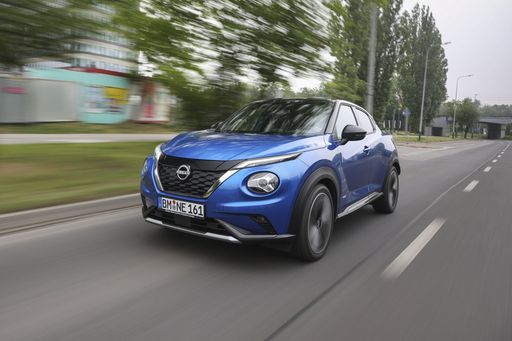
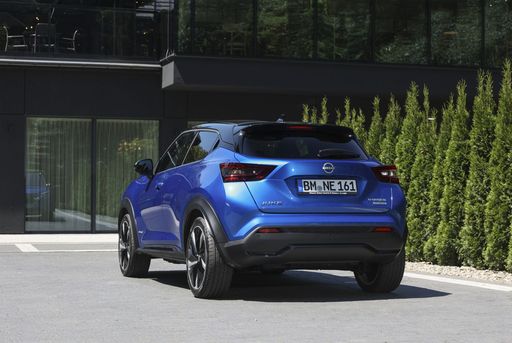
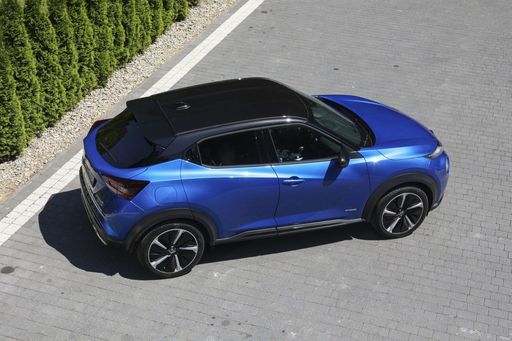
The Nissan Juke is a pocket-sized crossover that refuses to blend in, with quirky styling and a cheeky stance that turns heads at every traffic light. It’s ideal for shoppers who value personality and nimble urban driving over maximum practicality, delivering surprising pep and a well-equipped feel for everyday fun.

details
Renault Captur
Nissan Juke

Costs and Consumption

Price
21,100 - 28,400 £
Price
21,400 - 31,800 £
Consumption L/100km
4.4 - 6 L/100km
Consumption L/100km
4.7 - 6 L/100km
Consumption kWh/100km
-
Consumption kWh/100km
-
Electric Range
-
Electric Range
-
Battery Capacity
-
Battery Capacity
-
co2
100 - 137 g/km
co2
105 - 136 g/km
Fuel tank capacity
48 L
Fuel tank capacity
-

Dimensions and Body

Body Type
SUV
Body Type
SUV
Seats
5
Seats
5
Doors
5
Doors
-
Curb weight
1,323 - 1,441 kg
Curb weight
1,274 - 1,405 kg
Trunk capacity
326 - 422 L
Trunk capacity
354 - 422 L
Length
4,239 mm
Length
-
Width
1,797 mm
Width
1,800 mm
Height
1,575 mm
Height
-
Max trunk capacity
1,363 L
Max trunk capacity
-
Payload
447 - 453 kg
Payload
405 - 427 kg

Engine and Performance

Engine Type
Full Hybrid, Petrol, Petrol MHEV
Engine Type
Petrol, Full Hybrid
Transmission
Automatic, Manuel
Transmission
Manuel, Automatic
Transmission Detail
Automatic Gearbox, Manual Gearbox, Dual-Clutch Automatic
Transmission Detail
Manual Gearbox, Dual-Clutch Automatic, Automatic Gearbox
Drive Type
Front-Wheel Drive
Drive Type
Front-Wheel Drive
Power HP
115 - 158 HP
Power HP
114 - 143 HP
Acceleration 0-100km/h
8.9 - 12.3 s
Acceleration 0-100km/h
10.1 - 11.8 s
Max Speed
180 km/h
Max Speed
-
Torque
160 - 265 Nm
Torque
200 Nm
Number of Cylinders
3 - 4
Number of Cylinders
3 - 4
Power kW
84 - 116 kW
Power kW
84 - 105 kW
Engine capacity
1,199 - 1,789 cm3
Engine capacity
999 - 1,598 cm3

General

Model Year
2,025
Model Year
2,025
CO2 Efficiency Class
C, D, E
CO2 Efficiency Class
D, E, C
Brand
Renault
Brand
Nissan
DriveDuel uses data analysis and artificial intelligence to evaluate vehicle data and create content. Content is regularly reviewed and improved. The displayed prices are estimates based on German list prices, adjusted to the respective country’s VAT. Country-specific registration taxes are not included. This information is not legally binding.