VS

Renault Clio vs Hyundai i10 comparison

Compare performance (158 HP vs 90 HP), boot space and price (17,100 £ vs 14,600 £ ) at a glance. Find out which car is the better choice for you – Renault Clio or Hyundai i10?

Renault Clio vs Hyundai i10: Key differences

Renault Clio

4.7 (1 Reviews)
rate
  • considerably more power
  • moderately more efficient
  • visibly quicker 0–100 km/h
  • clearly more trunk space

Hyundai i10

5 (1 Reviews)
rate
  • moderately cheaper
  • noticeably lighter

All details on performance, efficiency, range and trunk space can be found in the technical comparison below – including user reviews for both models.

Clio

Hyundai i10 VS Renault Clio: the compact showdown

The Hyundai i10 and the Renault Clio go head-to-head in this compact car comparison, pitching urban nimbleness against supermini sophistication. If you're searching for a clear read on how a small city car stacks up against a more grown-up hatch, this is that page — think sprightly practicality versus polished presence. We’ll tease out differences in everyday usability, perceived comfort, and who will actually enjoy living with each car. Whether you type in “Hyundai i10” or “Renault Clio” into your search bar, you’ll leave knowing which one speaks to your priorities.
i10

Two personalities: spunky tight-park expert vs. composed all-rounder

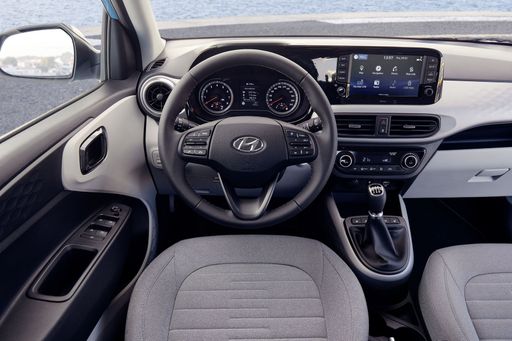
The Hyundai i10 arrives like a city sprite — light-footed, unpretentious and designed to make short trips painless — while the Renault Clio behaves more like a style-conscious grown-up, with a composed road manners and a touch more refinement. The i10 trades theatre for friendliness: it’s uncomplicated and pleasantly eager around town. The Clio, meanwhile, leans on a bit more presence and a firmer handshake on the open road, aiming to feel like a small car with grown-up ambitions. It’s the difference between a trusted commuter sidekick and a small hatch that wants to look and feel like something a step up.

Clio

Daily life: city errands, school runs and weekend escapes

For tight inner-city streets, short runs and parking that makes you thankful for small turning circles, the Hyundai i10 is the pragmatic pick that keeps life simple and cheap to live with. The Renault Clio rewards longer journeys with a more settled ride and a bit more space for luggage or a family’s weekend kit, so it’s the more versatile companion for mixed use. Parents will notice how the Clio’s greater practicality eases child seats and grocery runs, while commuters who live and work in town will appreciate the i10’s city-first focus. Each car makes sense in a different everyday rhythm: one minimizes hassle, the other expands capability.

i10

Why you’ll tell your friends you bought it

Buy the Hyundai i10 and you’ll tell people you were sensible — you chose a cheerful, economical city car that doesn’t fuss. Buy the Renault Clio and the story tilts toward style and a nicer driving experience; it’s easier to justify as a practical splurge that still earns compliments. The i10 sells confidence through low fuss and clear purpose; the Clio sells personality through looks, a nicer cabin feel and the hint of broader capability. In short: one is a canny choice, the other a slightly aspirational one.

Clio

Who should seriously consider the Hyundai i10?

If you live in the city, juggle tight parking, and prize low running headache, the Hyundai i10 is the easy-to-like answer for commuters and pragmatic buyers who want sensible value without drama. New drivers, apartment dwellers and anyone who treats cars as tools rather than trophies will find the i10’s focus appealing and unpretentious. It’s a car that rewards routine use with economy and uncomplicated ownership, and it quietly outperforms expectations where space and handling aren’t the top priorities. If you’re comparing it to the Renault Clio, think of the i10 as the clear-headed choice for everyday urban life.

i10

Who should seriously consider the Renault Clio (and when the i10 still makes sense)

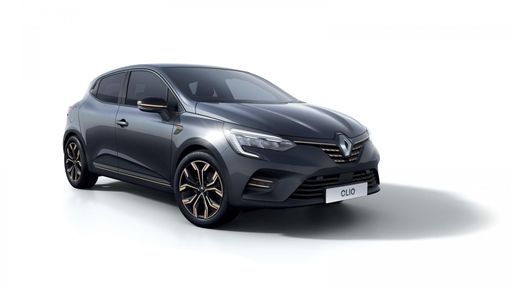
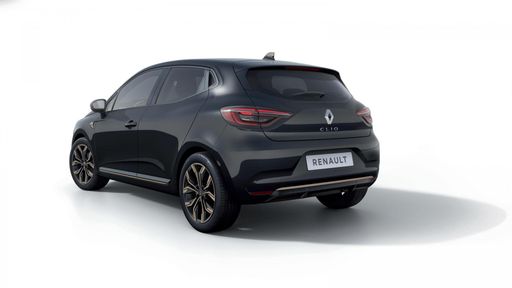
The Renault Clio suits drivers who want a little more style, a bit more room and a composed feel on longer runs — ideal for those who split time between city chores and regular motorway miles. If interior ambience, a more grown-up driving character and a flair for design matter, the Clio reads as the more complete small-hatch package. That said, mention the practicality of the Hyundai i10 when you square up real-world trade-offs: where townliness and lower fuss win, the i10 remains hard to beat. Read on into the technical breakdown below to see where those perceived differences translate into measurable strengths.

Here’s where it gets real: The technical differences in detail

Clio

Costs and Efficiency:

Price and efficiency are often the first things buyers look at. Here it becomes clear which model has the long-term edge – whether at the pump, the plug, or in purchase price.

Hyundai i10 is moderately cheaper – starting at 14,600 £ , while the Renault Clio costs 17,100 £ . That’s a price difference of around 2,495 £.

Fuel consumption also shows a difference: the Renault Clio uses 4.1 L/100km and is moderately more efficient than the Hyundai i10 with 4.9 L/100km. The difference is about 0.8 L/100km.

i10

Engine and Performance:

Power, torque and acceleration are the classic benchmarks for car enthusiasts – and here, some clear differences start to show.

When it comes to engine power, the Renault Clio offers considerably more power – delivering 158 HP compared to 90 HP. That’s roughly 68 HP more horsepower.

When accelerating from 0 to 100 km/h, the Renault Clio is visibly quicker – completing the sprint in 8.3 s, while the Hyundai i10 takes 11.4 s. That’s about 3.1 s quicker.

Looking at top speed, the Renault Clio is only slightly faster – reaching 180 km/h, while the Hyundai i10 tops out at 175 km/h. The difference is around 5 km/h.

There’s also a difference in torque: the Renault Clio delivers marginally more torque with 190 Nm compared to 172 Nm. That’s about 18 Nm more.

Clio

Space and Everyday Use:

Beyond pure performance, interior space and usability matter most in daily life. This is where you see which car is more practical and versatile.

Both vehicles offer seating for 5 people.

In terms of curb weight, Hyundai i10 is noticeably lighter – 996 kg compared to 1,202 kg. The difference is around 206 kg.

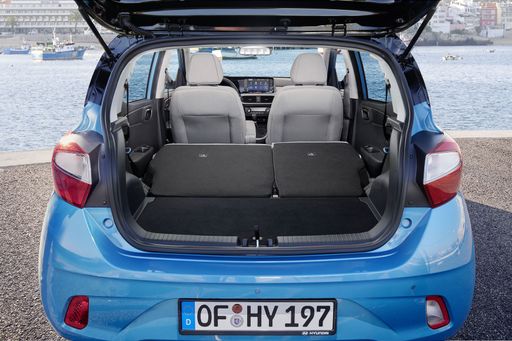
Looking at boot space, the Renault Clio offers clearly more boot space – 327 L compared to 252 L. That’s a difference of about 75 L.

For maximum load capacity, the Renault Clio offers moderately more capacity – up to 1,176 L, about 126 L more than the Hyundai i10.

When it comes to payload, the Renault Clio carries barely more – 463 kg compared to 423 kg. That’s a difference of about 40 kg.

Who wins the race in the data check?

The Renault Clio stands well ahead of its rival in the objective data comparison.
This result only shows which model scores more points on paper – not which of the two cars feels right for you.

from £17,100
Clio

Renault Clio

  • Engine Type : Petrol, Full Hybrid
  • Transmission : Manuel, Automatic
  • Drive Type : Front-Wheel Drive
  • Power HP : 115 - 158 HP
  • Consumption L/100km : 4.1 - 5.1 L/100km
Renault Clio
Hyundai i10

Costs and Consumption

View detailed analysis

Engine and Performance

View detailed analysis

Dimensions and Body

View detailed analysis

Renault Clio

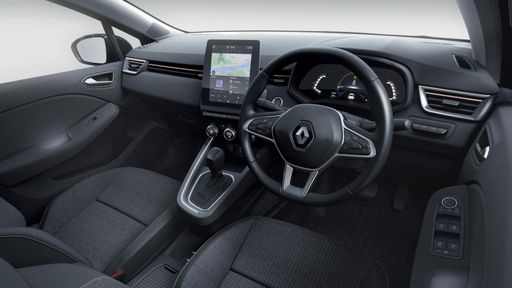
The Clio punches above its weight with chic French styling and a surprisingly grown-up cabin that makes city driving feel effortlessly stylish. It's an easy-to-live-with choice that keeps ownership simple and even manages to put a grin on your face when the traffic gets dull.

details

Hyundai i10

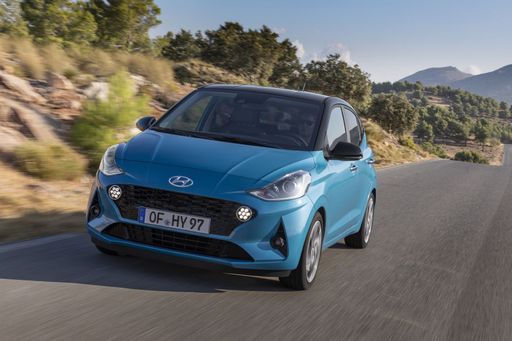
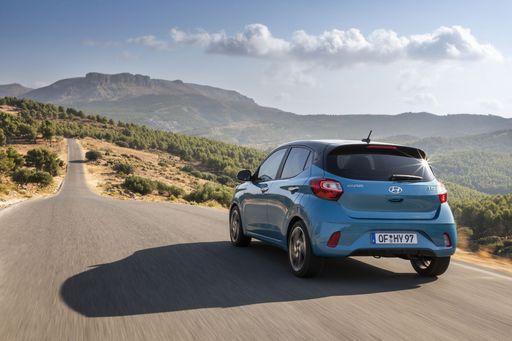
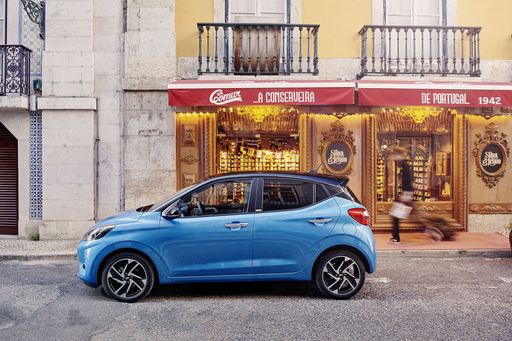
The Hyundai i10 is a cheeky city car that squeezes big-car confidence into a pocket-friendly package, carving through tight streets with surprising composure and sensible practicality. For buyers after low fuss, sensible equipment and wallet-friendly running costs, it's a smart, no-nonsense pick that makes sense whether you're a first-time driver or need a reliable second car.

details
Renault Clio
Hyundai i10

Costs and Consumption

Price
17,100 - 23,700 £
Price
14,600 - 19,000 £
Consumption L/100km
4.1 - 5.1 L/100km
Consumption L/100km
4.9 - 5.5 L/100km
Consumption kWh/100km
-
Consumption kWh/100km
-
Electric Range
-
Electric Range
-
Battery Capacity
-
Battery Capacity
-
co2
92 - 115 g/km
co2
110 - 124 g/km
Fuel tank capacity
39 - 42 L
Fuel tank capacity
36 L

Dimensions and Body

Body Type
Hatchback
Body Type
Hatchback
Seats
5
Seats
4 - 5
Doors
5
Doors
5
Curb weight
1,202 - 1,316 kg
Curb weight
996 - 1,099 kg
Trunk capacity
301 - 327 L
Trunk capacity
252 L
Length
4,116 mm
Length
3,670 - 3,675 mm
Width
1,768 mm
Width
1,680 mm
Height
1,451 mm
Height
1,480 - 1,483 mm
Max trunk capacity
1,094 - 1,176 L
Max trunk capacity
1,050 L
Payload
453 - 463 kg
Payload
344 - 423 kg

Engine and Performance

Engine Type
Petrol, Full Hybrid
Engine Type
Petrol
Transmission
Manuel, Automatic
Transmission
Manuel, Automatic
Transmission Detail
Manual Gearbox, Dual-Clutch Automatic, Automatic Gearbox
Transmission Detail
Manual Gearbox, Automated Manual
Drive Type
Front-Wheel Drive
Drive Type
Front-Wheel Drive
Power HP
115 - 158 HP
Power HP
63 - 90 HP
Acceleration 0-100km/h
8.3 - 10.1 s
Acceleration 0-100km/h
11.4 - 18.4 s
Max Speed
180 km/h
Max Speed
143 - 175 km/h
Torque
190 Nm
Torque
93 - 172 Nm
Number of Cylinders
3 - 4
Number of Cylinders
3 - 4
Power kW
84 - 116 kW
Power kW
46 - 66 kW
Engine capacity
1,199 - 1,789 cm3
Engine capacity
998 - 1,197 cm3

General

Model Year
2,026
Model Year
2,024
CO2 Efficiency Class
C, B
CO2 Efficiency Class
C, D
Brand
Renault
Brand
Hyundai
DriveDuel uses data analysis and artificial intelligence to evaluate vehicle data and create content. Content is regularly reviewed and improved. The displayed prices are estimates based on German list prices, adjusted to the respective country’s VAT. Country-specific registration taxes are not included. This information is not legally binding.