
VS

Renault Master Bus vs Nissan Interstar comparison

Compare performance (180 HP vs 170 HP), boot space and price (36,600 £ vs 36,000 £ ) at a glance. Find out which car is the better choice for you – Renault Master Bus or Nissan Interstar?

Renault Master Bus vs Nissan Interstar: Key differences

Renault Master Bus

  • very slightly more power
details

Nissan Interstar

  • very slightly cheaper
  • slightly more efficient
  • barely lighter
details

By Achim Sedelmaier

Master Bus

The Great Debate: Nissan Interstar vs. Renault Master Bus

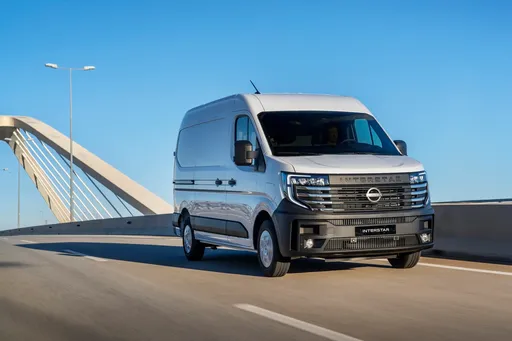
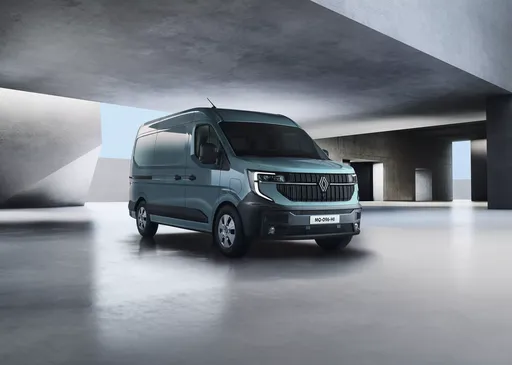
The commercial vehicle market is packed with choices, and two standout options are the Nissan Interstar and the Renault Master Bus. While both vehicles cater to professionals in need of reliable transportation, they offer distinct advantages and features. In this article, we delve into the technical nuances of both models to help you make an informed decision.
Interstar

Engine Power and Performance

The Nissan Interstar comes with the flexibility of diesel and electric engine options. Diesel variants offer power outputs ranging from 105 HP to 180 HP, with an efficient electric range of 400 km. In contrast, the Renault Master Bus sticks to traditional diesel engines, providing a range of power outputs from 135 HP to 180 HP.

When it comes to torque, the Interstar offers a variety from 300 Nm to 400 Nm, whereas the Master Bus provides between 360 Nm and 400 Nm. This aligns with their diesel offerings, providing a torque-packed performance necessary for heavy loads.

Fuel Efficiency and Environmental Impact

For those looking to minimize fuel costs, the Interstar has an advantage, boasting consumption rates of approximately 7.4 L/100km to 7.5 L/100km for diesel engines. In comparison, the Master Bus has higher consumption, ranging from 8.7 L/100km to 10.7 L/100km, reflecting its focus on power and capacity.

On the environmental front, the Interstar offers a CO2 emission class ranging from 0 to 195 g/km, thanks to its electric variant. Meanwhile, the Master Bus, without an electric version, emits 227 to 280 g/km of CO2, placing it in a higher emission bracket.

Design and Capacity

The Nissan Interstar offers versatile options, with body lengths varying from 5048 mm to 6848 mm, widths of up to 2222 mm, and heights reaching up to 2808 mm. It accommodates between 3 to 7 seats depending on the configuration.

The Renault Master Bus similarly offers adjustable configurations, supporting lengths of 5075 mm to 5575 mm, a width of 2070 mm, and a height up to 2486 mm. It can seat 6 to 9 passengers, ideal for commercial people transport.

Payload and Practicality

For payload capabilities, the Interstar shines with capacities up to 1451 kg, while the Master Bus maintains a robust performance with payloads reaching up to 1254 kg. Both vehicles feature 4-door configurations for easy access and loading. The Interstar’s variable curb weight ranges from 1927 kg to 2538 kg, while the Master Bus ranges from 2189 kg to 2361 kg, showcasing their sturdy build to manage heavy-duty operations.

Techy Details and Innovations

Both models are equipped with manual and automatic transmissions, and the Interstar also introduces automated manual and reduction gearboxes for more tailored control. The drive types are predominantly front-wheel-drive for the Master Bus and either front or rear-wheel drive for the Interstar, adapting to different driving needs.

From a technological standpoint, the Interstar's electric variant represents a significant innovation in addressing environmental concerns, while Renault continues its focus on refining diesel technology for robust real-world performance.

Conclusion

Choosing between the Nissan Interstar and the Renault Master Bus depends largely on your specific operational needs. The Interstar offers flexibility with its electric model and slightly better fuel efficiency, making it suitable for those prioritizing green technology. On the other hand, the Master Bus provides robustness and a focus on traditional power, ideal for those needing a reliable and slightly larger passenger capacity.

Your decision should be driven by weighing the necessity for fuel efficiency and lower emissions against the need for carrying capacity and established diesel performance.

Here’s where it gets real: The technical differences in detail

Master Bus

Costs and Efficiency:

Price and efficiency are often the first things buyers look at. Here it becomes clear which model has the long-term edge – whether at the pump, the plug, or in purchase price.

Nissan Interstar is very slightly cheaper – starting at 36,000 £ , while the Renault Master Bus costs 36,600 £ . That’s a price difference of around 632 £.

Fuel consumption also shows a difference: the Nissan Interstar uses 7.5 L/100km and is slightly more efficient than the Renault Master Bus with 8.7 L/100km. The difference is about 1.2 L/100km.

Interstar

Engine and Performance:

Under the bonnet, it becomes clear which model is tuned for sportiness and which one takes the lead when you hit the accelerator.

When it comes to engine power, the Renault Master Bus offers very slightly more power – delivering 180 HP compared to 170 HP. That’s roughly 10 HP more horsepower.

There’s also a difference in torque: the Renault Master Bus delivers barely more torque with 400 Nm compared to 380 Nm. That’s about 20 Nm more.

Space and Everyday Use:

Whether family car or daily driver – which one offers more room, flexibility and comfort?

Seats: Renault Master Bus offers more seats – 9 vs 7.

In terms of curb weight, Nissan Interstar is barely lighter – 2,053 kg compared to 2,189 kg. The difference is around 136 kg.

When it comes to payload, the Nissan Interstar carries slightly more – 1,447 kg compared to 1,254 kg. That’s a difference of about 193 kg.

Who wins the race in the data check?

The Nissan Interstar holds a decisive overall lead in the objective data comparison.
This result only shows which model scores more points on paper – not which of the two cars feels right for you.

from £36,000
Interstar

Nissan Interstar

  • Engine Type : Diesel, Electric
  • Transmission : Manuel, Automatic
  • Drive Type : Front-Wheel Drive
  • Power HP : 130 - 170 HP
  • Consumption L/100km : 7.5 L/100km
  • Electric Range : 410 km
Renault Master Bus
Nissan Interstar

Costs and Consumption

View detailed analysis

Engine and Performance

View detailed analysis

Dimensions and Body

View detailed analysis

Renault Master Bus

The Renault Master Bus is a no-nonsense people carrier that trades flash for practicality, offering generous space for passengers and luggage with a sensible, robust feel. It’s a smart pick for buyers who want comfort and reliability over glamour — think dependable transport with a dash of French charm and a wry smile.

details

Nissan Interstar

The Nissan Interstar is a sensible, no-nonsense panel van that puts practicality front and center, with a cavernous load area and a durable feel built for daily work. It drives with surprising composure for its size, keeps running costs modest, and feels like the kind of professional tool that prefers reliable service over flashy showboating.

details
Renault Master Bus
Nissan Interstar

Costs and Consumption

Price
36,600 - 43,200 £
Price
36,000 - 54,600 £
Consumption L/100km
8.7 - 10.7 L/100km
Consumption L/100km
7.5 L/100km
Consumption kWh/100km
-
Consumption kWh/100km
-
Electric Range
-
Electric Range
410 km
Battery Capacity
-
Battery Capacity
-
co2
227 - 280 g/km
co2
0 - 195 g/km
Fuel tank capacity
105 L
Fuel tank capacity
-

Dimensions and Body

Body Type
Bus
Body Type
Cargo Van
Seats
6 - 9
Seats
3 - 7
Doors
4
Doors
-
Curb weight
2,189 - 2,361 kg
Curb weight
2,053 - 2,455 kg
Trunk capacity
-
Trunk capacity
-
Length
5,075 - 5,575 mm
Length
-
Width
2,070 mm
Width
2,080 mm
Height
2,290 - 2,486 mm
Height
-
Max trunk capacity
2,840 - 4,840 L
Max trunk capacity
-
Payload
939 - 1,254 kg
Payload
1,045 - 1,447 kg

Engine and Performance

Engine Type
Diesel
Engine Type
Diesel, Electric
Transmission
Manuel, Automatic
Transmission
Manuel, Automatic
Transmission Detail
Manual Gearbox, Automated Manual
Transmission Detail
Manual Gearbox, Automatic Gearbox, Reduction Gearbox
Drive Type
Front-Wheel Drive
Drive Type
Front-Wheel Drive
Power HP
135 - 180 HP
Power HP
130 - 170 HP
Acceleration 0-100km/h
-
Acceleration 0-100km/h
-
Max Speed
150 - 165 km/h
Max Speed
-
Torque
360 - 400 Nm
Torque
300 - 380 Nm
Number of Cylinders
4
Number of Cylinders
4
Power kW
99 - 132 kW
Power kW
96 - 125 kW
Engine capacity
2,299 cm3
Engine capacity
1,997 cm3

General

Model Year
2023
Model Year
2024
CO2 Efficiency Class
G
CO2 Efficiency Class
G, A
Brand
Renault
Brand
Nissan
DriveDuel uses data analysis and artificial intelligence to evaluate vehicle data and create content. Content is regularly reviewed and improved. The displayed prices are estimates based on German list prices, adjusted to the respective country’s VAT. Country-specific registration taxes are not included. This information is not legally binding.








