VS

Renault R4 vs Jeep Avenger comparison

Compare performance (150 HP vs 156 HP), boot space and price (27,300 £ vs 22,500 £ ) at a glance. Find out which car is the better choice for you – Renault R4 or Jeep Avenger?

Renault R4 vs Jeep Avenger: Key differences

Renault R4

5 (1 Reviews)
rate
  • marginally more efficient
  • marginally more electric range
  • only slightly quicker 0–100 km/h
  • clearly more trunk space
details

Jeep Avenger

4.1 (7 Reviews)
rate
  • markedly cheaper
  • very slightly more power
  • clearly lighter
details

All details on performance, efficiency, range and trunk space can be found in the technical comparison below – including user reviews for both models.

By Achim Sedelmaier

R4

Jeep Avenger VS Renault R4: a practical look at two small electric personalities

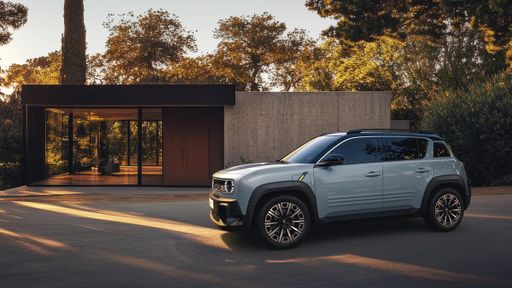
Jeep Avenger VS Renault R4 sits at the crossroads of city-friendly SUV styling and neo‑retro practicality, yet they approach that brief very differently. The Jeep Avenger presents itself as a compact, chunky urban SUV with a protective, go-anywhere look and a comfortable, easy-going ride. The Renault R4 leans into retro charm with an emphasis on everyday usefulness — a low loading sill, large boot and calm cruising manners. Both are designed for city and regional life, but the Avenger prioritises streetability and front‑row space while the R4 focuses on load capacity and simple, intuitive tech. Read on to see which trade-offs matter most for your use case before we dive into the specs.
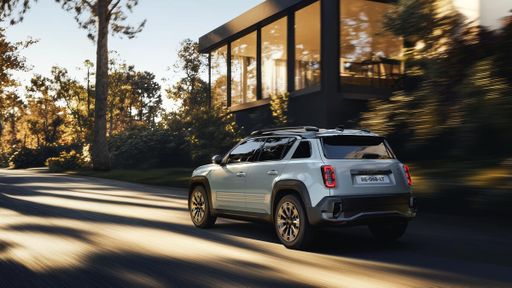
Avenger

Character and driving feel

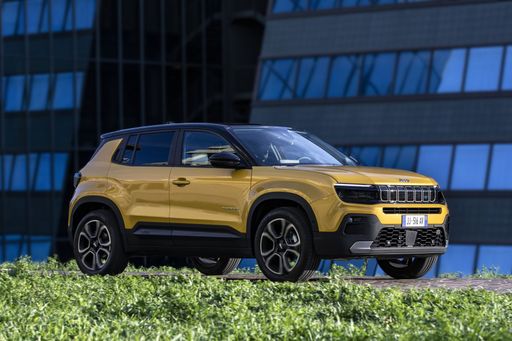
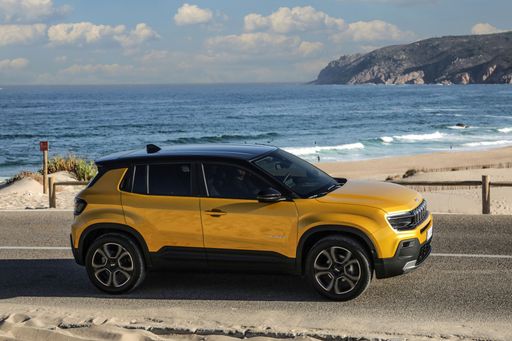
The Jeep Avenger feels like a small Jeep: upright seating, chunky styling and a deliberately relaxed driving setup that soaks up urban bumps without making the driver work. The Renault R4 is quieter and more composed on open roads, with a civilised, almost lounge‑like demeanour that favours steady cruising over sporty responses. If you like the idea of occasional light off‑road capability or an optional all‑wheel setup, the Jeep Avenger brings that flavour; if you want calm, predictable responses and a softer, efficient rhythm for daily miles, the Renault R4 earns the nod. Both are nimble in town, but the Avenger’s slightly sharper packaging and driving position make manoeuvring feel a touch easier. Which one pleases you most comes down to whether you prefer rugged city swagger or soothing, sensible motion.

R4

Comfort and long‑distance behaviour

On short runs the Jeep Avenger’s suspension and seating feel immediately forgiving, and the cabin is tuned for city comfort rather than taut sportiness. The Renault R4 matches that comfort on the motorway with a steady, low‑noise character that makes longer trips less tiring, although both show their limits at higher sustained speeds. Rear passengers find compromises in both cars: the Avenger’s rear legroom is tighter than you’d hope, while the R4’s rear bench sits lower and can feel cramped for taller adults. If you plan frequent long motorway hauls, the R4’s calmer cruising and marginally better efficiency will feel kinder, but if your miles are mostly urban and regional, the Avenger’s composed city ride and easy visibility win daily comfort points.

Avenger

Practicality and everyday usability

Practical differences are stark when you open the boots: the Renault R4 is built around usability with a low loading lip and a genuinely capacious cargo area that makes weekly shopping or stroller loading simple. The Jeep Avenger trades that outright volume for a squarer, more street‑friendly package and a tailgate that’s wide and easy to access — useful in tight parking spots where manoeuvring a long load is painful. Inside, the Avenger favours hardwearing surfaces and plentiful small cubbies; the Renault R4 prioritises clever touches like fold‑flat flexibility and intuitive storage that feels designed for family life. Both make sense for city dwellers, but if you regularly carry bulky items the R4’s cargo practicality is the clear advantage. For buyers balancing occasional touring and urban life, weigh the R4’s load space against the Avenger’s tighter footprint and easier parking.

R4

Cabin feel, tech and perceived quality

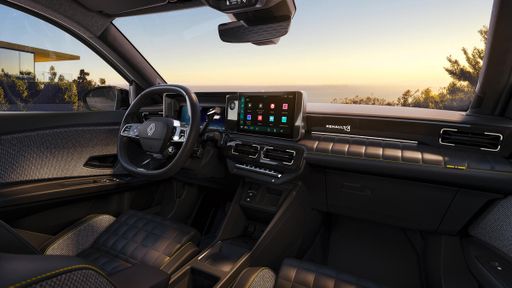
Step into the Jeep Avenger and you get a functional, rugged cabin: lots of hard plastics that look built to resist scratches and scrapes, plus straightforward physical controls that you can use without thinking. The Renault R4 presents a more cohesive interior layout and a slicker, Google‑based infotainment experience that generally feels faster and more modern in everyday use. Both cars keep physical climate buttons, which is a welcome touch for quick adjustments, but the Avenger’s infotainment can lag at times while the R4’s system tends to be more responsive — a real difference if you use navigation and phone integration daily. Perceived quality swings with trim level on the R4 and with trim and rear materials on the Avenger, so higher trims tighten the sense of refinement in either car. If cabin polish and snappy tech are priorities, the R4 typically feels a touch more contemporary; if durability and simple ergonomics matter most, the Avenger’s approach is pragmatic and reassuring.

Avenger

Buyer fit and trade‑offs before the numbers

Choose the Jeep Avenger if you want a compact, city‑friendly SUV with Jeep styling, easy front‑row comfort and the option of more traction for rougher weather; it suits urban drivers who value manoeuvrability and a protective, hard‑wearing look. Pick the Renault R4 if everyday practicality, easy loading and a calm long‑distance demeanour top your list — it’s the better tool for families or buyers who regularly cart bulky loads. Both compromise in the rear seat and have trade‑offs on noise and range at higher speeds, so your priorities around passenger comfort, cargo and charging behavior will decide the match. The technical comparison that follows will put those real‑world differences into sharper relief so you can match numbers to the lifestyle choices each car actually supports.

Here’s where it gets real: The technical differences in detail

R4

Costs and Efficiency:

Looking at overall running costs, both models reveal some interesting differences in everyday economy.

Jeep Avenger is markedly cheaper – starting at 22,500 £ , while the Renault R4 costs 27,300 £ . That’s a price difference of around 4,783 £.

In terms of energy consumption, the Renault R4 is marginally more efficient: consuming 15.1 kWh/100km compared to 15.5 kWh/100km for the Jeep Avenger. That’s a difference of about 0.4 kWh/100km.

As for electric range, the Renault R4 offers marginally more range – reaching up to 409 km, about 9 km more than the Jeep Avenger.

Avenger

Engine and Performance:

Under the bonnet, it becomes clear which model is tuned for sportiness and which one takes the lead when you hit the accelerator.

When it comes to engine power, the Jeep Avenger offers very slightly more power – delivering 156 HP compared to 150 HP. That’s roughly 6 HP more horsepower.

When accelerating from 0 to 100 km/h, the Renault R4 is only slightly quicker – completing the sprint in 8.2 s, while the Jeep Avenger takes 9 s. That’s about 0.8 s quicker.

There’s also a difference in torque: the Jeep Avenger delivers marginally more torque with 260 Nm compared to 245 Nm. That’s about 15 Nm more.

R4

Space and Everyday Use:

Whether family car or daily driver – which one offers more room, flexibility and comfort?

Seats: Jeep Avenger offers more seats – 5 vs 2.

In terms of curb weight, Jeep Avenger is clearly lighter – 1,180 kg compared to 1,510 kg. The difference is around 330 kg.

Looking at boot space, the Renault R4 offers clearly more boot space – 1,045 L compared to 380 L. That’s a difference of about 665 L.

When it comes to payload, the Jeep Avenger carries markedly more – 502 kg compared to 385 kg. That’s a difference of about 117 kg.

Who wins the race in the data check?

The Jeep Avenger stands well ahead of its rival in the objective data comparison.
This result only shows which model scores more points on paper – not which of the two cars feels right for you.

from £22,500
Avenger

Jeep Avenger

  • Engine Type : Petrol MHEV, Electric, Petrol
  • Transmission : Automatic, Manuel
  • Drive Type : Front-Wheel Drive
  • Power HP : 100 - 156 HP
  • Consumption L/100km : 4.9 - 5.7 L/100km
  • Consumption kWh/100km : 15.5 kWh/100km
  • Electric Range : 400 km
Renault R4
Jeep Avenger

Costs and Consumption

View detailed analysis

Engine and Performance

View detailed analysis

Dimensions and Body

View detailed analysis

Renault R4

The Renault R4, affectionately known as the "R4," is a quintessential symbol of French automotive simplicity and practicality. This classic compact car, originally introduced in the early 1960s, won over numerous enthusiasts with its versatile design and dependable performance. Its no-frills charm and robust build made it a beloved choice for rural drivers and city dwellers alike, cementing its status as an iconic piece of automotive history.

details

Jeep Avenger

The Jeep Avenger shrinks Jeep's boxy, adventurous styling into a city-friendly electric crossover that looks just as at home on tight streets as it does on muddy weekend lanes. It's a savvy pick for drivers who want go-anywhere attitude without the truck-size ego — practical inside, lively around town and ready to tackle a bit of rough stuff when the mood strikes.

details
Renault R4
Jeep Avenger

Costs and Consumption

Price
27,300 £
Price
22,500 - 35,000 £
Consumption L/100km
-
Consumption L/100km
4.9 - 5.7 L/100km
Consumption kWh/100km
15.1 kWh/100km
Consumption kWh/100km
15.5 kWh/100km
Electric Range
409 km
Electric Range
400 km
Battery Capacity
-
Battery Capacity
-
co2
0 g/km
co2
0 - 129 g/km
Fuel tank capacity
-
Fuel tank capacity
-

Dimensions and Body

Body Type
SUV
Body Type
SUV
Seats
2
Seats
5
Doors
-
Doors
-
Curb weight
1,510 kg
Curb weight
1,180 - 1,520 kg
Trunk capacity
1,045 L
Trunk capacity
355 - 380 L
Length
-
Length
-
Width
1,808 mm
Width
1,776 mm
Height
-
Height
-
Max trunk capacity
-
Max trunk capacity
-
Payload
385 kg
Payload
494 - 502 kg

Engine and Performance

Engine Type
Electric
Engine Type
Petrol MHEV, Electric, Petrol
Transmission
Automatic
Transmission
Automatic, Manuel
Transmission Detail
Reduction Gearbox
Transmission Detail
Dual-Clutch Automatic, Reduction Gearbox, Manual Gearbox
Drive Type
Front-Wheel Drive
Drive Type
Front-Wheel Drive
Power HP
150 HP
Power HP
100 - 156 HP
Acceleration 0-100km/h
8.2 s
Acceleration 0-100km/h
9 - 10.6 s
Max Speed
-
Max Speed
-
Torque
245 Nm
Torque
205 - 260 Nm
Number of Cylinders
-
Number of Cylinders
3
Power kW
110 kW
Power kW
74 - 115 kW
Engine capacity
-
Engine capacity
1,199 cm3

General

Model Year
2025
Model Year
2026
CO2 Efficiency Class
A
CO2 Efficiency Class
C, A, D
Brand
Renault
Brand
Jeep
DriveDuel uses data analysis and artificial intelligence to evaluate vehicle data and create content. Content is regularly reviewed and improved. The displayed prices are estimates based on German list prices, adjusted to the respective country’s VAT. Country-specific registration taxes are not included. This information is not legally binding.