VS

Renault Scénic vs Audi Q4 e-tron comparison

Compare performance (218 HP vs 340 HP), boot space and price (34,600 £ vs 39,600 £ ) at a glance. Find out which car is the better choice for you – Renault Scénic or Audi Q4 e-tron?

Renault Scénic vs Audi Q4 e-tron: Key differences

Renault Scénic

5 (1 Reviews)
rate
  • a bit cheaper
  • barely more electric range
  • slightly lighter
  • marginally more trunk space

Audi Q4 e-tron

4.9 (2 Reviews)
rate
  • noticeably more power
  • marginally more efficient
  • substantially quicker 0–100 km/h
Scénic

The automotive market is witnessing a notable shift towards electric vehicles, and two standout options in the all-electric arena are the Audi Q4 e-tron and the Renault Scénic. Both vehicles offer a blend of innovation, efficiency, and modern design, catering to a growing audience of eco-conscious consumers. In this article, we’ll delve deep into a comparison of these two electric SUVs, focusing on their technical specifications, driving experience, and innovative features.
Q4 e-tron

Powertrain and Performance

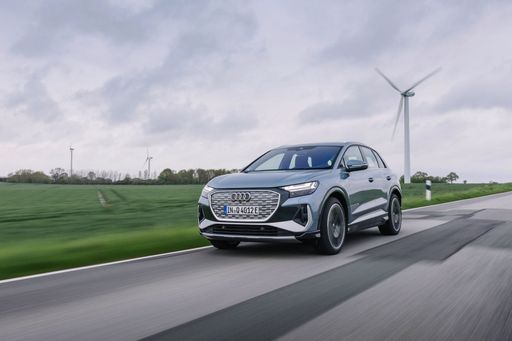
The Audi Q4 e-tron is available with multiple powertrain options, offering flexibility for different driving needs. With power outputs ranging from 170 HP to 340 HP, it provides not only a variety of choices but also respectable acceleration figures. The range-topping model boasts an impressive 0-100 km/h time of just 5.4 seconds. It comes equipped with a rear-wheel drive or all-wheel drive system, ensuring superior handling and grip in various conditions.

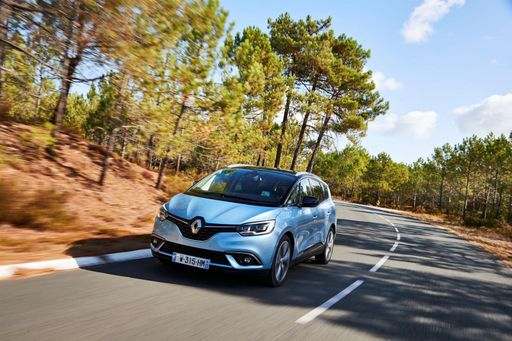
In contrast, the Renault Scénic offers a slightly less diverse offering with a maximum power of 220 HP. Its acceleration is competitive with a 0-100 km/h time between 7.9 and 8.6 seconds, depending on the variant. With its front-wheel drive configuration, the Scénic presents a more traditional driving experience but still performs admirably in urban settings.

Scénic

Range and Efficiency

When it comes to electric range, the Audi Q4 e-tron shines with a maximum capability of up to 551 km on a single charge, making it an excellent choice for long-distance journeys. The vehicle’s energy consumption is also commendably low, with figures as efficient as 15.9 kWh/100 km for select variants.

The Renault Scénic, on the other hand, offers a very competitive max range of 598 km. Its consumption is slightly higher at 16.7 kWh/100 km, but given its spaciousness and features, it still provides a solid choice for daily commutes and leisure trips alike. Both cars maintain a CO2 efficiency class of A, underscoring their environmental credentials.

Q4 e-tron

Interior and Practicality

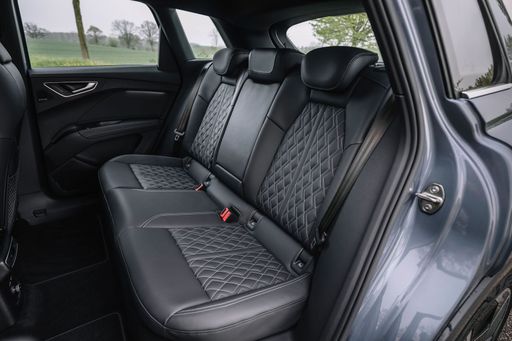
In terms of interior space and practicality, the Audi Q4 e-tron measures 4,588 mm in length, offering a trunk capacity of 520 to 535 liters, making it suitable for families or those needing extra cargo space. It also accommodates five passengers comfortably, ensuring a pleasant journey.

The Renault Scénic slightly edges out the Q4 e-tron with a trunk capacity of up to 545 liters, benefiting users focused on maximized cargo space. Its slightly smaller dimensions (4,470 mm in length) contribute to a more compact driving experience, ideal for urban settings.

Scénic

Innovative Features

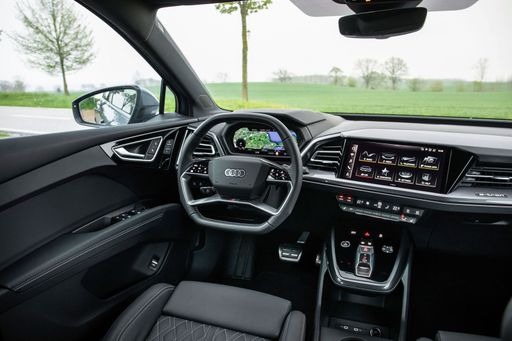
Both models incorporate cutting-edge technology to enhance the driving experience. The Audi Q4 e-tron features an advanced infotainment system with a large touch screen interface, digital cockpit, and offers connectivity options like smartphone integration and navigation services. Moreover, its driver assistance features are top-tier, aiming to provide a safe and seamless driving experience.

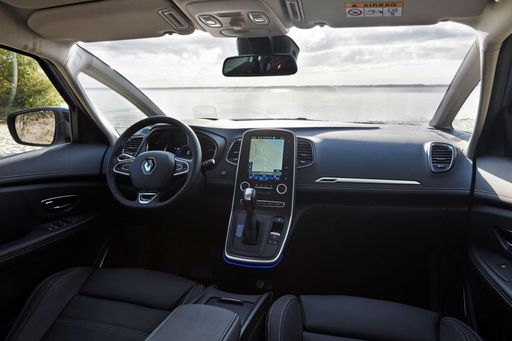
The Renault Scénic also embraces modern technology with its intuitive infotainment system and multiple connectivity options. It emphasizes practicality and ease of use, featuring an ergonomic interior design that reflects Renault's commitment to comfort and usability. Its driver assistance technologies include safety features that monitor surrounding conditions, aiding in navigation through busy environments.

Q4 e-tron

Conclusion

Choosing between the Audi Q4 e-tron and the Renault Scénic ultimately depends on individual preferences and needs. The Q4 e-tron appeals with its powerful performance and superior range, making it a formidable contender for those requiring robust capabilities and premium features. On the other hand, the Scénic stands out with its spacious interior and competitive range, delivering a strong value proposition for everyday users and families.

As the electric vehicle market continues to evolve, both Audi and Renault are impressively positioned to capture the attention of diverse automotive enthusiasts. The choice comes down to the features and specifications that resonate most with your lifestyle—whether it’s the luxurious tech-savvy appeal of the Q4 e-tron or the spacious, practical allure of the Scénic.

Here’s where it gets real: The technical differences in detail

Scénic

Costs and Efficiency:

Price and efficiency are often the first things buyers look at. Here it becomes clear which model has the long-term edge – whether at the pump, the plug, or in purchase price.

Renault Scénic is a bit cheaper – starting at 34,600 £ , while the Audi Q4 e-tron costs 39,600 £ . That’s a price difference of around 4,929 £.

In terms of energy consumption, the Audi Q4 e-tron is marginally more efficient: consuming 15.9 kWh/100km compared to 16.6 kWh/100km for the Renault Scénic. That’s a difference of about 0.7 kWh/100km.

As for electric range, the Renault Scénic offers barely more range – reaching up to 598 km, about 44 km more than the Audi Q4 e-tron.

Q4 e-tron

Engine and Performance:

Power, torque and acceleration are the classic benchmarks for car enthusiasts – and here, some clear differences start to show.

When it comes to engine power, the Audi Q4 e-tron offers noticeably more power – delivering 340 HP compared to 218 HP. That’s roughly 122 HP more horsepower.

When accelerating from 0 to 100 km/h, the Audi Q4 e-tron is substantially quicker – completing the sprint in 5.4 s, while the Renault Scénic takes 7.9 s. That’s about 2.5 s quicker.

Looking at top speed, the Audi Q4 e-tron is only slightly faster – reaching 180 km/h, while the Renault Scénic tops out at 170 km/h. The difference is around 10 km/h.

There’s also a difference in torque: the Audi Q4 e-tron delivers considerably more torque with 679 Nm compared to 300 Nm. That’s about 379 Nm more.

Scénic

Space and Everyday Use:

Whether family car or daily driver – which one offers more room, flexibility and comfort?

Both vehicles offer seating for 5 people.

In terms of curb weight, Renault Scénic is slightly lighter – 1,822 kg compared to 2,035 kg. The difference is around 213 kg.

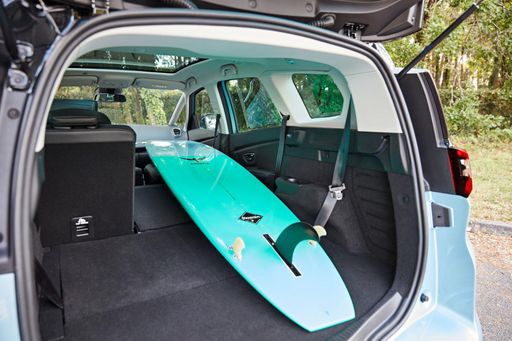
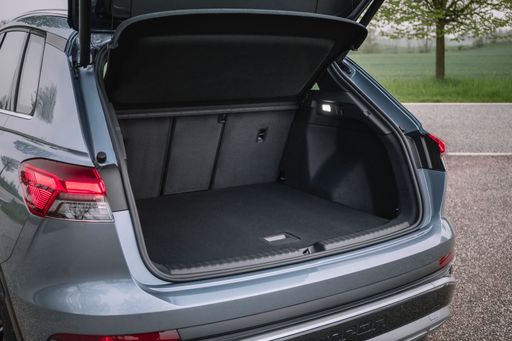
Looking at boot space, the Renault Scénic offers marginally more boot space – 545 L compared to 535 L. That’s a difference of about 10 L.

For maximum load capacity, the Renault Scénic offers slightly more capacity – up to 1,670 L, about 180 L more than the Audi Q4 e-tron.

When it comes to payload, the Renault Scénic carries marginally more – 518 kg compared to 515 kg. That’s a difference of about 3 kg.

Who wins the race in the data check?

The Audi Q4 e-tron is decisively ahead in the objective data comparison.
This result only shows which model scores more points on paper – not which of the two cars feels right for you.

from £39,600
Q4 e-tron

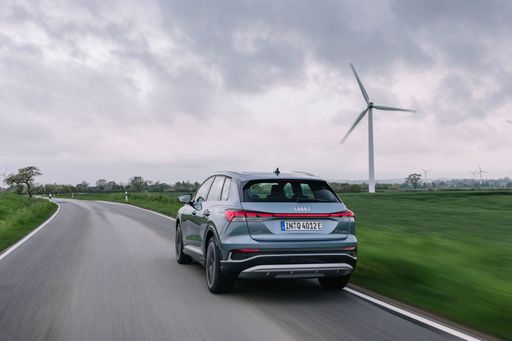
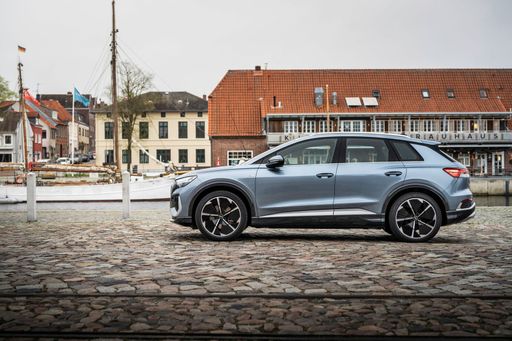
Audi Q4 e-tron

  • Engine Type : Electric
  • Transmission : Automatic
  • Drive Type : Rear-Wheel Drive, All-Wheel Drive
  • Power HP : 204 - 340 HP
  • Consumption kWh/100km : 15.9 - 17.4 kWh/100km
  • Electric Range : 406 - 554 km
Renault Scénic
Audi Q4 e-tron

Costs and Consumption

View detailed analysis

Engine and Performance

View detailed analysis

Dimensions and Body

View detailed analysis

Renault Scénic

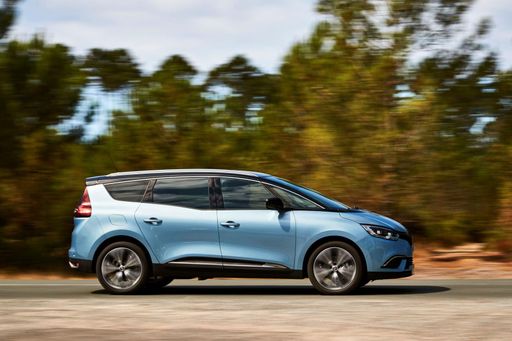
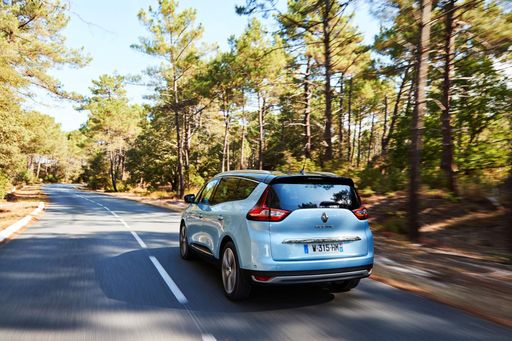
The Renault Scénic is a quietly clever family MPV that balances everyday practicality with unexpected flair, offering a roomy, flexible cabin that makes school runs and weekend escapes less of a chore. It won't dazzle like a sports car, but its composed ride, sensible tech and thoughtful storage solutions make it a superbly pragmatic choice for buyers who prefer substance with a wink.

details

Audi Q4 e-tron

The Audi Q4 e-tron brings Audi polish into the electric crossover scene, pairing a sleek exterior with a refined, airy interior that makes everyday driving feel distinctly premium. It’s an easy-to-live-with EV that balances comfort and real-world usability with intuitive tech, making it a smart choice for buyers who want electric mobility without giving up Audi character — and yes, it still looks good in the driveway.

details
Renault Scénic
Audi Q4 e-tron

Costs and Consumption

Price
34,600 - 44,000 £
Price
39,600 - 58,800 £
Consumption L/100km
-
Consumption L/100km
-
Consumption kWh/100km
16.6 - 17.5 kWh/100km
Consumption kWh/100km
15.9 - 17.4 kWh/100km
Electric Range
420 - 598 km
Electric Range
406 - 554 km
Battery Capacity
-
Battery Capacity
77 kWh
co2
0 g/km
co2
0 g/km
Fuel tank capacity
-
Fuel tank capacity
-

Dimensions and Body

Body Type
SUV
Body Type
SUV
Seats
5
Seats
5
Doors
5
Doors
5
Curb weight
1,822 - 1,927 kg
Curb weight
2,035 - 2,235 kg
Trunk capacity
545 L
Trunk capacity
520 - 535 L
Length
4,470 mm
Length
4,588 mm
Width
1,864 mm
Width
1,865 mm
Height
1,571 mm
Height
1,614 - 1,632 mm
Max trunk capacity
1,670 L
Max trunk capacity
1,460 - 1,490 L
Payload
514 - 518 kg
Payload
505 - 515 kg

Engine and Performance

Engine Type
Electric
Engine Type
Electric
Transmission
Automatic
Transmission
Automatic
Transmission Detail
Reduction Gearbox
Transmission Detail
Reduction Gearbox
Drive Type
Front-Wheel Drive
Drive Type
Rear-Wheel Drive, All-Wheel Drive
Power HP
170 - 218 HP
Power HP
204 - 340 HP
Acceleration 0-100km/h
7.9 - 8.6 s
Acceleration 0-100km/h
5.4 - 8.1 s
Max Speed
150 - 170 km/h
Max Speed
180 km/h
Torque
280 - 300 Nm
Torque
310 - 679 Nm
Number of Cylinders
-
Number of Cylinders
-
Power kW
125 - 160 kW
Power kW
150 - 250 kW
Engine capacity
-
Engine capacity
-

General

Model Year
2,025
Model Year
2,023 - 2,025
CO2 Efficiency Class
A
CO2 Efficiency Class
A
Brand
Renault
Brand
Audi
DriveDuel uses data analysis and artificial intelligence to evaluate vehicle data and create content. Content is regularly reviewed and improved. The displayed prices are estimates based on German list prices, adjusted to the respective country’s VAT. Country-specific registration taxes are not included. This information is not legally binding.