
 Deutschland
 France
 Nederland
 Great Britain
 Sverige
 Danmark
 Suomi
Suomi Italia
 Polska
 Česko
Česko España
VS
SERES 5 vs XPeng P7+ comparison
Compare performance (585 HP vs 503 HP), boot space and price (55,700 £ vs 39,900 £ ) at a glance. Find out which car is the better choice for you – SERES 5 or XPeng P7+?
SERES 5 vs XPeng P7+: Key differences
5
Costs and Efficiency:
Looking at overall running costs, both models reveal some interesting differences in everyday economy.
XPeng P7+ is markedly cheaper – starting at 39,900 £ , while the SERES 5 costs 55,700 £ . That’s a price difference of around 15,763 £.
In terms of energy consumption, the XPeng P7+ is visibly more efficient: consuming 15.2 kWh/100km compared to 18.6 kWh/100km for the SERES 5. That’s a difference of about 3.4 kWh/100km.
As for electric range, the XPeng P7+ offers somewhat more range – reaching up to 530 km, about 100 km more than the SERES 5.
P7+
Engine and Performance:
Power, torque and acceleration say a lot about how a car feels on the road. This is where you see which model delivers more driving dynamics.
When it comes to engine power, the SERES 5 offers a bit more power – delivering 585 HP compared to 503 HP. That’s roughly 82 HP more horsepower.
When accelerating from 0 to 100 km/h, the SERES 5 is only slightly quicker – completing the sprint in 4.1 s, while the XPeng P7+ takes 4.3 s. That’s about 0.2 s quicker.
There’s also a difference in torque: the SERES 5 delivers markedly more torque with 940 Nm compared to 670 Nm. That’s about 270 Nm more.
Space and Everyday Use:
Beyond pure performance, interior space and usability matter most in daily life. This is where you see which car is more practical and versatile.
Both vehicles offer seating for 5 people.
In terms of curb weight, XPeng P7+ is moderately lighter – 1,999 kg compared to 2,360 kg. The difference is around 361 kg.
Looking at boot space, the XPeng P7+ offers noticeably more boot space – 573 L compared to 367 L. That’s a difference of about 206 L.
When it comes to payload, the XPeng P7+ carries clearly more – 486 kg compared to 375 kg. That’s a difference of about 111 kg.
Who wins the race in the data check?
The XPeng P7+ is clearly superior overall in the objective data comparison.
This result only shows which model scores more points on paper – not which of the two cars feels right for you.
from £39,900
XPeng P7+
SERES 5
XPeng P7+
Costs and Consumption
View detailed analysis
View detailed analysis
Engine and Performance
View detailed analysis
View detailed analysis
Dimensions and Body
View detailed analysis
View detailed analysis
SERES 5
The Seres 5 carves a convincing niche in the crowded compact crossover market with bold styling and a surprisingly upscale cabin that feels larger than its footprint suggests. It’s an easy, fuss-free choice for shoppers after modern EV practicality and sensible running costs, delivered with a friendly personality that won’t try to outshine more expensive rivals.
details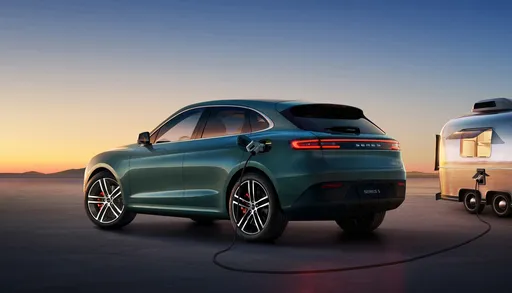
XPeng P7+
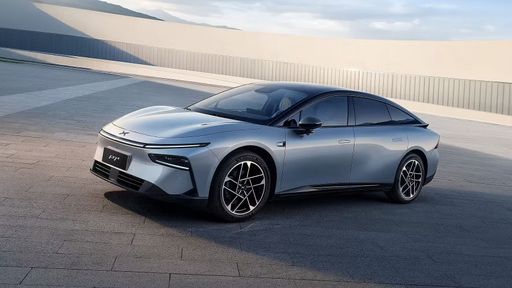
The XPeng P7+ is a sleek, coupe-like electric sedan that pairs a spacious, tech-forward cabin with an easygoing yet poised driving character — think premium feel without premium smugness. Packed with clever driver aids and a refined ride that earns the odd grin on twisty roads, it’s a compelling, modern alternative to the usual premium suspects.
details
SERES 5
XPeng P7+
Costs and Consumption |
|
|---|---|
|
Price
55,700 £
|
Price
39,900 - 45,900 £
|
|
Consumption L/100km
-
|
Consumption L/100km
-
|
|
Consumption kWh/100km
18.6 kWh/100km
|
Consumption kWh/100km
15.2 - 17.4 kWh/100km
|
|
Electric Range
430 km
|
Electric Range
455 - 530 km
|
|
Battery Capacity
-
|
Battery Capacity
-
|
|
co2
0 g/km
|
co2
0 g/km
|
|
Fuel tank capacity
-
|
Fuel tank capacity
-
|
Dimensions and Body |
|
|---|---|
|
Body Type
SUV
|
Body Type
Hatchback
|
|
Seats
5
|
Seats
5
|
|
Doors
-
|
Doors
-
|
|
Curb weight
2,360 kg
|
Curb weight
1,999 - 2,200 kg
|
|
Trunk capacity
367 L
|
Trunk capacity
573 L
|
|
Length
-
|
Length
-
|
|
Width
1,930 mm
|
Width
1,937 mm
|
|
Height
-
|
Height
-
|
|
Max trunk capacity
-
|
Max trunk capacity
-
|
|
Payload
375 kg
|
Payload
485 - 486 kg
|
Engine and Performance |
|
|---|---|
|
Engine Type
Electric
|
Engine Type
Electric
|
|
Transmission
Automatic
|
Transmission
Automatic
|
|
Transmission Detail
Reduction Gearbox
|
Transmission Detail
Reduction Gearbox
|
|
Drive Type
All-Wheel Drive
|
Drive Type
Rear-Wheel Drive, All-Wheel Drive
|
|
Power HP
585 HP
|
Power HP
245 - 503 HP
|
|
Acceleration 0-100km/h
4.1 s
|
Acceleration 0-100km/h
4.3 - 6.9 s
|
|
Max Speed
-
|
Max Speed
-
|
|
Torque
940 Nm
|
Torque
450 - 670 Nm
|
|
Number of Cylinders
-
|
Number of Cylinders
-
|
|
Power kW
430 kW
|
Power kW
180 - 370 kW
|
|
Engine capacity
-
|
Engine capacity
-
|
General |
|
|---|---|
|
Model Year
2024
|
Model Year
2026
|
|
CO2 Efficiency Class
A
|
CO2 Efficiency Class
A
|
|
Brand
SERES
|
Brand
XPeng
|
DriveDuel uses data analysis and artificial intelligence to evaluate vehicle data and create content. Content is regularly reviewed and improved.
The displayed prices are estimates based on German list prices, adjusted to the respective country’s VAT. Country-specific registration taxes are not included. This information is not legally binding.