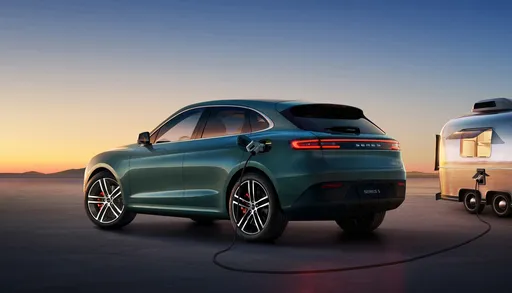
VS

XPeng G6 vs SERES 5 - Differences and prices compared

Compare performance (487 HP vs 585 HP), boot space and price (37400 £ vs 55700 £ ) at a glance. Find out which car is the better choice for you – XPeng G6 or SERES 5?

G6

Battle of the Electric SUVs: XPeng G6 vs SERES 5

The electric SUV market continues to heat up as innovative contenders like the XPeng G6 and the SERES 5 vie for supremacy. Both vehicles, set to be 2024 models, bring a range of technical innovations and styling cues to appeal to the modern, eco-conscious consumer. Let's dive deep into the specifics of these two formidable models.
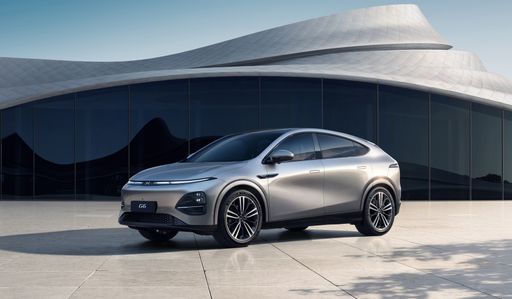
G6

Power and Performance

The XPeng G6 offers a range of drive types: rear-wheel drive and all-wheel drive, with power outputs of 286, 476, and 258 HP, thanks to its versatile setup. With acceleration from 0-100 km/h in as little as 4.1 seconds, the G6 matches high performance with efficiency. Its torque varies between 440 and 660 Nm, providing a responsive driving experience.

On the other hand, the SERES 5 exclusively features an all-wheel-drive setup and a powerful 646 HP engine under the hood, allowing it to match the G6’s fastest acceleration time at 4.1 seconds. SERES wins out in terms of torque as well, boasting a robust 940 Nm. This power translates into a thrilling drive, ideal for enthusiasts seeking potent electric prowess.

Electric Range and Efficiency

The XPeng G6 stands out with its impressive electric range. Depending on the configuration, one can expect a range of up to 570 km, surpassing the SERES 5, which offers a 430 km range. The G6 achieves this efficiency with consumption rates between 17.5 and 17.9 kWh/100 km, contrasting with the SERES 5's slightly higher 18.6 kWh/100 km.

Both models feature a CO2 efficiency class of 'A', aligned with the push towards greener driving solutions.

Design and Dimensions

When it comes to aesthetics and practicality, both SUVs sport sleek, modern designs. The XPeng G6 presents itself with a length of 4753 mm, a width of 1920 mm, and a height of 1650 mm. It accommodates five passengers comfortably and provides a substantial trunk capacity of 571 liters, perfect for family adventures or long-road trips.

The SERES 5, slightly more compact at 4700 mm in length, 1930 mm in width, and 1625 mm in height, also seats five. However, it offers a smaller trunk capacity at 367 liters, which might be a deciding factor for those who prioritize carrying space.

Weight and Payload

In terms of curb weight, the XPeng G6 weighs between 2025 kg to 2120 kg whereas the heavier SERES 5 comes in at 2360 kg. The payload reflects a similar pattern, with the G6 supporting around 518-528 kg, compared to SERES 5’s 375 kg. These specs may influence consumer choice, especially for those who frequently transport heavy loads.

Conclusion

The XPeng G6 and SERES 5 each bring compelling offerings to the electric SUV field. The G6 stands out with its extended range and larger cargo capacity, making it an excellent choice for range-anxious consumers or families needing extra space. Conversely, the SERES 5 channels its focus on sheer power and torque, ideal for adrenaline-lovers seeking a high-performance electric SUV. As consumer preferences evolve, both of these innovative vehicles are likely to shape the future narrative of electric transport.

XPeng G6

5 (3 Reviews)
rate

SERES 5

Here’s where it gets real: The technical differences in detail

Costs and Efficiency:

When it comes to price and running costs, the biggest differences usually appear. This is often where you see which car fits your budget better in the long run.

XPeng G6 has a significantly advantage in terms of price – it starts at 37400 £ , while the SERES 5 costs 55700 £ . That’s a price difference of around 18334 £.

In terms of energy consumption, the advantage goes to the XPeng G6: with 17.30 kWh per 100 km, it’s hardly perceptible more efficient than the SERES 5 with 18.60 kWh. That’s a difference of about 1.30 kWh.

As for electric range, the XPeng G6 performs slightly better – achieving up to 525 km, about 95 km more than the SERES 5.

Engine and Performance:

Power, torque and acceleration are the classic benchmarks for car enthusiasts – and here, some clear differences start to show.

When it comes to engine power, the SERES 5 has a somewhat edge – offering 585 HP compared to 487 HP. That’s roughly 98 HP more horsepower.

Both models accelerate almost equally fast – 4.10 s from 0 to 100 km/h.

There’s also a difference in torque: SERES 5 pulls noticeable stronger with 940 Nm compared to 660 Nm. That’s about 280 Nm difference.

Space and Everyday Use:

Cabin size, boot volume and payload all play a role in everyday practicality. Here, comfort and flexibility make the difference.

Both vehicles offer seating for 5 people.

In curb weight, XPeng G6 is to a small extent lighter – 2065 kg compared to 2360 kg. The difference is around 295 kg.

In terms of boot space, the XPeng G6 offers noticeable more room – 571 L compared to 367 L. That’s a difference of about 204 L.

When it comes to payload, XPeng G6 noticeable takes the win – 475 kg compared to 375 kg. That’s a difference of about 100 kg.

Who wins the race in the data check?

The XPeng G6 is far ahead overall in the objective data comparison.
This result only shows which model scores more points on paper – not which of the two cars feels right for you.

XPeng G6
SERES 5

Costs and Consumption

View detailed analysis

Engine and Performance

View detailed analysis

Dimensions and Body

View detailed analysis
from about £37,400
G6

XPeng G6

  • Engine Type : Electric
  • Transmission : Automatic
  • Drive Type : Rear-Wheel Drive, All-Wheel Drive
  • Power HP : 252 - 487 HP
  • Consumption kWh/100km : 17.3 - 18.4 kWh
  • Electric Range : 455 - 525 km

XPeng G6

5 (3 Reviews)
rate

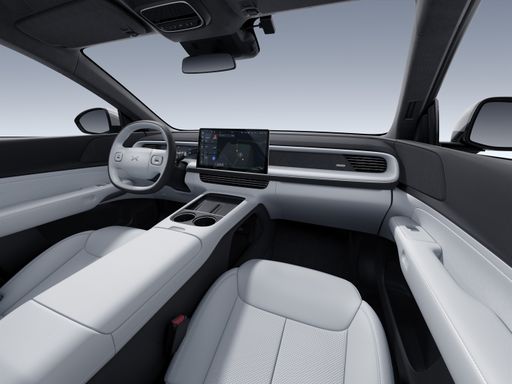
The XPeng G6 looks like a sleeker, tech-rich alternative to conventional electric SUVs, with an interior that feels modern, airy and purposefully designed for everyday comfort. On the road it’s composed and surprisingly engaging, giving drivers a smart mix of calm refinement and a playful streak — not bad for a car that quietly challenges the usual premium suspects.

details

SERES 5

The Seres 5 carves a convincing niche in the crowded compact crossover market with bold styling and a surprisingly upscale cabin that feels larger than its footprint suggests. It’s an easy, fuss-free choice for shoppers after modern EV practicality and sensible running costs, delivered with a friendly personality that won’t try to outshine more expensive rivals.

details
XPeng G6
SERES 5

Costs and Consumption

Price
37400 - 44200 £
Price
55700 £
Consumption L/100km
-
Consumption L/100km
-
Consumption kWh/100km
17.3 - 18.4 kWh
Consumption kWh/100km
18.60 kWh
Electric Range
455 - 525 km
Electric Range
430 km
Battery Capacity
-
Battery Capacity
-
co2
0 g/km
co2
0 g/km
Fuel tank capacity
-
Fuel tank capacity
-

Dimensions and Body

Body Type
SUV
Body Type
SUV
Seats
5
Seats
5
Doors
-
Doors
-
Curb weight
2065 - 2220 kg
Curb weight
2360 kg
Trunk capacity
571 L
Trunk capacity
367 L
Length
-
Length
-
Width
1920 mm
Width
1930 mm
Height
-
Height
-
Max trunk capacity
-
Max trunk capacity
-
Payload
470 - 475 kg
Payload
375 kg

Engine and Performance

Engine Type
Electric
Engine Type
Electric
Transmission
Automatic
Transmission
Automatic
Transmission Detail
Reduction Gearbox
Transmission Detail
Reduction Gearbox
Drive Type
Rear-Wheel Drive, All-Wheel Drive
Drive Type
All-Wheel Drive
Power HP
252 - 487 HP
Power HP
585 HP
Acceleration 0-100km/h
4.1 - 6.9 s
Acceleration 0-100km/h
4.10 s
Max Speed
-
Max Speed
-
Torque
440 - 660 Nm
Torque
940 Nm
Number of Cylinders
-
Number of Cylinders
-
Power kW
185 - 358 kW
Power kW
430 kW
Engine capacity
-
Engine capacity
-

General

Model Year
2025
Model Year
2024
CO2 Efficiency Class
A
CO2 Efficiency Class
A
Brand
XPeng
Brand
SERES
Is the XPeng G6 offered with different drivetrains?

Available configurations include Rear-Wheel Drive or All-Wheel Drive.

The prices shown are estimates based on German list prices, adjusted for local VAT. Local registration taxes (e.g. NoVA, BPM or CO2 malus) are not included. This information is not legally binding.