VS

Skoda Kamiq vs Audi Q3 comparison

Compare performance (150 HP vs 272 HP), boot space and price (22,300 £ vs 38,200 £ ) at a glance. Find out which car is the better choice for you – Skoda Kamiq or Audi Q3?

Skoda Kamiq vs Audi Q3: Key differences

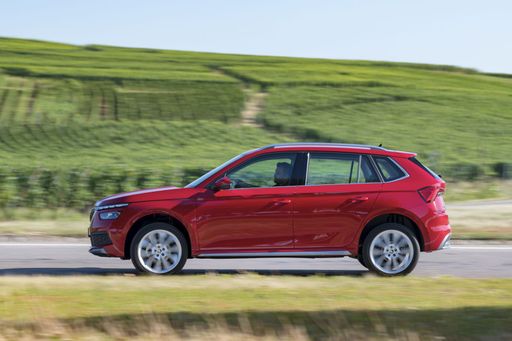
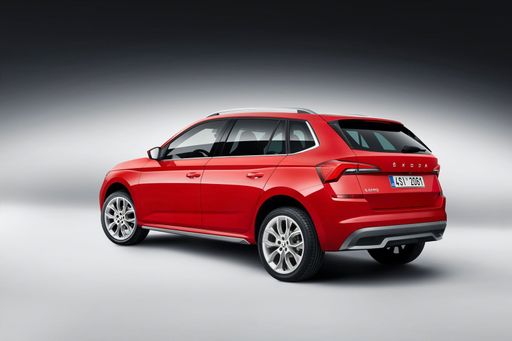
Skoda Kamiq

5 (5 Reviews)
rate
  • considerably cheaper
  • clearly lighter
details

Audi Q3

4.2 (3 Reviews)
rate
  • clearly more power
  • clearly more efficient
  • substantially quicker 0–100 km/h
  • a bit more trunk space
details

All details on performance, efficiency, range and trunk space can be found in the technical comparison below – including user reviews for both models.

By Achim Sedelmaier

Kamiq

A Battle of Compact SUVs: Audi Q3 vs. Skoda Kamiq

In the bustling market of compact SUVs, few vehicles stand out as much as the Audi Q3 and the Skoda Kamiq. Each carries the hallmark of German engineering and offers unique features to captivate prospective buyers. This article dives deep into a face-off between these two models, examining their technical aspects, innovations, and what makes each of them distinct.
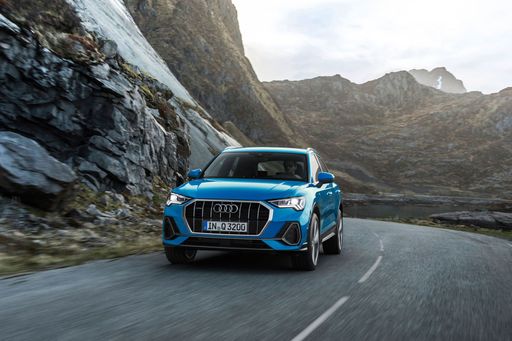
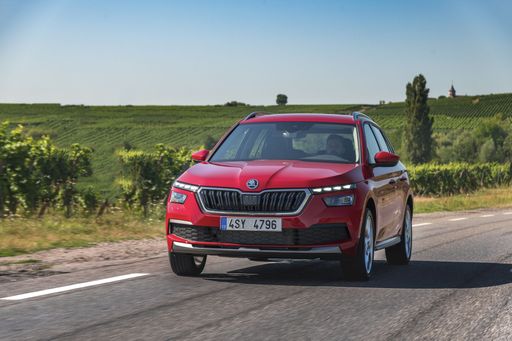
Q3

Performance and Drivability

The Audi Q3 offers a versatile range of engine types, including both petrol and diesel options, catering to various preferences. With a wider horsepower range from 150 to 245 HP, the Q3 promises dynamic driving experiences, with a top speed reaching up to 233 km/h. It also offers more flexibility with transmission choices, sporting both manual and dual-clutch automatic options, and a choice between front-wheel drive and all-wheel drive for different terrains and driving conditions.

On the other hand, the Skoda Kamiq is exclusively petrol-driven, focusing on simplicity and efficiency. The Kamiq's engine outputs range from 95 to 150 HP, with a maximum speed of 214 km/h. While it offers the same transmission types as the Q3, it commits solely to front-wheel drive, making it a straightforward choice for urban and suburban driving.

Kamiq

Fuel Efficiency and Environmental Impact

With growing awareness of environmental impact, fuel efficiency is crucial. The Kamiq scores well in fuel consumption, achieving 5.4 to 5.7 L/100km. Its CO2 emissions are also modest, ranging between 121 and 130 g/km, aligning with a better CO2 efficiency class of D.

The Audi Q3, despite its powerful engine options, presents a higher fuel consumption ranging from 5.5 to 8.5 L/100km, depending on the model configuration. Its CO2 emissions span from 143 to 193 g/km, categorizing it under efficiency classes E to G. However, the Q3 compensates for this with higher performance metrics.

Q3

Design and Dimensions

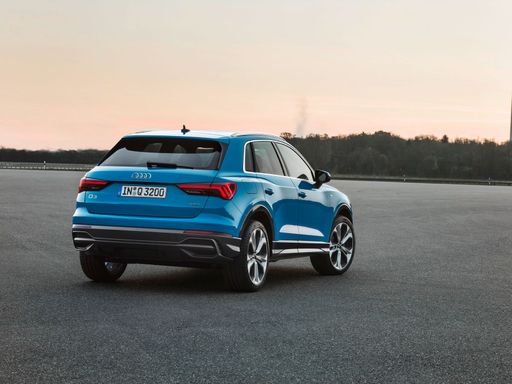
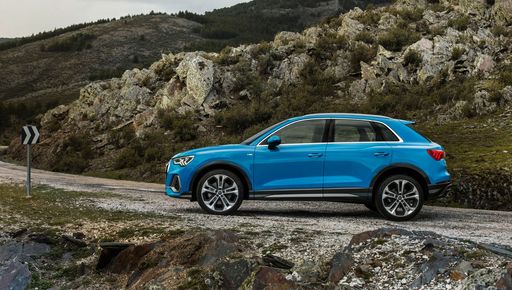
In terms of design, the Audi Q3 has a more robust presence with a length of 4484 to 4500 mm, a width of 1843 to 1849 mm, and a height of 1567 to 1585 mm. Its larger dimensions translate into more interior space and trunk capacity, offering 530 liters for cargo.

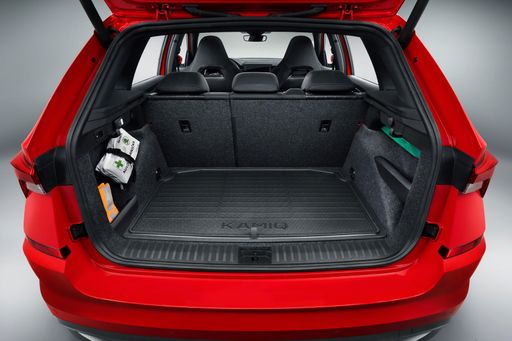
The Skoda Kamiq, with its compact form factor of 4241 mm length, 1793 mm width, and 1562 mm height, is designed for city convenience while still providing a substantial trunk capacity of 400 liters. The compact size aids in maneuverability and parking ease, especially in crowded urban settings.

Kamiq

Interior and Comfort

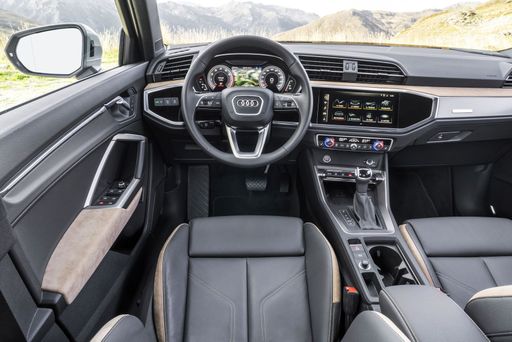
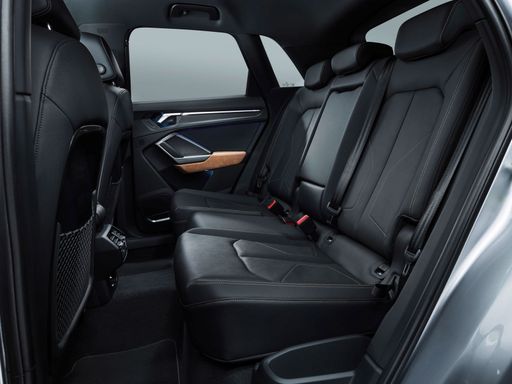
Both SUVs offer seating for five, blending utility with comfort. The Audi Q3's slightly larger interior dimensions afford it an edge in legroom and space comfort for all passengers. Meanwhile, the Kamiq’s interior design is known for its practicality and clever use of space, accommodating passengers comfortably despite the vehicle's smaller stature.

Q3

Conclusion: Making the Choice

Choosing between the Audi Q3 and the Skoda Kamiq ultimately comes down to priorities. The Audi Q3 appeals to those who value performance, luxury, and a broad engine selection. Its higher power output and optional all-wheel-drive system are tailored for those who enjoy a dynamic driving experience.

The Skoda Kamiq is the perfect match for drivers seeking efficiency, simplicity, and practicality. Its compact size and superior fuel economy make it an ideal companion for urban environments and daily commutes.

Both vehicles boast the reliability and quality expected from their respective brands, making them excellent contenders in the compact SUV segment. The decision rests on whether one's preference leans towards sheer power and luxury or efficient, no-nonsense practicality.

Here’s where it gets real: The technical differences in detail

Kamiq

Costs and Efficiency:

Price and efficiency are often the first things buyers look at. Here it becomes clear which model has the long-term edge – whether at the pump, the plug, or in purchase price.

Skoda Kamiq is considerably cheaper – starting at 22,300 £ , while the Audi Q3 costs 38,200 £ . That’s a price difference of around 15,960 £.

Fuel consumption also shows a difference: the Audi Q3 uses 1.7 L/100km and is clearly more efficient than the Skoda Kamiq with 5.3 L/100km. The difference is about 3.6 L/100km.

Q3

Engine and Performance:

Under the bonnet, it becomes clear which model is tuned for sportiness and which one takes the lead when you hit the accelerator.

When it comes to engine power, the Audi Q3 offers clearly more power – delivering 272 HP compared to 150 HP. That’s roughly 122 HP more horsepower.

When accelerating from 0 to 100 km/h, the Audi Q3 is substantially quicker – completing the sprint in 5.7 s, while the Skoda Kamiq takes 8.1 s. That’s about 2.4 s quicker.

There’s also a difference in torque: the Audi Q3 delivers clearly more torque with 400 Nm compared to 250 Nm. That’s about 150 Nm more.

Kamiq

Space and Everyday Use:

Cabin size, boot volume and payload all play a role in everyday practicality. Here, comfort and flexibility make the difference.

Both vehicles offer seating for 5 people.

In terms of curb weight, Skoda Kamiq is clearly lighter – 1,231 kg compared to 1,635 kg. The difference is around 404 kg.

Looking at boot space, the Audi Q3 offers a bit more boot space – 488 L compared to 400 L. That’s a difference of about 88 L.

When it comes to payload, the Skoda Kamiq carries barely more – 539 kg compared to 535 kg. That’s a difference of about 4 kg.

Who wins the race in the data check?

The Audi Q3 is far ahead overall in the objective data comparison.
This result only shows which model scores more points on paper – not which of the two cars feels right for you.

from £38,200
Q3

Audi Q3

  • Engine Type : Petrol MHEV, Petrol, Plugin Hybrid, Diesel
  • Transmission : Automatic
  • Drive Type : Front-Wheel Drive, All-Wheel Drive
  • Power HP : 150 - 272 HP
  • Consumption L/100km : 1.7 - 8.6 L/100km
  • Electric Range : 118 - 119 km
Skoda Kamiq
Audi Q3

Costs and Consumption

View detailed analysis

Engine and Performance

View detailed analysis

Dimensions and Body

View detailed analysis

Skoda Kamiq

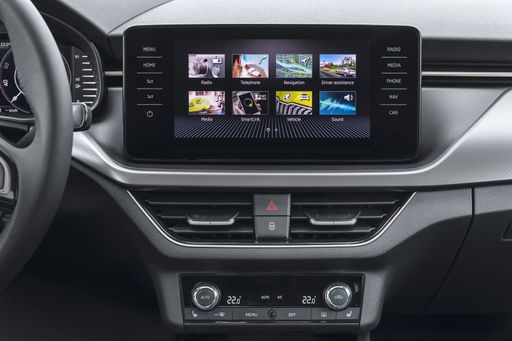
The Skoda Kamiq is a practical, well-built small crossover that mixes city-friendly manners with surprisingly versatile interior space and clever storage solutions. It offers a comfortable ride, user-friendly technology and solid value, making it a sensible choice for everyday driving.

details

Audi Q3

The Audi Q3 is a compact premium crossover that blends sharp styling with a well-crafted interior, making it an appealing choice for urban drivers who want a touch of luxury. It delivers a composed ride, intuitive tech features and a practical cabin, so it works well as a comfortable daily driver with an upscale feel.

details
Skoda Kamiq
Audi Q3

Costs and Consumption

Price
22,300 - 32,700 £
Price
38,200 - 52,900 £
Consumption L/100km
5.3 - 5.7 L/100km
Consumption L/100km
1.7 - 8.6 L/100km
Consumption kWh/100km
-
Consumption kWh/100km
-
Electric Range
-
Electric Range
118 - 119 km
Battery Capacity
-
Battery Capacity
-
co2
121 - 128 g/km
co2
39 - 195 g/km
Fuel tank capacity
-
Fuel tank capacity
-

Dimensions and Body

Body Type
SUV
Body Type
SUV
Seats
5
Seats
5
Doors
-
Doors
-
Curb weight
1,231 - 1,340 kg
Curb weight
1,635 - 1,900 kg
Trunk capacity
400 L
Trunk capacity
375 - 488 L
Length
-
Length
-
Width
1,793 mm
Width
1,859 mm
Height
-
Height
-
Max trunk capacity
-
Max trunk capacity
-
Payload
439 - 539 kg
Payload
505 - 535 kg

Engine and Performance

Engine Type
Petrol
Engine Type
Petrol MHEV, Petrol, Plugin Hybrid, Diesel
Transmission
Manuel, Automatic
Transmission
Automatic
Transmission Detail
Manual Gearbox, Dual-Clutch Automatic
Transmission Detail
Dual-Clutch Automatic
Drive Type
Front-Wheel Drive
Drive Type
Front-Wheel Drive, All-Wheel Drive
Power HP
95 - 150 HP
Power HP
150 - 272 HP
Acceleration 0-100km/h
8.1 - 11 s
Acceleration 0-100km/h
5.7 - 9.2 s
Max Speed
-
Max Speed
-
Torque
175 - 250 Nm
Torque
250 - 400 Nm
Number of Cylinders
3 - 4
Number of Cylinders
4
Power kW
70 - 110 kW
Power kW
110 - 200 kW
Engine capacity
999 - 1,498 cm3
Engine capacity
1,498 - 1,984 cm3

General

Model Year
2025
Model Year
2,025 - 2,026
CO2 Efficiency Class
D
CO2 Efficiency Class
E, G, B, F
Brand
Skoda
Brand
Audi
DriveDuel uses data analysis and artificial intelligence to evaluate vehicle data and create content. Content is regularly reviewed and improved. The displayed prices are estimates based on German list prices, adjusted to the respective country’s VAT. Country-specific registration taxes are not included. This information is not legally binding.