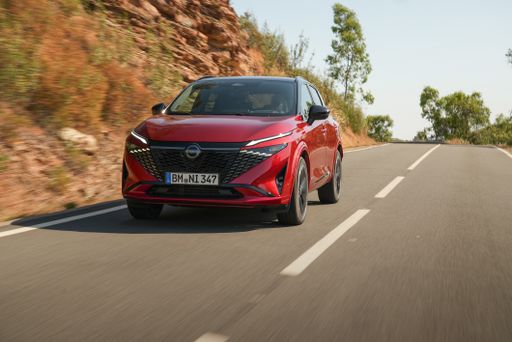
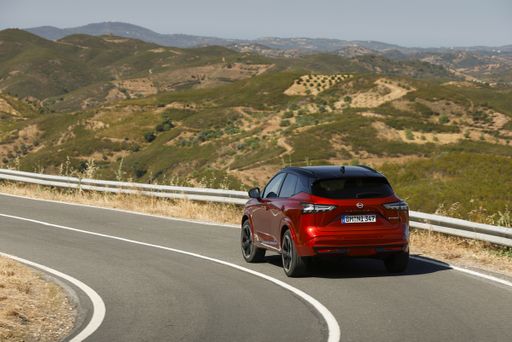
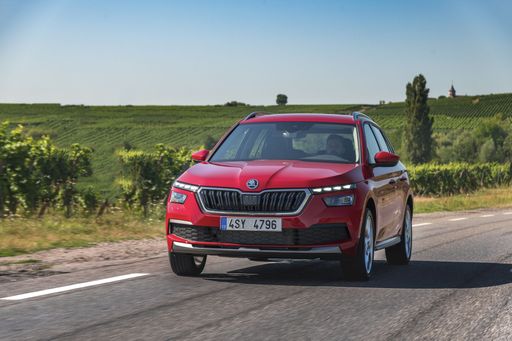
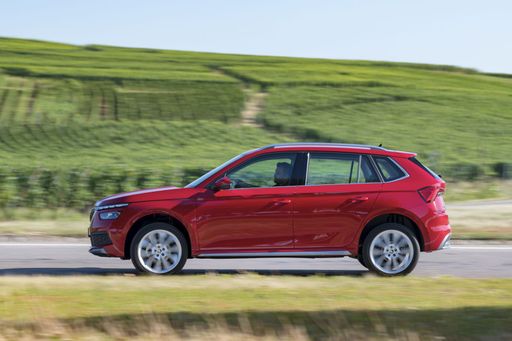
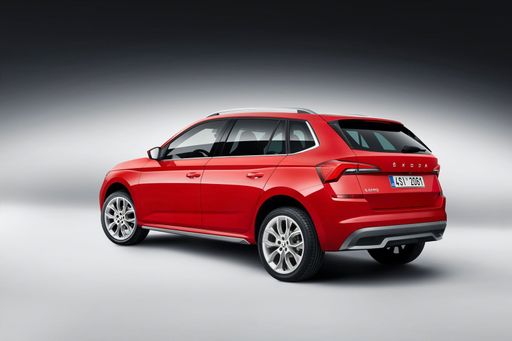
Compare performance (205 HP vs 150 HP), boot space and price (29600 £ vs 21700 £ ) at a glance. Find out which car is the better choice for you – Nissan Qashqai or Skoda Kamiq?
Price and efficiency are often the first things buyers look at. Here it becomes clear which model has the long-term edge – whether at the pump, the plug, or in purchase price.
Skoda Kamiq has a distinct advantage in terms of price – it starts at 21700 £ , while the Nissan Qashqai costs 29600 £ . That’s a price difference of around 7894 £.
Fuel consumption also shows a difference: Nissan Qashqai manages with 4.50 L and is therefore a bit more efficient than the Skoda Kamiq with 5.30 L. The difference is about 0.80 L per 100 km.
Under the bonnet, it becomes clear which model is tuned for sportiness and which one takes the lead when you hit the accelerator.
When it comes to engine power, the Nissan Qashqai has a noticeable edge – offering 205 HP compared to 150 HP. That’s roughly 55 HP more horsepower.
In acceleration from 0 to 100 km/h, the Nissan Qashqai is minimal quicker – completing the sprint in 7.60 s, while the Skoda Kamiq takes 8.10 s. That’s about 0.50 s faster.
In terms of top speed, the Skoda Kamiq performs slight better – reaching 216 km/h, while the Nissan Qashqai tops out at 206 km/h. The difference is around 10 km/h.
There’s also a difference in torque: Nissan Qashqai pulls clearly perceptible stronger with 330 Nm compared to 250 Nm. That’s about 80 Nm difference.
Whether family car or daily driver – which one offers more room, flexibility and comfort?
Both vehicles offer seating for 5 people.
In curb weight, Skoda Kamiq is a bit lighter – 1231 kg compared to 1420 kg. The difference is around 189 kg.
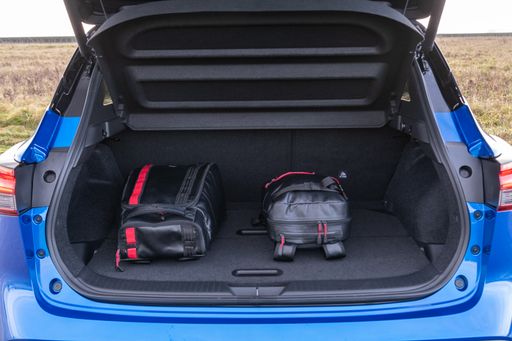
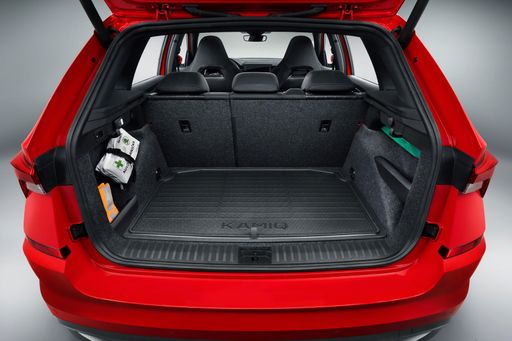
In terms of boot space, the Nissan Qashqai offers noticeable more room – 504 L compared to 400 L. That’s a difference of about 104 L.
In maximum load capacity, the Nissan Qashqai performs hardly perceptible better – up to 1447 L, which is about 52 L more than the Skoda Kamiq.
When it comes to payload, Skoda Kamiq barely noticeable takes the win – 539 kg compared to 520 kg. That’s a difference of about 19 kg.
The Nissan Qashqai is clearly superior overall in the objective data comparison.
This result only shows which model scores more points on paper – not which of the two cars feels right for you.
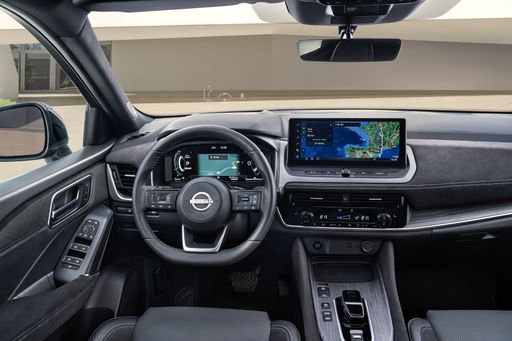
The Nissan Qashqai blends practical, family-friendly packaging with SUV styling that refuses to shout, making it a sensible and dependable choice for everyday life. It’s comfortable to live with, economical on the road, and neatly equipped enough to feel modern without ever feeling precious — perfect if you want crossover versatility without the drama.
detailsCosts and Consumption |
|
|---|---|
|
Price
29600 - 39900 £
|
Price
21700 - 31900 £
|
|
Consumption L/100km
4.5 - 6.8 L
|
Consumption L/100km
5.3 - 5.7 L
|
|
Consumption kWh/100km
-
|
Consumption kWh/100km
-
|
|
Electric Range
-
|
Electric Range
-
|
|
Battery Capacity
-
|
Battery Capacity
-
|
|
co2
102 - 154 g/km
|
co2
121 - 128 g/km
|
|
Fuel tank capacity
55 L
|
Fuel tank capacity
50 L
|
Dimensions and Body |
|
|---|---|
|
Body Type
SUV
|
Body Type
SUV
|
|
Seats
5
|
Seats
5
|
|
Doors
5
|
Doors
5
|
|
Curb weight
1420 - 1665 kg
|
Curb weight
1231 - 1340 kg
|
|
Trunk capacity
479 - 504 L
|
Trunk capacity
400 L
|
|
Length
4425 mm
|
Length
4241 mm
|
|
Width
1835 mm
|
Width
1793 mm
|
|
Height
1625 mm
|
Height
1562 mm
|
|
Max trunk capacity
1422 - 1447 L
|
Max trunk capacity
1395 L
|
|
Payload
466 - 520 kg
|
Payload
439 - 539 kg
|
Engine and Performance |
|
|---|---|
|
Engine Type
Petrol MHEV, Full Hybrid
|
Engine Type
Petrol
|
|
Transmission
Manuel, Automatic
|
Transmission
Manuel, Automatic
|
|
Transmission Detail
Manual Gearbox, CVT, Reduction Gearbox
|
Transmission Detail
Manual Gearbox, Dual-Clutch Automatic
|
|
Drive Type
Front-Wheel Drive, All-Wheel Drive
|
Drive Type
Front-Wheel Drive
|
|
Power HP
140 - 205 HP
|
Power HP
95 - 150 HP
|
|
Acceleration 0-100km/h
7.6 - 10.2 s
|
Acceleration 0-100km/h
8.1 - 11 s
|
|
Max Speed
170 - 206 km/h
|
Max Speed
183 - 216 km/h
|
|
Torque
240 - 330 Nm
|
Torque
175 - 250 Nm
|
|
Number of Cylinders
3 - 4
|
Number of Cylinders
3 - 4
|
|
Power kW
103 - 151 kW
|
Power kW
70 - 110 kW
|
|
Engine capacity
1332 - 1498 cm3
|
Engine capacity
999 - 1498 cm3
|
General |
|
|---|---|
|
Model Year
2025
|
Model Year
2025
|
|
CO2 Efficiency Class
E, C
|
CO2 Efficiency Class
D
|
|
Brand
Nissan
|
Brand
Skoda
|
Available configurations include Front-Wheel Drive or All-Wheel Drive.