VS

Skoda Kamiq vs Hyundai Kona comparison

Compare performance (150 HP vs 218 HP), boot space and price (22,300 £ vs 23,100 £ ) at a glance. Find out which car is the better choice for you – Skoda Kamiq or Hyundai Kona?

Skoda Kamiq vs Hyundai Kona: Key differences

Skoda Kamiq

5 (5 Reviews)
rate
  • very slightly cheaper
  • slightly lighter

Hyundai Kona

5 (1 Reviews)
rate
  • noticeably more power
  • a bit more efficient
  • very slightly quicker 0–100 km/h
  • slightly more trunk space
Kamiq

The automotive market continues to evolve, with manufacturers like Hyundai and Skoda making significant strides in the compact SUV segment. The 2024 Hyundai Kona and Skoda Kamiq are two contenders vying for consumer attention. As we delve into their specifications and innovative features, it’s clear that both vehicles bring a lot to the table. However, each offers something unique that may sway buyer preferences.

Kona

Performance and Engine Options

Starting with performance, the Hyundai Kona presents a versatile lineup of engine options including petrol, hybrid, and electric variants. Power outputs range from a modest 100 HP to a robust 218 HP, allowing consumers to choose based on their driving preferences. The Kona excels with an electric variant that boasts an impressive range of up to 514 km on a single charge, appealing to the eco-conscious driver.

The Skoda Kamiq, on the other hand, sticks to traditional petrol engines with power outputs ranging from 95 HP to 150 HP. While the Kamiq may not offer the extensive powertrain options seen in the Kona, its efficient petrol engines provide a delightful driving experience. Fuel consumption is commendable, averaging between 5.4 to 5.7 L/100 km across its variants, making it an economical choice for daily commutes.

Kamiq

Transmission and Driving Dynamics

Both vehicles provide manual and automatic transmission options, with the Hyundai Kona offering a more advanced dual-clutch gearbox in some variants. The ability to choose between front-wheel and all-wheel drive in the Kona adds versatility for different driving conditions. The Kamiq, however, is limited to front-wheel drive, which may suffice for urban driving but lacks the all-terrain capability some buyers may desire.

Kona

Dimensions and Interior Space

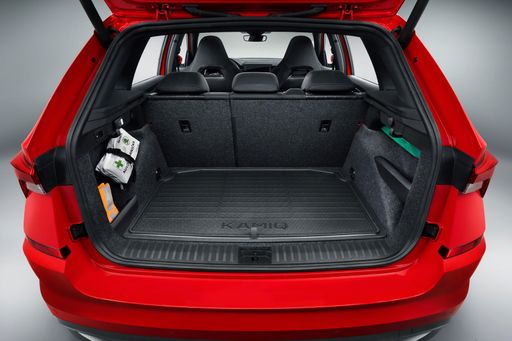
In terms of dimensions, the Hyundai Kona measures 4,350 mm in length with a trunk capacity of 466 liters, outclassing the Kamiq's 4,241 mm length and 400 liters of cargo space. Both models offer ample room for five passengers, but the Kona provides extra space for luggage, making it more practical for family outings or road trips.

Kamiq

Safety Features and Technology

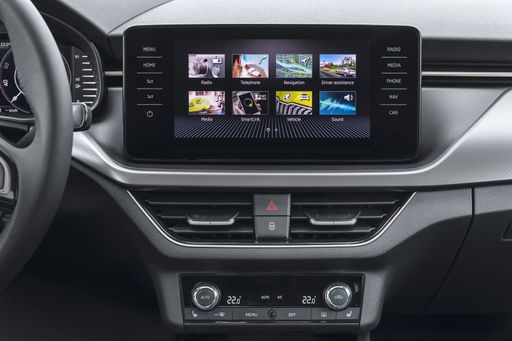
When it comes to safety, both Hyundai and Skoda have packed their vehicles with innovative technologies. The Kona incorporates an array of cutting-edge safety systems, including forward collision warning, lane-keeping assist, and adaptive cruise control. Its dashboard features a user-friendly infotainment system that supports Apple CarPlay and Android Auto, enhancing connectivity on the go.

Similarly, the Skoda Kamiq is equipped with advanced driver-assistance systems, but its tech features may be perceived as less sophisticated compared to the Kona. However, it compensates with a no-nonsense approach that emphasizes functionality and ease of use, catering to drivers who prefer simplicity over complexity.

Kona

Design and Aesthetics

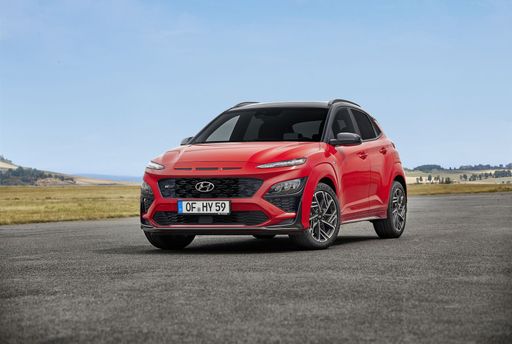
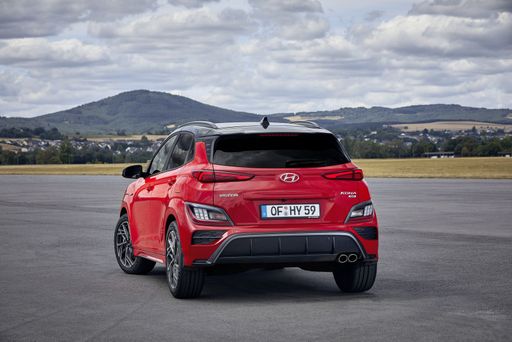
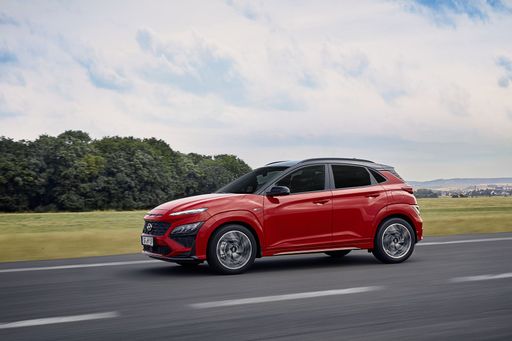
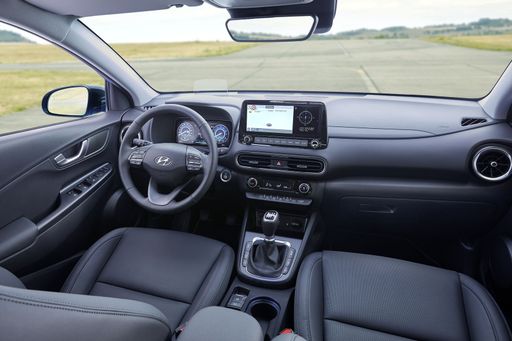
Aesthetic appeal often plays a crucial role in consumer choice. The Hyundai Kona presents a bold and sporty design with striking lines and an aggressive stance, making it stand out in the crowded SUV market. The interior features a modern layout with high-quality materials, delivering a premium feel.

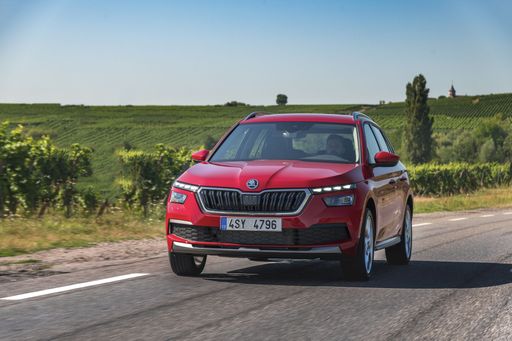
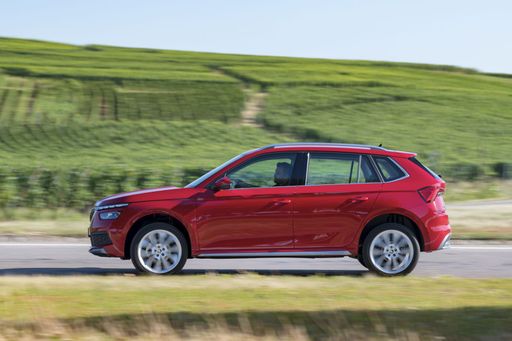
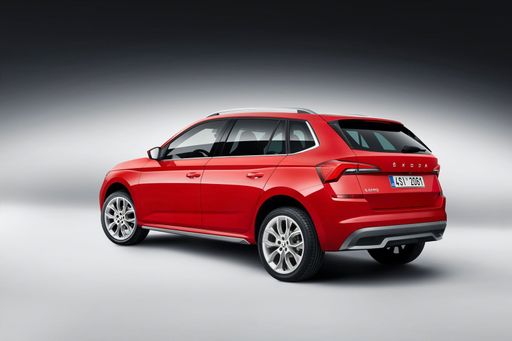
The Skoda Kamiq, while slightly more understated in design, exudes an elegant personality. Its spacious interior is thoughtfully designed with ergonomic seats and intuitive controls, ensuring a pleasant driving experience. The Kamiq balances functionality with style, appealing to a broader audience who may prioritize practicality.

Kamiq

Conclusion: Which SUV Reigns Supreme?

In the battle of the compact SUVs, the 2024 Hyundai Kona and Skoda Kamiq both showcase their strengths and weaknesses. The Kona shines with its diverse engine lineup, advanced technology, and spacious design, appealing to those who want a versatile and stylish vehicle. In contrast, the Kamiq’s solid fuel efficiency and straightforward approach may win over buyers seeking reliability and practicality.

Ultimately, the choice between the Hyundai Kona and Skoda Kamiq will depend on personal preferences regarding engine options, design aesthetics, and technological features. Regardless of which model you choose, both vehicles promise a blend of comfort, style, and performance fitting for today’s modern driver.

Here’s where it gets real: The technical differences in detail

Kamiq

Costs and Efficiency:

When it comes to price and running costs, the biggest differences usually appear. This is often where you see which car fits your budget better in the long run.

Skoda Kamiq is very slightly cheaper – starting at 22,300 £ , while the Hyundai Kona costs 23,100 £ . That’s a price difference of around 789 £.

Fuel consumption also shows a difference: the Hyundai Kona uses 4.6 L/100km and is a bit more efficient than the Skoda Kamiq with 5.3 L/100km. The difference is about 0.7 L/100km.

Kona

Engine and Performance:

Power, torque and acceleration are the classic benchmarks for car enthusiasts – and here, some clear differences start to show.

When it comes to engine power, the Hyundai Kona offers noticeably more power – delivering 218 HP compared to 150 HP. That’s roughly 68 HP more horsepower.

When accelerating from 0 to 100 km/h, the Hyundai Kona is very slightly quicker – completing the sprint in 7.8 s, while the Skoda Kamiq takes 8.1 s. That’s about 0.3 s quicker.

Looking at top speed, the Skoda Kamiq is markedly faster – reaching 216 km/h, while the Hyundai Kona tops out at 172 km/h. The difference is around 44 km/h.

There’s also a difference in torque: the Hyundai Kona delivers only slightly more torque with 265 Nm compared to 250 Nm. That’s about 15 Nm more.

Kamiq

Space and Everyday Use:

Beyond pure performance, interior space and usability matter most in daily life. This is where you see which car is more practical and versatile.

Both vehicles offer seating for 5 people.

In terms of curb weight, Skoda Kamiq is slightly lighter – 1,231 kg compared to 1,370 kg. The difference is around 139 kg.

Looking at boot space, the Hyundai Kona offers slightly more boot space – 466 L compared to 400 L. That’s a difference of about 66 L.

For maximum load capacity, the Skoda Kamiq offers only slightly more capacity – up to 1,395 L, about 95 L more than the Hyundai Kona.

When it comes to payload, the Skoda Kamiq carries barely more – 539 kg compared to 490 kg. That’s a difference of about 49 kg.

Who wins the race in the data check?

The Hyundai Kona stands well ahead of its rival in the objective data comparison.
This result only shows which model scores more points on paper – not which of the two cars feels right for you.

from £23,100
Kona

Hyundai Kona

  • Engine Type : Electric, Petrol, Full Hybrid
  • Transmission : Automatic, Manuel
  • Drive Type : Front-Wheel Drive, All-Wheel Drive
  • Power HP : 115 - 218 HP
  • Consumption L/100km : 4.6 - 7 L/100km
  • Consumption kWh/100km : 14.6 - 16.8 kWh/100km
  • Electric Range : 377 - 514 km
Skoda Kamiq
Hyundai Kona

Costs and Consumption

View detailed analysis

Engine and Performance

View detailed analysis

Dimensions and Body

View detailed analysis

Skoda Kamiq

The Skoda Kamiq is a neatly packaged city crossover that pairs practical space with unshowy, thoughtful design. It’s easy to live with, economical to run and full of clever details that make daily driving feel intelligently sorted rather than flashy.

details

Hyundai Kona

The Hyundai Kona wears its personality on the outside with bold styling and sprightly handling that turns city driving into something a little more fun than a commute. It blends practical space, modern tech and sensible running costs into a compact, stylish package — a smart pick if you want flair without paying luxury prices.

details
Skoda Kamiq
Hyundai Kona

Costs and Consumption

Price
22,300 - 32,700 £
Price
23,100 - 41,600 £
Consumption L/100km
5.3 - 5.7 L/100km
Consumption L/100km
4.6 - 7 L/100km
Consumption kWh/100km
-
Consumption kWh/100km
14.6 - 16.8 kWh/100km
Electric Range
-
Electric Range
377 - 514 km
Battery Capacity
-
Battery Capacity
48.4 - 65.4 kWh
co2
121 - 128 g/km
co2
0 - 163 g/km
Fuel tank capacity
50 L
Fuel tank capacity
-

Dimensions and Body

Body Type
SUV
Body Type
SUV
Seats
5
Seats
5
Doors
5
Doors
5
Curb weight
1,231 - 1,340 kg
Curb weight
1,370 - 1,773 kg
Trunk capacity
400 L
Trunk capacity
466 L
Length
4,241 mm
Length
4,355 - 4,385 mm
Width
1,793 mm
Width
1,825 mm
Height
1,562 mm
Height
1,580 mm
Max trunk capacity
1,395 L
Max trunk capacity
1,300 L
Payload
439 - 539 kg
Payload
420 - 490 kg

Engine and Performance

Engine Type
Petrol
Engine Type
Electric, Petrol, Full Hybrid
Transmission
Manuel, Automatic
Transmission
Automatic, Manuel
Transmission Detail
Manual Gearbox, Dual-Clutch Automatic
Transmission Detail
Reduction Gearbox, Manual Gearbox, Dual-Clutch Automatic
Drive Type
Front-Wheel Drive
Drive Type
Front-Wheel Drive, All-Wheel Drive
Power HP
95 - 150 HP
Power HP
115 - 218 HP
Acceleration 0-100km/h
8.1 - 11 s
Acceleration 0-100km/h
7.8 - 11.9 s
Max Speed
183 - 216 km/h
Max Speed
162 - 172 km/h
Torque
175 - 250 Nm
Torque
200 - 265 Nm
Number of Cylinders
3 - 4
Number of Cylinders
3 - 4
Power kW
70 - 110 kW
Power kW
85 - 160 kW
Engine capacity
999 - 1,498 cm3
Engine capacity
998 - 1,598 cm3

General

Model Year
2,025
Model Year
2,024 - 2,025
CO2 Efficiency Class
D
CO2 Efficiency Class
A, D, C, E, F
Brand
Skoda
Brand
Hyundai
DriveDuel uses data analysis and artificial intelligence to evaluate vehicle data and create content. Content is regularly reviewed and improved. The displayed prices are estimates based on German list prices, adjusted to the respective country’s VAT. Country-specific registration taxes are not included. This information is not legally binding.