VS

Skoda Karoq vs Nissan Qashqai comparison

Compare performance (190 HP vs 205 HP), boot space and price (29,100 £ vs 29,600 £ ) at a glance. Find out which car is the better choice for you – Skoda Karoq or Nissan Qashqai?

Skoda Karoq vs Nissan Qashqai: Key differences

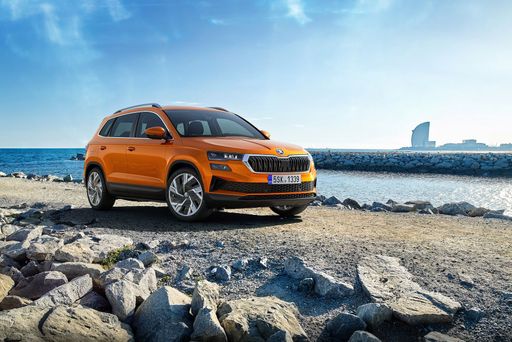
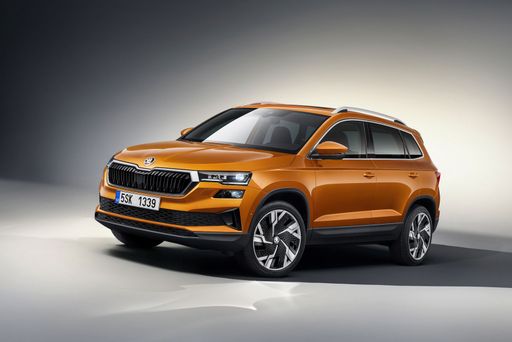
Skoda Karoq

4.6 (2 Reviews)
rate
  • very slightly cheaper
  • very slightly quicker 0–100 km/h
  • very slightly lighter
  • marginally more trunk space

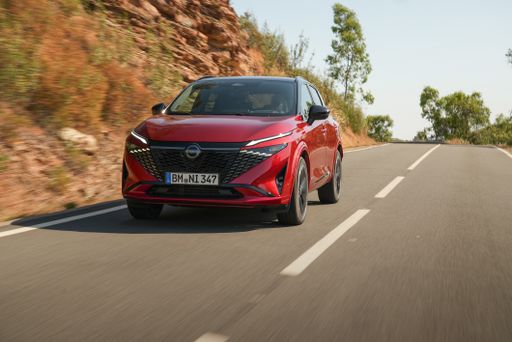
Nissan Qashqai

4.9 (3 Reviews)
rate
  • barely more power
  • barely more efficient
Karoq

Highway Titans: Nissan Qashqai vs Skoda Karoq

The SUV market is no stranger to fierce competition, and two models often compared for their blend of practicality, performance, and innovation are the Nissan Qashqai and the Skoda Karoq. As both vehicles roll out their 2024 models packed with new features, let's delve into a comprehensive analysis to discover which one might better suit your lifestyle.

Qashqai

Performance and Powertrain

When comparing engines, the Nissan Qashqai offers a mix of petrol MHEV (Mild Hybrid Electric Vehicle) and full hybrid options. The Qashqai's engines range from 140 to 190 horsepower, favoring both urban efficiency and more spirited motorway trips. Easy maneuverability is ensured by a selection of transmissions, including a manual gearbox, CVT, and a reduction gearbox, catering to diverse driving preferences.

The Skoda Karoq also presents a couple of enticing choices with both petrol and diesel engines, ranging from 115 to 190 horsepower. Additionally, its transmission options encompass a manual gearbox and an efficient dual-clutch automatic setup, allowing for silky-smooth gear shifts. On paper, the Karoq edges slightly ahead if versatility and fuel options are what you seek.

Karoq

Fuel Efficiency and Environmental Consciousness

For eco-conscious drivers, the Nissan Qashqai predicts fuel consumption between 5.1 and 6.8 liters per 100 km, with CO2 emissions varying between 116 and 154 g/km. In contrast, with the Skoda Karoq, you get a similar fuel efficiency range, consuming between 4.9 and 7.6 liters per 100 km. CO2 emissions hover from 134 to 174 g/km, depending on the engine configuration.

While both cars offer commendable efficiency given their SUV nature, the Qashqai's hybridity gives it a slight edge in lower carbon emissions, an appealing trait for those seeking greener motoring options.

Qashqai

Design and Space

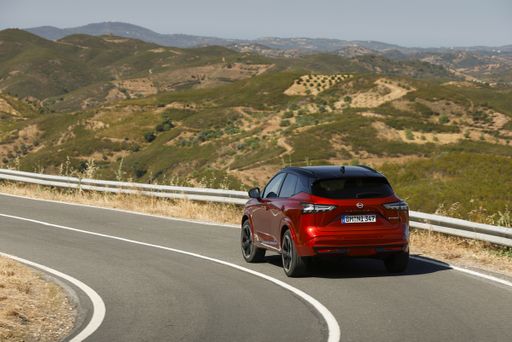
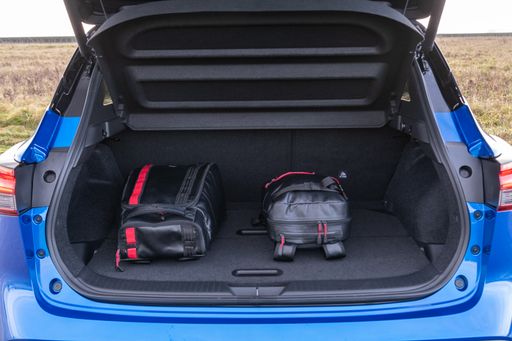
In terms of dimension, the Nissan Qashqai measures 4425mm in length, 1835mm in width, and 1625mm in height. It comfortably seats five passengers and offers a generous trunk capacity of up to 504 liters.

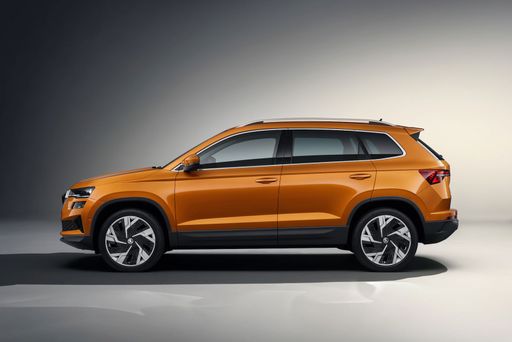
The Skoda Karoq, slightly smaller with a length up to 4390mm, offers ample width and height at 1841mm and 1624mm respectively. The Karoq can seat five passengers comfortably and even slightly surpasses Qashqai's cargo space with a trunk capacity of 521 liters, ideal for family getaways or sports gear storage.

Karoq

Technological Innovations

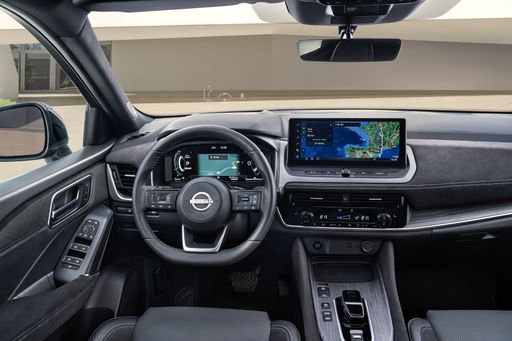
Innovation is the hallmark of both models. The Nissan Qashqai features advanced driver assistance and connectivity systems, enhancing safety and keeping drivers informed with its tech-savvy cockpit.

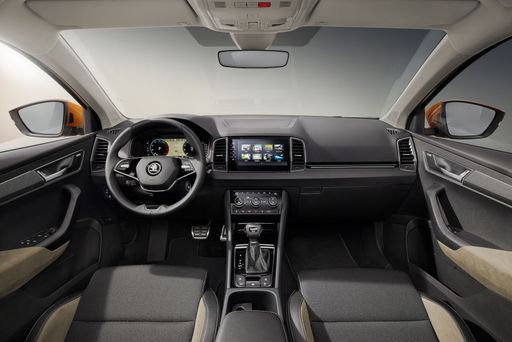
Skoda's Karoq rivals with its own suite of technological offerings, boasting a state-of-the-art infotainment system and a wide range of customizable digital displays, ensuring all necessary information is at the driver's fingertips while promoting an engaging driving experience.

Qashqai

Conclusion

The decision between the Nissan Qashqai and the Skoda Karoq ultimately hinges on individual needs and preferences. If you're after hybrid efficiency and innovative driver assistance, the Qashqai may be your best bet. However, if cargo space and a robust variety of engine types are your priorities, the Karoq presents a compelling case.

As always, personal preference will play a pivotal role, but both contenders stand tall in the SUV arena, promising reliable and enjoyable driving for the 2024 model year and beyond.

Here’s where it gets real: The technical differences in detail

Karoq

Costs and Efficiency:

When it comes to price and running costs, the biggest differences usually appear. This is often where you see which car fits your budget better in the long run.

Skoda Karoq is very slightly cheaper – starting at 29,100 £ , while the Nissan Qashqai costs 29,600 £ . That’s a price difference of around 523 £.

Fuel consumption also shows a difference: the Nissan Qashqai uses 4.5 L/100km and is barely more efficient than the Skoda Karoq with 4.9 L/100km. The difference is about 0.4 L/100km.

Qashqai

Engine and Performance:

Under the bonnet, it becomes clear which model is tuned for sportiness and which one takes the lead when you hit the accelerator.

When it comes to engine power, the Nissan Qashqai offers barely more power – delivering 205 HP compared to 190 HP. That’s roughly 15 HP more horsepower.

When accelerating from 0 to 100 km/h, the Skoda Karoq is very slightly quicker – completing the sprint in 7 s, while the Nissan Qashqai takes 7.6 s. That’s about 0.6 s quicker.

Looking at top speed, the Skoda Karoq is barely faster – reaching 210 km/h, while the Nissan Qashqai tops out at 206 km/h. The difference is around 4 km/h.

There’s also a difference in torque: the Skoda Karoq delivers marginally more torque with 360 Nm compared to 330 Nm. That’s about 30 Nm more.

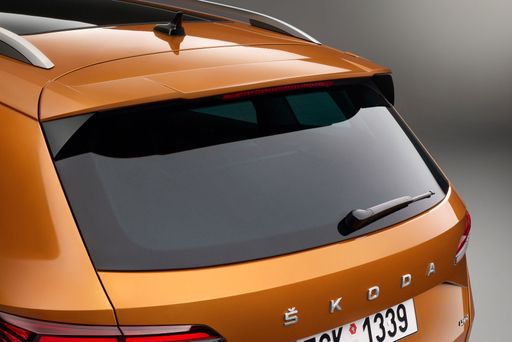
Karoq

Space and Everyday Use:

Whether family car or daily driver – which one offers more room, flexibility and comfort?

Both vehicles offer seating for 5 people.

In terms of curb weight, Skoda Karoq is very slightly lighter – 1,380 kg compared to 1,420 kg. The difference is around 40 kg.

Looking at boot space, the Skoda Karoq offers marginally more boot space – 521 L compared to 504 L. That’s a difference of about 17 L.

For maximum load capacity, the Skoda Karoq offers slightly more capacity – up to 1,630 L, about 183 L more than the Nissan Qashqai.

When it comes to payload, the Skoda Karoq carries only slightly more – 549 kg compared to 520 kg. That’s a difference of about 29 kg.

Who wins the race in the data check?

The Skoda Karoq sits just ahead overall in the objective data comparison.
This result only shows which model scores more points on paper – not which of the two cars feels right for you.

from £29,100
Karoq

Skoda Karoq

  • Engine Type : Petrol, Diesel
  • Transmission : Manuel, Automatic
  • Drive Type : Front-Wheel Drive, All-Wheel Drive
  • Power HP : 115 - 190 HP
  • Consumption L/100km : 4.9 - 7.6 L/100km
Skoda Karoq
Nissan Qashqai

Costs and Consumption

View detailed analysis

Engine and Performance

View detailed analysis

Dimensions and Body

View detailed analysis

Skoda Karoq

The Skoda Karoq is a smart, unfussy compact SUV that blends roomy practicality with a pleasantly composed driving character. It won’t turn heads at a car meet, but it will make daily life easier with clever storage, sensible ergonomics and a reassuringly grown-up ride.

details

Nissan Qashqai

The Nissan Qashqai blends practical, family-friendly packaging with SUV styling that refuses to shout, making it a sensible and dependable choice for everyday life. It’s comfortable to live with, economical on the road, and neatly equipped enough to feel modern without ever feeling precious — perfect if you want crossover versatility without the drama.

details
Skoda Karoq
Nissan Qashqai

Costs and Consumption

Price
29,100 - 41,700 £
Price
29,600 - 39,900 £
Consumption L/100km
4.9 - 7.6 L/100km
Consumption L/100km
4.5 - 6.8 L/100km
Consumption kWh/100km
-
Consumption kWh/100km
-
Electric Range
-
Electric Range
-
Battery Capacity
-
Battery Capacity
-
co2
128 - 173 g/km
co2
102 - 154 g/km
Fuel tank capacity
50 - 55 L
Fuel tank capacity
55 L

Dimensions and Body

Body Type
SUV
Body Type
SUV
Seats
5
Seats
5
Doors
5
Doors
5
Curb weight
1,380 - 1,655 kg
Curb weight
1,420 - 1,665 kg
Trunk capacity
521 L
Trunk capacity
479 - 504 L
Length
4,390 mm
Length
4,425 mm
Width
1,841 mm
Width
1,835 mm
Height
1,624 mm
Height
1,625 mm
Max trunk capacity
1,630 L
Max trunk capacity
1,422 - 1,447 L
Payload
456 - 549 kg
Payload
466 - 520 kg

Engine and Performance

Engine Type
Petrol, Diesel
Engine Type
Petrol MHEV, Full Hybrid
Transmission
Manuel, Automatic
Transmission
Manuel, Automatic
Transmission Detail
Manual Gearbox, Dual-Clutch Automatic
Transmission Detail
Manual Gearbox, CVT, Reduction Gearbox
Drive Type
Front-Wheel Drive, All-Wheel Drive
Drive Type
Front-Wheel Drive, All-Wheel Drive
Power HP
115 - 190 HP
Power HP
140 - 205 HP
Acceleration 0-100km/h
7 - 11.2 s
Acceleration 0-100km/h
7.6 - 10.2 s
Max Speed
192 - 210 km/h
Max Speed
170 - 206 km/h
Torque
200 - 360 Nm
Torque
240 - 330 Nm
Number of Cylinders
3 - 4
Number of Cylinders
3 - 4
Power kW
85 - 140 kW
Power kW
103 - 151 kW
Engine capacity
999 - 1,984 cm3
Engine capacity
1,332 - 1,498 cm3

General

Model Year
2,025
Model Year
2,025 - 2,026
CO2 Efficiency Class
D, E, F
CO2 Efficiency Class
E, C
Brand
Skoda
Brand
Nissan
DriveDuel uses data analysis and artificial intelligence to evaluate vehicle data and create content. Content is regularly reviewed and improved. The displayed prices are estimates based on German list prices, adjusted to the respective country’s VAT. Country-specific registration taxes are not included. This information is not legally binding.