VS

Skoda Karoq vs VW Golf Variant comparison

Compare performance (190 HP vs 204 HP), boot space and price (29,100 £ vs 28,800 £ ) at a glance. Find out which car is the better choice for you – Skoda Karoq or VW Golf Variant?

Skoda Karoq vs VW Golf Variant: Key differences

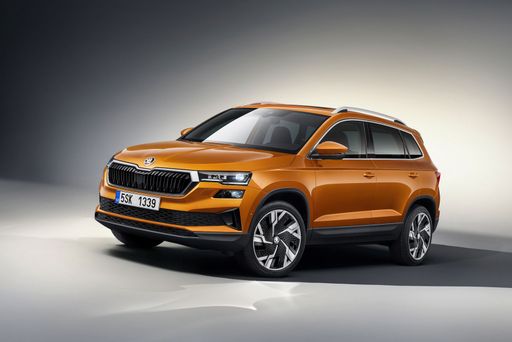
Skoda Karoq

4.6 (2 Reviews)
rate
details

VW Golf Variant

  • very slightly cheaper
  • only slightly more power
  • a bit more efficient
  • barely quicker 0–100 km/h
  • barely lighter
  • slightly more trunk space
details

By Achim Sedelmaier

Karoq

Dynamic Duo: Skoda Karoq vs VW Golf Variant

As the automotive landscape continues to evolve, two models emerge as noteworthy contenders in their respective categories: the Skoda Karoq and the VW Golf Variant. Though they belong to different segments—SUV and wagon—they cater to similar needs for practicality, performance, and innovation. Join us as we put these two vehicles head-to-head to uncover what sets them apart and what makes them each an excellent choice for discerning drivers.
Golf Variant

Design and Dimensions: Versatility vs. Agility

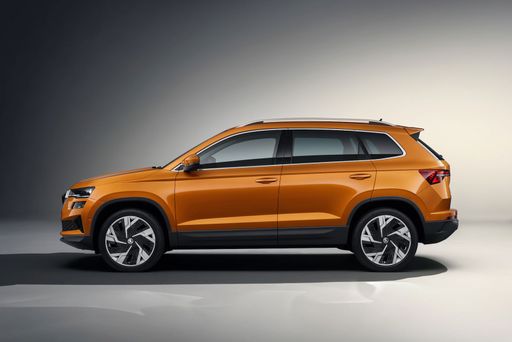
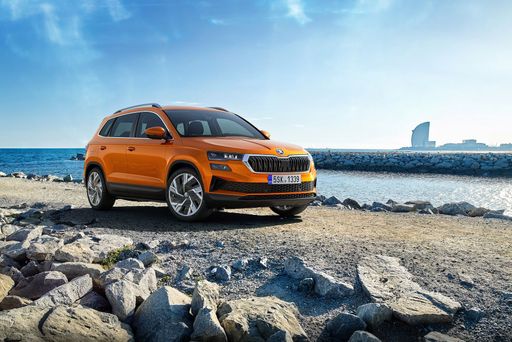
The Skoda Karoq, an SUV, boasts a robust design with dimensions that measure approximately 4,390 mm in length, 1,841 mm in width, and a height ranging up to 1,624 mm. Its higher stance is paired with a trunk capacity of 521 liters, offering ample storage for family adventures.

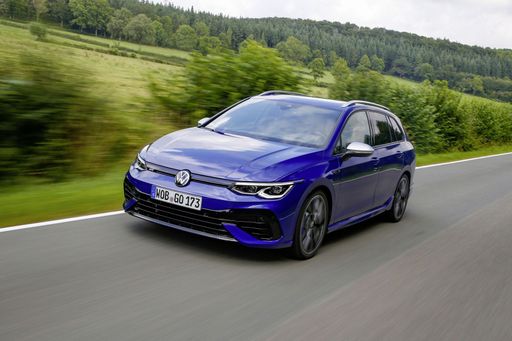
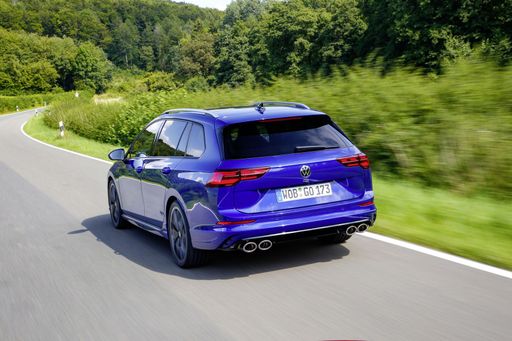
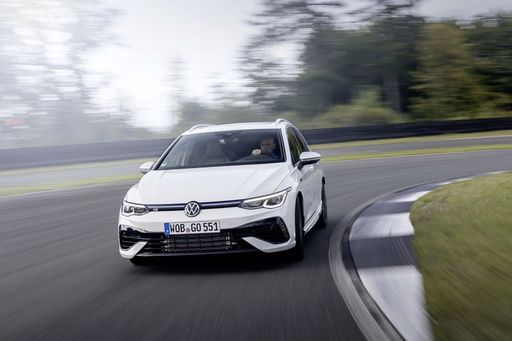
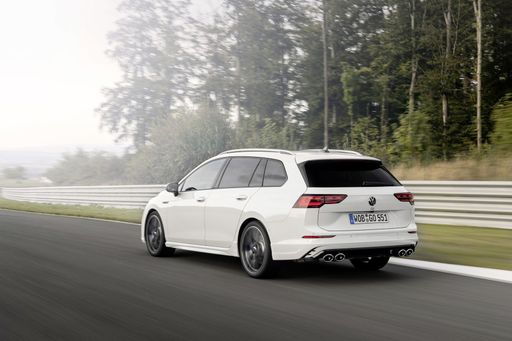
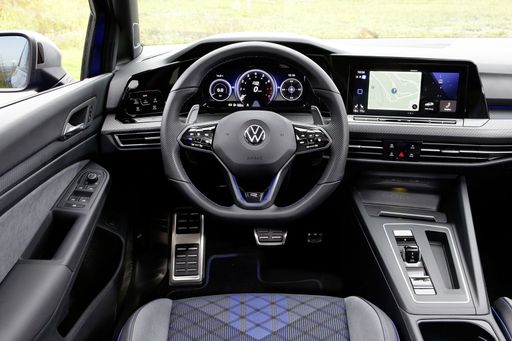
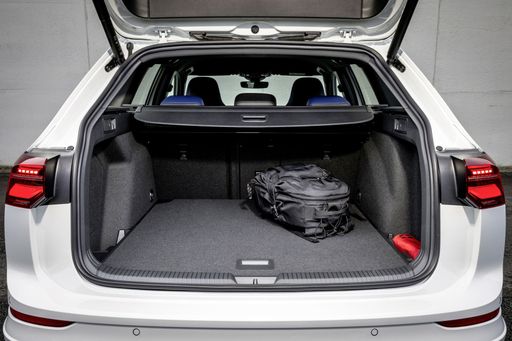
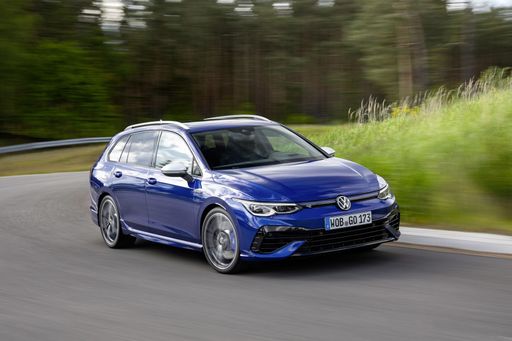
In contrast, the VW Golf Variant, a classic wagon, presents a sleek and elongated profile at 4,631 mm in length, 1,789 mm in width, and a lower height of 1,487 mm. The Golf Variant also excels in practicality with a superior trunk capacity of 611 liters, making it exceptionally suitable for long road trips and daily commuting alike.

Karoq

Engine and Performance: Power Meets Efficiency

Under the hood, the Karoq offers a range of engine options, including both petrol and diesel, with power outputs ranging from 115 HP to 190 HP. The SUV can accelerate from 0 to 100 km/h in as quick as 7 seconds, depending on the variant, and reaches a top speed of up to 221 km/h, ensuring a thrilling drive.

The Golf Variant provides an equally robust lineup, including mild-hybrid options with power outputs going up to a remarkable 333 HP. This wagon promises an exhilarating 0 to 100 km/h sprint in just 4.8 seconds with its top variants, appealing to those seeking both speed and efficiency.

Golf Variant

Fuel Efficiency and CO2 Emissions: A Green Approach

When it comes to efficiency, the Karoq delivers commendable fuel consumption figures ranging from 4.9 to 7.6 L/100km. CO2 emissions vary between 129 and 174 g/km, offering both economy and an environmentally conscious approach.

The Golf Variant leads in fuel efficiency with consumption figures between 4.4 and 8.5 L/100km. Its CO2 emissions range from a low 115 g/km to 194 g/km, making it an attractive choice for the eco-aware driver.

Karoq

Driving Dynamics and Comfort: Tackling Terrains

The Karoq’s capability extends to offering front-wheel and all-wheel-drive options. With a seating capacity for five and ample payload capacity, it is crafted for versatility both on urban roads and off-road paths.

The Golf Variant also offers front-wheel and all-wheel-drive configurations, prioritizing driver engagement and passenger comfort. Its refined suspension and seating for five make it a go-to for seamless journeys across varied terrains.

Golf Variant

Technology and Innovation: Modern Marvels

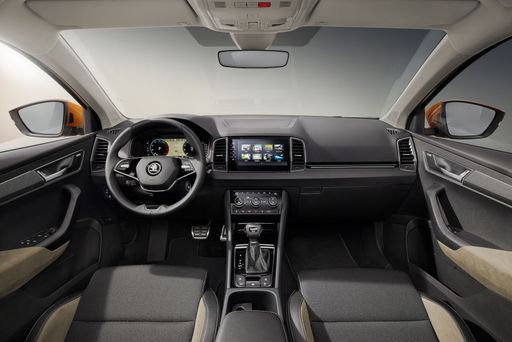
Technological innovations abound in both models. The Skoda Karoq is fitted with a dual-clutch automatic option, providing a smooth and efficient driving experience. The interior is marked by intuitive infotainment systems, promoting connectivity and convenience.

The Golf Variant stakes its claim with similar advancements, including dual-clutch automatic transmissions and state-of-the-art infotainment systems. It underscores Volkswagen’s commitment to blending performance and technology seamlessly.

Karoq

Conclusion: Choosing Your Perfect Match

Choosing between the Skoda Karoq and the VW Golf Variant ultimately depends on individual needs and preferences. While the Karoq appeals with its SUV practicality and versatile performance, the Golf Variant impresses with its superior speed, fuel efficiency, and modern aesthetics. Both vehicles promise a rewarding drive, making them top contenders in their segments.

Here’s where it gets real: The technical differences in detail

Karoq

Costs and Efficiency:

Looking at overall running costs, both models reveal some interesting differences in everyday economy.

VW Golf Variant is very slightly cheaper – starting at 28,800 £ , while the Skoda Karoq costs 29,100 £ . That’s a price difference of around 235 £.

Fuel consumption also shows a difference: the VW Golf Variant uses 4.3 L/100km and is a bit more efficient than the Skoda Karoq with 4.9 L/100km. The difference is about 0.6 L/100km.

Golf Variant

Engine and Performance:

Power, torque and acceleration say a lot about how a car feels on the road. This is where you see which model delivers more driving dynamics.

When it comes to engine power, the VW Golf Variant offers only slightly more power – delivering 204 HP compared to 190 HP. That’s roughly 14 HP more horsepower.

When accelerating from 0 to 100 km/h, the VW Golf Variant is barely quicker – completing the sprint in 6.5 s, while the Skoda Karoq takes 7 s. That’s about 0.5 s quicker.

Both models offer the same torque – 360 Nm.

Karoq

Space and Everyday Use:

Beyond pure performance, interior space and usability matter most in daily life. This is where you see which car is more practical and versatile.

Both vehicles offer seating for 5 people.

In terms of curb weight, VW Golf Variant is barely lighter – 1,366 kg compared to 1,380 kg. The difference is around 14 kg.

Looking at boot space, the VW Golf Variant offers slightly more boot space – 611 L compared to 521 L. That’s a difference of about 90 L.

When it comes to payload, the Skoda Karoq carries barely more – 549 kg compared to 547 kg. That’s a difference of about 2 kg.

Who wins the race in the data check?

The VW Golf Variant is decisively ahead in the objective data comparison.
This result only shows which model scores more points on paper – not which of the two cars feels right for you.

from £28,800
Golf Variant

VW Golf Variant

  • Engine Type Petrol, Petrol MHEV, Diesel
  • Transmission Manuel, Automatic
  • Drive Type Front-Wheel Drive, All-Wheel Drive
  • Power HP 116 - 204 HP
  • Consumption L/100km 4.3 - 7 L/100km
Skoda Karoq
VW Golf Variant

Costs and Consumption

View detailed analysis

Engine and Performance

View detailed analysis

Dimensions and Body

View detailed analysis

Skoda Karoq

Skoda Karoq is a smartly packaged compact SUV that balances practical family-friendly space with composed handling, making daily drives feel easy and assured. Its straightforward design, roomy cabin with clever storage solutions, and sensible equipment make it a strong choice for buyers seeking value and versatility without fuss.

details

VW Golf Variant

The Golf Estate packs Volkswagen's familiar poise into a practical, grown-up estate that quietly makes everyday life easier without shouting for attention. It's clever, comfortable and roomy enough for weekend kit or family chaos, offering smart packaging and refined manners that make it a sensible and surprisingly stylish choice for buyers who need space but don't want a van.

details
Skoda Karoq
VW Golf Variant

Costs and Consumption

Price
29,100 - 41,700 £
Price
28,800 - 38,800 £
Consumption L/100km
4.9 - 7.6 L/100km
Consumption L/100km
4.3 - 7 L/100km
Consumption kWh/100km
-
Consumption kWh/100km
-
Electric Range
-
Electric Range
-
Battery Capacity
-
Battery Capacity
-
co2
128 - 173 g/km
co2
114 - 159 g/km
Fuel tank capacity
-
Fuel tank capacity
-

Dimensions and Body

Body Type
SUV
Body Type
Estate
Seats
5
Seats
5
Doors
-
Doors
-
Curb weight
1,380 - 1,655 kg
Curb weight
1,366 - 1,551 kg
Trunk capacity
521 L
Trunk capacity
611 L
Length
-
Length
-
Width
1,841 mm
Width
1,789 mm
Height
-
Height
-
Max trunk capacity
-
Max trunk capacity
-
Payload
456 - 549 kg
Payload
509 - 547 kg

Engine and Performance

Engine Type
Petrol, Diesel
Engine Type
Petrol, Petrol MHEV, Diesel
Transmission
Manuel, Automatic
Transmission
Manuel, Automatic
Transmission Detail
Manual Gearbox, Dual-Clutch Automatic
Transmission Detail
Manual Gearbox, Dual-Clutch Automatic
Drive Type
Front-Wheel Drive, All-Wheel Drive
Drive Type
Front-Wheel Drive, All-Wheel Drive
Power HP
115 - 190 HP
Power HP
116 - 204 HP
Acceleration 0-100km/h
7 - 11.2 s
Acceleration 0-100km/h
6.5 - 10.5 s
Max Speed
-
Max Speed
-
Torque
200 - 360 Nm
Torque
220 - 360 Nm
Number of Cylinders
3 - 4
Number of Cylinders
4
Power kW
85 - 140 kW
Power kW
85 - 150 kW
Engine capacity
999 - 1,984 cm3
Engine capacity
1,498 - 1,984 cm3

General

Model Year
2025
Model Year
2025
CO2 Efficiency Class
D, E, F
CO2 Efficiency Class
D, F, C
Brand
Skoda
Brand
VW
DriveDuel uses data analysis and artificial intelligence to evaluate vehicle data and create content. Content is regularly reviewed and improved. The displayed prices are estimates based on German list prices, adjusted to the respective country’s VAT. Country-specific registration taxes are not included. This information is not legally binding.