VS

Suzuki Ignis vs Hyundai i10 comparison

Compare performance (83 HP vs 90 HP), boot space and price (15,600 £ vs 14,600 £ ) at a glance. Find out which car is the better choice for you – Suzuki Ignis or Hyundai i10?

Suzuki Ignis vs Hyundai i10: Key differences

Suzuki Ignis

4.7 (1 Reviews)
rate
  • only slightly lighter
  • marginally more trunk space

Hyundai i10

5 (1 Reviews)
rate
  • barely cheaper
  • very slightly more power
  • moderately quicker 0–100 km/h

All details on performance, efficiency, range and trunk space can be found in the technical comparison below – including user reviews for both models.

Ignis

Introducing the Compact Contenders: Hyundai i10 vs Suzuki Ignis

In the ever-evolving world of compact cars, the Hyundai i10 and Suzuki Ignis stand out not just through their unique designs but also through an array of technical features and innovations. Both models cater to urban driving needs while promising efficiency and comfort. Let’s dive into the details and see how they stack up against each other.
i10

Engine and Performance

The Hyundai i10 offers a selection of petrol engines, which are designed to cater to diverse driving preferences. With power outputs ranging from 63 HP to a more robust 90 HP, the i10 provides enough punch for city driving. Acceleration from 0-100 km/h varies, with the quickest variant achieving it in just 11.4 seconds. The driving experience is enhanced by options for both manual and automated transmissions, underpinned by a front-wheel-drive system.

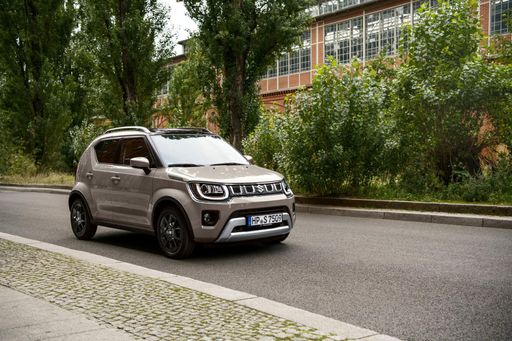
On the other hand, the Suzuki Ignis is equipped with a petrol MHEV engine that produces 83 HP. It’s slightly slower to reach 100 km/h, taking around 12.7 seconds, but it compensates with a sporty SUV look and feel. The Ignis also offers both manual and CVT transmissions, along with front and optional all-wheel drive, providing versatility for those who might venture off the beaten path.

Ignis

Efficiency and Consumption

Fuel efficiency is a critical consideration for city dwellers, and both cars deliver strong performances in this aspect. The Hyundai i10 records a fuel consumption of about 4.9 to 5.4 L/100 km, keeping running costs low. Its CO2 emissions range from 111 to 123 g/km, placing it in the C to D efficiency class.

In comparison, the Suzuki Ignis showcases a similar fuel consumption range of 4.9 to 5.4 L/100 km, with CO2 emissions between 110 to 122 g/km. This positions the Ignis closely to the i10, making both vehicles an eco-friendly choice in the compact segment.

i10

Interior Space and Comfort

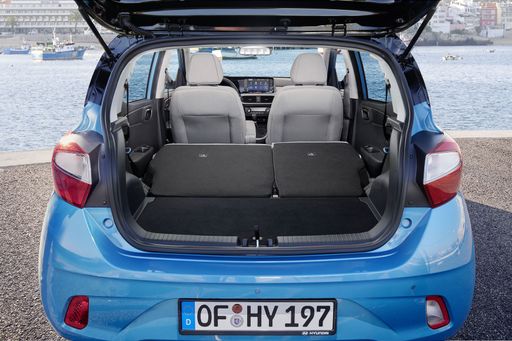
Interior space sets the tone for comfort during commutes and long drives. The Hyundai i10 accommodates five passengers with ample legroom and headroom, a feature enhanced by its generous trunk capacity of 252 L. The ergonomics of the cabin design also cater to driver comfort, with accessible controls and a modern infotainment system.

The Suzuki Ignis, although classified as a subcompact SUV, provides a slightly larger trunk capacity of up to 267 L. It can comfortably seat five passengers and features a higher ride height, which some drivers may prefer for increased visibility. The layout in the Ignis is versatile, allowing for different configurations of passenger and cargo space.

Ignis

Dimensions and Design

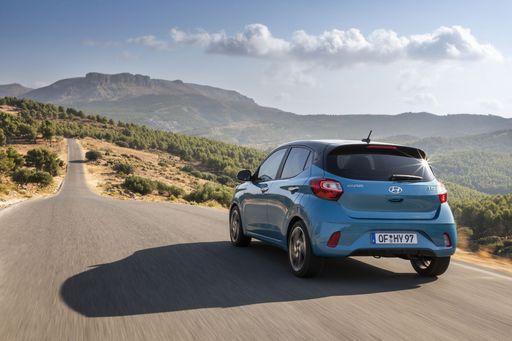
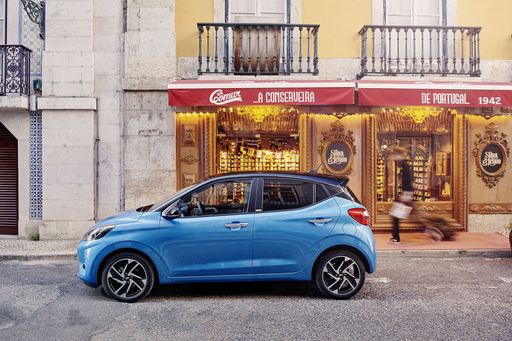
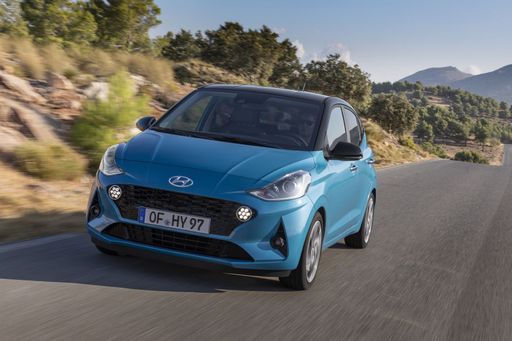
Visually, the Hyundai i10 presents a sleek hatchback silhouette, measuring 3670 mm in length and 1680 mm in width. Its compact stature makes it an ideal city car, easily maneuverable in tight spaces. The design language is modern, with stylish lines and a contemporary front end that is appealing to a younger audience.

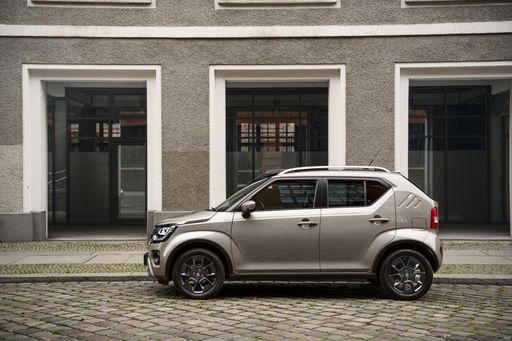
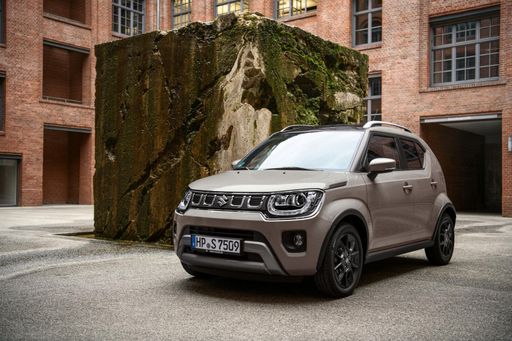
Conversely, the Suzuki Ignis sports a distinctive SUV-like form with a height of 1605 mm, offering a more commanding presence on the road. With a length of 3700 mm and a width of 1690 mm, the Ignis is slightly larger, which contributes to its spacious feel inside and practicality for varying lifestyles.

i10

Safety and Technology Innovations

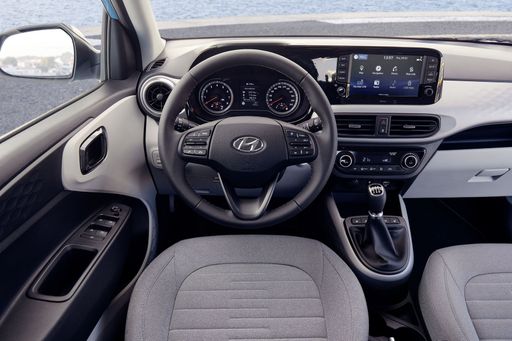
Safety technology has become paramount in modern automotive design. The Hyundai i10 is packed with features designed to keep occupants safe, including anti-lock brakes, electronic stability control, and multiple airbags. Updates to the infotainment system allow for smartphone connectivity and enhanced navigation features.

The Suzuki Ignis also offers a suite of safety features, including advanced braking assist and traction control. Its infotainment system is intuitive, well-suited for both tech-savvy users and those seeking simplicity, with features such as Bluetooth connectivity and touch-screen controls.

Ignis

Conclusion: Which One Should You Choose?

Both the Hyundai i10 and Suzuki Ignis shine in their respective domains, offering smart engineering, considerable efficiency, and urban versatility. If you favor a more traditional hatchback vibe with outstanding maneuverability, the i10 might be your pick. However, if you seek a slightly taller, more rugged SUV experience that doesn’t skimp on technology or space, the Ignis stands ready to impress. Ultimately, your choice will boil down to personal preference and the specific needs of your driving lifestyle.

Here’s where it gets real: The technical differences in detail

Ignis

Costs and Efficiency:

Price and efficiency are often the first things buyers look at. Here it becomes clear which model has the long-term edge – whether at the pump, the plug, or in purchase price.

Hyundai i10 is barely cheaper – starting at 14,600 £ , while the Suzuki Ignis costs 15,600 £ . That’s a price difference of around 1,046 £.

Both cars consume an average of 4.9 L/100km – no difference here.

i10

Engine and Performance:

Under the bonnet, it becomes clear which model is tuned for sportiness and which one takes the lead when you hit the accelerator.

When it comes to engine power, the Hyundai i10 offers very slightly more power – delivering 90 HP compared to 83 HP. That’s roughly 7 HP more horsepower.

When accelerating from 0 to 100 km/h, the Hyundai i10 is moderately quicker – completing the sprint in 11.4 s, while the Suzuki Ignis takes 12.7 s. That’s about 1.3 s quicker.

Looking at top speed, the Hyundai i10 is very slightly faster – reaching 175 km/h, while the Suzuki Ignis tops out at 165 km/h. The difference is around 10 km/h.

There’s also a difference in torque: the Hyundai i10 delivers clearly more torque with 172 Nm compared to 107 Nm. That’s about 65 Nm more.

Ignis

Space and Everyday Use:

Cabin size, boot volume and payload all play a role in everyday practicality. Here, comfort and flexibility make the difference.

Both vehicles offer seating for 5 people.

In terms of curb weight, Suzuki Ignis is only slightly lighter – 935 kg compared to 996 kg. The difference is around 61 kg.

Looking at boot space, the Suzuki Ignis offers marginally more boot space – 267 L compared to 252 L. That’s a difference of about 15 L.

For maximum load capacity, the Suzuki Ignis offers very slightly more capacity – up to 1,100 L, about 50 L more than the Hyundai i10.

When it comes to payload, the Hyundai i10 carries very slightly more – 423 kg compared to 395 kg. That’s a difference of about 28 kg.

Who wins the race in the data check?

The Hyundai i10 holds a decisive overall lead in the objective data comparison.
This result only shows which model scores more points on paper – not which of the two cars feels right for you.

from £14,600
i10

Hyundai i10

  • Engine Type : Petrol
  • Transmission : Manuel, Automatic
  • Drive Type : Front-Wheel Drive
  • Power HP : 63 - 90 HP
  • Consumption L/100km : 4.9 - 5.5 L/100km
Suzuki Ignis
Hyundai i10

Costs and Consumption

View detailed analysis

Engine and Performance

View detailed analysis

Dimensions and Body

View detailed analysis

Suzuki Ignis

The Suzuki Ignis is a cheeky compact crossover that turns city chores into cheerful adventures, with chunky styling and a surprisingly practical cabin. It won't pretend to be a sports car, but its nimble manners, low running costs and ample personality make it an ideal pick for urban buyers who want fun without pretension.

details

Hyundai i10

The Hyundai i10 is a cheeky city car that squeezes big-car confidence into a pocket-friendly package, carving through tight streets with surprising composure and sensible practicality. For buyers after low fuss, sensible equipment and wallet-friendly running costs, it's a smart, no-nonsense pick that makes sense whether you're a first-time driver or need a reliable second car.

details
Suzuki Ignis
Hyundai i10

Costs and Consumption

Price
15,600 - 19,500 £
Price
14,600 - 19,000 £
Consumption L/100km
4.9 - 5.4 L/100km
Consumption L/100km
4.9 - 5.5 L/100km
Consumption kWh/100km
-
Consumption kWh/100km
-
Electric Range
-
Electric Range
-
Battery Capacity
-
Battery Capacity
-
co2
110 - 122 g/km
co2
110 - 124 g/km
Fuel tank capacity
30 - 32 L
Fuel tank capacity
36 L

Dimensions and Body

Body Type
SUV
Body Type
Hatchback
Seats
4 - 5
Seats
4 - 5
Doors
5
Doors
5
Curb weight
935 - 995 kg
Curb weight
996 - 1,099 kg
Trunk capacity
204 - 267 L
Trunk capacity
252 L
Length
3,700 mm
Length
3,670 - 3,675 mm
Width
1,690 mm
Width
1,680 mm
Height
1,605 mm
Height
1,480 - 1,483 mm
Max trunk capacity
1,086 - 1,100 L
Max trunk capacity
1,050 L
Payload
335 - 395 kg
Payload
344 - 423 kg

Engine and Performance

Engine Type
Petrol MHEV
Engine Type
Petrol
Transmission
Manuel, Automatic
Transmission
Manuel, Automatic
Transmission Detail
Manual Gearbox, CVT
Transmission Detail
Manual Gearbox, Automated Manual
Drive Type
Front-Wheel Drive, All-Wheel Drive
Drive Type
Front-Wheel Drive
Power HP
83 HP
Power HP
63 - 90 HP
Acceleration 0-100km/h
12.7 - 12.8 s
Acceleration 0-100km/h
11.4 - 18.4 s
Max Speed
155 - 165 km/h
Max Speed
143 - 175 km/h
Torque
107 Nm
Torque
93 - 172 Nm
Number of Cylinders
4
Number of Cylinders
3 - 4
Power kW
61 kW
Power kW
46 - 66 kW
Engine capacity
1,197 cm3
Engine capacity
998 - 1,197 cm3

General

Model Year
2,020
Model Year
2,024
CO2 Efficiency Class
C, D
CO2 Efficiency Class
C, D
Brand
Suzuki
Brand
Hyundai
DriveDuel uses data analysis and artificial intelligence to evaluate vehicle data and create content. Content is regularly reviewed and improved. The displayed prices are estimates based on German list prices, adjusted to the respective country’s VAT. Country-specific registration taxes are not included. This information is not legally binding.