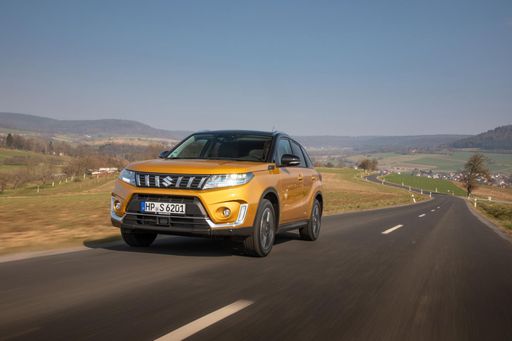
VS

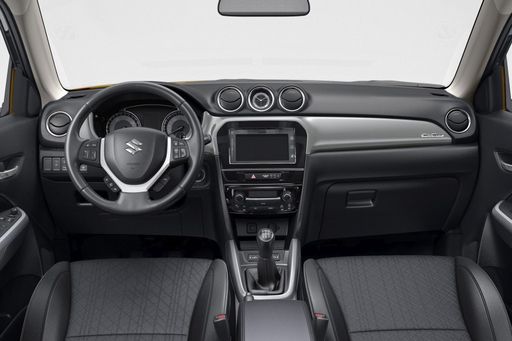
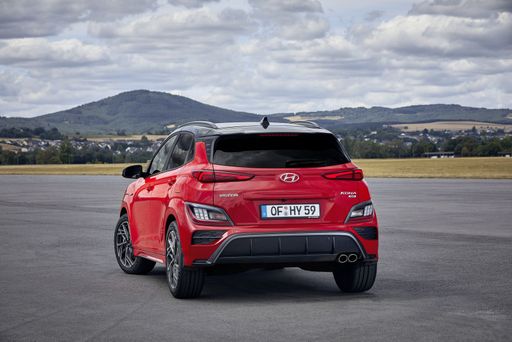
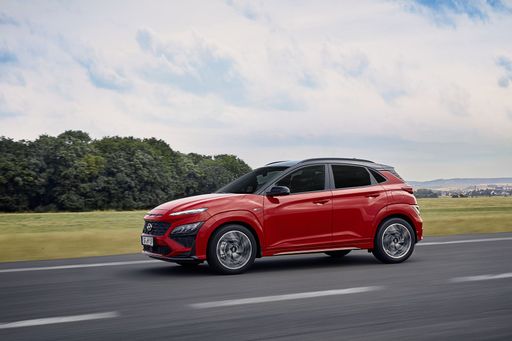
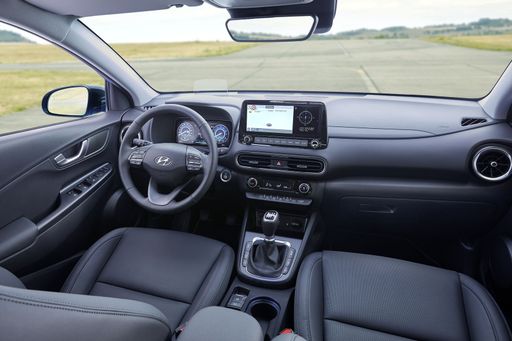
Suzuki Vitara vs Hyundai Kona comparison

Compare performance (184 HP vs 204 HP), boot space and price (23,600 £ vs 23,600 £ ) at a glance. Find out which car is the better choice for you – Suzuki Vitara or Hyundai Kona?

Suzuki Vitara vs Hyundai Kona: Key differences

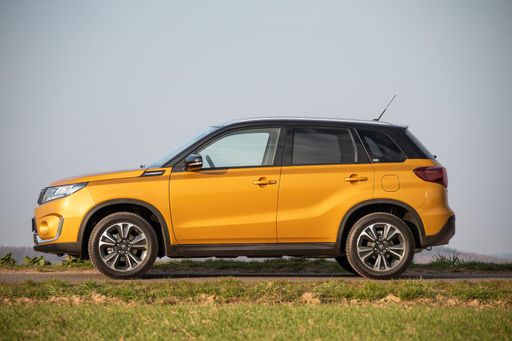
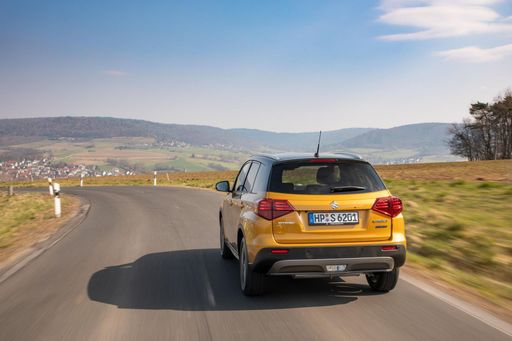
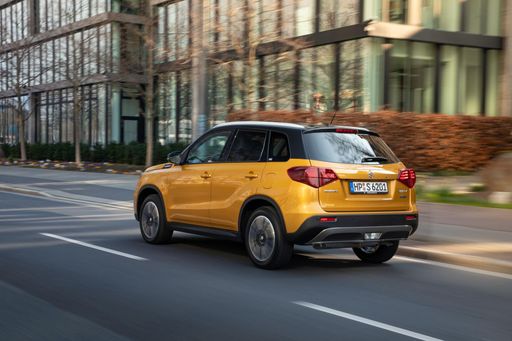
Suzuki Vitara

4.5 (9 Reviews)
rate
  • barely quicker 0–100 km/h
  • marginally lighter
details

Hyundai Kona

4.6 (10 Reviews)
rate
  • very slightly more power
  • slightly more efficient
  • marginally more efficient
  • slightly more electric range
  • somewhat more trunk space
details

All details on performance, efficiency, range and trunk space can be found in the technical comparison below – including user reviews for both models.

By Achim Sedelmaier

Vitara

The Battle of Compact SUVs: Hyundai Kona vs Suzuki Vitara

The compact SUV market has been buzzing with excitement, thanks to the 2024 releases of the Hyundai Kona and Suzuki Vitara. Both models are renowned for their innovative designs, advanced technology, and targeted appeal to urban explorers and families alike. As they go head-to-head, let's dive into their technical aspects and innovations to determine which of these two champions stands out.
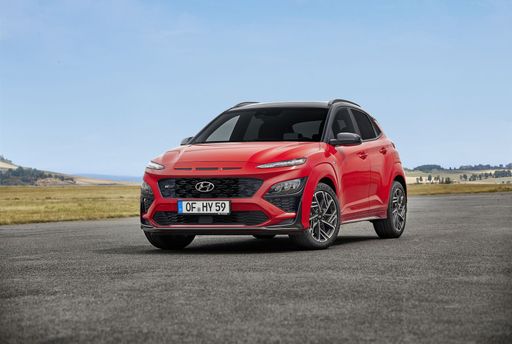
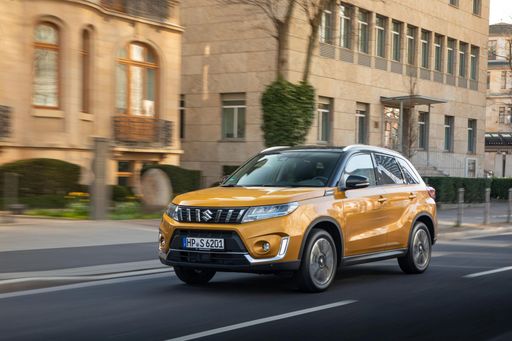
Kona

Engine Options and Performance

Hyundai Kona offers a versatile array of powertrains. With petrol, full hybrid, and electric options, it caters to a wide range of driving preferences. The Kona's electric variant can achieve an impressive range of up to 514 km, a game-changer for eco-conscious drivers. In terms of traditional engine capabilities, it provides horsepower ranging from 100 HP to 218 HP with torque reaching up to 265 Nm, ensuring a robust and responsive driving experience.

On the other hand, Suzuki Vitara presents a more streamlined engine lineup with petrol mild-hybrid (MHEV) and full hybrid options. The Vitara offers a maximum of 129 HP with a torque of 235 Nm, slightly less powerful than its rival. Nevertheless, it makes an impact with its fine balance of fuel economy and performance.

Vitara

Transmission and Drive

Both the Kona and Vitara are equipped with manual and automatic transmission variants. The Hyundai Kona features options like the dual-clutch automatic and reduction gearbox for its electric version, along with both front-wheel and all-wheel drive capabilities, offering drivers flexibility across different terrains.

The Suzuki Vitara counters with its efficient automated manual transmission, supplemented by front-wheel and all-wheel drive configurations, providing responsive handling in various conditions.

Kona

Fuel Efficiency and Range

Fuel efficiency plays a crucial role in selecting a compact SUV. The Kona's hybrid version boasts an excellent consumption rate of 4.5 L/100km, while the electric model consumes between 14.6 to 16.8 kWh/100km. These figures underline Kona's commitment to sustainability without compromising on power.

Vitara keeps up with economic consumption rates between 5 to 5.6 L/100km, marking itself as a fuel-conscious option aimed at long journeys and daily commutes alike.

Vitara

Dimensions and Comfort

The Hyundai Kona stands tall with a length ranging from 4350 to 4385 mm, and a width of 1825 mm. Its interior setup ensures comfort with five seats and a considerable trunk capacity of 466 liters, perfect for weekend adventures.

The Vitara is slightly more compact with a length of 4185 mm and a width of 1775 mm. Despite its smaller size, it seats five adults comfortably and provides up to 375 liters of trunk space, making it a nimble yet practical city vehicle.

Kona

Sustainability and Innovation

Both SUVs emphasize eco-friendliness, reflected in their CO2 emissions. The Kona's all-electric version emits a commendable 0 g/km, setting a benchmark for sustainable driving. The Suzuki Vitara's mild-hybrid variants follow suit with emissions ranging from 113 to 129 g/km.

Hyundai equips the Kona with a battery capacity of up to 65.4 kWh, offering an edge in electric mobility innovations. In contrast, Suzuki’s focus remains on mild-hybrid technology, which supports fuel efficiency without requiring extensive battery resources.

Vitara

The Verdict

The choice between the Hyundai Kona and Suzuki Vitara largely depends on individual needs. Kona's diverse powertrain options, especially its electric range, position it as a future-forward choice for tech-savvy drivers. Meanwhile, the Vitara appeals to those looking for a balanced, fuel-efficient ride with a traditional yet cutting-edge feel.

Ultimately, both vehicles stand out in the compact SUV segment, reflecting the ever-evolving landscape of modern automotive innovations.

Here’s where it gets real: The technical differences in detail

Vitara

Costs and Efficiency:

Price and efficiency are key factors when choosing a car – and this is often where the real differences emerge.

Both models are evenly matched in price – each starts at 23,600 £ .

Fuel consumption also shows a difference: the Hyundai Kona uses 4.6 L/100km and is slightly more efficient than the Suzuki Vitara with 5.3 L/100km. The difference is about 0.7 L/100km.

In terms of energy consumption, the Hyundai Kona is marginally more efficient: consuming 14.6 kWh/100km compared to 14.9 kWh/100km for the Suzuki Vitara. That’s a difference of about 0.3 kWh/100km.

As for electric range, the Hyundai Kona offers slightly more range – reaching up to 510 km, about 84 km more than the Suzuki Vitara.

Kona

Engine and Performance:

Under the bonnet, it becomes clear which model is tuned for sportiness and which one takes the lead when you hit the accelerator.

When it comes to engine power, the Hyundai Kona offers very slightly more power – delivering 204 HP compared to 184 HP. That’s roughly 20 HP more horsepower.

When accelerating from 0 to 100 km/h, the Suzuki Vitara is barely quicker – completing the sprint in 7.4 s, while the Hyundai Kona takes 8.1 s. That’s about 0.7 s quicker.

There’s also a difference in torque: the Suzuki Vitara delivers slightly more torque with 307 Nm compared to 265 Nm. That’s about 42 Nm more.

Vitara

Space and Everyday Use:

Beyond pure performance, interior space and usability matter most in daily life. This is where you see which car is more practical and versatile.

Both vehicles offer seating for 5 people.

In terms of curb weight, Suzuki Vitara is marginally lighter – 1,255 kg compared to 1,370 kg. The difference is around 115 kg.

Looking at boot space, the Hyundai Kona offers somewhat more boot space – 466 L compared to 375 L. That’s a difference of about 91 L.

When it comes to payload, the Hyundai Kona carries somewhat more – 490 kg compared to 425 kg. That’s a difference of about 65 kg.

Who wins the race in the data check?

The Hyundai Kona stands well ahead of its rival in the objective data comparison.
This result only shows which model scores more points on paper – not which of the two cars feels right for you.

from £23,600
Kona

Hyundai Kona

  • Engine Type Petrol, Full Hybrid, Electric
  • Transmission Manuel, Automatic
  • Drive Type Front-Wheel Drive, All-Wheel Drive
  • Power HP 115 - 204 HP
  • Consumption L/100km 4.6 - 7 L/100km
  • Consumption kWh/100km 14.6 - 16.1 kWh/100km
  • Electric Range 380 - 510 km
Suzuki Vitara
Hyundai Kona

Costs and Consumption

View detailed analysis

Engine and Performance

View detailed analysis

Dimensions and Body

View detailed analysis

Suzuki Vitara

The Suzuki Vitara is a practical compact SUV that balances a comfortable, composed ride with easy-to-live-with interior space, making it well suited for daily driving and weekend getaways. It's widely praised for reliable engineering and sensible running costs, offering straightforward value to buyers who want a no-nonsense, economical crossover.

details

Hyundai Kona

The Hyundai Kona is a compact crossover that pairs bold styling with practical everyday usability, offering a comfortable cabin and intuitive tech for modern drivers. Available in both conventional and electrified versions, Kona brings lively handling and strong value for buyers who want crossover versatility and standout character.

details
Suzuki Vitara
Hyundai Kona

Costs and Consumption

Price
23,600 - 36,800 £
Price
23,600 - 41,900 £
Consumption L/100km
5.3 - 5.8 L/100km
Consumption L/100km
4.6 - 7 L/100km
Consumption kWh/100km
14.9 - 16.6 kWh/100km
Consumption kWh/100km
14.6 - 16.1 kWh/100km
Electric Range
344 - 426 km
Electric Range
380 - 510 km
Battery Capacity
-
Battery Capacity
-
co2
0 - 137 g/km
co2
0 - 163 g/km
Fuel tank capacity
-
Fuel tank capacity
-

Dimensions and Body

Body Type
SUV
Body Type
SUV
Seats
5
Seats
5
Doors
-
Doors
-
Curb weight
1,255 - 1,935 kg
Curb weight
1,370 - 1,773 kg
Trunk capacity
310 - 375 L
Trunk capacity
466 L
Length
-
Length
-
Width
1,775 - 1,800 mm
Width
1,825 mm
Height
-
Height
-
Max trunk capacity
-
Max trunk capacity
-
Payload
395 - 425 kg
Payload
420 - 490 kg

Engine and Performance

Engine Type
Petrol MHEV, Electric
Engine Type
Petrol, Full Hybrid, Electric
Transmission
Automatic, Manuel
Transmission
Manuel, Automatic
Transmission Detail
Automatic Gearbox, Reduction Gearbox, Manual Gearbox
Transmission Detail
Manual Gearbox, Dual-Clutch Automatic, Reduction Gearbox
Drive Type
Front-Wheel Drive, All-Wheel Drive
Drive Type
Front-Wheel Drive, All-Wheel Drive
Power HP
110 - 184 HP
Power HP
115 - 204 HP
Acceleration 0-100km/h
7.4 - 9.6 s
Acceleration 0-100km/h
8.1 - 11.9 s
Max Speed
-
Max Speed
-
Torque
193 - 307 Nm
Torque
200 - 265 Nm
Number of Cylinders
4
Number of Cylinders
3 - 4
Power kW
81 - 135 kW
Power kW
85 - 150 kW
Engine capacity
1,373 cm3
Engine capacity
998 - 1,598 cm3

General

Model Year
2,025 - 2,026
Model Year
2025
CO2 Efficiency Class
D, E, A
CO2 Efficiency Class
D, C, E, F, A
Brand
Suzuki
Brand
Hyundai
DriveDuel uses data analysis and artificial intelligence to evaluate vehicle data and create content. Content is regularly reviewed and improved. The displayed prices are estimates based on German list prices, adjusted to the respective country’s VAT. Country-specific registration taxes are not included. This information is not legally binding.