VS

Suzuki Vitara vs Nissan Leaf comparison

Compare performance (184 HP vs 217 HP), boot space and price (23,600 £ vs 30,800 £ ) at a glance. Find out which car is the better choice for you – Suzuki Vitara or Nissan Leaf?

Suzuki Vitara vs Nissan Leaf: Key differences

Suzuki Vitara

4.5 (10 Reviews)
rate
  • clearly cheaper
  • only slightly quicker 0–100 km/h
  • clearly lighter
details

Nissan Leaf

4.4 (2 Reviews)
rate
  • somewhat more power
  • barely more efficient
  • noticeably more electric range
  • slightly more trunk space
details

All details on performance, efficiency, range and trunk space can be found in the technical comparison below – including user reviews for both models.

By Achim Sedelmaier

Vitara

Nissan Hoja vs Suzuki Vitara: A Comprehensive Comparison

The automotive market is continually evolving, with manufacturers striving to innovate and meet the needs of a diverse consumer base. In this article, we delve into a detailed comparison between the Nissan Hoja and the Suzuki Vitara, two compelling options in the hatchback and SUV segments, respectively. We will explore their technical specifications, performance capabilities, and innovative features to help you make an informed decision.
Leaf

Body and Dimensions

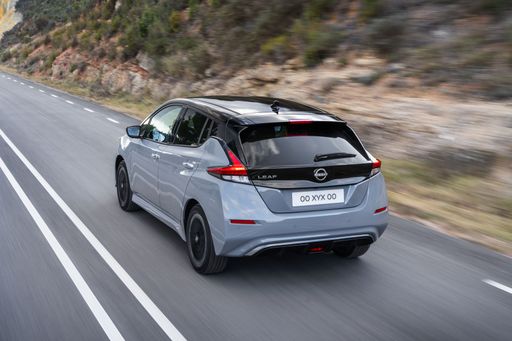
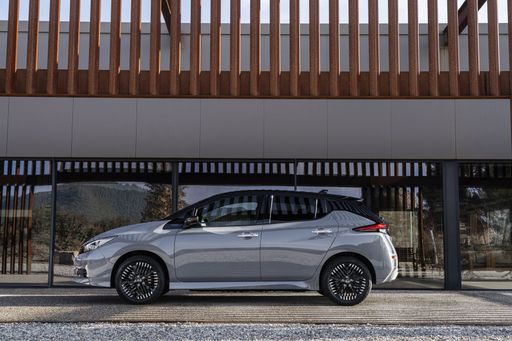
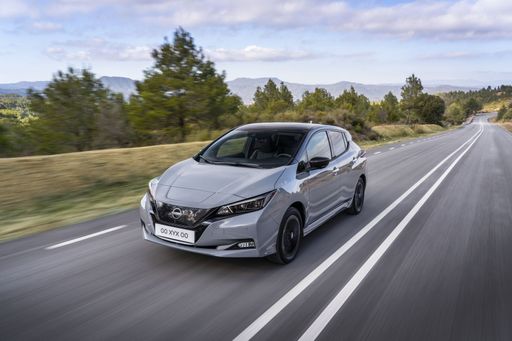
The Nissan Hoja embodies the compact nature of a hatchback, measuring 4490 mm in length, 1788 mm in width, and 1540 mm in height. Its design, optimized for urban driving, offers a trunk capacity of 394 liters, making it practical for day-to-day use.

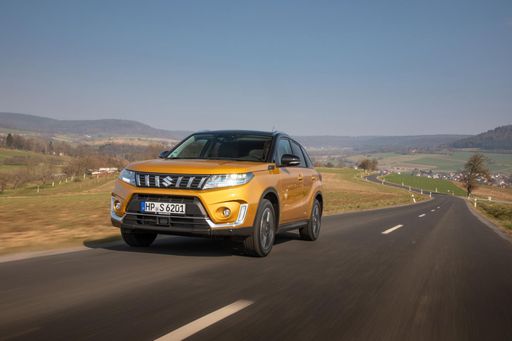
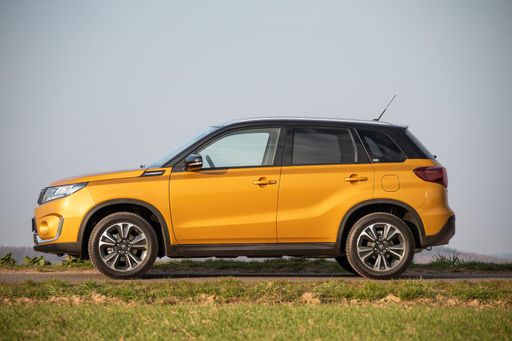
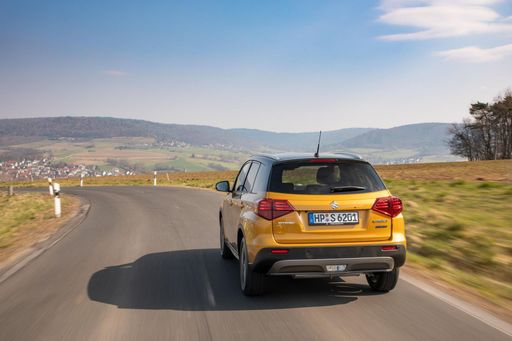
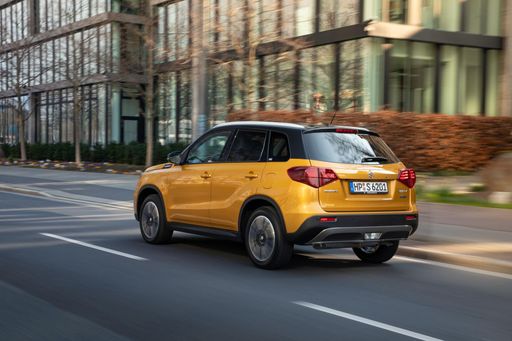
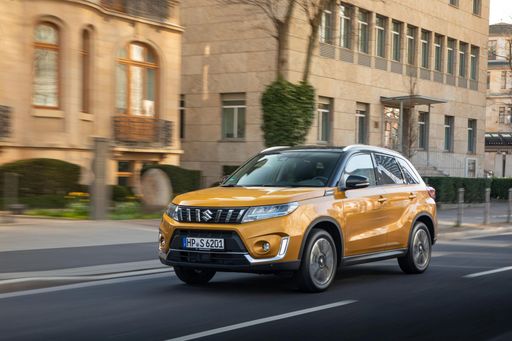
On the other hand, the Suzuki Vitara stands as a robust SUV, with slightly shorter dimensions at 4185 mm long, 1775 mm wide, and 1595 mm high. Despite its smaller trunk capacity of 375 liters, the Vitara’s SUV styling presents a higher driving position and a sense of ruggedness that appeals to adventure seekers.

Vitara

Engine and Performance

The Nissan Hoja is a front-wheel-drive electric hatchback that showcases Nissan's commitment to sustainability. It boasts two variants of electric power, generating between 150 to 217 HP, with torque values ranging from 320 to 340 Nm. The Hoja’s accelerated performance is impressive, achieving 0-100 km/h in as little as 6.9 seconds. With a top speed of 157 km/h and an electric range of up to 385 km, the Hoja is an excellent option for eco-conscious drivers.

Conversely, the Suzuki Vitara offers more traditional petrol engine options, available in hybrid variants. While its power output is slightly lower, ranging from 116 to 129 HP with a torque of 235 Nm, it delivers commendable efficiency, consuming between 5.0 to 5.6 L/100km. The Vitara's acceleration ranges from 9.5 to 12.7 seconds for 0-100 km/h, with a top speed of 190 km/h, reflecting its potential for lively performance on the highway.

Leaf

Transmission and Drive Types

The Nissan Hoja features an automatic transmission with a reduction gearbox, ensuring smooth and efficient electric power delivery. Its front-wheel-drive layout enhances handling in urban conditions, making it a suitable choice for city dwellers.

On the other hand, the Suzuki Vitara offers both manual and automatic transmission options along with front-wheel and all-wheel drive configurations. This versatility allows drivers to choose a setup that best suits their driving conditions, whether in urban settings or off-road adventures.

Vitara

Comfort and Interior Features

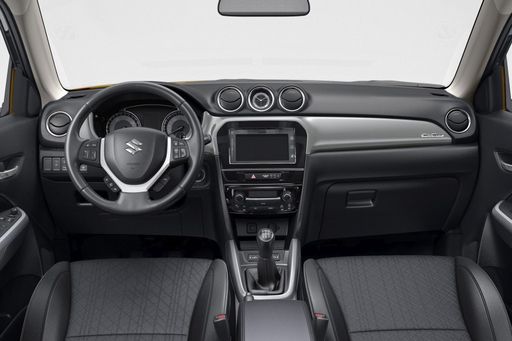
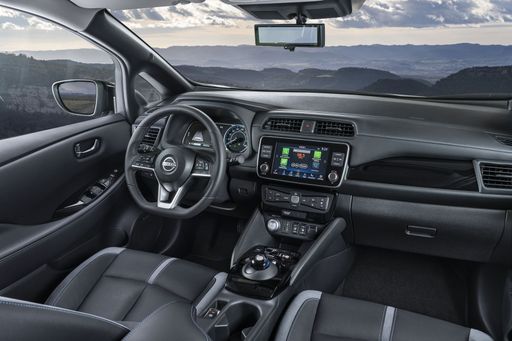
Both vehicles accommodate five passengers comfortably, but the interior experiences differ significantly due to their design philosophies. The Nissan Hoja focuses on modernity and minimalism, emphasizing technological integration with features designed for electric vehicle users.

The Suzuki Vitara, with its SUV stature, offers a more rugged and spacious cabin with additional storage options, appealing to families and those seeking adventure. Its interior design is functional yet stylish, with well-placed controls and user-friendly interfaces.

Leaf

Usage and Practicality

As an electric vehicle, the Nissan Hoja boasts an impressive CO2 efficiency class of A, making it an attractive option for environmentally conscious consumers. Its lower curb weight of 1580 kg contributes to its impressive range and efficiency, making it ideal for city commuting.

In contrast, the Suzuki Vitara, classified within the D and C CO2 efficiency classes, is still competitive despite its reliance on petrol engines. With a curb weight ranging from 1255 kg to 1395 kg, it strikes a balance between performance and fuel efficiency, catering to those who prefer hybrid driving with flexibility for longer road trips.

Vitara

Conclusion: Which One Is Right for You?

The choice between the Nissan Hoja and Suzuki Vitara ultimately hinges on your priorities. If sustainability, electric efficiency, and a compact design are your primary concerns, the Nissan Hoja shines with its electric capabilities. However, if you seek versatility, off-road potential, and a traditional driving experience, the Suzuki Vitara offers the robust features of an SUV with hybrid options.

In conclusion, both vehicles are formidable contenders in their segments, showcasing the best of what Nissan and Suzuki have to offer. Evaluate your driving needs, lifestyle, and preferences to determine which model aligns best with your automotive lifestyle.

Here’s where it gets real: The technical differences in detail

Vitara

Costs and Efficiency:

Price and efficiency are often the first things buyers look at. Here it becomes clear which model has the long-term edge – whether at the pump, the plug, or in purchase price.

Suzuki Vitara is clearly cheaper – starting at 23,600 £ , while the Nissan Leaf costs 30,800 £ . That’s a price difference of around 7,243 £.

In terms of energy consumption, the Nissan Leaf is barely more efficient: consuming 13.7 kWh/100km compared to 14.9 kWh/100km for the Suzuki Vitara. That’s a difference of about 1.2 kWh/100km.

As for electric range, the Nissan Leaf offers noticeably more range – reaching up to 624 km, about 198 km more than the Suzuki Vitara.

Leaf

Engine and Performance:

Under the bonnet, it becomes clear which model is tuned for sportiness and which one takes the lead when you hit the accelerator.

When it comes to engine power, the Nissan Leaf offers somewhat more power – delivering 217 HP compared to 184 HP. That’s roughly 33 HP more horsepower.

When accelerating from 0 to 100 km/h, the Suzuki Vitara is only slightly quicker – completing the sprint in 7.4 s, while the Nissan Leaf takes 7.6 s. That’s about 0.2 s quicker.

There’s also a difference in torque: the Nissan Leaf delivers moderately more torque with 355 Nm compared to 307 Nm. That’s about 48 Nm more.

Vitara

Space and Everyday Use:

Cabin size, boot volume and payload all play a role in everyday practicality. Here, comfort and flexibility make the difference.

Both vehicles offer seating for 5 people.

In terms of curb weight, Suzuki Vitara is clearly lighter – 1,255 kg compared to 1,864 kg. The difference is around 609 kg.

Looking at boot space, the Nissan Leaf offers slightly more boot space – 437 L compared to 375 L. That’s a difference of about 62 L.

When it comes to payload, the Nissan Leaf carries marginally more – 444 kg compared to 425 kg. That’s a difference of about 19 kg.

Who wins the race in the data check?

The Nissan Leaf has the upper hand in the objective data comparison.
This result only shows which model scores more points on paper – not which of the two cars feels right for you.

from £30,800
Leaf

Nissan Leaf

  • Engine Type Electric
  • Transmission Automatic
  • Drive Type Front-Wheel Drive
  • Power HP 176 - 217 HP
  • Consumption kWh/100km 13.7 - 13.8 kWh/100km
  • Electric Range 436 - 624 km
Suzuki Vitara
Nissan Leaf

Costs and Consumption

View detailed analysis

Engine and Performance

View detailed analysis

Dimensions and Body

View detailed analysis

Suzuki Vitara

The Suzuki Vitara is a practical compact SUV that balances a comfortable, composed ride with easy-to-live-with interior space, making it well suited for daily driving and weekend getaways. It's widely praised for reliable engineering and sensible running costs, offering straightforward value to buyers who want a no-nonsense, economical crossover.

details

Nissan Leaf

The Nissan Leaf is a practical, easygoing electric hatch that turns daily commutes into a quiet, effortless affair while offering more cabin space than it lets on. It’s a sensible, wallet-friendly step into electrification for buyers who value comfort and simplicity over sporty drama, though those chasing long-distance thrills might look elsewhere.

details
Suzuki Vitara
Nissan Leaf

Costs and Consumption

Price
23,600 - 36,800 £
Price
30,800 - 41,100 £
Consumption L/100km
5.3 - 5.8 L/100km
Consumption L/100km
-
Consumption kWh/100km
14.9 - 16.6 kWh/100km
Consumption kWh/100km
13.7 - 13.8 kWh/100km
Electric Range
344 - 426 km
Electric Range
436 - 624 km
Battery Capacity
-
Battery Capacity
-
co2
0 - 137 g/km
co2
0 g/km
Fuel tank capacity
-
Fuel tank capacity
-

Dimensions and Body

Body Type
SUV
Body Type
Hatchback
Seats
5
Seats
5
Doors
-
Doors
-
Curb weight
1,255 - 1,935 kg
Curb weight
1,864 - 1,956 kg
Trunk capacity
310 - 375 L
Trunk capacity
437 L
Length
-
Length
-
Width
1,775 - 1,800 mm
Width
1,810 mm
Height
-
Height
-
Max trunk capacity
-
Max trunk capacity
-
Payload
395 - 425 kg
Payload
441 - 444 kg

Engine and Performance

Engine Type
Petrol MHEV, Electric
Engine Type
Electric
Transmission
Automatic, Manuel
Transmission
Automatic
Transmission Detail
Automatic Gearbox, Reduction Gearbox, Manual Gearbox
Transmission Detail
Reduction Gearbox
Drive Type
Front-Wheel Drive, All-Wheel Drive
Drive Type
Front-Wheel Drive
Power HP
110 - 184 HP
Power HP
176 - 217 HP
Acceleration 0-100km/h
7.4 - 9.6 s
Acceleration 0-100km/h
7.6 - 8.3 s
Max Speed
-
Max Speed
-
Torque
193 - 307 Nm
Torque
345 - 355 Nm
Number of Cylinders
4
Number of Cylinders
-
Power kW
81 - 135 kW
Power kW
130 - 160 kW
Engine capacity
1,373 cm3
Engine capacity
-

General

Model Year
2,025 - 2,026
Model Year
2026
CO2 Efficiency Class
D, E, A
CO2 Efficiency Class
A
Brand
Suzuki
Brand
Nissan
DriveDuel uses data analysis and artificial intelligence to evaluate vehicle data and create content. Content is regularly reviewed and improved. The displayed prices are estimates based on German list prices, adjusted to the respective country’s VAT. Country-specific registration taxes are not included. This information is not legally binding.