VS

SEAT Ateca vs Suzuki Vitara comparison

Compare performance (150 HP vs 184 HP), boot space and price (25,100 £ vs 23,600 £ ) at a glance. Find out which car is the better choice for you – SEAT Ateca or Suzuki Vitara?

SEAT Ateca vs Suzuki Vitara: Key differences

SEAT Ateca

4.9 (3 Reviews)
rate
  • very slightly more efficient
  • noticeably more trunk space
details

Suzuki Vitara

4.5 (3 Reviews)
rate
  • very slightly cheaper
  • a bit more power
  • noticeably quicker 0–100 km/h
  • marginally lighter
details

All details on performance, efficiency, range and trunk space can be found in the technical comparison below – including user reviews for both models.

By Achim Sedelmaier

Ateca

The SEAT Ateca vs. Suzuki Vitara: A Clash of Compact SUVs

The SUV segment, brimming with options for every kind of driver, just became more interesting with the latest iterations of the SEAT Ateca and the Suzuki Vitara. These models bring an enticing mix of style, performance, and technology, presenting a tough choice for potential buyers. Let's delve into the specifics that make each vehicle unique, suitable for different driving preferences and needs.

Vitara

Design and Dimensions: Practicality Meets Style

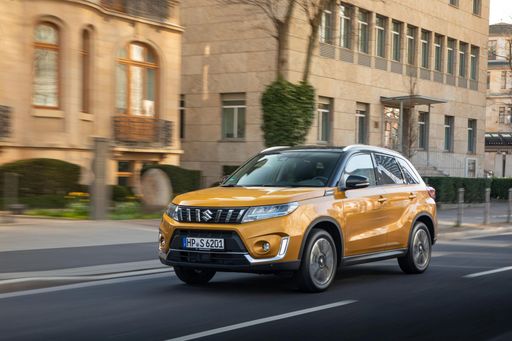
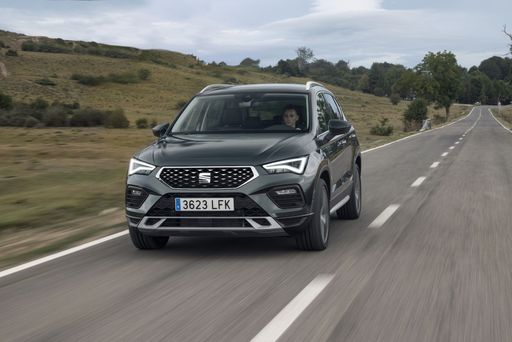
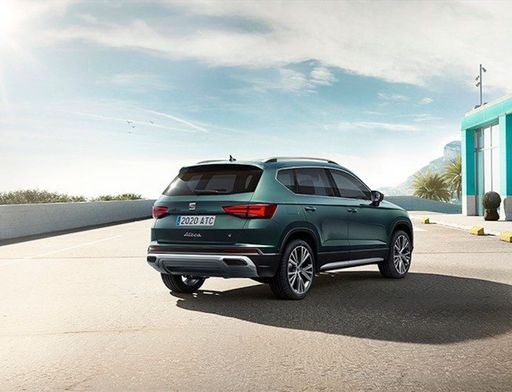
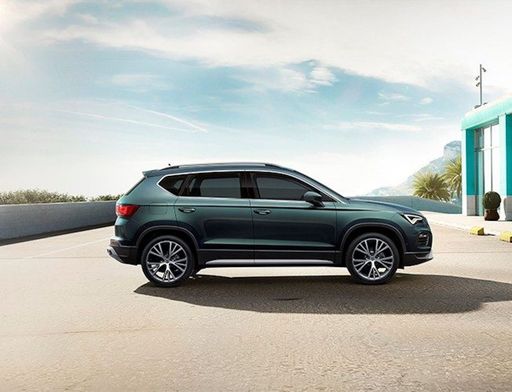
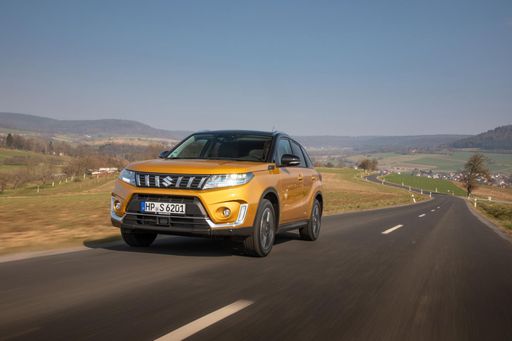
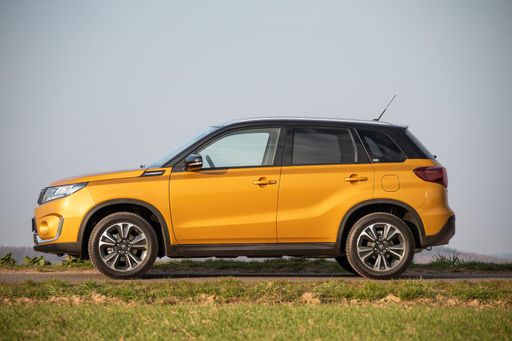
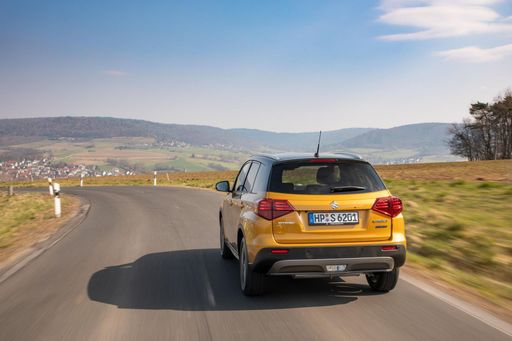
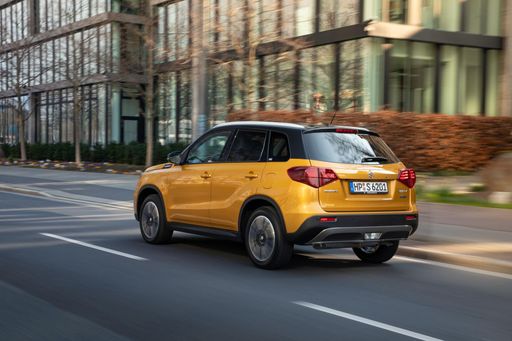
The SEAT Ateca stands as a slightly larger contender, with a length of 4,381 mm, width of 1,841 mm, and height of 1,601 mm. Its spacious design offers a remarkable trunk capacity of 510 L, ideal for families or those who enjoy adventurous road trips. Meanwhile, the Suzuki Vitara features a more compact size, measuring 4,185 mm in length, 1,775 mm in width, and 1,595 mm in height, with a trunk capacity ranging from 289 L to 375 L. This makes it a great choice for urban driving, where maneuverability and parking are crucial factors.

Ateca

Performance: Power and Efficiency

Under the hood, the Ateca provides a range of petrol and diesel engines, delivering between 116 and 150 HP with impressive torque figures of up to 360 Nm. With options for both a manual gearbox and dual-clutch automatic transmission, the Ateca accommodates diverse driving styles. It boasts an acceleration from 0-100 km/h in as fast as 9 seconds, with top speeds reaching up to 202 km/h.

The Vitara, offering petrol MHEV (Mild Hybrid Electric Vehicle) and full hybrid engine options, delivers power between 116 and 129 HP. While slightly less powerful than its SEAT counterpart, the Vitara achieves decent throttle response with a torque output of 235 Nm. It accelerates from 0-100 km/h in 9.5 seconds with a maximum speed of 190 km/h, all while delivering superior fuel economy of 5 to 5.6 L/100 km.

Vitara

Drive Type and Transmission: Customized Driving Experience

The SEAT Ateca comes exclusively with a front-wheel-drive system, ensuring stability and straightforward handling on urban roads. Its transmission choices further allow for both traditional and automatic driving preferences.

The Suzuki Vitara, however, offers greater flexibility with both front-wheel and all-wheel-drive options, catering to off-road enthusiasts and those in regions with challenging weather conditions. Add that to its available manual gearbox and automated manual transmission, the Vitara truly caters to a wide array of drivers.

Ateca

Environmental Efficiency: Emissions and Consumption

When it comes to CO2 emissions, the Ateca emits between 129 and 141 g/km, which is quite comparable to the Vitara’s range of 113 to 129 g/km. Both vehicles strive for better emission standards, reflected in their CO2 efficiency classes. However, the Vitara edges out slightly in terms of overall efficiency, aligning with Suzuki’s strategy towards hybrid technology and reduced environmental impact.

Vitara

Comfort and Innovation: Interiors and Features

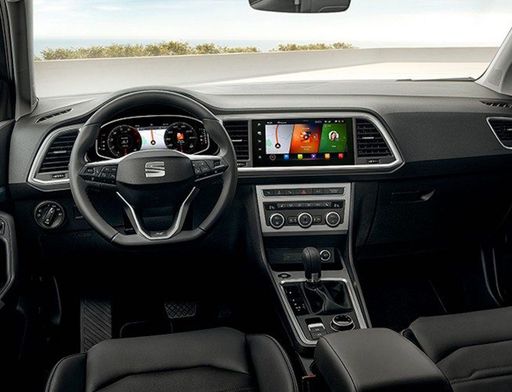
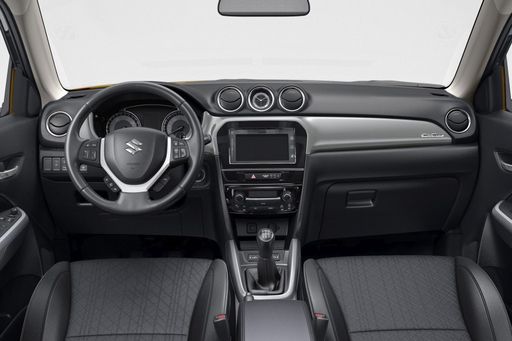
Inside, both vehicles comfortably seat five passengers, offering a pleasant ride with a range of technological features. The Ateca tends to present a more premium feel, with a focus on high-quality materials and a spacious interior. Innovation in infotainment and driver-assistance systems are notable highlights in SEAT's design.

Conversely, the Vitara shines with its value-driven approach, offering essential features and hybrid-specific driving modes that enhance the driving experience without complicating the in-car technology suite. Suzuki places a strong emphasis on ensuring practicality and user-friendliness.

Ateca

Conclusion: Choosing Between Two Distinct Realms

Choosing between the SEAT Ateca and Suzuki Vitara ultimately comes down to your driving needs and lifestyle. The Ateca appeals to those seeking a more powerful performance with premium touches, making it perfect for drivers who appreciate long cruises and ample cargo space. On the other hand, the Vitara is a champion of efficiency and versatility, particularly appealing to those navigating urban environments or looking for off-road adventure capabilities. Both vehicles offer excellent value, ensuring motorists find a match tailored to their desires.

Here’s where it gets real: The technical differences in detail

Ateca

Costs and Efficiency:

Looking at overall running costs, both models reveal some interesting differences in everyday economy.

Suzuki Vitara is very slightly cheaper – starting at 23,600 £ , while the SEAT Ateca costs 25,100 £ . That’s a price difference of around 1,534 £.

Fuel consumption also shows a difference: the SEAT Ateca uses 4.9 L/100km and is very slightly more efficient than the Suzuki Vitara with 5.3 L/100km. The difference is about 0.4 L/100km.

Vitara

Engine and Performance:

Power, torque and acceleration are the classic benchmarks for car enthusiasts – and here, some clear differences start to show.

When it comes to engine power, the Suzuki Vitara offers a bit more power – delivering 184 HP compared to 150 HP. That’s roughly 34 HP more horsepower.

When accelerating from 0 to 100 km/h, the Suzuki Vitara is noticeably quicker – completing the sprint in 7.4 s, while the SEAT Ateca takes 9 s. That’s about 1.6 s quicker.

There’s also a difference in torque: the SEAT Ateca delivers slightly more torque with 360 Nm compared to 307 Nm. That’s about 53 Nm more.

Ateca

Space and Everyday Use:

Cabin size, boot volume and payload all play a role in everyday practicality. Here, comfort and flexibility make the difference.

Both vehicles offer seating for 5 people.

In terms of curb weight, Suzuki Vitara is marginally lighter – 1,255 kg compared to 1,345 kg. The difference is around 90 kg.

Looking at boot space, the SEAT Ateca offers noticeably more boot space – 510 L compared to 375 L. That’s a difference of about 135 L.

When it comes to payload, the SEAT Ateca carries slightly more – 525 kg compared to 425 kg. That’s a difference of about 100 kg.

Who wins the race in the data check?

The Suzuki Vitara stands well ahead of its rival in the objective data comparison.
This result only shows which model scores more points on paper – not which of the two cars feels right for you.

from £23,600
Vitara

Suzuki Vitara

  • Engine Type : Petrol MHEV, Electric
  • Transmission : Automatic, Manuel
  • Drive Type : Front-Wheel Drive, All-Wheel Drive
  • Power HP : 110 - 184 HP
  • Consumption L/100km : 5.3 - 5.9 L/100km
  • Consumption kWh/100km : 14.9 - 16.6 kWh/100km
  • Electric Range : 344 - 426 km
SEAT Ateca
Suzuki Vitara

Costs and Consumption

View detailed analysis

Engine and Performance

View detailed analysis

Dimensions and Body

View detailed analysis

SEAT Ateca

The SEAT Ateca blends sharp, purposeful styling with practical space that turns everyday errands into something a bit more enjoyable. It’s poised and engaging to drive for its segment, offers solid value, and has just enough personality to make you smile on the school run.

details

Suzuki Vitara

The Vitara is a city-smart SUV with a cheeky streak of off-road promise, perfect for drivers who want practicality without pretense. It’s honest, easy to live with and surprisingly likeable, a sensible companion for everyday adventures and weekend escapes.

details
SEAT Ateca
Suzuki Vitara

Costs and Consumption

Price
25,100 - 36,900 £
Price
23,600 - 36,800 £
Consumption L/100km
4.9 - 6.4 L/100km
Consumption L/100km
5.3 - 5.9 L/100km
Consumption kWh/100km
-
Consumption kWh/100km
14.9 - 16.6 kWh/100km
Electric Range
-
Electric Range
344 - 426 km
Battery Capacity
-
Battery Capacity
-
co2
129 - 144 g/km
co2
0 - 138 g/km
Fuel tank capacity
-
Fuel tank capacity
47 L

Dimensions and Body

Body Type
SUV
Body Type
SUV
Seats
5
Seats
5
Doors
-
Doors
5
Curb weight
1,345 - 1,514 kg
Curb weight
1,255 - 1,935 kg
Trunk capacity
510 L
Trunk capacity
310 - 375 L
Length
-
Length
4,185 mm
Width
1,841 mm
Width
1,775 - 1,800 mm
Height
-
Height
1,595 mm
Max trunk capacity
-
Max trunk capacity
1,120 L
Payload
516 - 525 kg
Payload
395 - 425 kg

Engine and Performance

Engine Type
Petrol, Diesel
Engine Type
Petrol MHEV, Electric
Transmission
Manuel, Automatic
Transmission
Automatic, Manuel
Transmission Detail
Manual Gearbox, Dual-Clutch Automatic
Transmission Detail
Automatic Gearbox, Manual Gearbox
Drive Type
Front-Wheel Drive
Drive Type
Front-Wheel Drive, All-Wheel Drive
Power HP
116 - 150 HP
Power HP
110 - 184 HP
Acceleration 0-100km/h
9 - 11 s
Acceleration 0-100km/h
7.4 - 9.6 s
Max Speed
-
Max Speed
180 km/h
Torque
200 - 360 Nm
Torque
193 - 307 Nm
Number of Cylinders
3 - 4
Number of Cylinders
4
Power kW
85 - 110 kW
Power kW
81 - 135 kW
Engine capacity
999 - 1,968 cm3
Engine capacity
1,373 cm3

General

Model Year
2025
Model Year
2,025 - 2,026
CO2 Efficiency Class
E, D
CO2 Efficiency Class
D, E, A
Brand
SEAT
Brand
Suzuki
DriveDuel uses data analysis and artificial intelligence to evaluate vehicle data and create content. Content is regularly reviewed and improved. The displayed prices are estimates based on German list prices, adjusted to the respective country’s VAT. Country-specific registration taxes are not included. This information is not legally binding.