VS

Tesla Model 3 vs Aiways U5 - Differences and prices compared

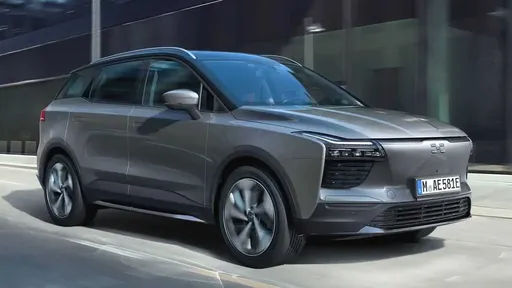
Compare performance (460 HP vs 204 HP), boot space and price (34300 £ vs 33900 £ ) at a glance. Find out which car is the better choice for you – Tesla Model 3 or Aiways U5?

Tesla Model 3

2.9 (2 Reviews)
rate

Aiways U5

Here’s where it gets real: The technical differences in detail

Model 3

Costs and Efficiency:

Price and efficiency are key factors when choosing a car – and this is often where the real differences emerge.

Aiways U5 has a minimal advantage in terms of price – it starts at 33900 £ , while the Tesla Model 3 costs 34300 £ . That’s a price difference of around 362 £.

In terms of energy consumption, the advantage goes to the Tesla Model 3: with 13.20 kWh per 100 km, it’s noticeable more efficient than the Aiways U5 with 16.60 kWh. That’s a difference of about 3.40 kWh.

As for electric range, the Tesla Model 3 performs decisively better – achieving up to 750 km, about 340 km more than the Aiways U5.

Model 3

Engine and Performance:

Under the bonnet, it becomes clear which model is tuned for sportiness and which one takes the lead when you hit the accelerator.

When it comes to engine power, the Tesla Model 3 has a significantly edge – offering 460 HP compared to 204 HP. That’s roughly 256 HP more horsepower.

In acceleration from 0 to 100 km/h, the Tesla Model 3 is clearly quicker – completing the sprint in 3.10 s, while the Aiways U5 takes 7.50 s. That’s about 4.40 s faster.

In terms of top speed, the Tesla Model 3 performs clearly perceptible better – reaching 262 km/h, while the Aiways U5 tops out at 160 km/h. The difference is around 102 km/h.

There’s also a difference in torque: Tesla Model 3 pulls significantly stronger with 660 Nm compared to 310 Nm. That’s about 350 Nm difference.

Model 3

Space and Everyday Use:

Cabin size, boot volume and payload all play a role in everyday practicality. Here, comfort and flexibility make the difference.

Both vehicles offer seating for 5 people.

In curb weight, Aiways U5 is minimal lighter – 1720 kg compared to 1822 kg. The difference is around 102 kg.

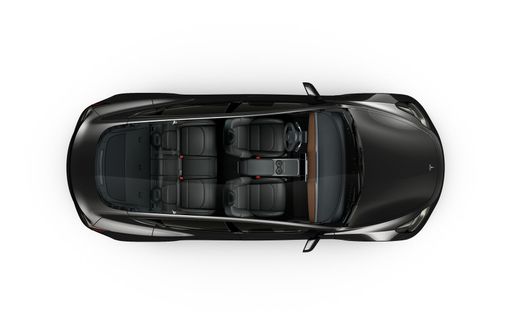
In terms of boot space, the Tesla Model 3 offers distinct more room – 594 L compared to 432 L. That’s a difference of about 162 L.

When it comes to payload, Aiways U5 evident takes the win – 435 kg compared to 333 kg. That’s a difference of about 102 kg.

Who wins the race in the data check?

The Tesla Model 3 is decisively ahead in the objective data comparison.
This result only shows which model scores more points on paper – not which of the two cars feels right for you.

Tesla Model 3
Aiways U5

Costs and Consumption

View detailed analysis

Engine and Performance

View detailed analysis

Dimensions and Body

View detailed analysis
from about £34,300
Model 3

Tesla Model 3

  • Engine Type : Electric
  • Transmission : Automatic
  • Drive Type : Rear-Wheel Drive, All-Wheel Drive
  • Power HP : 283 - 460 HP
  • Consumption kWh/100km : 13.2 - 16.7 kWh
  • Electric Range : 550 - 750 km

Tesla Model 3

2.9 (2 Reviews)
rate

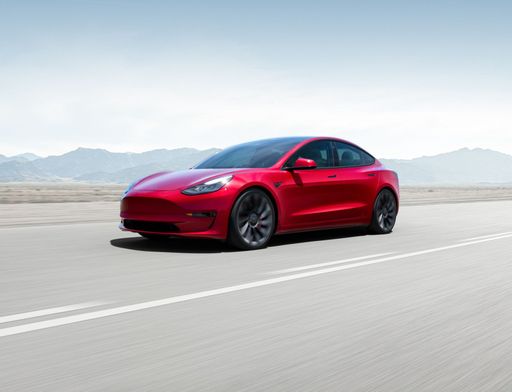
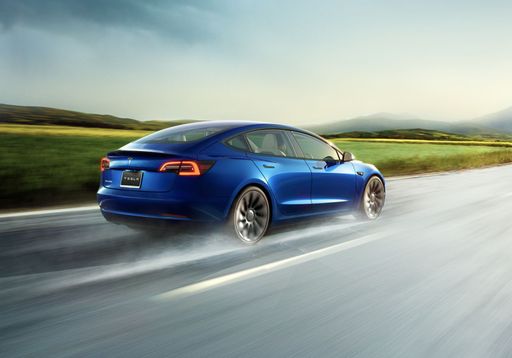
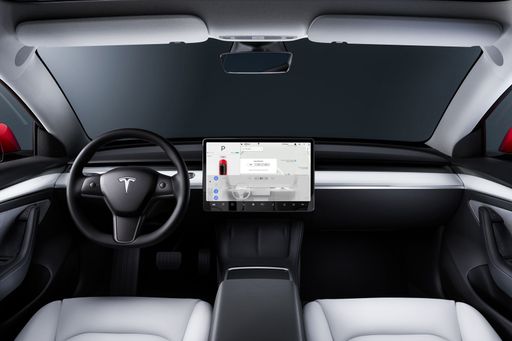
The Tesla Model 3 slices through daily commuting with a silent, confident shove that makes petrolheads reassess their life choices, while its minimalist cabin feels more like a slick gadget gallery than a traditional car interior. For buyers after a fuss-free, tech-forward electric with plenty of grin factor and low running drama, it’s hard to beat—just don't be surprised when the car updates itself overnight.

details

Aiways U5

The U5 stands out in the electric vehicle market with its stylish design and spacious interior, making it an attractive option for families and urban drivers alike. Its smooth performance and impressive range cater to the modern consumer's need for practicality without sacrificing comfort. With a focus on sustainability and innovation, the U5 is poised to make a significant impact on the future of eco-friendly transportation.

details
Tesla Model 3
Aiways U5

Costs and Consumption

Price
34300 - 50100 £
Price
33900 - 39900 £
Consumption L/100km
-
Consumption L/100km
-
Consumption kWh/100km
13.2 - 16.7 kWh
Consumption kWh/100km
16.6 - 17 kWh
Electric Range
550 - 750 km
Electric Range
400 - 410 km
Battery Capacity
64.5 - 83 kWh
Battery Capacity
-
co2
0 g/km
co2
0 g/km
Fuel tank capacity
-
Fuel tank capacity
-

Dimensions and Body

Body Type
Sedan
Body Type
SUV
Seats
5
Seats
5
Doors
4
Doors
5
Curb weight
1822 - 1929 kg
Curb weight
1720 - 1770 kg
Trunk capacity
594 L
Trunk capacity
432 L
Length
4720 - 4724 mm
Length
4680 mm
Width
1850 mm
Width
1865 mm
Height
1431 - 1440 mm
Height
1700 mm
Max trunk capacity
-
Max trunk capacity
1555 L
Payload
303 - 333 kg
Payload
385 - 435 kg

Engine and Performance

Engine Type
Electric
Engine Type
Electric
Transmission
Automatic
Transmission
Automatic
Transmission Detail
Reduction Gearbox
Transmission Detail
Reduction Gearbox
Drive Type
Rear-Wheel Drive, All-Wheel Drive
Drive Type
Front-Wheel Drive
Power HP
283 - 460 HP
Power HP
204 HP
Acceleration 0-100km/h
3.1 - 6.1 s
Acceleration 0-100km/h
7.5 - 7.7 s
Max Speed
201 - 262 km/h
Max Speed
160 km/h
Torque
420 - 660 Nm
Torque
310 Nm
Number of Cylinders
-
Number of Cylinders
-
Power kW
208 - 338 kW
Power kW
150 kW
Engine capacity
-
Engine capacity
-

General

Model Year
2025
Model Year
2022
CO2 Efficiency Class
A
CO2 Efficiency Class
A
Brand
Tesla
Brand
Aiways
Is the Tesla Model 3 offered with different drivetrains?

Available configurations include Rear-Wheel Drive or All-Wheel Drive.

The prices shown are estimates based on German list prices, adjusted for local VAT. Local registration taxes (e.g. NoVA, BPM or CO2 malus) are not included. This information is not legally binding.