VS

Toyota C-HR vs Ford Kuga comparison

Compare performance (223 HP vs 243 HP), boot space and price (29,100 £ vs 34,200 £ ) at a glance. Find out which car is the better choice for you – Toyota C-HR or Ford Kuga?

Toyota C-HR vs Ford Kuga: Key differences

Toyota C-HR

4.8 (2 Reviews)
rate
  • somewhat cheaper
  • visibly more efficient
  • only slightly lighter

Ford Kuga

4.2 (6 Reviews)
rate
  • only slightly more power
  • barely more electric range
  • only slightly quicker 0–100 km/h

All details on performance, efficiency, range and trunk space can be found in the technical comparison below – including user reviews for both models.

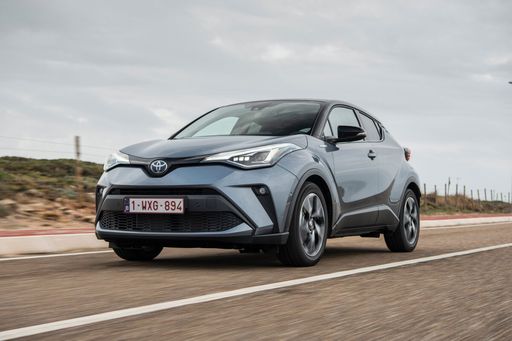
C-HR

Ford Kuga vs Toyota C-HR: A Comprehensive Comparison

As the SUV segment continues to grow, two promising contenders, the Ford Kuga and the Toyota C-HR, are making headlines for their blend of style, performance, and innovative technology. This article delves into a detailed comparison of these popular models, focusing on technical aspects, innovations, and overall driving experience.
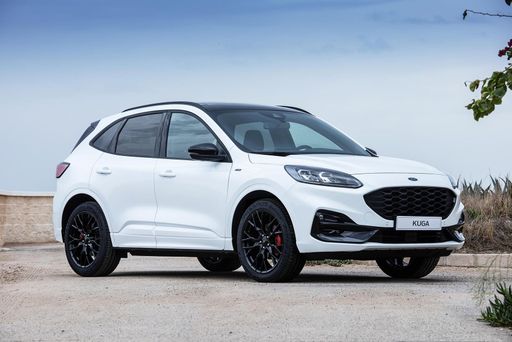
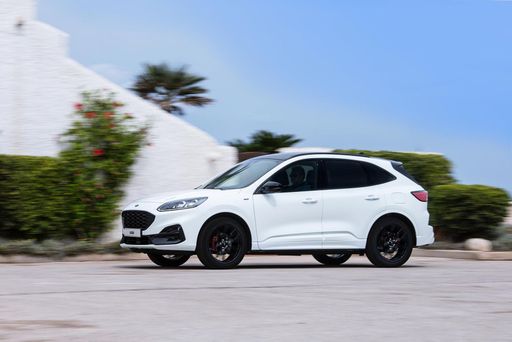
Kuga

Pricing and Variants

Starting with pricing, the Ford Kuga is available at a variety of price points ranging from €39,950 to €52,200, depending on the variant. In contrast, the Toyota C-HR is slightly more affordable, with prices ranging from €34,990 to €48,990. Both automakers offer multiple trims, providing an array of features to suit different budgets.

C-HR

Engine Types and Performance

The Ford Kuga comes with several engine options: a petrol engine, a full hybrid, and a plug-in hybrid. Power output ranges from 150 HP in the base model to a potent 243 HP in the top-end variant. The Kuga’s acceleration of 0-100 km/h can be achieved in as little as 7.3 seconds, making it quite competitive in its class.

The Toyota C-HR offers a range of hybrid solutions as well, with power outputs from 140 HP to 223 HP. Acceleration reaches 0-100 km/h in as little as 7.4 seconds for the more powerful variants. The C-HR prides itself on excellent fuel efficiency, with consumption figures as low as 4.7 L/100 km.

Kuga

Fuel Efficiency and Emissions

When it comes to fuel efficiency, the Kuga's hybrid variants are impressive. The plug-in hybrid model boasts consumption figures as low as 0.9 L/100 km and CO2 emissions as low as 20 g/km. Its electric range reaches up to 69 km, allowing for significant emissions-free driving.

Meanwhile, the C-HR's fuel consumption rates are commendable as well, with figures starting at 4.7 L/100 km. The overall CO2 emissions stand at a competitive 19 g/km for its plug-in variant. The C-HR also offers an electric range of around 67 km, making it an efficient choice for urban driving.

C-HR

Interior Space and Comfort

Both models can accommodate five passengers comfortably, but the interior design and cargo space are noteworthy aspects in this comparison. The Ford Kuga boasts a generous trunk capacity of 412 liters, making it ideal for families or road trips. In contrast, the Toyota C-HR offers a trunk capacity that ranges up to 447 liters, slightly edging the Kuga in this department.

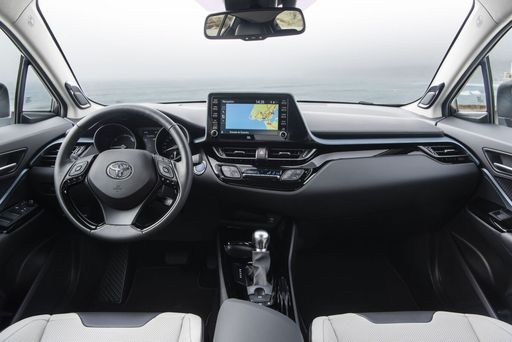
In terms of interior materials and design, Ford's approach leans toward a more functional layout with intuitive technology integration, while Toyota emphasizes a premium feel with elegant styling and user-friendly features.

Kuga

Innovative Features

Both the Ford Kuga and the Toyota C-HR are equipped with modern technological innovations. The Kuga offers advanced driver-assistance systems, including adaptive cruise control, blind-spot monitoring, and a state-of-the-art infotainment system with smartphone integration.

On the other hand, the C-HR showcases Toyota’s cutting-edge safety features, including Toyota Safety Sense, which comes standard across various trims. This package includes lane departure alert, automatic high beams, and a pre-collision system that enhances driving safety.

C-HR

Driving Experience and Handling

The Ford Kuga is designed to deliver a dynamic driving experience, especially with its available all-wheel-drive option, providing better stability and control in diverse driving conditions. With a maximum speed reaching up to 200 km/h, the Kuga is built for performance enthusiasts.

Conversely, the Toyota C-HR’s lower center of gravity lends itself to agile handling, making it particularly enjoyable to drive on winding roads. Its top speed caps at 180 km/h, reflecting a focus on efficiency and comfort rather than outright power.

Conclusion: Which SUV Reigns Supreme?

The comparison between the Ford Kuga and the Toyota C-HR ultimately comes down to individual preferences. The Kuga stands out for its powerful engine options and spacious interior, making it a fantastic choice for families or those needing additional cargo space. Meanwhile, the C-HR impresses with its hybrid efficiency, cutting-edge safety features, and agile driving characteristics.

For buyers leaning towards a more performance-oriented SUV, the Ford Kuga is the go-to choice, while those seeking a stylish, efficient, and tech-savvy vehicle may find the Toyota C-HR hard to resist. Both models represent the best of their brands, appealing to a wide range of consumers in the ever-competitive SUV market.

Here’s where it gets real: The technical differences in detail

C-HR

Costs and Efficiency:

When it comes to price and running costs, the biggest differences usually appear. This is often where you see which car fits your budget better in the long run.

Toyota C-HR is somewhat cheaper – starting at 29,100 £ , while the Ford Kuga costs 34,200 £ . That’s a price difference of around 5,108 £.

Fuel consumption also shows a difference: the Toyota C-HR uses 2.3 L/100km and is visibly more efficient than the Ford Kuga with 2.8 L/100km. The difference is about 0.5 L/100km.

As for electric range, the Ford Kuga offers barely more range – reaching up to 68 km, about 2 km more than the Toyota C-HR.

Kuga

Engine and Performance:

Power, torque and acceleration are the classic benchmarks for car enthusiasts – and here, some clear differences start to show.

When it comes to engine power, the Ford Kuga offers only slightly more power – delivering 243 HP compared to 223 HP. That’s roughly 20 HP more horsepower.

When accelerating from 0 to 100 km/h, the Ford Kuga is only slightly quicker – completing the sprint in 7.3 s, while the Toyota C-HR takes 7.4 s. That’s about 0.1 s quicker.

C-HR

Space and Everyday Use:

Whether family car or daily driver – which one offers more room, flexibility and comfort?

Both vehicles offer seating for 5 people.

In terms of curb weight, Toyota C-HR is only slightly lighter – 1,505 kg compared to 1,526 kg. The difference is around 21 kg.

When it comes to payload, the Ford Kuga carries noticeably more – 550 kg compared to 425 kg. That’s a difference of about 125 kg.

Who wins the race in the data check?

The Ford Kuga is narrowly ahead in the objective data comparison.
This result only shows which model scores more points on paper – not which of the two cars feels right for you.

from £34,200
Kuga

Ford Kuga

  • Engine Type : Petrol, Full Hybrid, Plugin Hybrid
  • Transmission : Manuel, Automatic
  • Drive Type : Front-Wheel Drive, All-Wheel Drive
  • Power HP : 150 - 243 HP
  • Consumption L/100km : 2.8 - 6.8 L/100km
  • Electric Range : 68 km
Toyota C-HR
Ford Kuga

Costs and Consumption

View detailed analysis

Engine and Performance

View detailed analysis

Dimensions and Body

View detailed analysis

Toyota C-HR

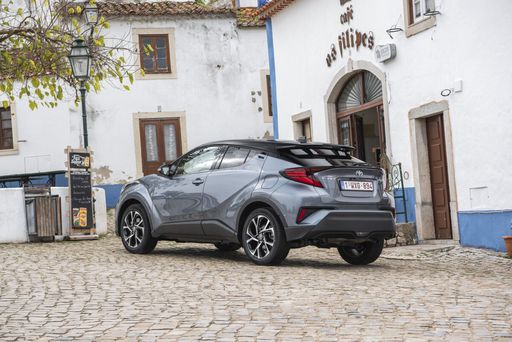
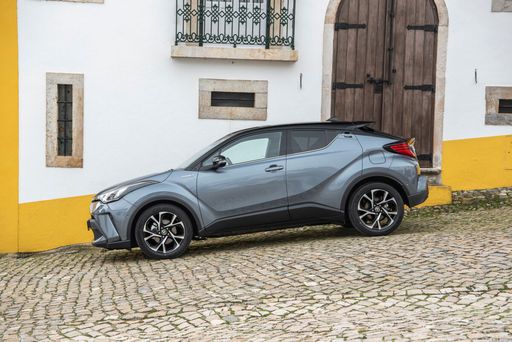
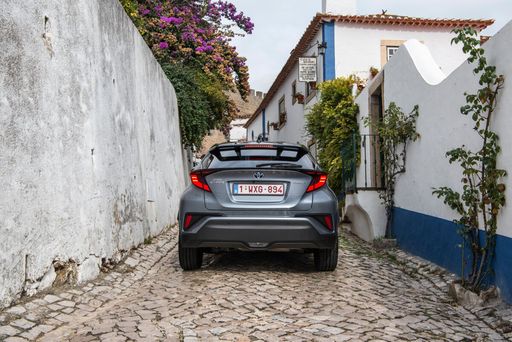
The Toyota C-HR cuts a striking figure with its angular styling and coupe-like profile, so you’ll never go unnoticed in the supermarket car park. It balances everyday practicality with a nimble, city-friendly personality, making routine commutes feel a touch more fun without asking for forgiveness.

details

Ford Kuga

The Kuga is Ford’s adaptable family SUV that blends usable space with a surprisingly lively driving character, making daily commutes and weekend escapes equally enjoyable. With smart interior packaging, an easy-to-use infotainment setup and composed road manners, it’s a sensible choice for buyers who want a bit of fun without the fuss.

details
Toyota C-HR
Ford Kuga

Costs and Consumption

Price
29,100 - 42,800 £
Price
34,200 - 46,300 £
Consumption L/100km
2.3 - 5.1 L/100km
Consumption L/100km
2.8 - 6.8 L/100km
Consumption kWh/100km
-
Consumption kWh/100km
-
Electric Range
66 km
Electric Range
68 km
Battery Capacity
-
Battery Capacity
-
co2
52 - 116 g/km
co2
55 - 154 g/km
Fuel tank capacity
-
Fuel tank capacity
-

Dimensions and Body

Body Type
SUV
Body Type
SUV
Seats
5
Seats
5
Doors
-
Doors
-
Curb weight
1,505 - 1,755 kg
Curb weight
1,526 - 1,859 kg
Trunk capacity
350 - 447 L
Trunk capacity
-
Length
-
Length
-
Width
1,832 mm
Width
1,882 mm
Height
-
Height
-
Max trunk capacity
-
Max trunk capacity
-
Payload
375 - 425 kg
Payload
541 - 550 kg

Engine and Performance

Engine Type
Full Hybrid, Plugin Hybrid
Engine Type
Petrol, Full Hybrid, Plugin Hybrid
Transmission
Automatic
Transmission
Manuel, Automatic
Transmission Detail
CVT
Transmission Detail
Manual Gearbox, CVT, Automatic Gearbox
Drive Type
Front-Wheel Drive, All-Wheel Drive
Drive Type
Front-Wheel Drive, All-Wheel Drive
Power HP
140 - 223 HP
Power HP
150 - 243 HP
Acceleration 0-100km/h
7.4 - 9.9 s
Acceleration 0-100km/h
7.3 - 9.9 s
Max Speed
-
Max Speed
-
Torque
-
Torque
240 Nm
Number of Cylinders
4
Number of Cylinders
3 - 4
Power kW
103 - 164 kW
Power kW
111 - 178 kW
Engine capacity
1,798 - 1,987 cm3
Engine capacity
1,496 - 2,488 cm3

General

Model Year
2,026
Model Year
2,025
CO2 Efficiency Class
C, D, B
CO2 Efficiency Class
E, D, B
Brand
Toyota
Brand
Ford
DriveDuel uses data analysis and artificial intelligence to evaluate vehicle data and create content. Content is regularly reviewed and improved. The displayed prices are estimates based on German list prices, adjusted to the respective country’s VAT. Country-specific registration taxes are not included. This information is not legally binding.