VS

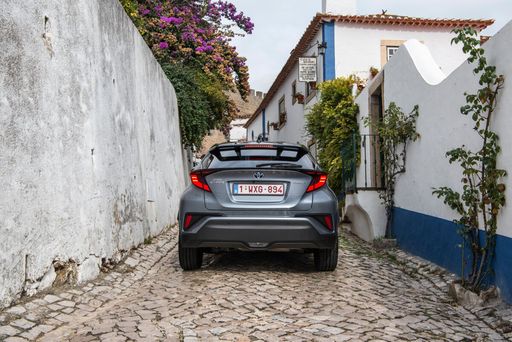
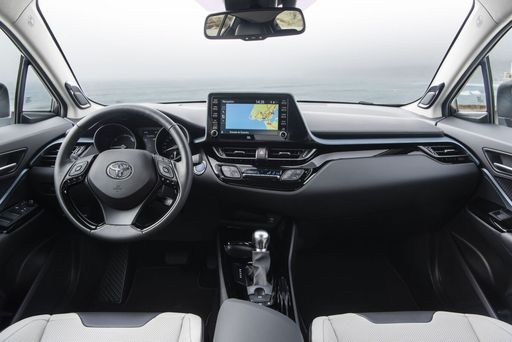
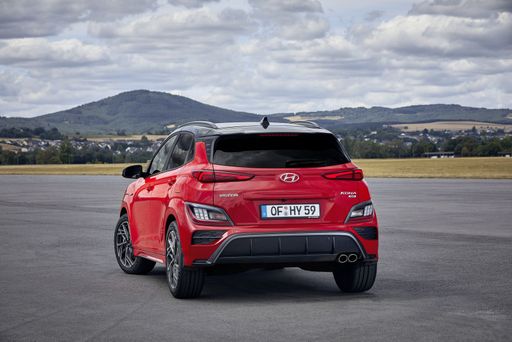
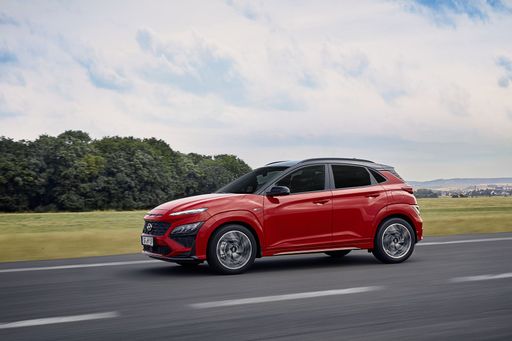
Toyota C-HR vs Hyundai Kona comparison

Compare performance (223 HP vs 218 HP), boot space and price (29,100 £ vs 23,100 £ ) at a glance. Find out which car is the better choice for you – Toyota C-HR or Hyundai Kona?

Toyota C-HR vs Hyundai Kona: Key differences

Toyota C-HR

4.8 (2 Reviews)
rate
  • marginally more power
  • clearly more efficient
  • marginally quicker 0–100 km/h

Hyundai Kona

5 (1 Reviews)
rate
  • noticeably cheaper
  • considerably more electric range
  • very slightly lighter
  • very slightly more trunk space
C-HR

Hyundai Kona vs Toyota C-HR: The Battle of the Dynamic SUVs

In the world of compact SUVs, two names often stand out for their distinctive style and innovative features—Hyundai Kona and Toyota C-HR. Both models present a compelling case for potential buyers, but differences in technical specifications and design philosophies set them apart. Let's delve into the details to see how these two contenders stack up against each other.

Kona

Impressive Engine and Powertrain Options

The Hyundai Kona offers flexibility with its trio of engine choices: petrol, full hybrid, and electric. The petrol variants come equipped with either a manual or a dual-clutch automatic transmission, offering smooth transitions. The electric version utilizes a reduction gearbox, providing an efficient driving experience. The Kona boasts a power range from 100 HP to a muscular 218 HP, delivering performance suited to various driving needs.

On the other hand, the Toyota C-HR focuses primarily on hybrid technology, offering full hybrid and plug-in hybrid options. The C-HR uses a continuously variable transmission (CVT) to ensure seamless acceleration without the jerks typically associated with gear changes. It offers a respectable power range from 140 HP to 223 HP, capitalizing on Toyota's expertise in hybrid technology.

C-HR

Fuel Efficiency and Environmental Impact

For environmentally conscious buyers, the Kona electric variant shines with an impressive electric range of up to 514 km. In terms of conventional fuels, Kona's consumption figures range from 4.5 L/100km for hybrids to 6.7 L/100km for petrol engines. This is complemented by a competitive CO2 efficiency class that spans from A to E, underscoring its commitment to sustainability.

The C-HR takes fuel efficiency a step further, especially with its plug-in hybrid model achieving a consumption of just 0.8 L/100km and CO2 emissions as low as 17 g/km. While its petrol hybrid models offer a slightly higher consumption, they are still commendable, with figures around 4.7 L/100km.

Kona

Performance and Dynamics

Driving enthusiasts will appreciate the Hyundai Kona’s range of acceleration capabilities, from a relaxed 13.3 seconds to a brisk 7.8 seconds for 0-100 km/h sprints. Its top speed also varies depending on the engine type, reaching up to 201 km/h for select variants, which ensures that there is something for both urban commuters and highway explorers.

Toyota C-HR isn’t far behind, offering acceleration from 9.9 seconds down to a swift 7.4 seconds, depending on the hybrid configuration. Its top speed ranges up to 180 km/h, making it well-suited for city drives and occasional highway runs.

C-HR

Design and Practicality

Both models feature a 5-door layout and provide seating for five, catering perfectly to families and small groups. The Hyundai Kona offers a generous trunk capacity of 466 liters, ideal for storage needs. It's slightly larger in dimension with a length of up to 4385 mm, width of 1825 mm, and a height of up to 1585 mm, providing ample cabin room.

The Toyota C-HR's design isn't far off, featuring a sleek silhouette with dimensions of 4362 mm in length and a width of 1832 mm. Despite a slightly lower trunk capacity varying between 350 to 447 liters, it maintains a stylish and compact form factor. Rounded off with a payload capacity between 375 to 425 kg, it sufficiently caters to everyday utility needs.

Kona

Conclusion

Both Hyundai Kona and Toyota C-HR bring their own unique strengths to the table. Kona's versatility with its diverse engine offerings and extensive electric range speaks to those seeking options and power. Meanwhile, the C-HR appeals to eco-conscious drivers with its superior hybrid technology and low emissions. Ultimately, the choice between these two compelling SUVs will depend on individual preferences regarding performance, efficiency, and design.

Here’s where it gets real: The technical differences in detail

C-HR

Costs and Efficiency:

Price and efficiency are often the first things buyers look at. Here it becomes clear which model has the long-term edge – whether at the pump, the plug, or in purchase price.

Hyundai Kona is noticeably cheaper – starting at 23,100 £ , while the Toyota C-HR costs 29,100 £ . That’s a price difference of around 6,077 £.

Fuel consumption also shows a difference: the Toyota C-HR uses 2.3 L/100km and is clearly more efficient than the Hyundai Kona with 4.6 L/100km. The difference is about 2.3 L/100km.

As for electric range, the Hyundai Kona offers considerably more range – reaching up to 514 km, about 448 km more than the Toyota C-HR.

Kona

Engine and Performance:

Under the bonnet, it becomes clear which model is tuned for sportiness and which one takes the lead when you hit the accelerator.

When it comes to engine power, the Toyota C-HR offers marginally more power – delivering 223 HP compared to 218 HP. That’s roughly 5 HP more horsepower.

When accelerating from 0 to 100 km/h, the Toyota C-HR is marginally quicker – completing the sprint in 7.4 s, while the Hyundai Kona takes 7.8 s. That’s about 0.4 s quicker.

C-HR

Space and Everyday Use:

Cabin size, boot volume and payload all play a role in everyday practicality. Here, comfort and flexibility make the difference.

Both vehicles offer seating for 5 people.

In terms of curb weight, Hyundai Kona is very slightly lighter – 1,370 kg compared to 1,505 kg. The difference is around 135 kg.

Looking at boot space, the Hyundai Kona offers very slightly more boot space – 466 L compared to 447 L. That’s a difference of about 19 L.

When it comes to payload, the Hyundai Kona carries a bit more – 490 kg compared to 425 kg. That’s a difference of about 65 kg.

Who wins the race in the data check?

The Hyundai Kona holds a decisive overall lead in the objective data comparison.
This result only shows which model scores more points on paper – not which of the two cars feels right for you.

from £23,100
Kona

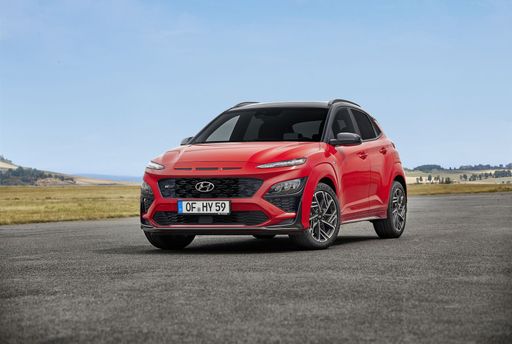
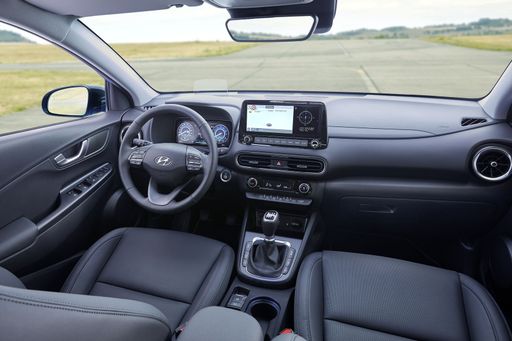
Hyundai Kona

  • Engine Type : Electric, Petrol, Full Hybrid
  • Transmission : Automatic, Manuel
  • Drive Type : Front-Wheel Drive, All-Wheel Drive
  • Power HP : 115 - 218 HP
  • Consumption L/100km : 4.6 - 7 L/100km
  • Consumption kWh/100km : 14.6 - 16.8 kWh/100km
  • Electric Range : 377 - 514 km
Toyota C-HR
Hyundai Kona

Costs and Consumption

View detailed analysis

Engine and Performance

View detailed analysis

Dimensions and Body

View detailed analysis

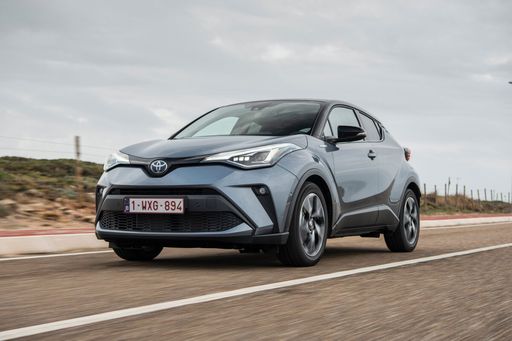
Toyota C-HR

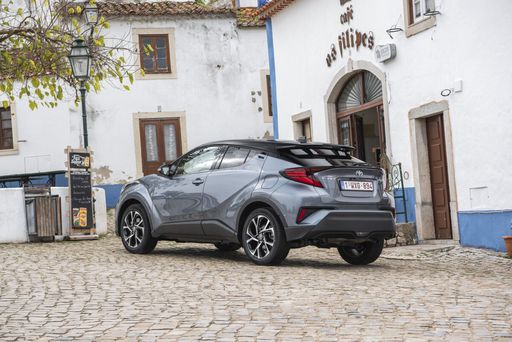
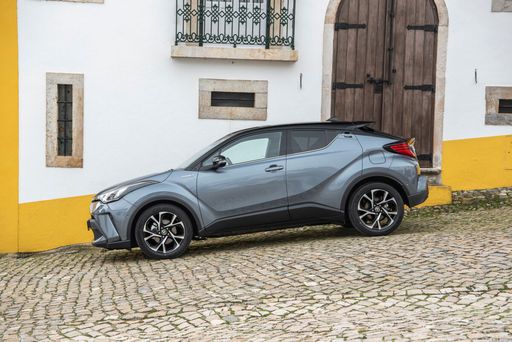
The Toyota C-HR cuts a striking figure with its angular styling and coupe-like profile, so you’ll never go unnoticed in the supermarket car park. It balances everyday practicality with a nimble, city-friendly personality, making routine commutes feel a touch more fun without asking for forgiveness.

details

Hyundai Kona

The Hyundai Kona wears its personality on the outside with bold styling and sprightly handling that turns city driving into something a little more fun than a commute. It blends practical space, modern tech and sensible running costs into a compact, stylish package — a smart pick if you want flair without paying luxury prices.

details
Toyota C-HR
Hyundai Kona

Costs and Consumption

Price
29,100 - 42,800 £
Price
23,100 - 41,600 £
Consumption L/100km
2.3 - 5.1 L/100km
Consumption L/100km
4.6 - 7 L/100km
Consumption kWh/100km
-
Consumption kWh/100km
14.6 - 16.8 kWh/100km
Electric Range
66 km
Electric Range
377 - 514 km
Battery Capacity
-
Battery Capacity
48.4 - 65.4 kWh
co2
52 - 116 g/km
co2
0 - 163 g/km
Fuel tank capacity
-
Fuel tank capacity
-

Dimensions and Body

Body Type
SUV
Body Type
SUV
Seats
5
Seats
5
Doors
-
Doors
5
Curb weight
1,505 - 1,755 kg
Curb weight
1,370 - 1,773 kg
Trunk capacity
350 - 447 L
Trunk capacity
466 L
Length
-
Length
4,355 - 4,385 mm
Width
1,832 mm
Width
1,825 mm
Height
-
Height
1,580 mm
Max trunk capacity
-
Max trunk capacity
1,300 L
Payload
375 - 425 kg
Payload
420 - 490 kg

Engine and Performance

Engine Type
Full Hybrid, Plugin Hybrid
Engine Type
Electric, Petrol, Full Hybrid
Transmission
Automatic
Transmission
Automatic, Manuel
Transmission Detail
CVT
Transmission Detail
Reduction Gearbox, Manual Gearbox, Dual-Clutch Automatic
Drive Type
Front-Wheel Drive, All-Wheel Drive
Drive Type
Front-Wheel Drive, All-Wheel Drive
Power HP
140 - 223 HP
Power HP
115 - 218 HP
Acceleration 0-100km/h
7.4 - 9.9 s
Acceleration 0-100km/h
7.8 - 11.9 s
Max Speed
-
Max Speed
162 - 172 km/h
Torque
-
Torque
200 - 265 Nm
Number of Cylinders
4
Number of Cylinders
3 - 4
Power kW
103 - 164 kW
Power kW
85 - 160 kW
Engine capacity
1,798 - 1,987 cm3
Engine capacity
998 - 1,598 cm3

General

Model Year
2,026
Model Year
2,024 - 2,025
CO2 Efficiency Class
C, D, B
CO2 Efficiency Class
A, D, C, E, F
Brand
Toyota
Brand
Hyundai
DriveDuel uses data analysis and artificial intelligence to evaluate vehicle data and create content. Content is regularly reviewed and improved. The displayed prices are estimates based on German list prices, adjusted to the respective country’s VAT. Country-specific registration taxes are not included. This information is not legally binding.