VS

Toyota Corolla Cross vs Renault Symbioz comparison

Compare performance (180 HP vs 158 HP), boot space and price (31,700 £ vs 24,700 £ ) at a glance. Find out which car is the better choice for you – Toyota Corolla Cross or Renault Symbioz?

Toyota Corolla Cross vs Renault Symbioz: Key differences

Toyota Corolla Cross

4.3 (8 Reviews)
rate
  • a bit more power
  • slightly quicker 0–100 km/h
details

Renault Symbioz

4.8 (5 Reviews)
rate
  • visibly cheaper
  • marginally more efficient
  • marginally lighter
  • moderately more trunk space
details

All details on performance, efficiency, range and trunk space can be found in the technical comparison below – including user reviews for both models.

By Achim Sedelmaier

Corolla Cross

Renault Symbioz VS Toyota Corolla Cross: a practical C‑SUV face-off

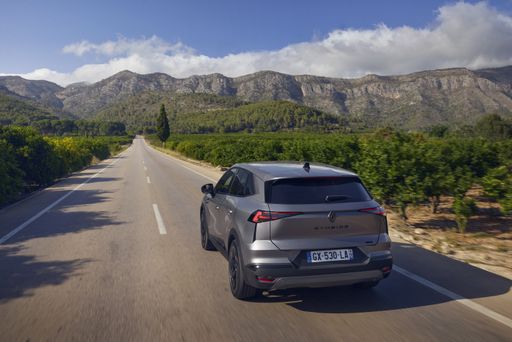
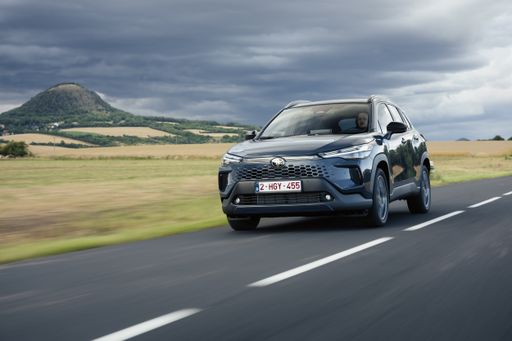
Renault Symbioz VS Toyota Corolla Cross sit squarely in the compact‑SUV sweet spot but aim at slightly different buyers. The Renault Symbioz leans into smart infotainment and cargo flexibility, while the Toyota Corolla Cross trades some flash for a steadier, more conservative package focused on safety and long‑term ownership. Renault Symbioz feels younger and more tech‑forward inside, and Toyota Corolla Cross delivers a tougher, more reassuring interior touch. Price and ownership considerations nudge the decision: the Symbioz is positioned to be kinder on the initial bill, whereas the Corolla Cross builds its case around proven dependability and warranty peace of mind.
Symbioz

Comfort and long‑distance behaviour

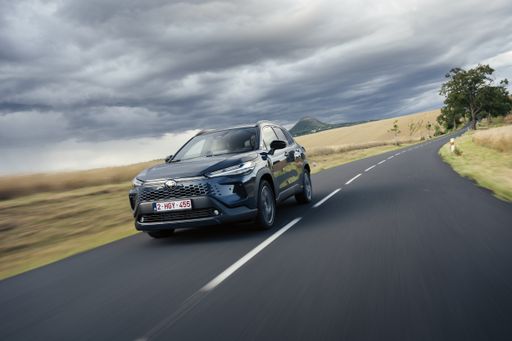
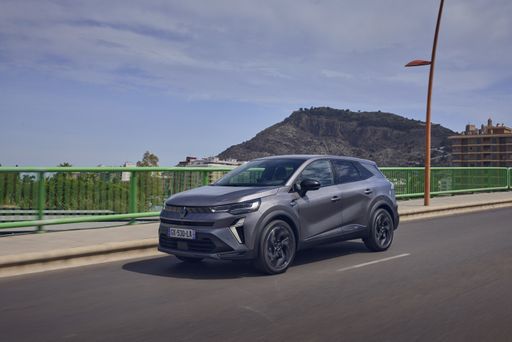
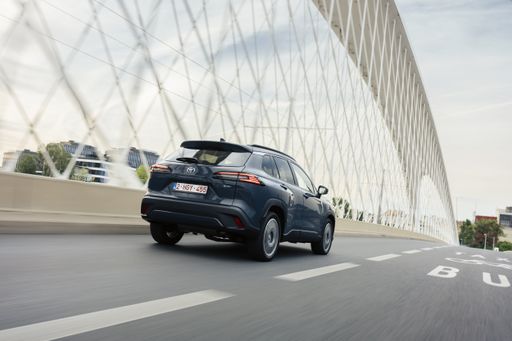
On longer trips the Renault Symbioz is calm and efficient, rewarding steady cruising with low background noise and good fuel frugality. The Toyota Corolla Cross is similarly relaxed but feels a touch more planted and composed at speed, which can make it feel slightly more confidence‑inspiring on extended motorway runs. Both hybrids become more vocal when you ask for strong overtakes — the Symbioz tends to reveal gearbox and engine sounds under load, while the Corolla Cross rises in pitch with its e‑CVT character. Suspension tuning diverges too: the Symbioz can transmit short, sharper hits on broken surfaces, whereas the Corolla Cross smooths those imperfections a bit better without becoming sporty.

Corolla Cross

City friendliness and daily usability

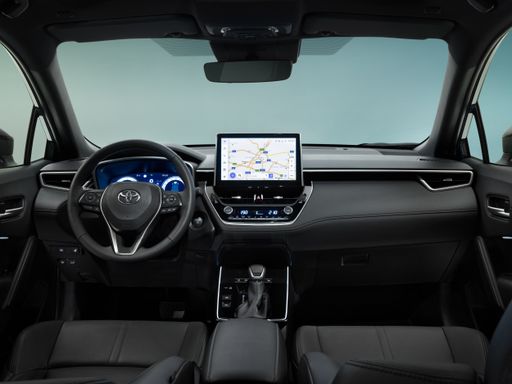
In town both Renault Symbioz and Toyota Corolla Cross are straightforward to live with thanks to compact dimensions and hybrid drivetrains that favour quiet, low‑speed running. The Renault Symbioz scores for daily tech — its Google‑centric OpenR system is quick and intuitive and physical climate controls reduce distraction — while the Toyota Corolla Cross offers excellent outward visibility and a familiar, no‑nonsense control layout that makes parking effortless. Practical downsides differ: the Symbioz can show uneven backup‑camera behaviour and some assistants intervene a bit abruptly, whereas the Corolla Cross typically delivers steadier camera guidance and conservative assistance. If you do lots of short trips the Symbioz’s tendency to behave electrically often is a notable fuel‑saving advantage, but the Corolla Cross wins on simple, predictable systems that many drivers prefer.

Symbioz

Cabin feel and perceived quality

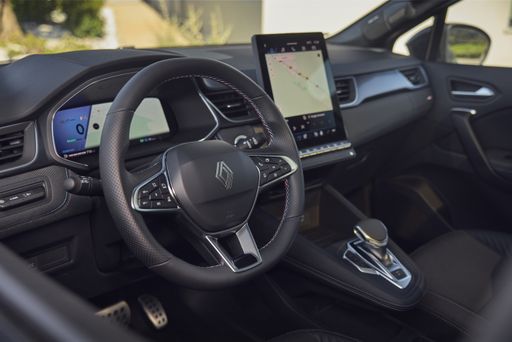
Open a door and the cabins tell different stories: the Renault Symbioz presents a tech‑forward, functional space with strong smartphone integration, while the Toyota Corolla Cross opts for a sober, neatly organized interior that reads tougher. Materials in the Symbioz are serviceable and pragmatic rather than luxurious, whereas the Corolla Cross uses slightly more conservative finishes that add to a sense of solidity rather than flair. The Symbioz’s panoramic Solarbay roof brightens the interior but doesn’t offer full blackout, a small trade‑off versus the Corolla Cross’s more traditional roof. If you care about gadgetry and a modern infotainment vibe the Renault Symbioz will feel more contemporary; if you prize durability and a calmer, uncluttered layout the Toyota Corolla Cross will feel more reassuring.

Corolla Cross

Practicality and family use

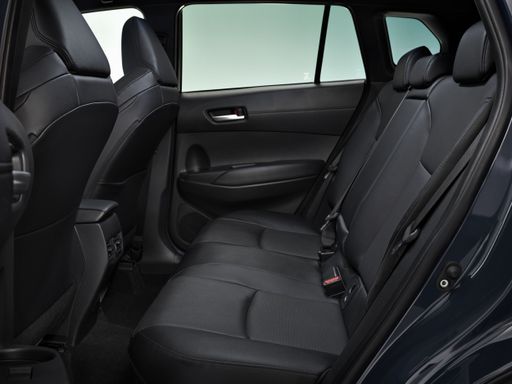
For family life the Renault Symbioz’s sliding rear seat and flexible boot arrangements are genuinely useful when you need to shuffle between passengers and cargo on the fly. The Toyota Corolla Cross provides a straightforward, dependable loadbay with easy access and solid safety fittings, but it doesn’t match the Symbioz’s flexibility for swapping legroom and luggage volume. Rear‑seat space is comparable for everyday use, though taller occupants may prefer the Symbioz when you exploit its adjustable bench; the Corolla Cross offers reliable child‑seat mounting and a broadly practical layout that families value. Parents will also weigh Toyota’s strong safety standing and ownership package heavily, which can offset a few litres of extra luggage room in the Symbioz for those prioritising long‑term reassurance.

Symbioz

Buyer fit and what to test first

If your priority is low running costs, a modern Google‑centric cabin and the ability to trade boot space for rear legroom, start your test drive with the Renault Symbioz. If you place higher value on perceived robustness, a calm, confidence‑inspiring road manner and an ownership package built around safety and warranty, the Toyota Corolla Cross belongs at the top of your list. Both cars make sensible, practical compromises rather than chasing sportiness, so the differences are about daily life: tech and cargo cleverness for the Symbioz versus refinement and long‑term peace of mind for the Corolla Cross. Read on to the technical comparison for the concrete figures and trade‑offs to match those buyer preferences to the numbers that matter.

Here’s where it gets real: The technical differences in detail

Corolla Cross

Costs and Efficiency:

When it comes to price and running costs, the biggest differences usually appear. This is often where you see which car fits your budget better in the long run.

Renault Symbioz is visibly cheaper – starting at 24,700 £ , while the Toyota Corolla Cross costs 31,700 £ . That’s a price difference of around 7,020 £.

Fuel consumption also shows a difference: the Renault Symbioz uses 4.5 L/100km and is marginally more efficient than the Toyota Corolla Cross with 4.9 L/100km. The difference is about 0.4 L/100km.

Symbioz

Engine and Performance:

Power, torque and acceleration are the classic benchmarks for car enthusiasts – and here, some clear differences start to show.

When it comes to engine power, the Toyota Corolla Cross offers a bit more power – delivering 180 HP compared to 158 HP. That’s roughly 22 HP more horsepower.

When accelerating from 0 to 100 km/h, the Toyota Corolla Cross is slightly quicker – completing the sprint in 7.6 s, while the Renault Symbioz takes 9.1 s. That’s about 1.5 s quicker.

Corolla Cross

Space and Everyday Use:

Whether family car or daily driver – which one offers more room, flexibility and comfort?

Both vehicles offer seating for 5 people.

In terms of curb weight, Renault Symbioz is marginally lighter – 1,359 kg compared to 1,380 kg. The difference is around 21 kg.

Looking at boot space, the Renault Symbioz offers moderately more boot space – 576 L compared to 473 L. That’s a difference of about 103 L.

When it comes to payload, the Toyota Corolla Cross carries slightly more – 560 kg compared to 459 kg. That’s a difference of about 101 kg.

Who wins the race in the data check?

The Toyota Corolla Cross sits just ahead overall in the objective data comparison.
This result only shows which model scores more points on paper – not which of the two cars feels right for you.

from £31,700
Corolla Cross

Toyota Corolla Cross

  • Engine Type Full Hybrid
  • Transmission Automatic
  • Drive Type Front-Wheel Drive, All-Wheel Drive
  • Power HP 140 - 180 HP
  • Consumption L/100km 4.9 - 5.3 L/100km
Toyota Corolla Cross
Renault Symbioz

Costs and Consumption

View detailed analysis

Engine and Performance

View detailed analysis

Dimensions and Body

View detailed analysis

Toyota Corolla Cross

The Toyota Corolla Cross is a compact crossover that blends the practicality and reliability Toyota is known for with a comfortable, easygoing driving experience. It offers a roomy interior and sensible features that make it a strong choice for daily commuting and family outings.

details

Renault Symbioz

The Renault Symbioz is a forward-looking concept car that imagines a seamless link between vehicle and home, pairing a lounge-like cabin with striking, futuristic styling. More idea than production plan, it showcases Renault's vision for connected, autonomous and sustainable mobility while provoking debate about how we will live and travel.

details
Toyota Corolla Cross
Renault Symbioz

Costs and Consumption

Price
31,700 - 41,900 £
Price
24,700 - 31,100 £
Consumption L/100km
4.9 - 5.3 L/100km
Consumption L/100km
4.5 - 6 L/100km
Consumption kWh/100km
-
Consumption kWh/100km
-
Electric Range
-
Electric Range
-
Battery Capacity
-
Battery Capacity
-
co2
112 - 120 g/km
co2
102 - 136 g/km
Fuel tank capacity
-
Fuel tank capacity
-

Dimensions and Body

Body Type
SUV
Body Type
SUV
Seats
5
Seats
5
Doors
-
Doors
-
Curb weight
1,380 - 1,500 kg
Curb weight
1,359 - 1,465 kg
Trunk capacity
380 - 473 L
Trunk capacity
492 - 576 L
Length
-
Length
-
Width
1,825 mm
Width
1,797 mm
Height
-
Height
-
Max trunk capacity
-
Max trunk capacity
-
Payload
515 - 560 kg
Payload
455 - 459 kg

Engine and Performance

Engine Type
Full Hybrid
Engine Type
Full Hybrid, Petrol MHEV
Transmission
Automatic
Transmission
Automatic, Manuel
Transmission Detail
CVT
Transmission Detail
Automatic Gearbox, Manual Gearbox, Dual-Clutch Automatic
Drive Type
Front-Wheel Drive, All-Wheel Drive
Drive Type
Front-Wheel Drive
Power HP
140 - 180 HP
Power HP
140 - 158 HP
Acceleration 0-100km/h
7.6 - 10 s
Acceleration 0-100km/h
9.1 - 11 s
Max Speed
-
Max Speed
-
Torque
-
Torque
250 - 265 Nm
Number of Cylinders
4
Number of Cylinders
4
Power kW
103 - 132 kW
Power kW
103 - 116 kW
Engine capacity
1,798 - 1,987 cm3
Engine capacity
1,332 - 1,789 cm3

General

Model Year
2025
Model Year
2025
CO2 Efficiency Class
C, D
CO2 Efficiency Class
C, D, E
Brand
Toyota
Brand
Renault
DriveDuel uses data analysis and artificial intelligence to evaluate vehicle data and create content. Content is regularly reviewed and improved. The displayed prices are estimates based on German list prices, adjusted to the respective country’s VAT. Country-specific registration taxes are not included. This information is not legally binding.