VS

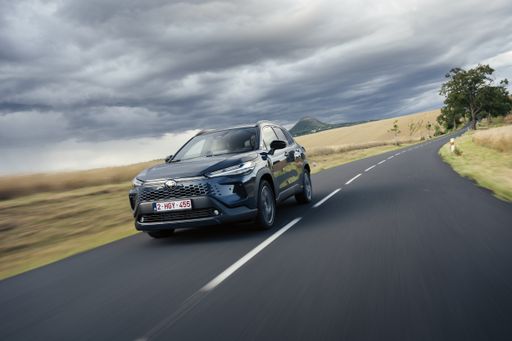
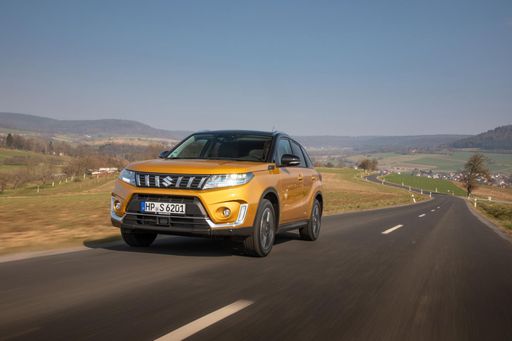
Toyota Corolla Cross vs Suzuki Vitara comparison

Compare performance (180 HP vs 184 HP), boot space and price (31,700 £ vs 23,600 £ ) at a glance. Find out which car is the better choice for you – Toyota Corolla Cross or Suzuki Vitara?

Toyota Corolla Cross vs Suzuki Vitara: Key differences

Toyota Corolla Cross

4.3 (8 Reviews)
rate
  • very slightly more efficient
  • visibly more trunk space
details

Suzuki Vitara

4.5 (9 Reviews)
rate
  • markedly cheaper
  • marginally more power
  • only slightly quicker 0–100 km/h
  • marginally lighter
details

All details on performance, efficiency, range and trunk space can be found in the technical comparison below – including user reviews for both models.

By Achim Sedelmaier

Corolla Cross

Overview: Suzuki Vitara VS Toyota Corolla Cross — what this match-up is really about

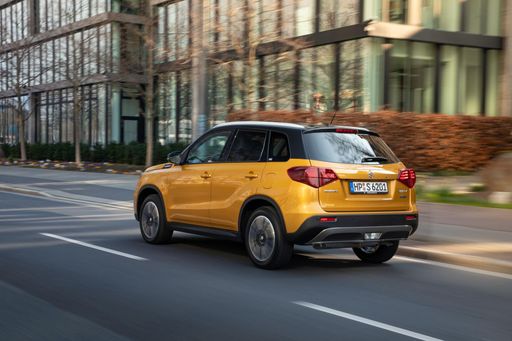
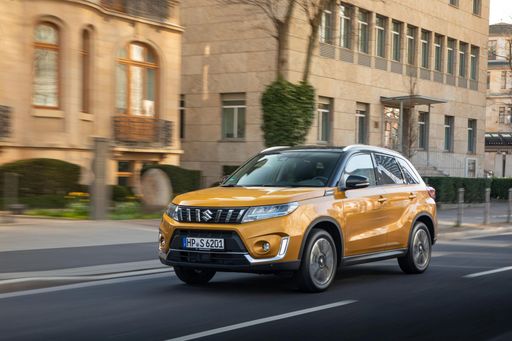
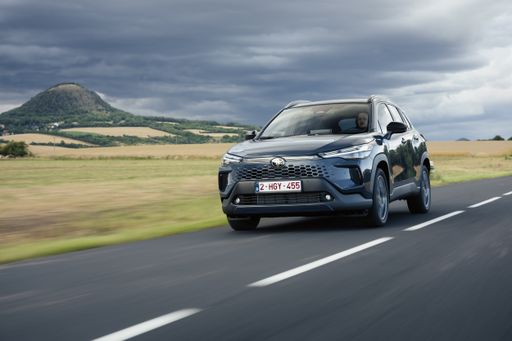
Suzuki Vitara VS Toyota Corolla Cross puts a compact, hands-on SUV against a composed, efficiency-first rival. The Suzuki Vitara sells itself on lightness, visibility and an optional AWD setup that makes it feel more capable on sloppy roads, while the Toyota Corolla Cross prioritises quiet cruising, low running costs and a softly tuned ride. In everyday use that means the Vitara feels more like a nimble, no-nonsense tool and the Corolla Cross like a settled, economical family cruiser. Both are sensible choices, but they cater to different priorities: engagement and utility on one side, refinement and economy on the other. Read on to see which tendencies matter most for your driving life before we dig into the technical details.
Vitara

Character and driving feel

The Suzuki Vitara leans toward a livelier, lighter character with direct visibility and a willingness to feel smaller than it is, whereas the Toyota Corolla Cross delivers a calm, relaxed pace that rewards steady inputs. Vitara's design emphasises agility and a more tactile control layout, so drivers who enjoy immediate responses and the option of real all-wheel traction will feel at home. By contrast, the Corolla Cross smooths over road irregularities and the hybrid powertrain makes acceleration feel measured rather than sporty, which suits drivers who value composure over spark. The trade-off is simple: Vitara asks for a bit more involvement and tolerates road and wind noise, while Corolla Cross buys you serenity and thrift at the cost of less engagement. Pick the Vitara if you want a playful, capable small SUV; pick the Corolla Cross if you prefer a relaxed, takes-care-of-you commuter.

Corolla Cross

Comfort and long-distance behaviour

On long runs the Toyota Corolla Cross feels more at ease thanks to a quieter cabin and a suspension that isolates motorway bumps with greater composure. The Suzuki Vitara is comfortable around town, but on sustained high-speed stretches its wind and engine noise become obvious and the seats offer less long-distance support. That means families planning regular motorway trips will appreciate the Corolla Cross’s ability to keep occupants fresher after hours behind the wheel, while Vitara owners may prefer shorter journeys or value the extra on-road involvement. If you prioritise low-stress cruising and a placid cabin, the Corolla Cross is the clearer fit; if you trade some serenity for a lighter, more alert on-road sensation, the Vitara still makes sense. Both will do the job, but they deliver different endurance experiences.

Vitara

Usability, practicality and cabin feel

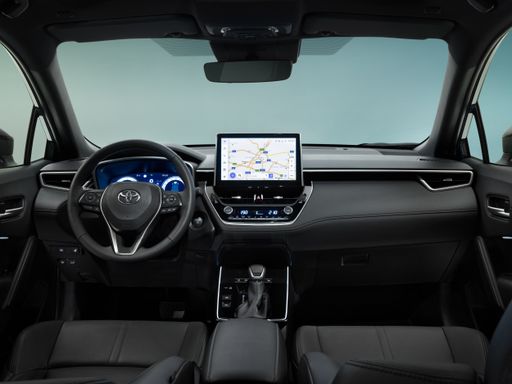
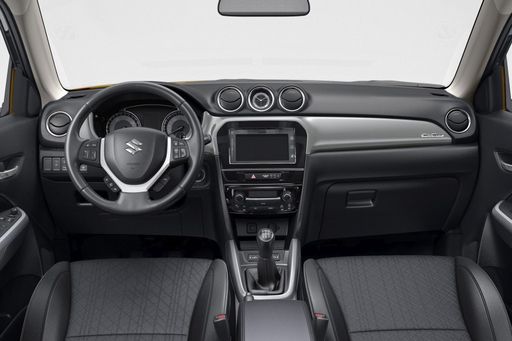
Practical differences are where the two show their philosophies: the Toyota Corolla Cross offers a more modern-feeling interior package and a generally more usable luggage space, whereas the Suzuki Vitara wins on sightlines, simple tactile controls and easier day-to-day handling. Vitara’s physical buttons and straightforward layout make routine tasks quicker and more intuitive, while Corolla Cross brings larger displays and a tidier, quieter cabin that reads as more refined. In practice the Corolla Cross will suit buyers who pack regularly and appreciate a more composed boot and neater tech integration, while Vitara owners benefit from easier parking, cleaner outward visibility and simpler maintenance. Note that some Vitara variants sacrifice cargo space for hybrid hardware, so luggage needs push buyers toward the Toyota in this matchup. The contrast is functional: convenience and perceived quality with the Corolla Cross versus raw usability and low-complexity operation with the Vitara.

Corolla Cross

City friendliness and everyday usability

In urban life the Suzuki Vitara’s light weight, compact feel and excellent all-round visibility make it exceptionally easy to slot into tight parking and twisty streets, and optional AWD gives winter commuters extra confidence. The Toyota Corolla Cross is also very city-capable thanks to smooth hybrid take-offs, comprehensive cameras and an overall calm manner that reduces driver stress, plus outstanding fuel economy in stop-and-go traffic. The practical takeaway is that Vitara is slightly more manoeuvrable and immediate in tight spots, while Corolla Cross is quieter and cheaper to run over thousands of short trips. If your daily routine is dominated by city errands and you prize nimbleness, the Vitara has the edge; if you want silence, low fuel bills and a relaxed daily commute, the Corolla Cross is more convincing. Both work well in town, but they solve urban friction in different ways.

Vitara

Buyer fit: who should pick which model before you read the numbers

If you want a straightforward, light-feeling compact SUV with strong visibility, simple controls and the option to go off the beaten path occasionally, the Suzuki Vitara is tailored to that mindset. If your priorities are low running costs, a quiet long-distance cabin, strong safety credentials and a modern-feeling interior, the Toyota Corolla Cross aligns better with that checklist. Families who carry a lot of luggage or regularly travel long distances will likely favour the Corolla Cross for its usable boot and relaxed motorway behaviour, while solo drivers, winter commuters and drivers who value analogue simplicity will appreciate the Vitara. The choice comes down to trade-offs between engagement and refinement, and the technical comparison that follows will make those differences concrete so you can match specifications to your real-world needs.

Here’s where it gets real: The technical differences in detail

Corolla Cross

Costs and Efficiency:

Price and efficiency are key factors when choosing a car – and this is often where the real differences emerge.

Suzuki Vitara is markedly cheaper – starting at 23,600 £ , while the Toyota Corolla Cross costs 31,700 £ . That’s a price difference of around 8,134 £.

Fuel consumption also shows a difference: the Toyota Corolla Cross uses 4.9 L/100km and is very slightly more efficient than the Suzuki Vitara with 5.3 L/100km. The difference is about 0.4 L/100km.

Vitara

Engine and Performance:

Under the bonnet, it becomes clear which model is tuned for sportiness and which one takes the lead when you hit the accelerator.

When it comes to engine power, the Suzuki Vitara offers marginally more power – delivering 184 HP compared to 180 HP. That’s roughly 4 HP more horsepower.

When accelerating from 0 to 100 km/h, the Suzuki Vitara is only slightly quicker – completing the sprint in 7.4 s, while the Toyota Corolla Cross takes 7.6 s. That’s about 0.2 s quicker.

Corolla Cross

Space and Everyday Use:

Cabin size, boot volume and payload all play a role in everyday practicality. Here, comfort and flexibility make the difference.

Both vehicles offer seating for 5 people.

In terms of curb weight, Suzuki Vitara is marginally lighter – 1,255 kg compared to 1,380 kg. The difference is around 125 kg.

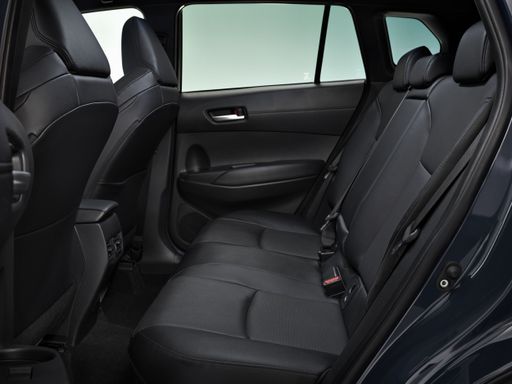
Looking at boot space, the Toyota Corolla Cross offers visibly more boot space – 473 L compared to 375 L. That’s a difference of about 98 L.

When it comes to payload, the Toyota Corolla Cross carries clearly more – 560 kg compared to 425 kg. That’s a difference of about 135 kg.

Who wins the race in the data check?

The Suzuki Vitara is far ahead overall in the objective data comparison.
This result only shows which model scores more points on paper – not which of the two cars feels right for you.

from £23,600
Vitara

Suzuki Vitara

  • Engine Type Petrol MHEV, Electric
  • Transmission Automatic, Manuel
  • Drive Type Front-Wheel Drive, All-Wheel Drive
  • Power HP 110 - 184 HP
  • Consumption L/100km 5.3 - 5.8 L/100km
  • Consumption kWh/100km 14.9 - 16.6 kWh/100km
  • Electric Range 344 - 426 km
Toyota Corolla Cross
Suzuki Vitara

Costs and Consumption

View detailed analysis

Engine and Performance

View detailed analysis

Dimensions and Body

View detailed analysis

Toyota Corolla Cross

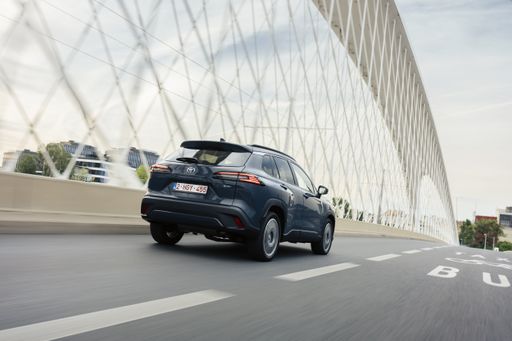
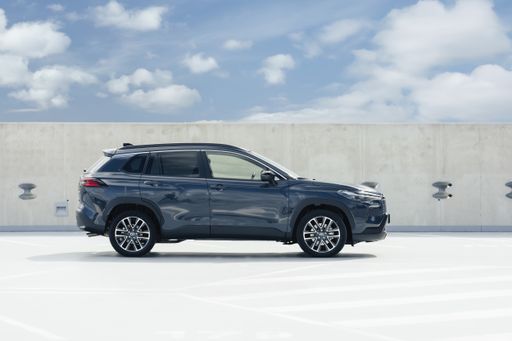
The Toyota Corolla Cross is a compact crossover that blends the practicality and reliability Toyota is known for with a comfortable, easygoing driving experience. It offers a roomy interior and sensible features that make it a strong choice for daily commuting and family outings.

details

Suzuki Vitara

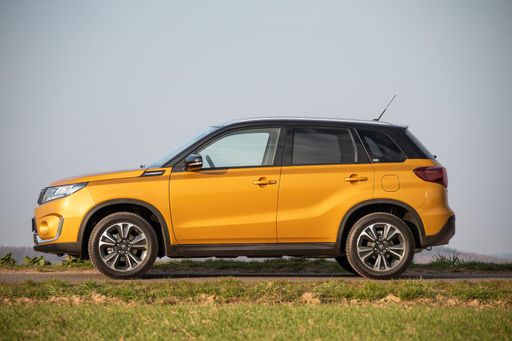
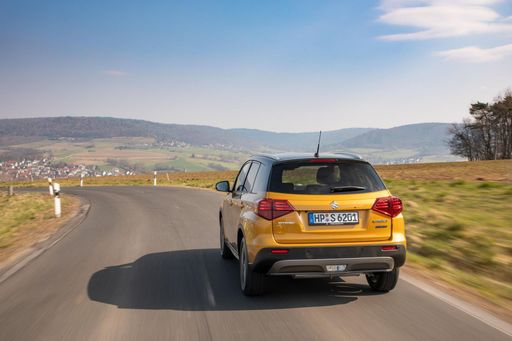
The Suzuki Vitara is a practical compact SUV that balances a comfortable, composed ride with easy-to-live-with interior space, making it well suited for daily driving and weekend getaways. It's widely praised for reliable engineering and sensible running costs, offering straightforward value to buyers who want a no-nonsense, economical crossover.

details
Toyota Corolla Cross
Suzuki Vitara

Costs and Consumption

Price
31,700 - 41,900 £
Price
23,600 - 36,800 £
Consumption L/100km
4.9 - 5.3 L/100km
Consumption L/100km
5.3 - 5.8 L/100km
Consumption kWh/100km
-
Consumption kWh/100km
14.9 - 16.6 kWh/100km
Electric Range
-
Electric Range
344 - 426 km
Battery Capacity
-
Battery Capacity
-
co2
112 - 120 g/km
co2
0 - 137 g/km
Fuel tank capacity
-
Fuel tank capacity
-

Dimensions and Body

Body Type
SUV
Body Type
SUV
Seats
5
Seats
5
Doors
-
Doors
-
Curb weight
1,380 - 1,500 kg
Curb weight
1,255 - 1,935 kg
Trunk capacity
380 - 473 L
Trunk capacity
310 - 375 L
Length
-
Length
-
Width
1,825 mm
Width
1,775 - 1,800 mm
Height
-
Height
-
Max trunk capacity
-
Max trunk capacity
-
Payload
515 - 560 kg
Payload
395 - 425 kg

Engine and Performance

Engine Type
Full Hybrid
Engine Type
Petrol MHEV, Electric
Transmission
Automatic
Transmission
Automatic, Manuel
Transmission Detail
CVT
Transmission Detail
Automatic Gearbox, Reduction Gearbox, Manual Gearbox
Drive Type
Front-Wheel Drive, All-Wheel Drive
Drive Type
Front-Wheel Drive, All-Wheel Drive
Power HP
140 - 180 HP
Power HP
110 - 184 HP
Acceleration 0-100km/h
7.6 - 10 s
Acceleration 0-100km/h
7.4 - 9.6 s
Max Speed
-
Max Speed
-
Torque
-
Torque
193 - 307 Nm
Number of Cylinders
4
Number of Cylinders
4
Power kW
103 - 132 kW
Power kW
81 - 135 kW
Engine capacity
1,798 - 1,987 cm3
Engine capacity
1,373 cm3

General

Model Year
2025
Model Year
2,025 - 2,026
CO2 Efficiency Class
C, D
CO2 Efficiency Class
D, E, A
Brand
Toyota
Brand
Suzuki
DriveDuel uses data analysis and artificial intelligence to evaluate vehicle data and create content. Content is regularly reviewed and improved. The displayed prices are estimates based on German list prices, adjusted to the respective country’s VAT. Country-specific registration taxes are not included. This information is not legally binding.