VS

Toyota Corolla Touring Sports vs Toyota C-HR comparison

Compare performance (178 HP vs 223 HP), boot space and price (29,600 £ vs 29,100 £ ) at a glance. Find out which car is the better choice for you – Toyota Corolla Touring Sports or Toyota C-HR?

Toyota Corolla Touring Sports vs Toyota C-HR: Key differences

Toyota Corolla Touring Sports

4.7 (1 Reviews)
rate
  • very slightly lighter
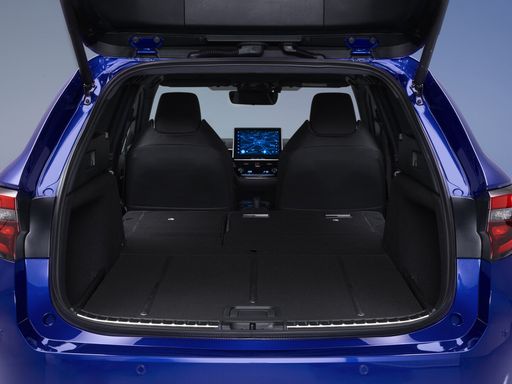
  • noticeably more trunk space

Toyota C-HR

4.8 (2 Reviews)
rate
  • barely cheaper
  • clearly more power
  • clearly more efficient
  • barely quicker 0–100 km/h
Corolla Touring Sports

Introduction

When it comes to choosing a compact vehicle that provides both style and functionality, the Toyota C-HR and the Toyota Corolla Touring Sports are two impressive contenders. Both models share Toyota's commitment to innovation, efficiency, and reliability, but they cater to different needs and lifestyles. In this article, we will delve into a comprehensive comparison of these two popular vehicles based on their technical specifications, innovations, and driving experience.

C-HR

Design and Dimensions

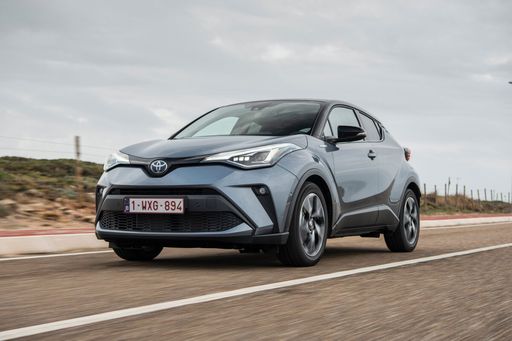
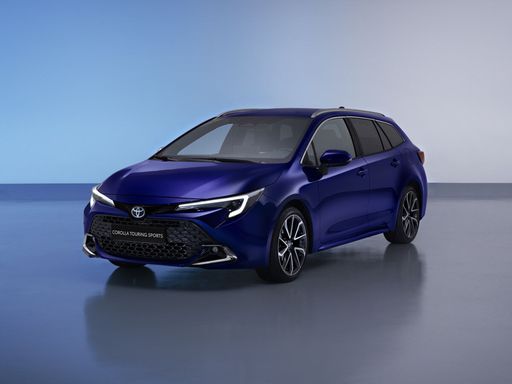
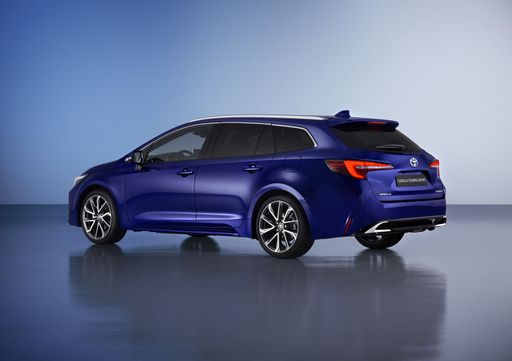
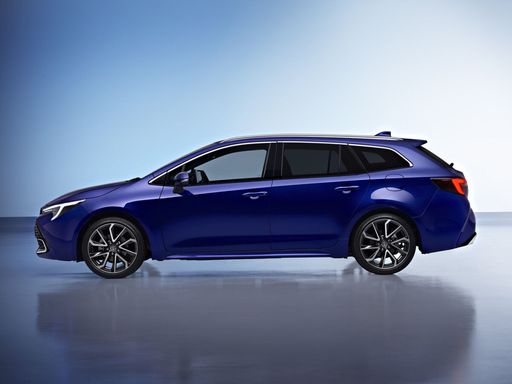
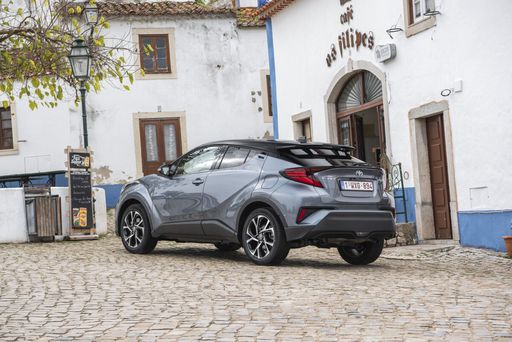
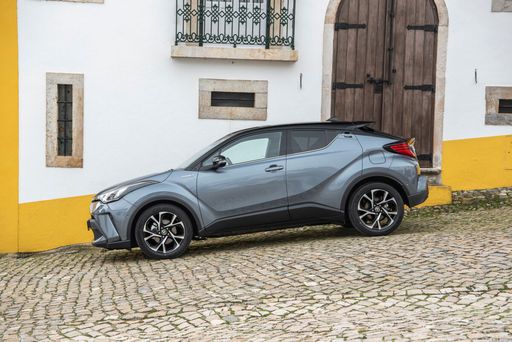
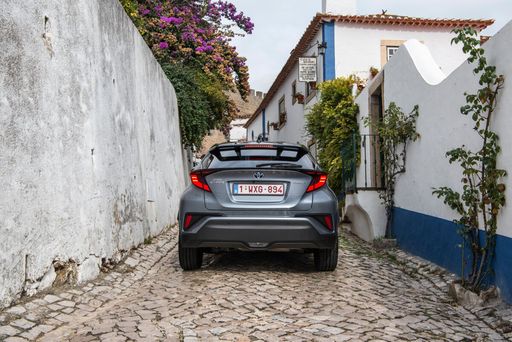
The Toyota C-HR, a striking SUV, boasts a bold design with aggressive lines and a coupe-like silhouette. Measuring 4362 mm in length, 1832 mm in width, and standing 1558 mm tall, the C-HR presents a modern aesthetic suitable for urban settings. In contrast, the Corolla Touring Sports adopts a more traditional wagon profile, offering practicality with a length of 4650 mm, a width of 1790 mm, and a sleek height of 1435 mm. This additional length translates into an impressive trunk capacity of 596 liters, making it a preferred choice for families and adventurers alike.

Corolla Touring Sports

Powertrains and Performance

Both vehicles incorporate Toyota's renowned hybrid technology, but they differ in power outputs and capabilities. The latest model year of the C-HR offers various hybrid configurations, including a Full Hybrid with up to 140 HP and a Plug-in Hybrid variant that bumps power up to 223 HP. With a 0-100km/h acceleration time of 9.9 seconds (with the 140 HP engine) or as fast as 7.4 seconds with the more powerful variant, it holds its ground in performance.

On the other hand, the Corolla Touring Sports also features a Full Hybrid system that delivers 140 HP. Its acceleration is notably impressive, clocking in at 9.2 seconds, with a top speed of 180 km/h. For those seeking a more potent option, the 196 HP model can achieve 0-100 km/h in just 7.5 seconds. Both vehicles are equipped with a smooth CVT transmission, enhancing fuel efficiency and driving comfort.

C-HR

Fuel Efficiency and Emissions

Fuel consumption is a significant factor for many buyers, and here the vehicles compete closely. The C-HR offers a range of consumption from 4.7 to 5.1 L/100 km, depending on the hybrid configuration, whereas the Corolla Touring Sports excels with even lower figures, achieving as low as 4.4 L/100 km. As for emissions, the C-HR registers CO2 emissions between 105 and 108 g/km, while the Corolla Touring Sports stands out with an efficient 100 g/km, making it a marginally greener option.

Corolla Touring Sports

Interior Comfort and Technology

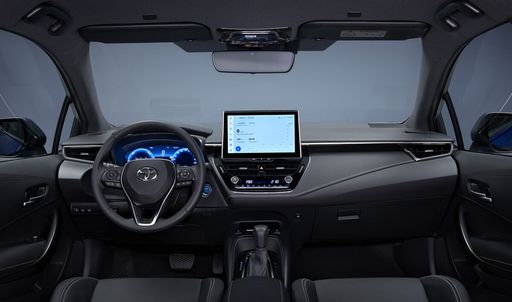
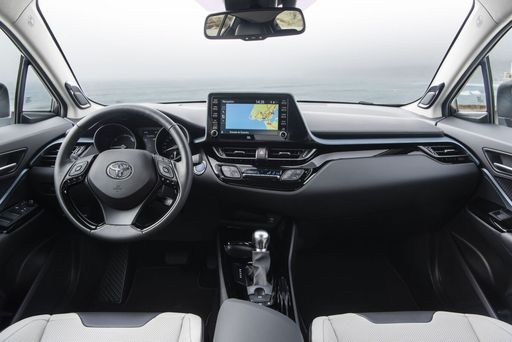
Inside, both vehicles are designed with comfort and driver satisfaction in mind. The C-HR accommodates up to five passengers with innovative details and premium materials. It features advanced technology, including a touchscreen infotainment system with smartphone connectivity options.

The Corolla Touring Sports, while still offering a modern cockpit, emphasizes practicality with ample storage spaces and user-friendly technology. The seats are designed for long drives, providing superior support and comfort, making it a top choice for families or long-distance travelers.

C-HR

Driving Experience

The driving dynamics of both the C-HR and Corolla Touring Sports offer a satisfying experience. The C-HR features an available All-Wheel Drive option, providing confidence on various terrains, while the Corolla Touring Sports focuses on stability and handling on roads. The C-HR's SUV stance and elevated seating position offer drivers a commanding view, whereas the Corolla delivers a sporty feel with a lower center of gravity.

Corolla Touring Sports

Conclusion

Choosing between the Toyota C-HR and the Toyota Corolla Touring Sports ultimately depends on individual preferences and needs. The C-HR offers a stylish SUV design with flexible configurations ideal for city dwellers and adventure seekers. Conversely, the Corolla Touring Sports combines spaciousness and utility with impeccable fuel efficiency and reduced emissions. Both vehicles embody Toyota's commitment to quality and innovation, making them stand out options in the compact vehicle market.

Here’s where it gets real: The technical differences in detail

Corolla Touring Sports

Costs and Efficiency:

Price and efficiency are often the first things buyers look at. Here it becomes clear which model has the long-term edge – whether at the pump, the plug, or in purchase price.

Toyota C-HR is barely cheaper – starting at 29,100 £ , while the Toyota Corolla Touring Sports costs 29,600 £ . That’s a price difference of around 471 £.

Fuel consumption also shows a difference: the Toyota C-HR uses 2.3 L/100km and is clearly more efficient than the Toyota Corolla Touring Sports with 4.4 L/100km. The difference is about 2.1 L/100km.

C-HR

Engine and Performance:

Power, torque and acceleration say a lot about how a car feels on the road. This is where you see which model delivers more driving dynamics.

When it comes to engine power, the Toyota C-HR offers clearly more power – delivering 223 HP compared to 178 HP. That’s roughly 45 HP more horsepower.

When accelerating from 0 to 100 km/h, the Toyota C-HR is barely quicker – completing the sprint in 7.4 s, while the Toyota Corolla Touring Sports takes 7.5 s. That’s about 0.1 s quicker.

Corolla Touring Sports

Space and Everyday Use:

Beyond pure performance, interior space and usability matter most in daily life. This is where you see which car is more practical and versatile.

Both vehicles offer seating for 5 people.

In terms of curb weight, Toyota Corolla Touring Sports is very slightly lighter – 1,485 kg compared to 1,505 kg. The difference is around 20 kg.

Looking at boot space, the Toyota Corolla Touring Sports offers noticeably more boot space – 596 L compared to 447 L. That’s a difference of about 149 L.

When it comes to payload, the Toyota Corolla Touring Sports carries very slightly more – 440 kg compared to 425 kg. That’s a difference of about 15 kg.

Who wins the race in the data check?

The Toyota C-HR is clearly superior overall in the objective data comparison.
This result only shows which model scores more points on paper – not which of the two cars feels right for you.

from £29,100
C-HR

Toyota C-HR

  • Engine Type : Full Hybrid, Plugin Hybrid
  • Transmission : Automatic
  • Drive Type : Front-Wheel Drive, All-Wheel Drive
  • Power HP : 140 - 223 HP
  • Consumption L/100km : 2.3 - 5.1 L/100km
  • Electric Range : 66 km
Toyota Corolla Touring Sports
Toyota C-HR

Costs and Consumption

View detailed analysis

Engine and Performance

View detailed analysis

Dimensions and Body

View detailed analysis

Toyota Corolla Touring Sports

The Toyota Corolla Touring Sports is a sensible yet stylish estate that blends everyday practicality with Toyota's trademark reliability, making it the kind of car that quietly gets on with family life without drama. Inside it's cleverly packaged for luggage and kids' gear and feels calm and comfortable on the road — sensible rather than flashy, but with enough character to make daily drives more enjoyable.

details

Toyota C-HR

The Toyota C-HR cuts a striking figure with its angular styling and coupe-like profile, so you’ll never go unnoticed in the supermarket car park. It balances everyday practicality with a nimble, city-friendly personality, making routine commutes feel a touch more fun without asking for forgiveness.

details
Toyota Corolla Touring Sports
Toyota C-HR

Costs and Consumption

Price
29,600 - 36,400 £
Price
29,100 - 42,800 £
Consumption L/100km
4.4 L/100km
Consumption L/100km
2.3 - 5.1 L/100km
Consumption kWh/100km
-
Consumption kWh/100km
-
Electric Range
-
Electric Range
66 km
Battery Capacity
-
Battery Capacity
-
co2
100 g/km
co2
52 - 116 g/km
Fuel tank capacity
43 L
Fuel tank capacity
-

Dimensions and Body

Body Type
Estate
Body Type
SUV
Seats
5
Seats
5
Doors
5
Doors
-
Curb weight
1,485 - 1,515 kg
Curb weight
1,505 - 1,755 kg
Trunk capacity
581 - 596 L
Trunk capacity
350 - 447 L
Length
4,650 mm
Length
-
Width
1,790 mm
Width
1,832 mm
Height
1,435 mm
Height
-
Max trunk capacity
1,591 - 1,606 L
Max trunk capacity
-
Payload
400 - 440 kg
Payload
375 - 425 kg

Engine and Performance

Engine Type
Full Hybrid
Engine Type
Full Hybrid, Plugin Hybrid
Transmission
Automatic
Transmission
Automatic
Transmission Detail
CVT
Transmission Detail
CVT
Drive Type
Front-Wheel Drive
Drive Type
Front-Wheel Drive, All-Wheel Drive
Power HP
140 - 178 HP
Power HP
140 - 223 HP
Acceleration 0-100km/h
7.5 - 9.2 s
Acceleration 0-100km/h
7.4 - 9.9 s
Max Speed
180 km/h
Max Speed
-
Torque
-
Torque
-
Number of Cylinders
4
Number of Cylinders
4
Power kW
103 - 131 kW
Power kW
103 - 164 kW
Engine capacity
1,798 - 1,987 cm3
Engine capacity
1,798 - 1,987 cm3

General

Model Year
2,025
Model Year
2,026
CO2 Efficiency Class
C
CO2 Efficiency Class
C, D, B
Brand
Toyota
Brand
Toyota
DriveDuel uses data analysis and artificial intelligence to evaluate vehicle data and create content. Content is regularly reviewed and improved. The displayed prices are estimates based on German list prices, adjusted to the respective country’s VAT. Country-specific registration taxes are not included. This information is not legally binding.