VS

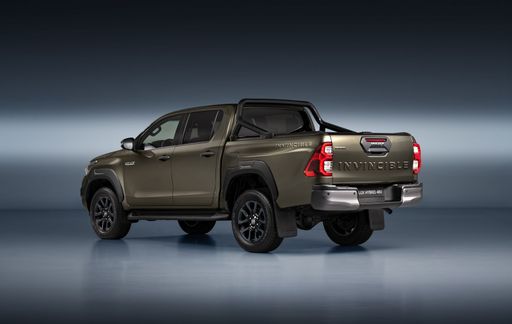
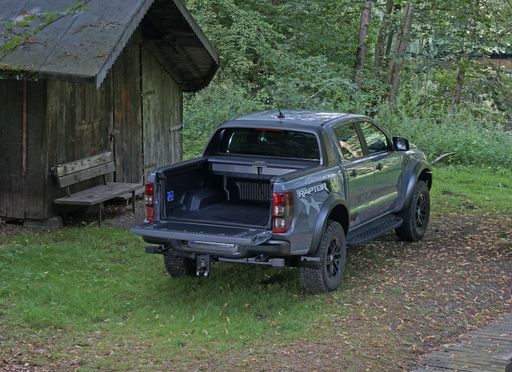
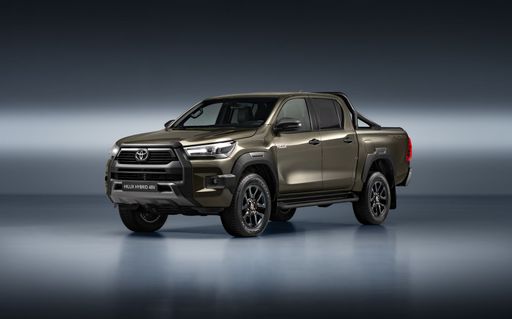
Toyota Hilux vs Ford Ranger comparison

Compare performance (204 HP vs 292 HP), boot space and price (39,800 £ vs 45,600 £ ) at a glance. Find out which car is the better choice for you – Toyota Hilux or Ford Ranger?

Toyota Hilux vs Ford Ranger: Key differences

Toyota Hilux

5 (1 Reviews)
rate
  • moderately cheaper
  • somewhat lighter

Ford Ranger

  • visibly more power
  • considerably more efficient

All details on performance, efficiency, range and trunk space can be found in the technical comparison below – including user reviews for both models.

Hilux

The battle of the pickups is on, and two heavyweights—Ford Ranger and Toyota Hilux—are vying for supremacy. With impressive specifications, advanced technologies, and renowned reliability, both pickups have loyal followings. This comparison delves into their technical aspects and innovations, helping you decide which truck fits your needs best.
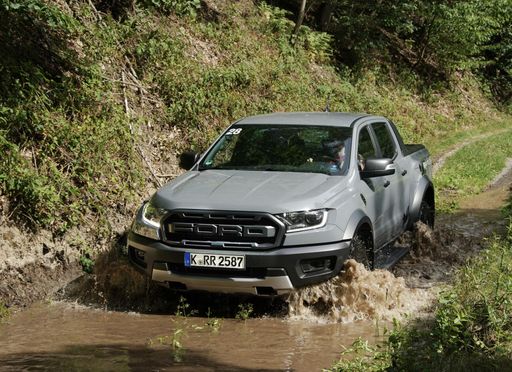
Ranger

Powertrain Performance

The Ford Ranger showcases a robust lineup of engines that includes both diesel and petrol options, with power output ranging from 170 HP to an impressive 292 HP. With models equipped with a 3.0L V6, it churns out 600 Nm of torque, allowing for smooth acceleration. The Ranger also offers manual and automatic transmission options, making it flexible for various driving preferences.

On the other hand, the Toyota Hilux sticks to a 2.4L diesel engine delivering 150 HP and 400 Nm of torque. While it may trail behind the Ranger in sheer horsepower and torque, the Hilux remains a reliable choice, particularly for off-road enthusiasts. It features an automatic gearbox, keeping it user-friendly for everyday driving.

Hilux

Acceleration and Speed

The Ford Ranger takes the edge in acceleration, with some variants reaching 0-100 km/h in just 7.9 seconds, depending on the engine choice. Its top speed reaches an impressive 190 km/h, reinforcing its performance credentials.

Conversely, the Hilux accelerates from 0-100 km/h in 12.8 seconds, with a top speed of 170 km/h. While not as swift as the Ranger, the Hilux is still designed to handle tough terrains effectively.

Ranger

Fuel Efficiency and Emissions

When it comes to fuel consumption, the Ford Ranger averages between 8.4 to 10.6 L/100 km, depending on the engine variant. Its CO2 emissions range from 220 g/km to as high as 315 g/km, reflecting a broader spectrum of engine outputs.

The Hilux, contributing to environmental considerations, maintains a fuel consumption of 8.7 L/100 km and emits 227 g/km of CO2. For environmentally-conscious buyers, the Hilux’s slightly lower figures may be appealing, lending it a reputation for efficiency in its class.

Dimensions and Capacity

In terms of size, the Ranger measures between 5370 mm to 5420 mm in length, 1918 mm to 1968 mm in width, and varies in height between 1868 mm to 1884 mm. It boasts a payload capacity reaching up to 1,108 kg, making it an excellent choice for heavy-duty applications.

The Hilux, while slightly shorter at 5325 mm, features a width of 1855 mm and a height of 1815 mm. With a payload capacity of 1,025 kg, it is well-equipped for a variety of work tasks, though it offers less overall payload than the Ranger.

Innovative Features

Ford is known for incorporating cutting-edge technology in the Ranger. The latest models come with advanced driver-assistance features, such as adaptive cruise control, automatic emergency braking, and lane-keeping assist. The Ranger's infotainment system includes Ford's SYNC 4, which offers seamless connectivity with enhanced voice recognition.

The Toyota Hilux is no slouch either, featuring a solid infotainment system with smartphone integration capabilities. However, it tends to focus more on robust durability and reliability than ultra-modern tech features. Value seekers will also appreciate the Hilux's renowned durability and lower maintenance costs.

Conclusion: Which One is Right for You?

Your choice between the Ford Ranger and Toyota Hilux ultimately depends on your personal needs and preferences. If you prioritize sheer power, advanced technology, and versatility, the Ranger could be the perfect match. Yet, for those who value reliability, solid performance in challenging conditions, and good fuel efficiency, the Hilux remains a formidable contender in the pickup segment.

In the end, both vehicles represent the best of what modern pickups offer, and choosing one comes down to which qualities resonate with you more. Happy truck shopping!

Here’s where it gets real: The technical differences in detail

Hilux

Costs and Efficiency:

Price and efficiency are key factors when choosing a car – and this is often where the real differences emerge.

Toyota Hilux is moderately cheaper – starting at 39,800 £ , while the Ford Ranger costs 45,600 £ . That’s a price difference of around 5,824 £.

Fuel consumption also shows a difference: the Ford Ranger uses 3.1 L/100km and is considerably more efficient than the Toyota Hilux with 9.7 L/100km. The difference is about 6.6 L/100km.

Ranger

Engine and Performance:

Under the bonnet, it becomes clear which model is tuned for sportiness and which one takes the lead when you hit the accelerator.

When it comes to engine power, the Ford Ranger offers visibly more power – delivering 292 HP compared to 204 HP. That’s roughly 88 HP more horsepower.

Looking at top speed, the Ford Ranger is barely faster – reaching 190 km/h, while the Toyota Hilux tops out at 175 km/h. The difference is around 15 km/h.

There’s also a difference in torque: the Ford Ranger delivers markedly more torque with 697 Nm compared to 500 Nm. That’s about 197 Nm more.

Hilux

Space and Everyday Use:

Beyond pure performance, interior space and usability matter most in daily life. This is where you see which car is more practical and versatile.

Both vehicles offer seating for 5 people.

In terms of curb weight, Toyota Hilux is somewhat lighter – 2,085 kg compared to 2,405 kg. The difference is around 320 kg.

When it comes to payload, the Toyota Hilux carries moderately more – 1,125 kg compared to 989 kg. That’s a difference of about 136 kg.

Who wins the race in the data check?

The Ford Ranger is clearly superior overall in the objective data comparison.
This result only shows which model scores more points on paper – not which of the two cars feels right for you.

from £45,600
Ranger

Ford Ranger

  • Engine Type : Diesel, Petrol, Plugin Hybrid
  • Transmission : Automatic
  • Drive Type : All-Wheel Drive
  • Power HP : 210 - 292 HP
  • Consumption L/100km : 3.1 - 13.8 L/100km
  • Electric Range : 42 km
Toyota Hilux
Ford Ranger

Costs and Consumption

View detailed analysis

Engine and Performance

View detailed analysis

Dimensions and Body

View detailed analysis

Toyota Hilux

The Toyota Hilux is a no-nonsense pick-up that blends worksite toughness with proper off-road ability, built to shrug off punishment and keep going long after fancier rivals give up. It won’t win any beauty contests, but buyers who want a practical, rugged truck that simply gets the job done will appreciate its honest, hard-working character.

details

Ford Ranger

The Ford Ranger is a workhorse with the manners of a grown-up pickup—practical, tough, and surprisingly civilized on the road. It’s the sort of truck that laughs at mud on the weekend and performs like a sensible daily driver during the week, making it an easy sell for buyers who want capability without theatrics.

details
Toyota Hilux
Ford Ranger

Costs and Consumption

Price
39,800 - 56,200 £
Price
45,600 - 71,900 £
Consumption L/100km
9.7 - 10 L/100km
Consumption L/100km
3.1 - 13.8 L/100km
Consumption kWh/100km
-
Consumption kWh/100km
-
Electric Range
-
Electric Range
42 km
Battery Capacity
-
Battery Capacity
11.8 kWh
co2
253 - 264 g/km
co2
70 - 315 g/km
Fuel tank capacity
80 L
Fuel tank capacity
80 L

Dimensions and Body

Body Type
Pickup
Body Type
Pickup
Seats
4 - 5
Seats
4 - 5
Doors
2 - 4
Doors
4
Curb weight
2,085 - 2,295 kg
Curb weight
2,405 - 2,511 kg
Trunk capacity
-
Trunk capacity
-
Length
5,325 mm
Length
5,370 - 5,381 mm
Width
1,855 mm
Width
1,918 - 1,968 mm
Height
1,810 - 1,815 mm
Height
1,884 - 1,922 mm
Max trunk capacity
-
Max trunk capacity
-
Payload
915 - 1,125 kg
Payload
676 - 989 kg

Engine and Performance

Engine Type
Diesel MHEV, Diesel
Engine Type
Diesel, Petrol, Plugin Hybrid
Transmission
Automatic, Manuel
Transmission
Automatic
Transmission Detail
Automatic Gearbox, Manual Gearbox
Transmission Detail
Automatic Gearbox
Drive Type
All-Wheel Drive
Drive Type
All-Wheel Drive
Power HP
150 - 204 HP
Power HP
210 - 292 HP
Acceleration 0-100km/h
-
Acceleration 0-100km/h
7.9 - 9.2 s
Max Speed
170 - 175 km/h
Max Speed
180 - 190 km/h
Torque
400 - 500 Nm
Torque
491 - 697 Nm
Number of Cylinders
4
Number of Cylinders
4 - 6
Power kW
110 - 150 kW
Power kW
154 - 215 kW
Engine capacity
2,393 - 2,755 cm3
Engine capacity
1,996 - 2,993 cm3

General

Model Year
2,024 - 2,025
Model Year
2,022 - 2,025
CO2 Efficiency Class
G
CO2 Efficiency Class
G, B
Brand
Toyota
Brand
Ford
DriveDuel uses data analysis and artificial intelligence to evaluate vehicle data and create content. Content is regularly reviewed and improved. The displayed prices are estimates based on German list prices, adjusted to the respective country’s VAT. Country-specific registration taxes are not included. This information is not legally binding.