VS

Toyota RAV4 vs Honda HR-V comparison

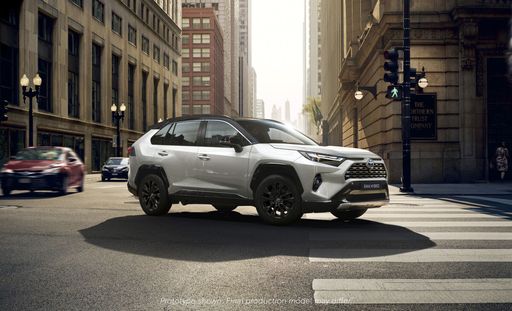
Compare performance (306 HP vs 131 HP), boot space and price (35,100 £ vs 29,700 £ ) at a glance. Find out which car is the better choice for you – Toyota RAV4 or Honda HR-V?

Toyota RAV4 vs Honda HR-V: Key differences

Toyota RAV4

4.8 (6 Reviews)
rate
  • significantly more power
  • clearly more efficient
  • clearly quicker 0–100 km/h
  • clearly more trunk space

Honda HR-V

4 (9 Reviews)
rate
  • somewhat cheaper
  • clearly lighter
Overall, owners tend to find the Honda HR‑V a practical, reliable and economical compact SUV that’s easy to live with in town and for family duties, offering predictable handling and a comfortable ride. Common positives include good fuel economy, roomy/intuive packaging and reassuring manners; common negatives some owners mention are noticeable noise under brisk acceleration or low‑speed maneuvers and a tendency to feel underpowered on sustained highway runs. So while feedback is broadly favorable for city and everyday use, opinions are more mixed on long‑distance refinement — worth a motorway run during your test drive if that’s your regular terrain.

All details on performance, efficiency, range and trunk space can be found in the technical comparison below – including user reviews for both models.

RAV4

Honda HR-V vs. Toyota RAV4: A Comprehensive Comparison

In the competitive landscape of compact SUVs, the Honda HR-V and the Toyota RAV4 stand out as two popular choices among consumers. Both vehicles offer a blend of practicality, efficiency, and technological advancements. This article delves into their technical aspects and innovations, helping you decide which model suits your needs best.
HR-V

Engine and Performance

The Honda HR-V comes equipped with a 1.5L full hybrid engine that produces 130 HP and 253 Nm of torque, delivering a respectable acceleration of 0-100 km/h in approximately 10.7 seconds. Its continuously variable transmission (CVT) ensures a smooth driving experience with a front-wheel drive setup. The HR-V’s powertrain boasts a fuel consumption of just 5.4 L/100 km and CO2 emissions of 122 g/km, classifying it as a CO2 efficiency class D vehicle.

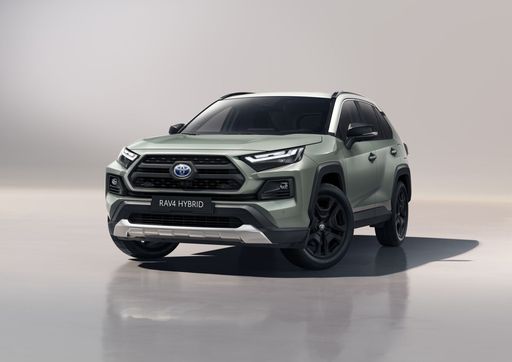
On the other hand, the Toyota RAV4 offers multiple powertrain options, including full hybrid and plug-in hybrid variants. The standard hybrid engine delivers an impressive 218 HP and allows for even quicker acceleration, with a 0-100 km/h time of just 8.4 seconds. The most powerful plug-in hybrid version makes 306 HP, propelling it from 0-100 km/h in a mere 6 seconds. The RAV4's hybrid model achieves a fuel consumption of 5.6 L/100 km, combined with CO2 emissions ranging from 126 to 128 g/km, with its CO2 efficiency class generally rated higher than the HR-V.

RAV4

Dimensions and Practicality

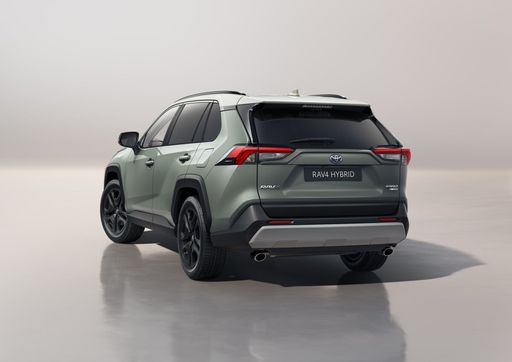
When it comes to size, the RAV4 is the larger of the two vehicles, measuring 4600 mm in length, 1855 mm in width, and 1685 mm in height, compared to the HR-V's 4340 mm length and 1582 mm height. This size advantage translates into superior trunk capacity, as the RAV4 provides 580 liters of storage space, substantially more than the HR-V's 335 liters. However, the HR-V compensates with a slightly lighter curb weight of 1452 kg versus 1745 kg for the standard RAV4, enhancing its agility.

HR-V

Interior and Technology

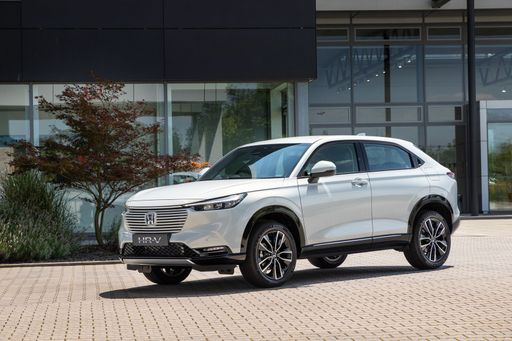
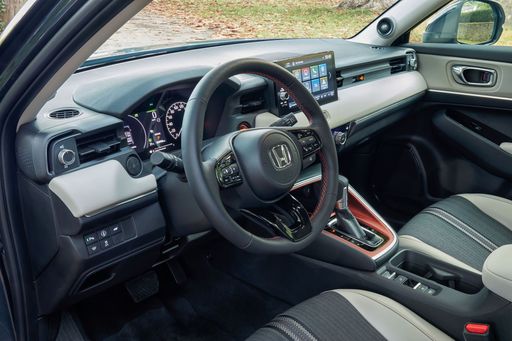
Both SUVs offer a comfortable seating capacity for five passengers, but the HR-V's interior is designed with a focus on versatility. Its Magic Seat feature allows for multiple configurations, catering to different cargo needs. This innovation, combined with an accessible infotainment system, makes the HR-V highly appealing for families and urban dwellers alike.

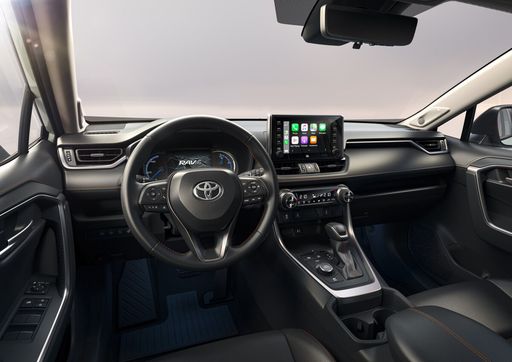
The Toyota RAV4, renowned for its robust build quality, provides a more upscale and feature-rich cabin. With a modern infotainment system that offers advanced connectivity options including Apple CarPlay and Android Auto, the RAV4 caters to tech-savvy consumers. Additionally, it features a host of safety technologies, such as Toyota Safety Sense, which includes adaptive cruise control, lane departure warning, and more.

RAV4

Driving Experience and Feedback

Driving the HR-V offers a balanced experience, ideal for city commuting and light off-roading. Its hybrid engine delivers a quiet operation, resulting in a serene ride. The RAV4 is designed for those who appreciate a more dynamic driving experience, with a slightly sportier suspension setup and responsive steering that enhances handling around corners, making it feel more like an SUV when pushing limits.

HR-V

Conclusion

In conclusion, the choice between the Honda HR-V and the Toyota RAV4 boils down to individual preferences and driving needs. The HR-V excels in practicality and maneuverability, making it an excellent urban vehicle. In contrast, the RAV4 shines with its strong performance, versatility, and larger interior space, suitable for those who prioritize power and advanced features. Both models continue to reflect the innovations and commitments of their respective brands toward meeting modern drivers' demands.

Here’s where it gets real: The technical differences in detail

RAV4

Costs and Efficiency:

Looking at overall running costs, both models reveal some interesting differences in everyday economy.

Honda HR-V is somewhat cheaper – starting at 29,700 £ , while the Toyota RAV4 costs 35,100 £ . That’s a price difference of around 5,392 £.

Fuel consumption also shows a difference: the Toyota RAV4 uses 1 L/100km and is clearly more efficient than the Honda HR-V with 5.4 L/100km. The difference is about 4.4 L/100km.

HR-V

Engine and Performance:

Power, torque and acceleration say a lot about how a car feels on the road. This is where you see which model delivers more driving dynamics.

When it comes to engine power, the Toyota RAV4 offers significantly more power – delivering 306 HP compared to 131 HP. That’s roughly 175 HP more horsepower.

When accelerating from 0 to 100 km/h, the Toyota RAV4 is clearly quicker – completing the sprint in 6 s, while the Honda HR-V takes 10.6 s. That’s about 4.6 s quicker.

RAV4

Space and Everyday Use:

Cabin size, boot volume and payload all play a role in everyday practicality. Here, comfort and flexibility make the difference.

Both vehicles offer seating for 5 people.

In terms of curb weight, Honda HR-V is clearly lighter – 1,452 kg compared to 1,745 kg. The difference is around 293 kg.

Looking at boot space, the Toyota RAV4 offers clearly more boot space – 580 L compared to 319 L. That’s a difference of about 261 L.

When it comes to payload, the Toyota RAV4 carries noticeably more – 600 kg compared to 418 kg. That’s a difference of about 182 kg.

Who wins the race in the data check?

The Toyota RAV4 is far ahead overall in the objective data comparison.
This result only shows which model scores more points on paper – not which of the two cars feels right for you.

from £35,100
RAV4

Toyota RAV4

  • Engine Type : Full Hybrid, Plugin Hybrid
  • Transmission : Automatic
  • Drive Type : Front-Wheel Drive, All-Wheel Drive
  • Power HP : 218 - 306 HP
  • Consumption L/100km : 1 - 5.6 L/100km
  • Electric Range : 75 km
Toyota RAV4
Honda HR-V

Costs and Consumption

View detailed analysis

Engine and Performance

View detailed analysis

Dimensions and Body

View detailed analysis

Toyota RAV4

The Toyota RAV4 feels like a sensible friend on the road, marrying dependable practicality with a dash of SUV personality that keeps daily driving from turning dull. Comfortable and easy to live with, it looks tough without shouting and quietly gets the job done — a sensible pick for buyers who want versatility without drama.

details

Honda HR-V

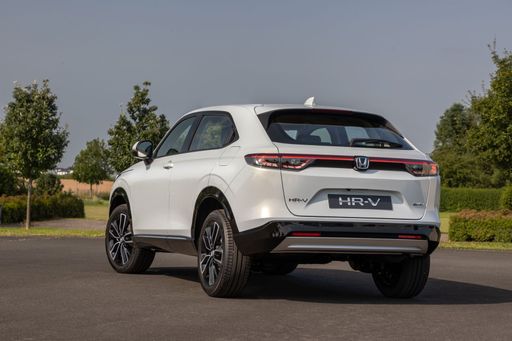
The Honda HR-V is the sensible compact crossover that blends roomy practicality with a composed, friendly drive, making it an easy pick for buyers who want everyday usability without fuss. It won’t thrill hardcore enthusiasts, but its clever packaging, comfortable cabin and low-key styling make life simpler — and that’s exactly the point.

details
Toyota RAV4
Honda HR-V

Costs and Consumption

Price
35,100 - 55,700 £
Price
29,700 - 35,400 £
Consumption L/100km
1 - 5.6 L/100km
Consumption L/100km
5.4 L/100km
Consumption kWh/100km
-
Consumption kWh/100km
-
Electric Range
75 km
Electric Range
-
Battery Capacity
-
Battery Capacity
-
co2
22 - 128 g/km
co2
122 g/km
Fuel tank capacity
55 L
Fuel tank capacity
-

Dimensions and Body

Body Type
SUV
Body Type
SUV
Seats
5
Seats
5
Doors
5
Doors
-
Curb weight
1,745 - 1,910 kg
Curb weight
1,452 kg
Trunk capacity
520 - 580 L
Trunk capacity
319 L
Length
4,600 mm
Length
-
Width
1,855 mm
Width
-
Height
1,685 mm
Height
-
Max trunk capacity
1,604 - 1,690 L
Max trunk capacity
-
Payload
390 - 600 kg
Payload
418 kg

Engine and Performance

Engine Type
Full Hybrid, Plugin Hybrid
Engine Type
Full Hybrid
Transmission
Automatic
Transmission
Automatic
Transmission Detail
CVT
Transmission Detail
CVT
Drive Type
Front-Wheel Drive, All-Wheel Drive
Drive Type
Front-Wheel Drive
Power HP
218 - 306 HP
Power HP
131 HP
Acceleration 0-100km/h
6 - 8.4 s
Acceleration 0-100km/h
10.6 - 10.8 s
Max Speed
180 km/h
Max Speed
-
Torque
-
Torque
253 Nm
Number of Cylinders
4
Number of Cylinders
4
Power kW
160 - 225 kW
Power kW
96 kW
Engine capacity
2,487 cm3
Engine capacity
1,498 cm3

General

Model Year
2,024 - 2,025
Model Year
2,025
CO2 Efficiency Class
D, B
CO2 Efficiency Class
D
Brand
Toyota
Brand
Honda
DriveDuel uses data analysis and artificial intelligence to evaluate vehicle data and create content. Content is regularly reviewed and improved. The displayed prices are estimates based on German list prices, adjusted to the respective country’s VAT. Country-specific registration taxes are not included. This information is not legally binding.