VS

Toyota RAV4 vs Peugeot 3008 comparison

Compare performance (306 HP vs 325 HP), boot space and price (35,100 £ vs 35,100 £ ) at a glance. Find out which car is the better choice for you – Toyota RAV4 or Peugeot 3008?

Toyota RAV4 vs Peugeot 3008: Key differences

Toyota RAV4

4.8 (6 Reviews)
rate
  • only slightly cheaper
  • clearly more efficient
  • moderately more trunk space

Peugeot 3008

3.4 (4 Reviews)
rate
  • only slightly more power
  • substantially more electric range
  • very slightly lighter

All details on performance, efficiency, range and trunk space can be found in the technical comparison below – including user reviews for both models.

RAV4

Peugeot 3008 vs. Toyota RAV4: A Comprehensive Comparison

In the competitive world of compact SUVs, the Peugeot 3008 and Toyota RAV4 stand out as excellent options for those seeking performance, style, and advanced technology. Both vehicles have their unique features, making them appealing to different types of drivers. This article will delve into a side-by-side comparison of the two models, focusing on technical specifications and innovative features.
3008

Engine Performance and Efficiency

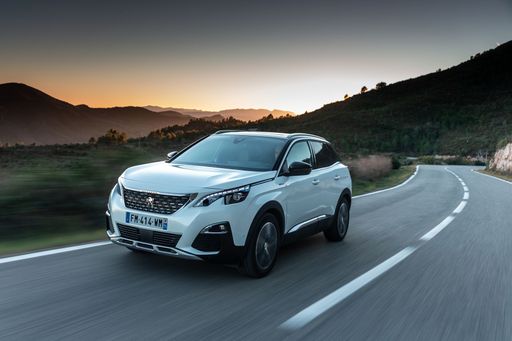
The Peugeot 3008 offers a range of powertrains, including petrol mild hybrid, plug-in hybrid, and all-electric options. With power outputs ranging from 136 to 231 hp and torque figures between 230 and 345 Nm, drivers can select the performance that suits their needs best. Its fuel consumption is impressively low with figures such as 5.7 L/100 km for hybrid variants, and it boasts an electric range of up to 698 km on its fully electric model.

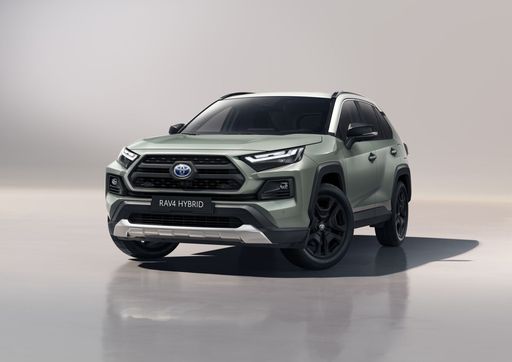
Conversely, the Toyota RAV4 is available with full hybrid and plug-in hybrid engines, delivering 218 to 306 hp. The RAV4 showcases remarkable fuel economy as well, starting from 5.6 L/100 km to a mere 1L/100 km in plug-in hybrid mode, with an electric range of up to 75 km. While the RAV4's top speed is limited to 180 km/h, its energetic performance allows for 0-100 km/h acceleration in as little as 6 seconds with higher-end models.

RAV4

Transmission Systems and Drivability

The 3008 is equipped with an automatic transmission, featuring a dual-clutch automatic system and a reduction gearbox for enhanced responsiveness. This allows for a seamless driving experience, whether navigating urban environments or cruising on highways.

On the other hand, the RAV4 features a continuously variable transmission (CVT). While it may not provide the immediate torque feel of a dual-clutch system, it efficiently delivers power to both front and all-wheel-drive setups, ensuring optimal handling across various terrains.

3008

Dimensions and Interior Space

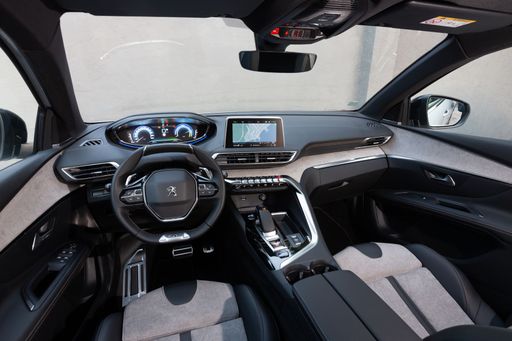
When it comes to dimensions, the Peugeot 3008 measures 4542 mm in length, 1895 mm in width, and 1641 mm in height, offering a modern design with a sophisticated presence. It provides a trunk capacity of 520 liters, making it suitable for daily commuting or weekend getaways.

The Toyota RAV4 is slightly larger, measuring 4600 mm in length, 1855 mm in width, and 1685 mm in height. It offers ample trunk space, rated at 580 liters, which can accommodate larger loads. This extra capacity can be valuable for families or adventure-seekers requiring extensive cargo space.

RAV4

Technological Innovations

Both the Peugeot 3008 and Toyota RAV4 are equipped with advanced technology features. The 3008 offers a dazzling digital cockpit with a 12.3-inch display, enabling drivers to customize their dashboard experience with various interfaces. Additionally, it provides advanced driver assistance systems (ADAS) designed to enhance safety on the road.

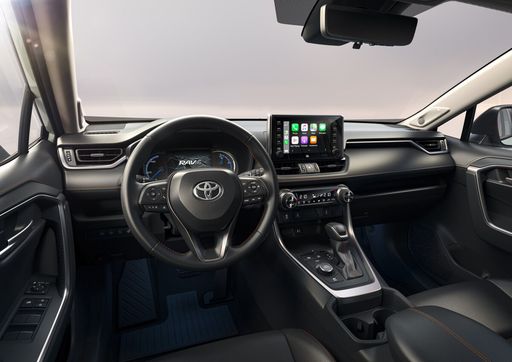
The RAV4 does not fall short in technology either, presenting the Toyota Safety Sense suite, which includes adaptive cruise control, lane departure alert, and pre-collision systems. Its infotainment system is user-friendly, with a touchscreen interface that allows for seamless integration of smartphones via Apple CarPlay and Android Auto.

3008

Conclusion: Choosing the Right SUV

Ultimately, the choice between the Peugeot 3008 and Toyota RAV4 will heavily depend on individual preferences and needs. The 3008 impresses with its stylish design and customizable technology, while the RAV4 stands out for its robust hybrid options and spacious interiors. Both vehicles provide excellent driving experiences, making them worthy contenders in the compact SUV market.

So, whether you prioritize stylish aesthetics or a practical and spacious interior, either of these SUVs would be a commendable choice in today's automotive landscape.

Here’s where it gets real: The technical differences in detail

RAV4

Costs and Efficiency:

Price and efficiency are key factors when choosing a car – and this is often where the real differences emerge.

Toyota RAV4 is only slightly cheaper – starting at 35,100 £ , while the Peugeot 3008 costs 35,100 £ . That’s a price difference of around 8 £.

Fuel consumption also shows a difference: the Toyota RAV4 uses 1 L/100km and is clearly more efficient than the Peugeot 3008 with 2.4 L/100km. The difference is about 1.4 L/100km.

As for electric range, the Peugeot 3008 offers substantially more range – reaching up to 698 km, about 623 km more than the Toyota RAV4.

3008

Engine and Performance:

Power, torque and acceleration say a lot about how a car feels on the road. This is where you see which model delivers more driving dynamics.

When it comes to engine power, the Peugeot 3008 offers only slightly more power – delivering 325 HP compared to 306 HP. That’s roughly 19 HP more horsepower.

Both models accelerate almost equally fast – 6 s from 0 to 100 km/h.

Looking at top speed, the Peugeot 3008 is slightly faster – reaching 201 km/h, while the Toyota RAV4 tops out at 180 km/h. The difference is around 21 km/h.

RAV4

Space and Everyday Use:

Beyond pure performance, interior space and usability matter most in daily life. This is where you see which car is more practical and versatile.

Both vehicles offer seating for 5 people.

In terms of curb weight, Peugeot 3008 is very slightly lighter – 1,648 kg compared to 1,745 kg. The difference is around 97 kg.

Looking at boot space, the Toyota RAV4 offers moderately more boot space – 580 L compared to 520 L. That’s a difference of about 60 L.

For maximum load capacity, the Toyota RAV4 offers somewhat more capacity – up to 1,690 L, about 210 L more than the Peugeot 3008.

When it comes to payload, the Toyota RAV4 carries visibly more – 600 kg compared to 467 kg. That’s a difference of about 133 kg.

Who wins the race in the data check?

The Toyota RAV4 has only a minor advantage in the objective data comparison.
This result only shows which model scores more points on paper – not which of the two cars feels right for you.

from £35,100
RAV4

Toyota RAV4

  • Engine Type : Full Hybrid, Plugin Hybrid
  • Transmission : Automatic
  • Drive Type : Front-Wheel Drive, All-Wheel Drive
  • Power HP : 218 - 306 HP
  • Consumption L/100km : 1 - 5.6 L/100km
  • Electric Range : 75 km
Toyota RAV4
Peugeot 3008

Costs and Consumption

View detailed analysis

Engine and Performance

View detailed analysis

Dimensions and Body

View detailed analysis

Toyota RAV4

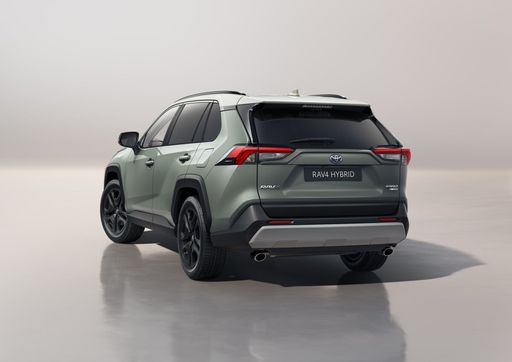
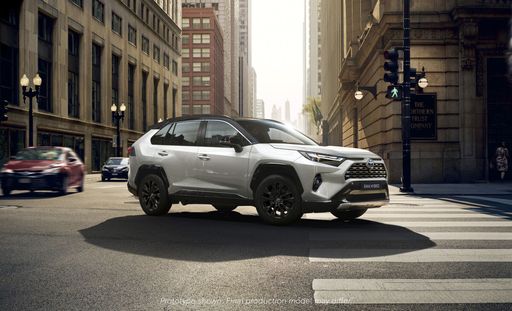
The Toyota RAV4 feels like a sensible friend on the road, marrying dependable practicality with a dash of SUV personality that keeps daily driving from turning dull. Comfortable and easy to live with, it looks tough without shouting and quietly gets the job done — a sensible pick for buyers who want versatility without drama.

details

Peugeot 3008

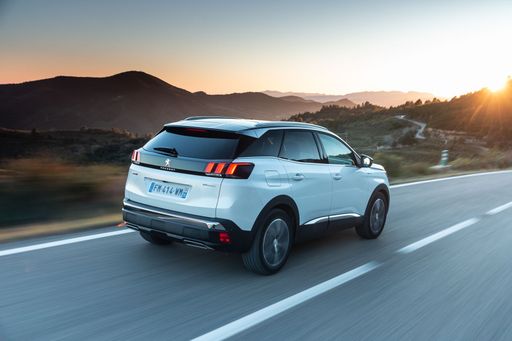
The Peugeot 3008 blends bold French styling with a surprisingly grown-up interior that makes even dull commutes feel a little bit special. Practical enough for family life yet lively to drive, it’s a clever all‑rounder that stands out from the crossover crowd without shouting for attention.

details
Toyota RAV4
Peugeot 3008

Costs and Consumption

Price
35,100 - 55,700 £
Price
35,100 - 52,000 £
Consumption L/100km
1 - 5.6 L/100km
Consumption L/100km
2.4 - 5.4 L/100km
Consumption kWh/100km
-
Consumption kWh/100km
16.9 - 17.6 kWh/100km
Electric Range
75 km
Electric Range
81 - 698 km
Battery Capacity
-
Battery Capacity
0.4 - 96.9 kWh
co2
22 - 128 g/km
co2
0 - 121 g/km
Fuel tank capacity
55 L
Fuel tank capacity
55 L

Dimensions and Body

Body Type
SUV
Body Type
SUV
Seats
5
Seats
5
Doors
5
Doors
5
Curb weight
1,745 - 1,910 kg
Curb weight
1,648 - 2,266 kg
Trunk capacity
520 - 580 L
Trunk capacity
470 - 520 L
Length
4,600 mm
Length
4,542 mm
Width
1,855 mm
Width
1,895 mm
Height
1,685 mm
Height
1,641 mm
Max trunk capacity
1,604 - 1,690 L
Max trunk capacity
1,430 - 1,480 L
Payload
390 - 600 kg
Payload
432 - 467 kg

Engine and Performance

Engine Type
Full Hybrid, Plugin Hybrid
Engine Type
Electric, Petrol MHEV, Plugin Hybrid
Transmission
Automatic
Transmission
Automatic
Transmission Detail
CVT
Transmission Detail
Reduction Gearbox, Dual-Clutch Automatic
Drive Type
Front-Wheel Drive, All-Wheel Drive
Drive Type
Front-Wheel Drive, All-Wheel Drive
Power HP
218 - 306 HP
Power HP
145 - 325 HP
Acceleration 0-100km/h
6 - 8.4 s
Acceleration 0-100km/h
6 - 10.2 s
Max Speed
180 km/h
Max Speed
170 - 201 km/h
Torque
-
Torque
230 - 511 Nm
Number of Cylinders
4
Number of Cylinders
3 - 4
Power kW
160 - 225 kW
Power kW
107 - 239 kW
Engine capacity
2,487 cm3
Engine capacity
1,199 - 1,598 cm3

General

Model Year
2,024 - 2,025
Model Year
2,024 - 2,026
CO2 Efficiency Class
D, B
CO2 Efficiency Class
A, D, B
Brand
Toyota
Brand
Peugeot
DriveDuel uses data analysis and artificial intelligence to evaluate vehicle data and create content. Content is regularly reviewed and improved. The displayed prices are estimates based on German list prices, adjusted to the respective country’s VAT. Country-specific registration taxes are not included. This information is not legally binding.