VS

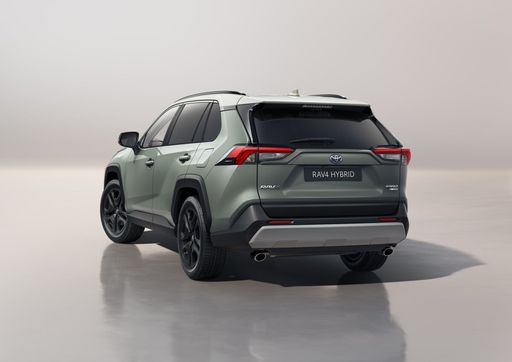
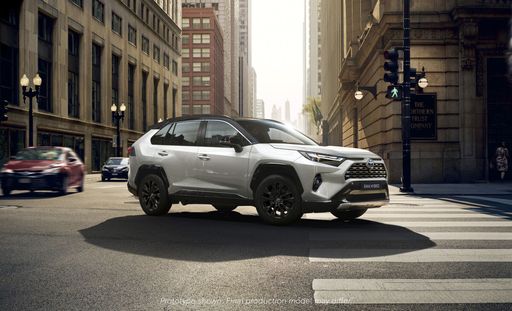
Toyota RAV4 vs Peugeot 5008 comparison

Compare performance (309 HP vs 325 HP), boot space and price (37,700 £ vs 39,300 £ ) at a glance. Find out which car is the better choice for you – Toyota RAV4 or Peugeot 5008?

Toyota RAV4 vs Peugeot 5008: Key differences

Toyota RAV4

4.8 (9 Reviews)
rate
  • only slightly cheaper
  • substantially more efficient
  • a bit quicker 0–100 km/h
  • very slightly lighter
  • markedly more trunk space
details

Peugeot 5008

4.7 (1 Reviews)
rate
  • very slightly more power
  • clearly more electric range
details

All details on performance, efficiency, range and trunk space can be found in the technical comparison below – including user reviews for both models.

By Achim Sedelmaier

RAV4

The automotive market has witnessed the growing popularity of family-oriented SUVs, and two prominent contenders in this segment are the Peugeot 5008 and the Toyota RAV4. Both vehicles offer impressive features, technological innovations, and distinct comfort, making them ideal choices for families and adventure seekers alike. In this article, we will delve into a comprehensive comparison of these vehicles across various aspects, including performance, design, and technological advancements.
5008

Design and Dimensions

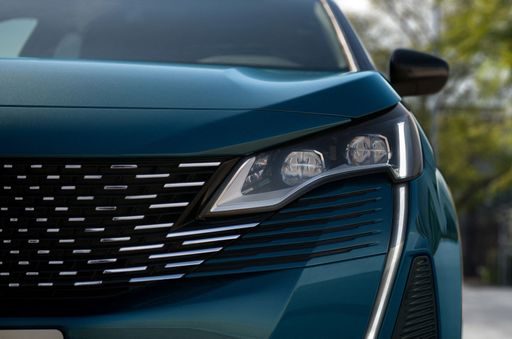
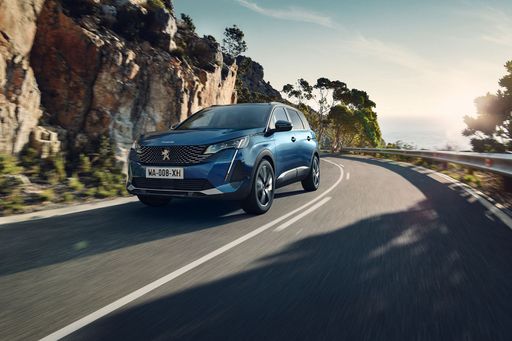
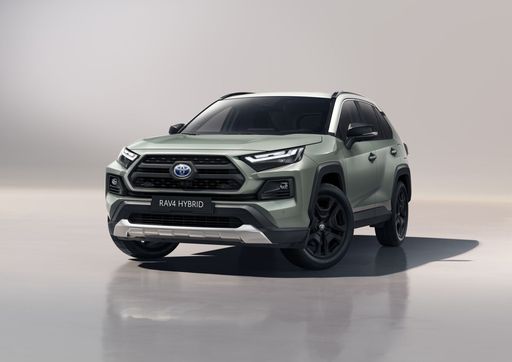
Starting with the design, the Peugeot 5008 boasts a modern and elegant aesthetic, with sharp lines and a bold front fascia that demands attention. Measuring 4791 mm in length, 1895 mm in width, and 1694 mm in height, the 5008 offers a spacious interior accommodating up to seven passengers. In contrast, the Toyota RAV4 has a slightly more compact dimension, with a length of 4600 mm, a width of 1855 mm, and a height of 1685 mm. Although the RAV4 accommodates five passengers, its spacious cabin and thoughtful layout ensure comfort for all occupants.

RAV4

Performance and Powertrains

Under the hood, the Peugeot 5008 features a variety of engine options, including petrol mild hybrid, plug-in hybrid, and fully electric versions. The power output ranges from 136 HP to a robust 231 HP, with acceleration times from 0-100 km/h varying between 8.8 and 10.2 seconds, depending on the variant chosen. With a maximum speed of 198 km/h, it delivers a blend of efficiency and performance.

The Toyota RAV4 is equipped primarily with hybrid powertrains, boasting power outputs of up to 306 HP in the more powerful configurations. Its acceleration capabilities are impressive, with the fastest variant reaching 0-100 km/h in just 6 seconds. The maximum speed for the RAV4 is capped at 180 km/h. Notably, both vehicles share a similar fuel tank capacity of 55 liters, contributing to their long-range capabilities.

5008

Efficiency and Fuel Consumption

Efficiency is a crucial factor for potential buyers, especially for those considering hybrid and electric options. The Peugeot 5008 showcases an impressive CO2 efficiency class, with emissions as low as 0 g/km for its electric variant. The petrol and hybrid models provide consumption figures averaging around 5.8 L/100 km, making it a competitive choice in its segment.

On the other hand, the Toyota RAV4 excels in fuel consumption as well, operating at approximately 5.6 L/100 km and maintaining a solid CO2 efficiency class. However, its electric range of 75 km pales in comparison to the 5008's 78 km, showcasing the technological advancements in Peugeot's offerings.

RAV4

Interior Comfort and Innovations

In terms of interior comfort, the Peugeot 5008 impresses with its innovative i-Cockpit design, featuring a compact steering wheel and a high-mounted instrument panel that encourages a dynamic driving experience. Its cargo space is also noteworthy, boasting a trunk capacity of 748 liters, making it highly practical for family outings.

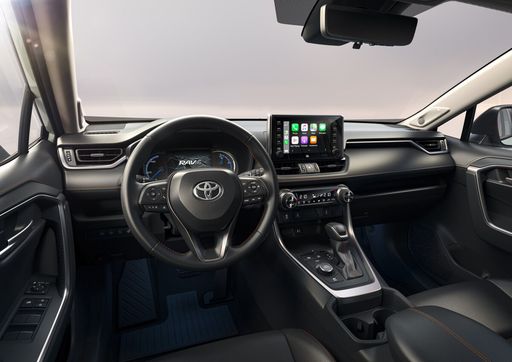
The Toyota RAV4 offers a straightforward, functional interior design that prioritizes user-friendliness. While it has a slightly smaller trunk capacity of 580 liters, its seating design ensures that occupants experience comfort on long journeys. Moreover, both vehicles are equipped with modern infotainment systems and connectivity features.

5008

Safety Features

Safety is an essential consideration for family SUVs. The Peugeot 5008 comes equipped with an array of safety features, including advanced driver assistance systems such as lane keeping assist, adaptive cruise control, and automatic emergency braking. The RAV4 also includes comparable features, with Toyota’s Safety Sense suite enhancing its appeal in terms of safety.

RAV4

Conclusion

In conclusion, the Peugeot 5008 and Toyota RAV4 each have their unique strengths and appeals. The 5008 stands out with its larger seating capacity, innovative design, and advanced electrification options, while the RAV4 impresses with its powerful hybrid offerings and user-friendly interior. Ultimately, the choice between these two outstanding SUVs will depend on individual needs and preferences. Whether you prioritize space, performance, or hybrid efficiency, both vehicles offer something for everyone in today’s competitive SUV market.

Here’s where it gets real: The technical differences in detail

RAV4

Costs and Efficiency:

When it comes to price and running costs, the biggest differences usually appear. This is often where you see which car fits your budget better in the long run.

Toyota RAV4 is only slightly cheaper – starting at 37,700 £ , while the Peugeot 5008 costs 39,300 £ . That’s a price difference of around 1,603 £.

Fuel consumption also shows a difference: the Toyota RAV4 uses 1.3 L/100km and is substantially more efficient than the Peugeot 5008 with 2.7 L/100km. The difference is about 1.4 L/100km.

As for electric range, the Peugeot 5008 offers clearly more range – reaching up to 669 km, about 532 km more than the Toyota RAV4.

5008

Engine and Performance:

Under the bonnet, it becomes clear which model is tuned for sportiness and which one takes the lead when you hit the accelerator.

When it comes to engine power, the Peugeot 5008 offers very slightly more power – delivering 325 HP compared to 309 HP. That’s roughly 16 HP more horsepower.

When accelerating from 0 to 100 km/h, the Toyota RAV4 is a bit quicker – completing the sprint in 5.8 s, while the Peugeot 5008 takes 6.5 s. That’s about 0.7 s quicker.

RAV4

Space and Everyday Use:

Cabin size, boot volume and payload all play a role in everyday practicality. Here, comfort and flexibility make the difference.

Seats: Peugeot 5008 offers more seats – 7 vs 5.

In terms of curb weight, Toyota RAV4 is very slightly lighter – 1,655 kg compared to 1,700 kg. The difference is around 45 kg.

Looking at boot space, the Toyota RAV4 offers markedly more boot space – 514 L compared to 348 L. That’s a difference of about 166 L.

When it comes to payload, the Peugeot 5008 carries barely more – 640 kg compared to 610 kg. That’s a difference of about 30 kg.

Who wins the race in the data check?

The Peugeot 5008 comes out modestly ahead in the objective data comparison.
This result only shows which model scores more points on paper – not which of the two cars feels right for you.

from £39,300
5008

Peugeot 5008

  • Engine Type : Electric, Petrol MHEV, Plugin Hybrid
  • Transmission : Automatic
  • Drive Type : Front-Wheel Drive, All-Wheel Drive
  • Power HP : 145 - 325 HP
  • Consumption L/100km : 2.7 - 5.6 L/100km
  • Consumption kWh/100km : 17.8 - 18.1 kWh/100km
  • Electric Range : 78 - 669 km
Toyota RAV4
Peugeot 5008

Costs and Consumption

View detailed analysis

Engine and Performance

View detailed analysis

Dimensions and Body

View detailed analysis

Toyota RAV4

The Toyota RAV4 is a well-rounded compact SUV that pairs everyday practicality with a comfortable, composed ride and generous cargo space, making it a sensible choice for families and active lifestyles. Its strong reputation for reliability, efficient drivetrains, and straightforward technology gives it wide appeal whether you value economy, comfort, or capability.

details

Peugeot 5008

The Peugeot 5008 blends Peugeot's sharp design with the space and versatility families actually need, wrapping clever packaging and a premium-feeling cabin in a crisp, SUV-like silhouette. It drives with more poise than you'd expect from a people carrier, serves up practical touches and flexible seating for everyday chaos, and still looks good when parked outside the school gates.

details
Toyota RAV4
Peugeot 5008

Costs and Consumption

Price
37,700 - 54,200 £
Price
39,300 - 54,300 £
Consumption L/100km
1.3 - 5.3 L/100km
Consumption L/100km
2.7 - 5.6 L/100km
Consumption kWh/100km
-
Consumption kWh/100km
17.8 - 18.1 kWh/100km
Electric Range
133 - 137 km
Electric Range
78 - 669 km
Battery Capacity
-
Battery Capacity
-
co2
30 - 121 g/km
co2
0 - 127 g/km
Fuel tank capacity
-
Fuel tank capacity
-

Dimensions and Body

Body Type
SUV
Body Type
SUV
Seats
5
Seats
7
Doors
-
Doors
-
Curb weight
1,655 - 1,960 kg
Curb weight
1,700 - 2,344 kg
Trunk capacity
446 - 514 L
Trunk capacity
294 - 348 L
Length
-
Length
-
Width
1,880 mm
Width
1,895 mm
Height
-
Height
-
Max trunk capacity
-
Max trunk capacity
-
Payload
515 - 610 kg
Payload
596 - 640 kg

Engine and Performance

Engine Type
Full Hybrid, Plugin Hybrid
Engine Type
Electric, Petrol MHEV, Plugin Hybrid
Transmission
Automatic
Transmission
Automatic
Transmission Detail
CVT
Transmission Detail
Reduction Gearbox, Dual-Clutch Automatic
Drive Type
Front-Wheel Drive, All-Wheel Drive
Drive Type
Front-Wheel Drive, All-Wheel Drive
Power HP
185 - 309 HP
Power HP
145 - 325 HP
Acceleration 0-100km/h
5.8 - 8 s
Acceleration 0-100km/h
6.5 - 10.2 s
Max Speed
-
Max Speed
-
Torque
-
Torque
230 - 511 Nm
Number of Cylinders
4
Number of Cylinders
3 - 4
Power kW
136 - 227 kW
Power kW
107 - 239 kW
Engine capacity
2,487 cm3
Engine capacity
1,199 - 1,598 cm3

General

Model Year
2026
Model Year
2,024 - 2,026
CO2 Efficiency Class
C, D, B
CO2 Efficiency Class
A, D, B
Brand
Toyota
Brand
Peugeot
DriveDuel uses data analysis and artificial intelligence to evaluate vehicle data and create content. Content is regularly reviewed and improved. The displayed prices are estimates based on German list prices, adjusted to the respective country’s VAT. Country-specific registration taxes are not included. This information is not legally binding.