VS

Toyota Urban Cruiser vs Kia EV3 comparison

Compare performance (184 HP vs 265 HP), boot space and price (33,400 £ vs 40,200 £ ) at a glance. Find out which car is the better choice for you – Toyota Urban Cruiser or Kia EV3?

Toyota Urban Cruiser vs Kia EV3: Key differences

Toyota Urban Cruiser

4 (1 Reviews)
rate
  • clearly cheaper
  • very slightly more efficient
  • very slightly lighter
details

Kia EV3

4.6 (5 Reviews)
rate
  • markedly more power
  • markedly more electric range
  • somewhat quicker 0–100 km/h
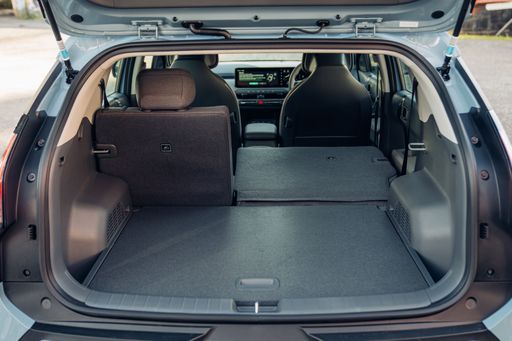
  • visibly more trunk space
details

All details on performance, efficiency, range and trunk space can be found in the technical comparison below – including user reviews for both models.

By Achim Sedelmaier

Urban Cruiser

Kia EV3 VS Toyota Urban Cruiser — a clear-headed everyday comparison

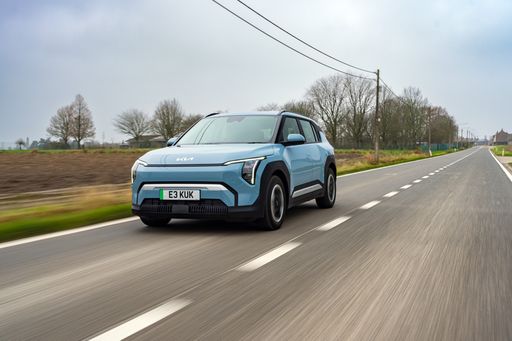
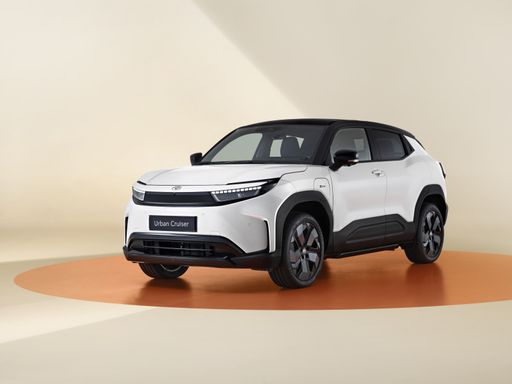
Kia EV3 and Toyota Urban Cruiser arrive with very different priorities: the EV3 pitches itself as a long-range, practicality-first compact electric SUV, while the Urban Cruiser is built around city agility and flexible rear seating. The EV3 feels like the relaxed, motorway-friendly choice that makes long trips less stressful thanks to its real-world range and roomy load area. The Urban Cruiser trades outright luggage capacity for a sliding 40:20:40 rear bench, which makes it surprisingly versatile for passengers but less generous with bulky cargo. Price and spec positioning also push the Urban Cruiser toward value-focused buyers, whereas the EV3 leans into usefulness and range as its headline strengths.
EV3

Character and driving feel: composed tourer versus urban sprinter

The Kia EV3 has a composed, comfort-biased chassis that soaks up distance and keeps occupants settled on motorways, which suits someone who spends regular time between cities. The Toyota Urban Cruiser feels livelier around town — tighter turn-in, a shorter turning circle, and a sense of nimbleness when threading into parking spaces — but it loses calm at higher speeds where road and wind noise become more apparent. If you prefer effortless cruising and predictable long runs, the EV3’s temperament will feel more relaxed; if your days are mostly short hops, tight streets and occasional snowy lanes, the Urban Cruiser rewards with confidence and optional AWD. The trade-off is simple: the EV3 privileges cruising comfort and usable range, the Urban Cruiser prioritizes city manoeuvrability and rear-seat flexibility.

Comfort and cabin quality: long-haul comfort versus pragmatic simplicity

Inside, the Kia EV3 leans toward comfort with supportive front seats and a quieter ambience that makes long drives less fatiguing, although some trims reveal hard plastics in less visible areas. The Toyota Urban Cruiser keeps things practical and straightforward — plenty of rear legroom thanks to the sliding bench but a cabin that feels more budget-oriented and can be noisier at speed. For passengers who spend time on motorways, the EV3’s quieter, more composed environment will feel noticeably more grown-up; for families prioritising space flexibility and easy ingress/egress, the Urban Cruiser’s rear-seat generosity is the stronger everyday benefit. Both cabins have sensible layouts, but they create different impressions: the EV3 aims for relaxed refinement, the Urban Cruiser for utilitarian convenience.

Practicality and family use: cargo-first versus seat-first flexibility

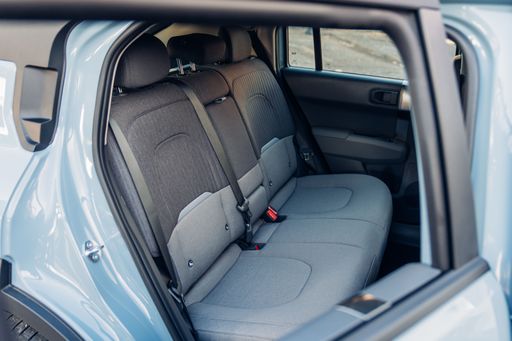
If you regularly carry luggage, pushchairs or weekend gear, the Kia EV3’s larger boot and additional small front storage make packing and family trips easier with fewer compromises. The Toyota Urban Cruiser answers with a genuinely flexible rear seat that slides and splits to prioritise passengers or longer items, which helps small families who need rear legroom as much as cargo space. The consequence is a trade-off every parent recognizes: the EV3 simplifies loading and storage, the Urban Cruiser lets you reconfigure the cabin to suit people more than parcels. Both are family-capable, but which one feels more practical depends on whether your daily life prioritises cargo volume or flexible passenger accommodation.

Usability and city friendliness: tech that helps or gets in the way

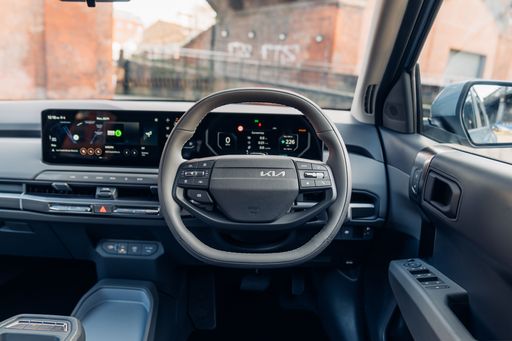
Day-to-day usability highlights a sharp contrast: the EV3 offers refined regenerative braking control that makes one-pedal driving more accessible and city stop‑start life less tiring, though some driver aids can be chatty and menus slightly scattered. The Urban Cruiser is instinctively city-friendly with a tiny turning circle, lots of physical switches for basic functions, and a warming system aimed at cold climates, but its infotainment and control logic can feel sluggish and the reku options less discoverable. In town, the Urban Cruiser’s visibility and manoeuvrability shine, while the EV3’s refined controls and larger range reduce range anxiety and make mixed commuting simpler. Your tolerance for intrusive alerts versus sluggish software will tip the balance between these two in daily use.

Buyer fit and the trade-offs to weigh before the spec sheet

Choose the Kia EV3 if your life includes regular longer runs, heavy luggage needs or you value a quieter, more relaxed cabin on motorways; it suits commuters who want fewer range interruptions and families who need a large boot. Opt for the Toyota Urban Cruiser if most of your miles are urban, you prize a small turning circle and sliding rear seats, or you want an optional AWD setup for winter conditions — but be ready to accept a smaller boot and a rougher, noisier ride at speed. The real decision comes down to how often you’ll trade cargo volume for rear-seat flexibility and whether city agility matters more than long-distance calm. Read the technical comparison next to see how those practical differences — charging behaviour, range, power delivery and luggage measurements — map to numbers that confirm which trade-offs you’ll actually live with.

Here’s where it gets real: The technical differences in detail

Urban Cruiser

Costs and Efficiency:

Looking at overall running costs, both models reveal some interesting differences in everyday economy.

Toyota Urban Cruiser is clearly cheaper – starting at 33,400 £ , while the Kia EV3 costs 40,200 £ . That’s a price difference of around 6,762 £.

In terms of energy consumption, the Toyota Urban Cruiser is very slightly more efficient: consuming 15.1 kWh/100km compared to 15.8 kWh/100km for the Kia EV3. That’s a difference of about 0.7 kWh/100km.

As for electric range, the Kia EV3 offers markedly more range – reaching up to 572 km, about 146 km more than the Toyota Urban Cruiser.

EV3

Engine and Performance:

Under the bonnet, it becomes clear which model is tuned for sportiness and which one takes the lead when you hit the accelerator.

When it comes to engine power, the Kia EV3 offers markedly more power – delivering 265 HP compared to 184 HP. That’s roughly 81 HP more horsepower.

When accelerating from 0 to 100 km/h, the Kia EV3 is somewhat quicker – completing the sprint in 6.6 s, while the Toyota Urban Cruiser takes 7.4 s. That’s about 0.8 s quicker.

There’s also a difference in torque: the Kia EV3 delivers noticeably more torque with 385 Nm compared to 307 Nm. That’s about 78 Nm more.

Space and Everyday Use:

Whether family car or daily driver – which one offers more room, flexibility and comfort?

Both vehicles offer seating for 5 people.

In terms of curb weight, Toyota Urban Cruiser is very slightly lighter – 1,839 kg compared to 1,995 kg. The difference is around 156 kg.

Looking at boot space, the Kia EV3 offers visibly more boot space – 413 L compared to 310 L. That’s a difference of about 103 L.

When it comes to payload, the Kia EV3 carries somewhat more – 485 kg compared to 421 kg. That’s a difference of about 64 kg.

Who wins the race in the data check?

The Kia EV3 is decisively ahead in the objective data comparison.
This result only shows which model scores more points on paper – not which of the two cars feels right for you.

from £40,200
EV3

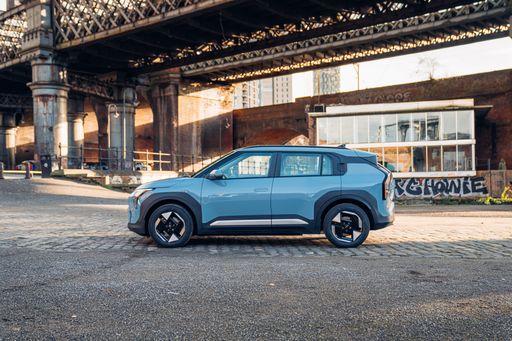
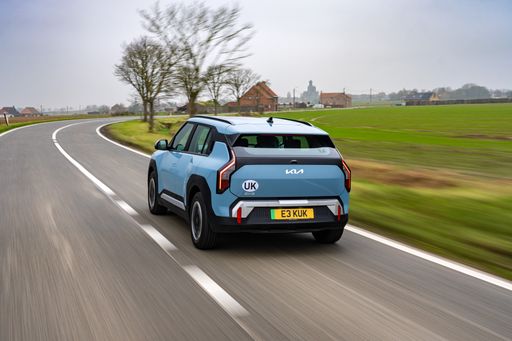
Kia EV3

  • Engine Type Electric
  • Transmission Automatic
  • Drive Type All-Wheel Drive
  • Power HP 265 HP
  • Consumption kWh/100km 15.8 kWh/100km
  • Electric Range 572 km
Toyota Urban Cruiser
Kia EV3

Costs and Consumption

View detailed analysis

Engine and Performance

View detailed analysis

Dimensions and Body

View detailed analysis

Toyota Urban Cruiser

The Toyota Urban Cruiser is a compact SUV that offers a blend of style and practicality, making it well-suited for urban living. It captures attention with its bold design, while providing a high driving position that enhances visibility and control on city roads. Inside, the Urban Cruiser offers comfortable seating and a range of features that cater to both driver and passengers, emphasizing convenience and everyday usability.

details

Kia EV3

The Kia EV3 is a stylish, user-friendly electric crossover that focuses on practicality and a roomy, well-equipped cabin. It delivers a comfortable ride with intuitive technology and efficient everyday performance, making it a sensible choice for city and family use.

details
Toyota Urban Cruiser
Kia EV3

Costs and Consumption

Price
33,400 - 38,600 £
Price
40,200 - 43,900 £
Consumption L/100km
-
Consumption L/100km
-
Consumption kWh/100km
15.1 - 16.6 kWh/100km
Consumption kWh/100km
15.8 kWh/100km
Electric Range
395 - 426 km
Electric Range
572 km
Battery Capacity
-
Battery Capacity
-
co2
0 g/km
co2
0 g/km
Fuel tank capacity
-
Fuel tank capacity
-

Dimensions and Body

Body Type
SUV
Body Type
SUV
Seats
5
Seats
5
Doors
-
Doors
-
Curb weight
1,839 - 1,939 kg
Curb weight
1,995 kg
Trunk capacity
306 - 310 L
Trunk capacity
413 L
Length
-
Length
-
Width
1,800 mm
Width
1,850 mm
Height
-
Height
-
Max trunk capacity
-
Max trunk capacity
-
Payload
411 - 421 kg
Payload
485 kg

Engine and Performance

Engine Type
Electric
Engine Type
Electric
Transmission
Automatic
Transmission
Automatic
Transmission Detail
Reduction Gearbox
Transmission Detail
Reduction Gearbox
Drive Type
Front-Wheel Drive, All-Wheel Drive
Drive Type
All-Wheel Drive
Power HP
174 - 184 HP
Power HP
265 HP
Acceleration 0-100km/h
7.4 - 8.7 s
Acceleration 0-100km/h
6.6 s
Max Speed
-
Max Speed
-
Torque
193 - 307 Nm
Torque
385 Nm
Number of Cylinders
-
Number of Cylinders
-
Power kW
128 - 135 kW
Power kW
195 kW
Engine capacity
-
Engine capacity
-

General

Model Year
2026
Model Year
2026
CO2 Efficiency Class
A
CO2 Efficiency Class
A
Brand
Toyota
Brand
Kia
DriveDuel uses data analysis and artificial intelligence to evaluate vehicle data and create content. Content is regularly reviewed and improved. The displayed prices are estimates based on German list prices, adjusted to the respective country’s VAT. Country-specific registration taxes are not included. This information is not legally binding.