VS

Toyota Yaris Cross vs Vauxhall Mokka comparison

Compare performance (130 HP vs 281 HP), boot space and price (23,700 £ vs 23,000 £ ) at a glance. Find out which car is the better choice for you – Toyota Yaris Cross or Vauxhall Mokka?

Toyota Yaris Cross vs Vauxhall Mokka: Key differences

Toyota Yaris Cross

4.3 (14 Reviews)
rate
  • marginally more efficient
  • marginally lighter
  • moderately more trunk space
details

Vauxhall Mokka

4.1 (4 Reviews)
rate
  • marginally cheaper
  • clearly more power
  • clearly quicker 0–100 km/h
details

All details on performance, efficiency, range and trunk space can be found in the technical comparison below – including user reviews for both models.

By Achim Sedelmaier

Yaris Cross

Street presence: bold face vs clever charm

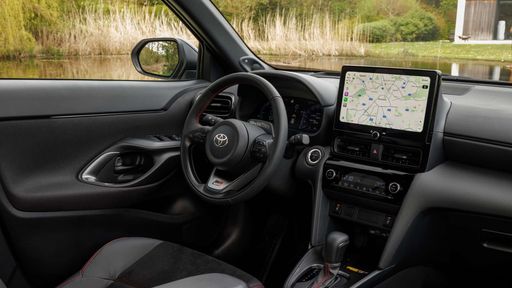
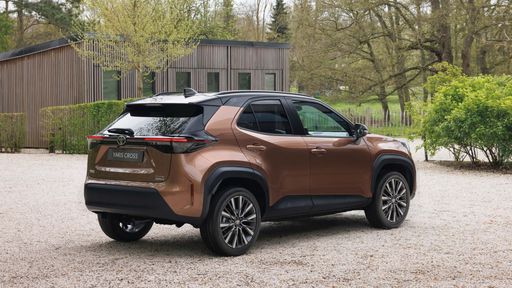
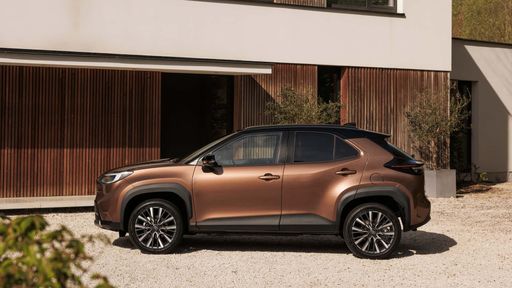
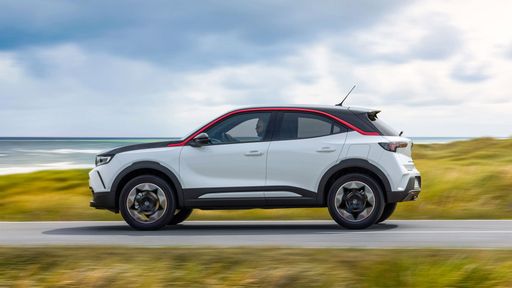
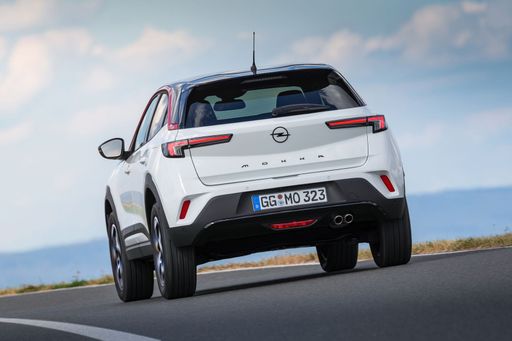
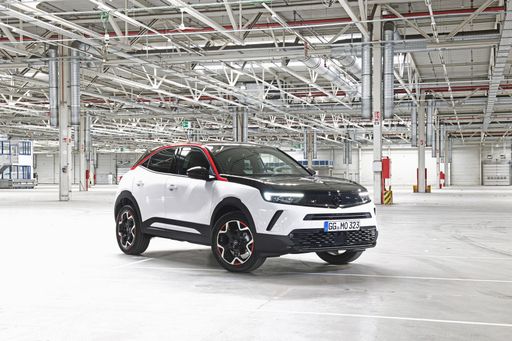
The two crossovers wear their personalities on their sleeves: the Opel Mokka projects bold, angular styling that demands attention, while the Toyota Yaris Cross reads as the clever, compact option that prefers practicality over flash. In a car park the Mokka will turn heads, the Yaris Cross will quietly slot into spaces and get on with life. Both look modern, but they appeal to very different tastes — one theatrical, the other quietly assured.
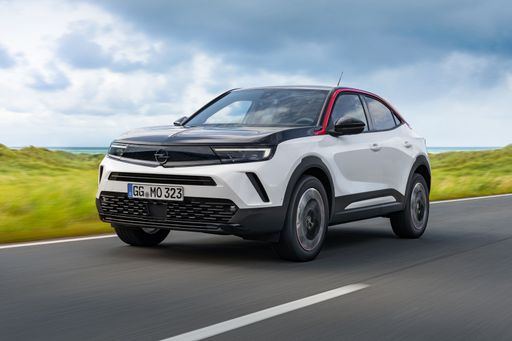
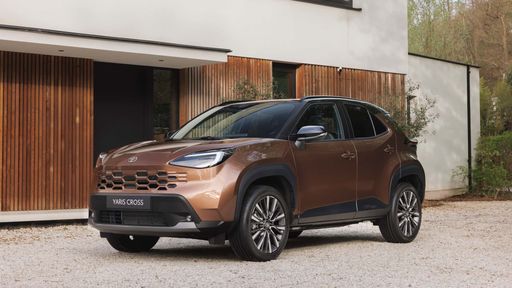
Mokka

Behind the wheel: zest or zen?

Drive either and the contrast becomes clear: the Mokka feels eager, with a drive character that rewards a firmer right foot and encourages longer stretches on open roads, whereas the Yaris Cross leans toward calm composure and easy urban manoeuvring. Steering and responses are tuned to different moods — one sportier and alert, the other forgiving and city-friendly — so your daily route will decide which attitude suits you. Both are competent, but they choose different driving jobs.

Yaris Cross

Cabin life: theatre or utility?

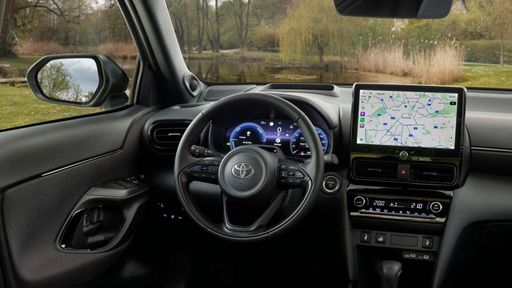
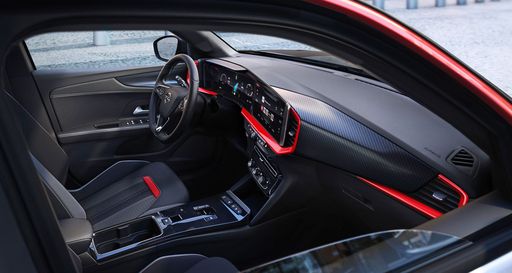
Inside, the Mokka opts for a more stylised cockpit, materials and graphics that aim to impress occupants as they approach the vanishing point of the dash, while the Yaris Cross keeps ergonomics and straightforward usability front and centre. Seat comfort and visibility are good in both, but the Yaris Cross feels slightly more sensibly packaged for transporting people and odd loads without drama. If you value a cabin that looks premium, the Mokka has flair; if you prize everyday clarity and sensible storage, the Yaris Cross will feel familiar and useful.

Mokka

How they live day to day

Practicality is where both do their homework: tight parking, school runs, and supermarket trips are easy chores for either, though they approach those tasks differently. The Mokka prefers to be the statement car in the daily routine, the Yaris Cross fades into the background and simply makes family life easier. That difference shows most when you load up the back seats or fit a child seat — one is about presence, the other about being unobtrusively accommodating.

Yaris Cross

Owning them: peace of mind vs value-focused thinking

Ownership isn’t just about the first handshake; it’s about how the car behaves over months and years. The Yaris Cross carries Toyota’s reputation for fuss-free reliability and modest running demands, while the Mokka plays the value card with a pleasing feature set and a fresher, more expressive persona that can feel like getting more car for the money. Buyers who want straightforward long-term ownership may tilt one way, while those who prioritise immediate equipment and design impact may favour the other.

Mokka

Who should pick which?

If you prioritise style, a livelier on-road demeanour and a cabin that makes a statement, the Opel Mokka is tailored to that kind of owner; if your days are dominated by commuting, school runs and a desire for an unobtrusive, efficient package, the Toyota Yaris Cross fits that bill neatly. Urban commuters, small families and pragmatic buyers will appreciate the Yaris Cross’s temperament, while style-conscious drivers and those who enjoy a bit of driving theatre will find the Mokka more alluring. Either way, both deliver sensible crossover virtues with different emphases.

Yaris Cross

Keep reading — the DriveDuel decision is coming

We’ve unpacked style, steering, cabin life and everyday sense so you know how each car will live with you, but the final verdict is still to come; follow the full DriveDuel feature to see which model takes the crown. Stay with us to find out which of these two contenders earns the title of DriveDuel Champion — the result might be the deciding factor in your next purchase.

Here’s where it gets real: The technical differences in detail

Yaris Cross

Costs and Efficiency:

Price and efficiency are often the first things buyers look at. Here it becomes clear which model has the long-term edge – whether at the pump, the plug, or in purchase price.

Vauxhall Mokka is marginally cheaper – starting at 23,000 £ , while the Toyota Yaris Cross costs 23,700 £ . That’s a price difference of around 643 £.

Fuel consumption also shows a difference: the Toyota Yaris Cross uses 4.5 L/100km and is marginally more efficient than the Vauxhall Mokka with 4.9 L/100km. The difference is about 0.4 L/100km.

Mokka

Engine and Performance:

Power, torque and acceleration say a lot about how a car feels on the road. This is where you see which model delivers more driving dynamics.

When it comes to engine power, the Vauxhall Mokka offers clearly more power – delivering 281 HP compared to 130 HP. That’s roughly 151 HP more horsepower.

When accelerating from 0 to 100 km/h, the Vauxhall Mokka is clearly quicker – completing the sprint in 5.9 s, while the Toyota Yaris Cross takes 10.7 s. That’s about 4.8 s quicker.

Yaris Cross

Space and Everyday Use:

Cabin size, boot volume and payload all play a role in everyday practicality. Here, comfort and flexibility make the difference.

Both vehicles offer seating for 5 people.

In terms of curb weight, Toyota Yaris Cross is marginally lighter – 1,180 kg compared to 1,294 kg. The difference is around 114 kg.

Looking at boot space, the Toyota Yaris Cross offers moderately more boot space – 397 L compared to 350 L. That’s a difference of about 47 L.

When it comes to payload, the Toyota Yaris Cross carries visibly more – 510 kg compared to 400 kg. That’s a difference of about 110 kg.

Who wins the race in the data check?

The Vauxhall Mokka is far ahead overall in the objective data comparison.
This result only shows which model scores more points on paper – not which of the two cars feels right for you.

from £23,000
Mokka

Vauxhall Mokka

  • Engine Type : Electric, Petrol, Petrol MHEV
  • Transmission : Automatic, Manuel
  • Drive Type : Front-Wheel Drive
  • Power HP : 136 - 281 HP
  • Consumption L/100km : 4.9 - 5.7 L/100km
  • Consumption kWh/100km : 15.4 - 18.5 kWh/100km
  • Electric Range : 336 - 403 km
Toyota Yaris Cross
Vauxhall Mokka

Costs and Consumption

View detailed analysis

Engine and Performance

View detailed analysis

Dimensions and Body

View detailed analysis

Toyota Yaris Cross

The Toyota Yaris Cross takes the jaunty personality of the Yaris and gives it a taller stance and a bit more practicality, so you get city-friendly agility with added SUV presence. It’s easy to live with, economical on the daily grind, and smartly packaged — a sensible pick for buyers who want fuss-free transport with a touch of character.

details

Vauxhall Mokka

The Opel Mokka cuts a smart, modern silhouette that feels right at home in the city while still turning heads on the open road. It's a practical, easy-to-live-with crossover that blends comfy driving manners with enough flair and tech to keep daily commutes interesting — and it won’t make you regret trading up.

details
Toyota Yaris Cross
Vauxhall Mokka

Costs and Consumption

Price
23,700 - 34,300 £
Price
23,000 - 40,500 £
Consumption L/100km
4.5 - 4.8 L/100km
Consumption L/100km
4.9 - 5.7 L/100km
Consumption kWh/100km
-
Consumption kWh/100km
15.4 - 18.5 kWh/100km
Electric Range
-
Electric Range
336 - 403 km
Battery Capacity
-
Battery Capacity
-
co2
101 - 108 g/km
co2
0 - 129 g/km
Fuel tank capacity
-
Fuel tank capacity
-

Dimensions and Body

Body Type
SUV
Body Type
SUV
Seats
5
Seats
5
Doors
-
Doors
-
Curb weight
1,180 - 1,290 kg
Curb weight
1,294 - 1,672 kg
Trunk capacity
320 - 397 L
Trunk capacity
310 - 350 L
Length
-
Length
-
Width
1,765 mm
Width
1,787 mm
Height
-
Height
-
Max trunk capacity
-
Max trunk capacity
-
Payload
485 - 510 kg
Payload
388 - 400 kg

Engine and Performance

Engine Type
Full Hybrid
Engine Type
Electric, Petrol, Petrol MHEV
Transmission
Automatic
Transmission
Automatic, Manuel
Transmission Detail
CVT
Transmission Detail
Reduction Gearbox, Manual Gearbox, Dual-Clutch Automatic
Drive Type
Front-Wheel Drive, All-Wheel Drive
Drive Type
Front-Wheel Drive
Power HP
116 - 130 HP
Power HP
136 - 281 HP
Acceleration 0-100km/h
10.7 - 11.3 s
Acceleration 0-100km/h
5.9 - 9 s
Max Speed
-
Max Speed
-
Torque
-
Torque
230 - 345 Nm
Number of Cylinders
3
Number of Cylinders
3
Power kW
85 - 96 kW
Power kW
100 - 207 kW
Engine capacity
1,490 cm3
Engine capacity
1,199 cm3

General

Model Year
2026
Model Year
2,024 - 2,025
CO2 Efficiency Class
C
CO2 Efficiency Class
A, D, C
Brand
Toyota
Brand
Vauxhall
DriveDuel uses data analysis and artificial intelligence to evaluate vehicle data and create content. Content is regularly reviewed and improved. The displayed prices are estimates based on German list prices, adjusted to the respective country’s VAT. Country-specific registration taxes are not included. This information is not legally binding.