VS

Toyota Yaris vs Hyundai i10 comparison

Compare performance (280 HP vs 90 HP), boot space and price (21,900 £ vs 14,600 £ ) at a glance. Find out which car is the better choice for you – Toyota Yaris or Hyundai i10?

Toyota Yaris vs Hyundai i10: Key differences

Toyota Yaris

3.9 (3 Reviews)
rate
  • significantly more power
  • visibly more efficient
  • clearly quicker 0–100 km/h
  • moderately more trunk space

Hyundai i10

5 (1 Reviews)
rate
  • significantly cheaper
  • marginally lighter

All details on performance, efficiency, range and trunk space can be found in the technical comparison below – including user reviews for both models.

Yaris

City sprint and suburban calm

The two contenders wear their intentions on their sleeves: one feels like a mischievous city sprite, slipping into tight gaps and turning errands into a bit of a grin, while the other settles into traffic with a calmer, more assured gait that suits longer runs beyond the urban grid. Steering and ride tuning highlight those personalities — one is chirpier and eager, the other composed and grown-up. For buyers who do most of their miles between kerbs and coffee shops, the lighter-footed car will charm; those who mix in motorway miles will appreciate the steadier demeanor of its rival.
i10

Inside — small-car cleverness

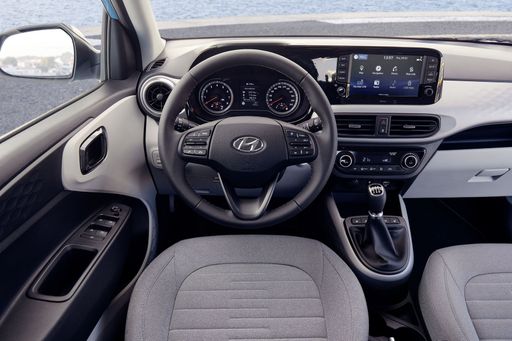
Step in and both cabins surprise with thoughtful touches; clever storage, straightforward controls and seats that manage to be comfortable without feeling overdone. Materials and fit-and-finish lean in different directions: one prioritizes a bright, user-friendly layout, the other aims for a slightly more polished, restrained ambience. Infotainment and daily ergonomics will sway buyers who prize simplicity over flash or vice versa, but neither interior feels like a compromise for its class.

Yaris

Practical realities that matter

If you judge by how easily a weekly shop, a stroller or a set of holiday bags are accommodated, the two offer different kinds of practicality rather than a clear superiority. One packs clever folding and useable cubby space to make urban life easier, while the other stretches its usefulness into longer trips and family duties with a bit more room where it counts. For parents and weekend adventurers the balance between cargo versatility and everyday convenience will be decisive.

i10

Looks and the statement they make

Design is about personality: one car wears a jaunty, youthful look that’s impossible to ignore on tight streets, while the other opts for a more conservative, well-bred appearance that ages gracefully. Colour options and trim choices can tilt either into sporty or sophisticated territory, so style-conscious buyers can tune the vibe to their taste. Ultimately, it comes down to whether you want to stand out at the coffee shop or blend in with an understated, competent presence.

Living with it: ownership sense

Both models make pragmatic sense for buyers watching the long game — warranties, service philosophies and dealer networks shape day-to-day ownership more than headline figures do. One leans towards being an economical, no-nonsense companion that’s easy to live with in the city, while the other projects a slightly more premium ownership feel that rewards longer journeys. Think about how often you’ll use it, how you’ll service it, and which brand’s aftercare puts you at ease.

Matchmaking guide for buyers

Commuters who prioritise nimble parking and cheerful urban manners will be drawn to one candidate, while buyers who want a balanced, all-round small car for mixed driving will find the other a compelling option. Young professionals and style-first drivers may prefer the bolder visual personality, whereas small families and regular out-of-town users will value the steadier, more versatile package. Choose according to your daily rhythm rather than headline claims, and you won’t go far wrong.

Ready to know who takes the crown?

We’ve laid out how each car feels, lives and performs as a daily companion — now stick with us to see which one earns the DriveDuel Champion badge in the final reveal. You’ll want to see which nuances decide the title, so stay tuned for the verdict that matters to buyers like you.

Here’s where it gets real: The technical differences in detail

Yaris

Costs and Efficiency:

Price and efficiency are key factors when choosing a car – and this is often where the real differences emerge.

Hyundai i10 is significantly cheaper – starting at 14,600 £ , while the Toyota Yaris costs 21,900 £ . That’s a price difference of around 7,295 £.

Fuel consumption also shows a difference: the Toyota Yaris uses 3.8 L/100km and is visibly more efficient than the Hyundai i10 with 4.9 L/100km. The difference is about 1.1 L/100km.

i10

Engine and Performance:

Power, torque and acceleration say a lot about how a car feels on the road. This is where you see which model delivers more driving dynamics.

When it comes to engine power, the Toyota Yaris offers significantly more power – delivering 280 HP compared to 90 HP. That’s roughly 190 HP more horsepower.

When accelerating from 0 to 100 km/h, the Toyota Yaris is clearly quicker – completing the sprint in 5.5 s, while the Hyundai i10 takes 11.4 s. That’s about 5.9 s quicker.

There’s also a difference in torque: the Toyota Yaris delivers substantially more torque with 390 Nm compared to 172 Nm. That’s about 218 Nm more.

Yaris

Space and Everyday Use:

Beyond pure performance, interior space and usability matter most in daily life. This is where you see which car is more practical and versatile.

Both vehicles offer seating for 5 people.

In terms of curb weight, Hyundai i10 is marginally lighter – 996 kg compared to 1,090 kg. The difference is around 94 kg.

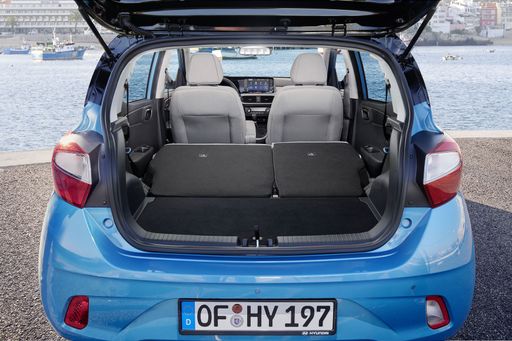
Looking at boot space, the Toyota Yaris offers moderately more boot space – 286 L compared to 252 L. That’s a difference of about 34 L.

When it comes to payload, the Toyota Yaris carries somewhat more – 525 kg compared to 423 kg. That’s a difference of about 102 kg.

Who wins the race in the data check?

The Toyota Yaris is clearly superior overall in the objective data comparison.
This result only shows which model scores more points on paper – not which of the two cars feels right for you.

from £21,900
Yaris

Toyota Yaris

  • Engine Type : Full Hybrid, Petrol
  • Transmission : Automatic, Manuel
  • Drive Type : Front-Wheel Drive, All-Wheel Drive
  • Power HP : 116 - 280 HP
  • Consumption L/100km : 3.8 - 8.7 L/100km
Toyota Yaris
Hyundai i10

Costs and Consumption

View detailed analysis

Engine and Performance

View detailed analysis

Dimensions and Body

View detailed analysis

Toyota Yaris

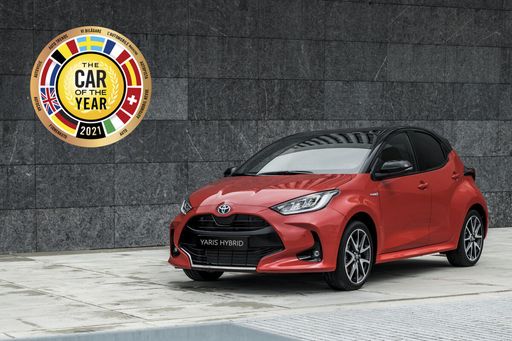
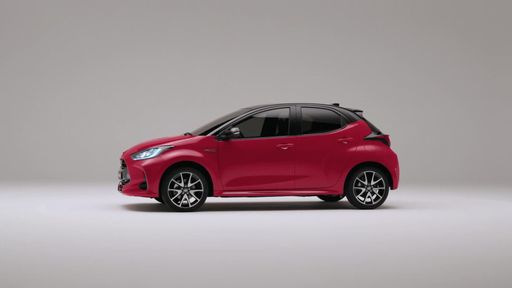
The Toyota Yaris is a sprightly city hatch that packs clever packaging, surprising comfort and fuel-sipping manners into a neat, easy-to-park package. It rewards sensible buyers with low running costs, friendly ergonomics and a forgiving drive, delivered with Japanese reliability and just enough personality to make errands feel a little less ordinary.

details

Hyundai i10

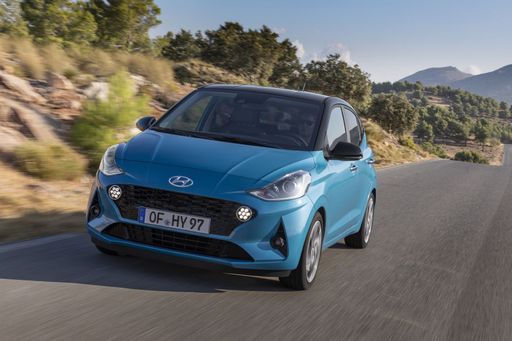
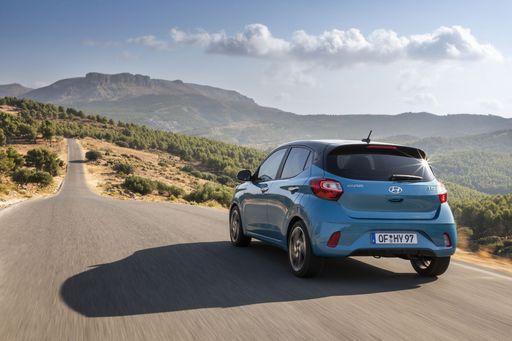
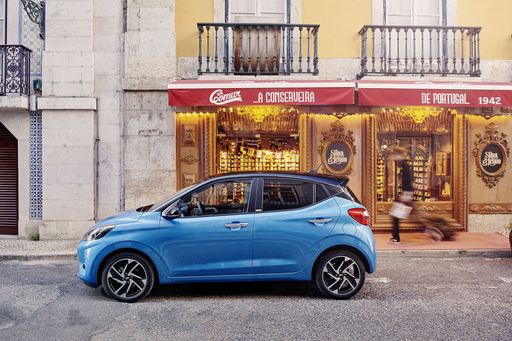
The Hyundai i10 is a cheeky city car that squeezes big-car confidence into a pocket-friendly package, carving through tight streets with surprising composure and sensible practicality. For buyers after low fuss, sensible equipment and wallet-friendly running costs, it's a smart, no-nonsense pick that makes sense whether you're a first-time driver or need a reliable second car.

details
Toyota Yaris
Hyundai i10

Costs and Consumption

Price
21,900 - 40,800 £
Price
14,600 - 19,000 £
Consumption L/100km
3.8 - 8.7 L/100km
Consumption L/100km
4.9 - 5.5 L/100km
Consumption kWh/100km
-
Consumption kWh/100km
-
Electric Range
-
Electric Range
-
Battery Capacity
-
Battery Capacity
-
co2
87 - 197 g/km
co2
110 - 124 g/km
Fuel tank capacity
-
Fuel tank capacity
36 L

Dimensions and Body

Body Type
Hatchback
Body Type
Hatchback
Seats
4 - 5
Seats
4 - 5
Doors
-
Doors
5
Curb weight
1,090 - 1,356 kg
Curb weight
996 - 1,099 kg
Trunk capacity
141 - 286 L
Trunk capacity
252 L
Length
-
Length
3,670 - 3,675 mm
Width
1,745 - 1,805 mm
Width
1,680 mm
Height
-
Height
1,480 - 1,483 mm
Max trunk capacity
-
Max trunk capacity
1,050 L
Payload
289 - 525 kg
Payload
344 - 423 kg

Engine and Performance

Engine Type
Full Hybrid, Petrol
Engine Type
Petrol
Transmission
Automatic, Manuel
Transmission
Manuel, Automatic
Transmission Detail
CVT, Manual Gearbox
Transmission Detail
Manual Gearbox, Automated Manual
Drive Type
Front-Wheel Drive, All-Wheel Drive
Drive Type
Front-Wheel Drive
Power HP
116 - 280 HP
Power HP
63 - 90 HP
Acceleration 0-100km/h
5.5 - 9.7 s
Acceleration 0-100km/h
11.4 - 18.4 s
Max Speed
-
Max Speed
143 - 175 km/h
Torque
390 Nm
Torque
93 - 172 Nm
Number of Cylinders
3
Number of Cylinders
3 - 4
Power kW
85 - 206 kW
Power kW
46 - 66 kW
Engine capacity
1,490 - 1,618 cm3
Engine capacity
998 - 1,197 cm3

General

Model Year
2,026
Model Year
2,024
CO2 Efficiency Class
B, G
CO2 Efficiency Class
C, D
Brand
Toyota
Brand
Hyundai
DriveDuel uses data analysis and artificial intelligence to evaluate vehicle data and create content. Content is regularly reviewed and improved. The displayed prices are estimates based on German list prices, adjusted to the respective country’s VAT. Country-specific registration taxes are not included. This information is not legally binding.