VS

Toyota Yaris vs Kia Stonic comparison

Compare performance (280 HP vs 115 HP), boot space and price (21,900 £ vs 20,100 £ ) at a glance. Find out which car is the better choice for you – Toyota Yaris or Kia Stonic?

Toyota Yaris vs Kia Stonic: Key differences

Toyota Yaris

3.9 (3 Reviews)
rate
  • considerably more power
  • considerably more efficient
  • clearly quicker 0–100 km/h
  • moderately lighter

Kia Stonic

4.6 (2 Reviews)
rate
  • barely cheaper
  • somewhat more trunk space

All details on performance, efficiency, range and trunk space can be found in the technical comparison below – including user reviews for both models.

Yaris

Introduction

The compact SUV segment is highly competitive, with various manufacturers vying for consumer attention. Among the standout contenders are the Kia Stonic and the Toyota Yaris, each boasting unique virtues and technological advancements. This comparison delves into their technical specifications, innovative features, and overall performance to help you determine which vehicle better suits your lifestyle.
Stonic

Design and Dimensions

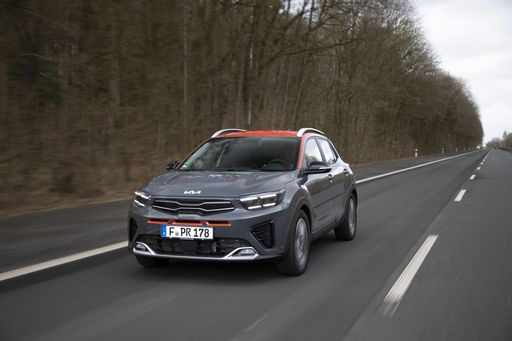
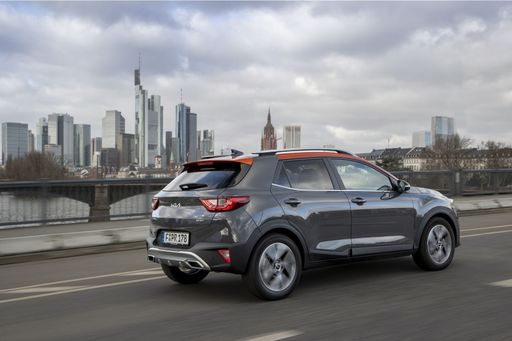
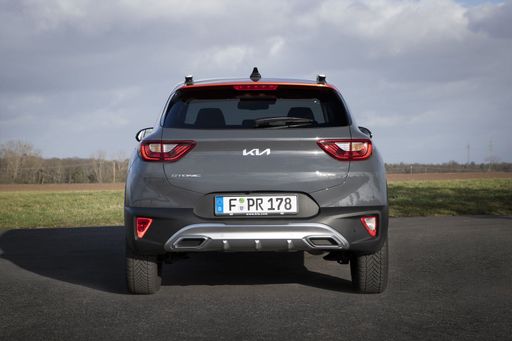
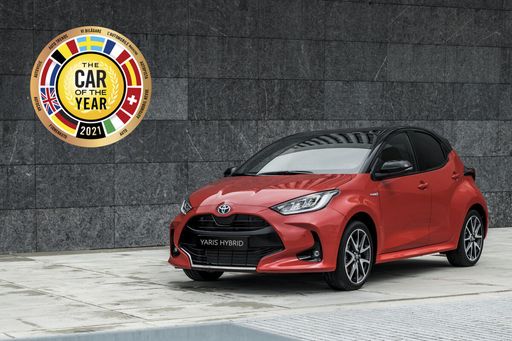
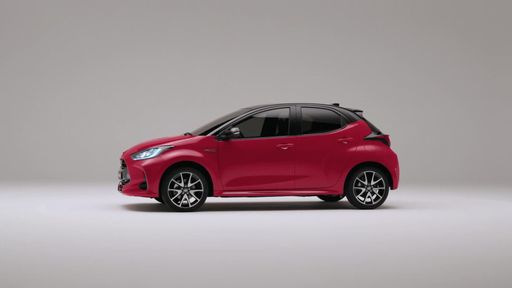
The Kia Stonic presents a robust SUV look, measuring 4140 mm in length, 1760 mm in width, and 1505 mm in height. Its aggressive styling, highlighted by sharp lines and a bold front grille, gives it a sporty appeal. In contrast, the Toyota Yaris adopts a more traditional hatchback shape, with a length of either 3940 mm or 3995 mm, a width of 1745 mm or 1805 mm, and a height that ranges between 1455 mm and 1500 mm. The Yaris’s curves and modern silhouette contribute to its aerodynamic efficiency.

Yaris

Powertrains and Performance

Performance is crucial when evaluating these two vehicles. The Kia Stonic offers a choice of petrol engines, including a 998 cc variant and a larger 1197 cc option, delivering between 100 HP and 79 HP. It boasts a torque range from 113 Nm to 200 Nm, with a 0-100 km/h acceleration time of 11.3 to 14.2 seconds. Notably, its fuel consumption varies between 5.5 and 5.8 L/100km, depending on the variant, matching the needs of economical drivers.

The Toyota Yaris, on the other hand, impresses with its engine lineup, including full hybrid variants that produce up to 116 HP. This makes the Yaris not just powerful, but also highly efficient, with a fuel consumption as low as 3.8 L/100km. Notable for its 0-100 km/h acceleration range of 9.2 to 9.7 seconds, it caters well to those who seek performance along with eco-friendliness.

Stonic

Innovation and Technology

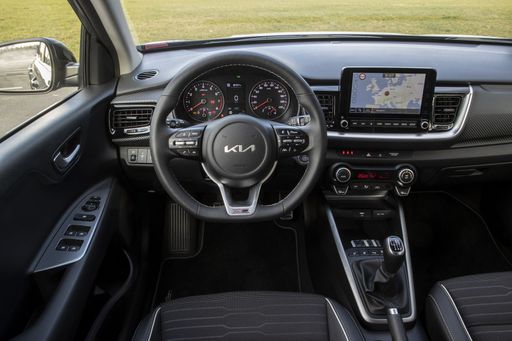
Technology and innovation play a significant role in the appeal of both models. The Kia Stonic incorporates advanced connectivity features such as an intuitive infotainment system compatible with Android Auto and Apple CarPlay, ensuring modern drivers stay connected on the go. Safety also takes precedence, with various driver assistance systems such as lane-keeping assist and a rear-view camera enhancing the overall driving experience.

The Toyota Yaris excels in technology with its hybrid system, providing a seamless transition between electric and petrol power. This not only enhances fuel efficiency but also enables a quieter ride. Additionally, Yaris features Toyota's latest safety suite, including adaptive cruise control and automatic emergency braking, making it one of the safest cars in its category.

Interior and Cargo Space

Inside, the Kia Stonic is cleverly designed to maximize comfort and usability. It comfortably seats up to five passengers and offers a trunk capacity of 352 liters, making it a practical choice for everyday use. The materials used throughout the cabin are of high quality, delivering a premium feel.

The Toyota Yaris, while slightly smaller in trunk capacity with 286 liters and 141 liters for hybrid variants, still provides a cozy interior that prioritizes the driver’s comfort. The rear seating arrangement can be adjusted to facilitate more cargo space if needed, appealing to those who prioritize utility in their hatchback.

Conclusion

In summary, both the Kia Stonic and the Toyota Yaris bring distinctive strengths to the table. The Stonic stands out with its SUV design, practical interior, and solid performance metrics. Meanwhile, the Yaris champions fuel efficiency and advanced hybrid technology, making it an excellent choice for eco-conscious drivers. Ultimately, the decision between the two will depend on your personal preferences regarding style, performance, and practicality.

Here’s where it gets real: The technical differences in detail

Yaris

Costs and Efficiency:

Looking at overall running costs, both models reveal some interesting differences in everyday economy.

Kia Stonic is barely cheaper – starting at 20,100 £ , while the Toyota Yaris costs 21,900 £ . That’s a price difference of around 1,723 £.

Fuel consumption also shows a difference: the Toyota Yaris uses 3.8 L/100km and is considerably more efficient than the Kia Stonic with 5.6 L/100km. The difference is about 1.8 L/100km.

Stonic

Engine and Performance:

Power, torque and acceleration are the classic benchmarks for car enthusiasts – and here, some clear differences start to show.

When it comes to engine power, the Toyota Yaris offers considerably more power – delivering 280 HP compared to 115 HP. That’s roughly 165 HP more horsepower.

When accelerating from 0 to 100 km/h, the Toyota Yaris is clearly quicker – completing the sprint in 5.5 s, while the Kia Stonic takes 10.7 s. That’s about 5.2 s quicker.

There’s also a difference in torque: the Toyota Yaris delivers significantly more torque with 390 Nm compared to 200 Nm. That’s about 190 Nm more.

Yaris

Space and Everyday Use:

Beyond pure performance, interior space and usability matter most in daily life. This is where you see which car is more practical and versatile.

Both vehicles offer seating for 5 people.

In terms of curb weight, Toyota Yaris is moderately lighter – 1,090 kg compared to 1,205 kg. The difference is around 115 kg.

Looking at boot space, the Kia Stonic offers somewhat more boot space – 352 L compared to 286 L. That’s a difference of about 66 L.

When it comes to payload, the Toyota Yaris carries somewhat more – 525 kg compared to 445 kg. That’s a difference of about 80 kg.

Who wins the race in the data check?

The Toyota Yaris holds a decisive overall lead in the objective data comparison.
This result only shows which model scores more points on paper – not which of the two cars feels right for you.

from £21,900
Yaris

Toyota Yaris

  • Engine Type : Full Hybrid, Petrol
  • Transmission : Automatic, Manuel
  • Drive Type : Front-Wheel Drive, All-Wheel Drive
  • Power HP : 116 - 280 HP
  • Consumption L/100km : 3.8 - 8.7 L/100km
Toyota Yaris
Kia Stonic

Costs and Consumption

View detailed analysis

Engine and Performance

View detailed analysis

Dimensions and Body

View detailed analysis

Toyota Yaris

The Toyota Yaris is a sprightly city hatch that packs clever packaging, surprising comfort and fuel-sipping manners into a neat, easy-to-park package. It rewards sensible buyers with low running costs, friendly ergonomics and a forgiving drive, delivered with Japanese reliability and just enough personality to make errands feel a little less ordinary.

details

Kia Stonic

The Kia Stonic is a sprightly compact crossover that mixes city-friendly agility with a cheeky, modern design — perfect for buyers who want style without sacrificing sense. Inside it serves up clever practicality and a bright, well-equipped cabin, making everyday driving feel a bit more fun than it has any right to be.

details
Toyota Yaris
Kia Stonic

Costs and Consumption

Price
21,900 - 40,800 £
Price
20,100 - 26,600 £
Consumption L/100km
3.8 - 8.7 L/100km
Consumption L/100km
5.6 - 5.9 L/100km
Consumption kWh/100km
-
Consumption kWh/100km
-
Electric Range
-
Electric Range
-
Battery Capacity
-
Battery Capacity
-
co2
87 - 197 g/km
co2
127 - 133 g/km
Fuel tank capacity
-
Fuel tank capacity
45 L

Dimensions and Body

Body Type
Hatchback
Body Type
SUV
Seats
4 - 5
Seats
5
Doors
-
Doors
5
Curb weight
1,090 - 1,356 kg
Curb weight
1,205 - 1,270 kg
Trunk capacity
141 - 286 L
Trunk capacity
352 L
Length
-
Length
4,165 mm
Width
1,745 - 1,805 mm
Width
1,760 mm
Height
-
Height
1,520 mm
Max trunk capacity
-
Max trunk capacity
1,155 L
Payload
289 - 525 kg
Payload
440 - 445 kg

Engine and Performance

Engine Type
Full Hybrid, Petrol
Engine Type
Petrol, Petrol MHEV
Transmission
Automatic, Manuel
Transmission
Manuel, Automatic
Transmission Detail
CVT, Manual Gearbox
Transmission Detail
Manual Gearbox, Dual-Clutch Automatic
Drive Type
Front-Wheel Drive, All-Wheel Drive
Drive Type
Front-Wheel Drive
Power HP
116 - 280 HP
Power HP
100 - 115 HP
Acceleration 0-100km/h
5.5 - 9.7 s
Acceleration 0-100km/h
10.7 - 12.1 s
Max Speed
-
Max Speed
179 - 182 km/h
Torque
390 Nm
Torque
172 - 200 Nm
Number of Cylinders
3
Number of Cylinders
3
Power kW
85 - 206 kW
Power kW
74 - 85 kW
Engine capacity
1,490 - 1,618 cm3
Engine capacity
998 cm3

General

Model Year
2,026
Model Year
2,025
CO2 Efficiency Class
B, G
CO2 Efficiency Class
D
Brand
Toyota
Brand
Kia
DriveDuel uses data analysis and artificial intelligence to evaluate vehicle data and create content. Content is regularly reviewed and improved. The displayed prices are estimates based on German list prices, adjusted to the respective country’s VAT. Country-specific registration taxes are not included. This information is not legally binding.