VS

Toyota Yaris vs Mitsubishi Space Star comparison

Compare performance (280 HP vs 71 HP), boot space and price (21,900 £ vs 11,600 £ ) at a glance. Find out which car is the better choice for you – Toyota Yaris or Mitsubishi Space Star?

Toyota Yaris vs Mitsubishi Space Star: Key differences

Toyota Yaris

4 (6 Reviews)
rate
  • considerably more power
  • markedly more efficient
  • substantially quicker 0–100 km/h
  • slightly more trunk space
details

Mitsubishi Space Star

4.3 (2 Reviews)
rate
  • clearly cheaper
  • somewhat lighter
details

All details on performance, efficiency, range and trunk space can be found in the technical comparison below – including user reviews for both models.

By Achim Sedelmaier

Yaris

A Hatchback Duel: Mitsubishi Space Star vs Toyota Yaris

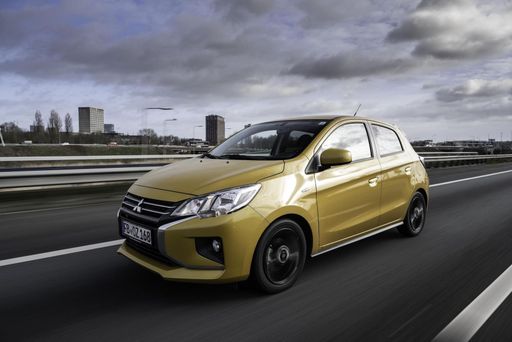
In the world of compact hatchbacks, two models consistently stand out from the crowd: the Mitsubishi Space Star and the Toyota Yaris. Both vehicles are known for their urban-friendly design, fuel efficiency, and compact dimensions, but how do they stack up against each other in a detailed comparison?
Space Star

Design and Dimensions

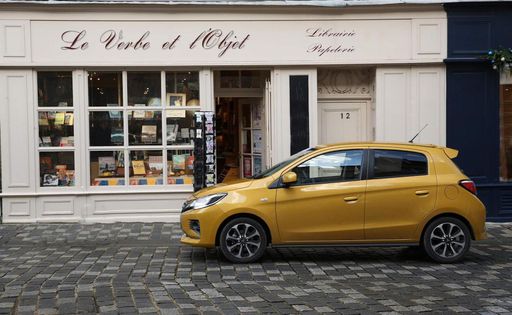
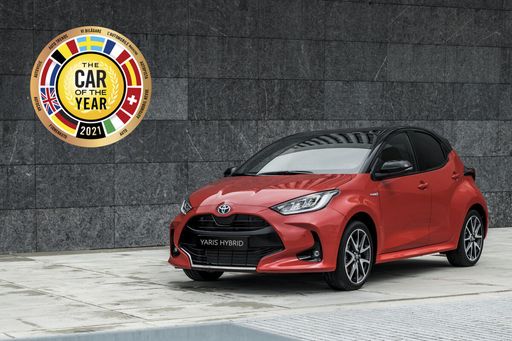
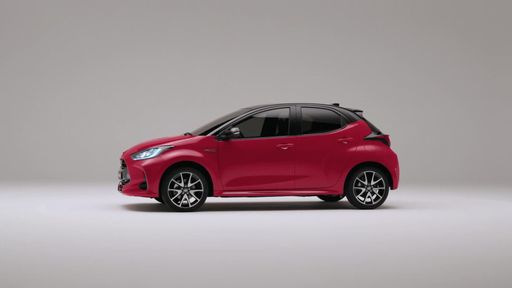
The Space Star and the Yaris are designed for maneuverability in tight urban environments. The Mitsubishi Space Star stretches to a length of 3845 mm, with a width of 1665 mm and a height of 1505 mm, making it an ideal candidate for city driving. The Toyota Yaris, slightly larger, measures between 3940 mm and 3995 mm in length, with a width ranging from 1745 mm to 1805 mm, and a height of 1500 mm to 1455 mm. This subtle increase in size for the Yaris affords it a sturdier road presence.

Yaris

Engine and Performance

The Mitsubishi Space Star offers a simple yet effective setup with a 1.2L petrol engine, producing 71 HP and a torque of 102 Nm. This three-cylinder engine supports a manual gearbox or a CVT automatic transmission, promising an average fuel consumption of around 5 L/100km. While not the quickest with a 0-100km/h time of 14.1 to 15.8 seconds, its modest curb weight ranging between 940 and 1009 kg helps it maintain decent agility for everyday needs.

On the other hand, the Toyota Yaris offers a more extensive engine lineup, including both petrol and full hybrid configurations. The Yaris offers more power, with horsepower ranging from 116 to 130 HP and up to 280 HP on the sportier models. This is paired with a torque output as high as 390 Nm, promising an exhilarating drive with 0-100km/h acceleration times between 5.5 and 9.7 seconds. Its hybrid variant impressively achieves an average consumption of just 3.8 L/100km, setting a high benchmark for efficiency.

Space Star

Technology and Features

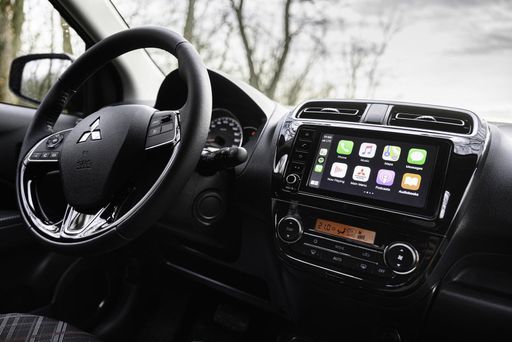
In terms of technology, both models boast a suite of features designed to enhance the driving experience. The Space Star is equipped with essentials like a 5-seat configuration, delivering practicality in a straightforward package. On the other hand, the Toyota Yaris includes a range of advanced features, with potential all-wheel drive options and a full suite of safety technologies, highlighting its appeal to tech-savvy buyers and families alike.

Environmental Impact

When considering environmental impact, the Yaris again takes the lead with its full hybrid model emitting as little as 87g/km in CO2, comfortably fitting within efficiency class B. The Space Star, while efficient for its class with emissions between 112 and 125g/km, sits within classes C and D. These figures make the Yaris a more appealing option for eco-conscious drivers who prioritize reducing their carbon footprint.

Cargo and Practicality

Both hatchbacks offer practical cargo spaces, though the Toyota Yaris pulls ahead with a trunk capacity of up to 286 liters, compared to the Space Star’s 235 to 209 liters. The Yaris’ additional payload capacity of up to 525 kg also enhances its versatility for daily transport tasks.

Conclusion: Which Hatchback Reigns Supreme?

The Mitsubishi Space Star and the Toyota Yaris both shine in the hatchback arena, each offering unique strengths. The Space Star’s affordable simplicity and practicality make it an ideal choice for drivers prioritizing straightforward functionality. However, for those seeking advanced tech, stronger performance, and superior efficiency, the Toyota Yaris edges ahead, particularly with its hybrid powertrain options.

Ultimately, the choice between the Space Star and the Yaris hinges on priorities: budget and basic functionality, or advanced features and higher efficiency. Both vehicles deliver on their promises, solidifying their positions as leaders in the compact hatchback market.

Here’s where it gets real: The technical differences in detail

Yaris

Costs and Efficiency:

When it comes to price and running costs, the biggest differences usually appear. This is often where you see which car fits your budget better in the long run.

Mitsubishi Space Star is clearly cheaper – starting at 11,600 £ , while the Toyota Yaris costs 21,900 £ . That’s a price difference of around 10,209 £.

Fuel consumption also shows a difference: the Toyota Yaris uses 3.8 L/100km and is markedly more efficient than the Mitsubishi Space Star with 4.9 L/100km. The difference is about 1.1 L/100km.

Space Star

Engine and Performance:

Power, torque and acceleration say a lot about how a car feels on the road. This is where you see which model delivers more driving dynamics.

When it comes to engine power, the Toyota Yaris offers considerably more power – delivering 280 HP compared to 71 HP. That’s roughly 209 HP more horsepower.

When accelerating from 0 to 100 km/h, the Toyota Yaris is substantially quicker – completing the sprint in 5.5 s, while the Mitsubishi Space Star takes 14.1 s. That’s about 8.6 s quicker.

There’s also a difference in torque: the Toyota Yaris delivers substantially more torque with 390 Nm compared to 102 Nm. That’s about 288 Nm more.

Yaris

Space and Everyday Use:

Cabin size, boot volume and payload all play a role in everyday practicality. Here, comfort and flexibility make the difference.

Both vehicles offer seating for 5 people.

In terms of curb weight, Mitsubishi Space Star is somewhat lighter – 940 kg compared to 1,090 kg. The difference is around 150 kg.

Looking at boot space, the Toyota Yaris offers slightly more boot space – 286 L compared to 235 L. That’s a difference of about 51 L.

When it comes to payload, the Toyota Yaris carries visibly more – 525 kg compared to 400 kg. That’s a difference of about 125 kg.

Who wins the race in the data check?

The Toyota Yaris holds a decisive overall lead in the objective data comparison.
This result only shows which model scores more points on paper – not which of the two cars feels right for you.

from £21,900
Yaris

Toyota Yaris

  • Engine Type Full Hybrid, Petrol
  • Transmission Automatic, Manuel
  • Drive Type Front-Wheel Drive, All-Wheel Drive
  • Power HP 116 - 280 HP
  • Consumption L/100km 3.8 - 8.7 L/100km
Toyota Yaris
Mitsubishi Space Star

Costs and Consumption

View detailed analysis

Engine and Performance

View detailed analysis

Dimensions and Body

View detailed analysis

Toyota Yaris

The Yaris is a compact hatchback that blends everyday practicality with Toyota’s long-standing reputation for reliability, making it easy to live with in city traffic. Its nimble handling and sensible interior make the Yaris a smart choice for drivers who want straightforward, fuss-free transport.

details

Mitsubishi Space Star

The Mitsubishi Space Star is a tidy, no-nonsense city car that squeezes surprising interior space into a compact, easy-to-park package. It's not a thrill-seeker's toy, but for buyers after low running costs, fuss-free reliability and sensible day-to-day practicality, it's a clever and cheerful choice that keeps your wallet and nerves happy.

details
Toyota Yaris
Mitsubishi Space Star

Costs and Consumption

Price
21,900 - 40,800 £
Price
11,600 - 18,700 £
Consumption L/100km
3.8 - 8.7 L/100km
Consumption L/100km
4.9 - 5.5 L/100km
Consumption kWh/100km
-
Consumption kWh/100km
-
Electric Range
-
Electric Range
-
Battery Capacity
-
Battery Capacity
-
co2
87 - 197 g/km
co2
112 - 125 g/km
Fuel tank capacity
-
Fuel tank capacity
35 L

Dimensions and Body

Body Type
Hatchback
Body Type
Hatchback
Seats
4 - 5
Seats
5
Doors
-
Doors
5
Curb weight
1,090 - 1,356 kg
Curb weight
940 - 1,011 kg
Trunk capacity
141 - 286 L
Trunk capacity
209 - 235 L
Length
-
Length
3,845 mm
Width
1,745 - 1,805 mm
Width
1,665 mm
Height
-
Height
1,505 mm
Max trunk capacity
-
Max trunk capacity
881 - 912 L
Payload
289 - 525 kg
Payload
359 - 400 kg

Engine and Performance

Engine Type
Full Hybrid, Petrol
Engine Type
Petrol
Transmission
Automatic, Manuel
Transmission
Manuel, Automatic
Transmission Detail
CVT, Manual Gearbox
Transmission Detail
Manual Gearbox, CVT
Drive Type
Front-Wheel Drive, All-Wheel Drive
Drive Type
Front-Wheel Drive
Power HP
116 - 280 HP
Power HP
71 HP
Acceleration 0-100km/h
5.5 - 9.7 s
Acceleration 0-100km/h
14.1 - 15.8 s
Max Speed
-
Max Speed
163 - 167 km/h
Torque
390 Nm
Torque
102 Nm
Number of Cylinders
3
Number of Cylinders
3
Power kW
85 - 206 kW
Power kW
52 kW
Engine capacity
1,490 - 1,618 cm3
Engine capacity
1,193 cm3

General

Model Year
2026
Model Year
2,020 - 2,022
CO2 Efficiency Class
B, G
CO2 Efficiency Class
C, D
Brand
Toyota
Brand
Mitsubishi
DriveDuel uses data analysis and artificial intelligence to evaluate vehicle data and create content. Content is regularly reviewed and improved. The displayed prices are estimates based on German list prices, adjusted to the respective country’s VAT. Country-specific registration taxes are not included. This information is not legally binding.