VS

Volvo EC40 vs Audi Q4 e-tron comparison

Compare performance (442 HP vs 340 HP), boot space and price (46,600 £ vs 39,600 £ ) at a glance. Find out which car is the better choice for you – Volvo EC40 or Audi Q4 e-tron?

Volvo EC40 vs Audi Q4 e-tron: Key differences

Volvo EC40

4.7 (1 Reviews)
rate
  • markedly more power
  • only slightly more electric range
  • a bit quicker 0–100 km/h

Audi Q4 e-tron

4.9 (2 Reviews)
rate
  • slightly cheaper
  • only slightly more efficient
  • barely lighter
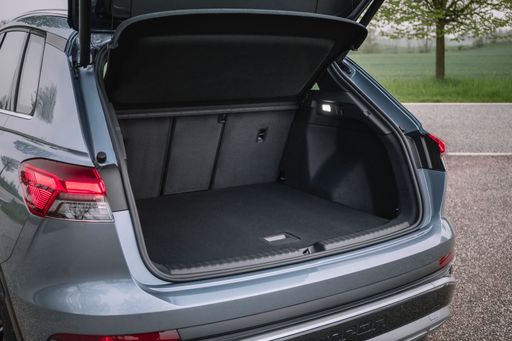
  • visibly more trunk space
EC40

An Electrifying Battle: Audi Q4 e-tron vs Volvo EC40

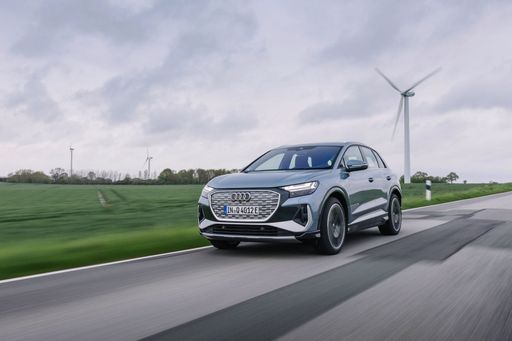
The rapidly evolving landscape of electric vehicles has introduced some remarkable contenders. In the spotlight today, we have the Audi Q4 e-tron and the Volvo EC40, two SUVs that promise innovation, performance, and sustainability. Let's delve into the technical prowess and unique features of these electrified warriors.
Q4 e-tron

Performance and Power

The Audi Q4 e-tron is available with a selection of power outputs ranging from 170 to a robust 340 horsepower, driven through either rear-wheel or all-wheel configurations. With an acceleration from 0 to 100 km/h in as fast as 5.4 seconds, it doesn’t compromise on exhilarating performance despite its substantial curb weight of up to 2235 kg. Audi’s transmission is a seamless automatic reduction gearbox, optimizing efficiency and drive smoothness.

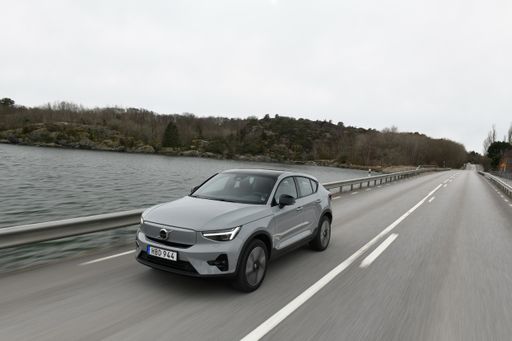
On the other hand, the Volvo EC40 comes equipped with power options between 238 and an impressive 408 horsepower. It achieves a slightly faster 0 to 100 km/h time of 4.6 seconds, closely competing with Audi’s performance credentials. Like the Audi, the EC40 employs an automatic reduction gearbox for its transmission duties, ensuring quiet and efficient cruising.

Electric Range and Efficiency

Efficiency is where these SUVs truly shine. The Q4 e-tron boasts various electric ranges depending on the configuration, stretching up to a commendable 554 km on a single charge, while consumption hovers around 15.9 to 17.4 kWh/100 km. The battery options include capacities of 52 and 77 kWh, accommodating diverse driving needs.

Competing closely, the Volvo EC40 offers an outstanding range, peaking at 584 km. It promises a competitive consumption figure between 16.2 and 17.3 kWh/100 km. The available battery capacities are 67 and 79 kWh, illustrating the EC40’s focus on long journeys and efficiency.

Design and Practicality

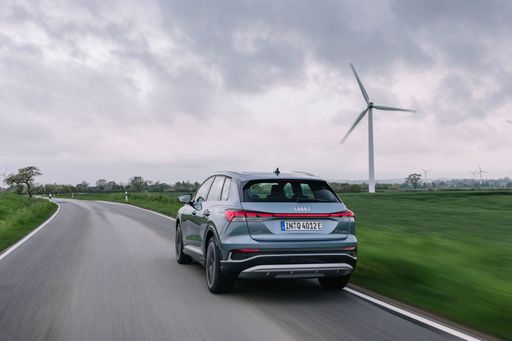
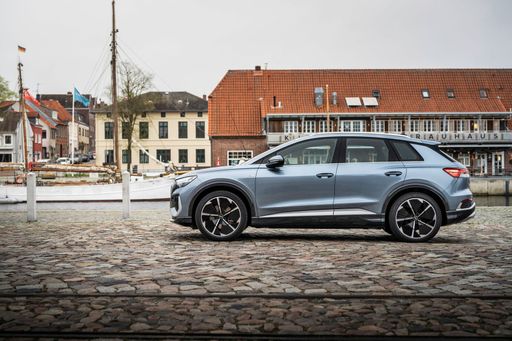
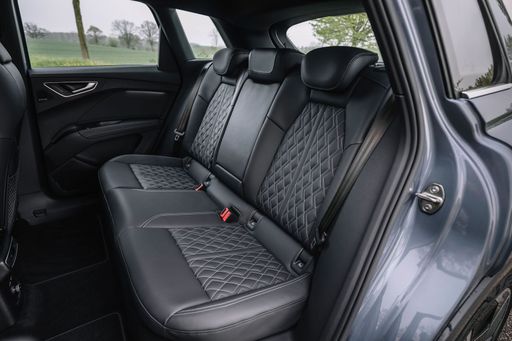
Design is a subjective realm, yet both brands offer their distinct aesthetic. The Audi Q4 e-tron, at a length of 4588 mm, exudes an assertive road presence, complemented by a spacious interior that accommodates five passengers comfortably. With a trunk capacity reaching up to 535 liters, practicality is as much a priority as style.

The Volvo EC40’s sleek silhouette, spanning a length of 4440 mm, also welcomes five occupants, though its trunk capacity is slightly smaller at 404 liters. Volvo's design language focuses on Nordic minimalism and sophistication, catering to those who desire a blend of form and function.

Conclusion: Which Wins the Electric Crown?

Both the Audi Q4 e-tron and Volvo EC40 bring their unique strengths to the table, appealing to different types of drivers. Audi offers a slightly longer range and a bigger boot space, making it a strong contender for longer trips and families who need extra space. Conversely, Volvo impresses with its slightly quicker acceleration and pioneering design.

Your choice between them might ultimately hinge on preference for brand aesthetics, specific range needs, or power desires. In the growing world of electric SUVs, both models epitomize the progress and potential of sustainable automotive innovation.

Here’s where it gets real: The technical differences in detail

EC40

Costs and Efficiency:

When it comes to price and running costs, the biggest differences usually appear. This is often where you see which car fits your budget better in the long run.

Audi Q4 e-tron is slightly cheaper – starting at 39,600 £ , while the Volvo EC40 costs 46,600 £ . That’s a price difference of around 7,063 £.

In terms of energy consumption, the Audi Q4 e-tron is only slightly more efficient: consuming 15.9 kWh/100km compared to 16.2 kWh/100km for the Volvo EC40. That’s a difference of about 0.3 kWh/100km.

As for electric range, the Volvo EC40 offers only slightly more range – reaching up to 584 km, about 30 km more than the Audi Q4 e-tron.

Q4 e-tron

Engine and Performance:

Power, torque and acceleration say a lot about how a car feels on the road. This is where you see which model delivers more driving dynamics.

When it comes to engine power, the Volvo EC40 offers markedly more power – delivering 442 HP compared to 340 HP. That’s roughly 102 HP more horsepower.

When accelerating from 0 to 100 km/h, the Volvo EC40 is a bit quicker – completing the sprint in 4.6 s, while the Audi Q4 e-tron takes 5.4 s. That’s about 0.8 s quicker.

There’s no difference in top speed – both reach 180 km/h.

There’s also a difference in torque: the Audi Q4 e-tron delivers only slightly more torque with 679 Nm compared to 670 Nm. That’s about 9 Nm more.

Space and Everyday Use:

Cabin size, boot volume and payload all play a role in everyday practicality. Here, comfort and flexibility make the difference.

Both vehicles offer seating for 5 people.

In terms of curb weight, Audi Q4 e-tron is barely lighter – 2,035 kg compared to 2,065 kg. The difference is around 30 kg.

Looking at boot space, the Audi Q4 e-tron offers visibly more boot space – 535 L compared to 404 L. That’s a difference of about 131 L.

For maximum load capacity, the Audi Q4 e-tron offers moderately more capacity – up to 1,490 L, about 294 L more than the Volvo EC40.

When it comes to payload, the Audi Q4 e-tron carries a bit more – 515 kg compared to 435 kg. That’s a difference of about 80 kg.

Who wins the race in the data check?

The Audi Q4 e-tron has only a minor advantage in the objective data comparison.
This result only shows which model scores more points on paper – not which of the two cars feels right for you.

from £39,600
Q4 e-tron

Audi Q4 e-tron

  • Engine Type : Electric
  • Transmission : Automatic
  • Drive Type : Rear-Wheel Drive, All-Wheel Drive
  • Power HP : 204 - 340 HP
  • Consumption kWh/100km : 15.9 - 17.4 kWh/100km
  • Electric Range : 406 - 554 km
Volvo EC40
Audi Q4 e-tron

Costs and Consumption

View detailed analysis

Engine and Performance

View detailed analysis

Dimensions and Body

View detailed analysis

Volvo EC40

The Volvo EC40 feels like a polished slice of Scandinavian calm on wheels, blending minimalist design with a cocoon-like interior that makes everyday driving surprisingly serene. It’s an electric compact that puts safety and comfort front and center, while still injecting enough personality and tech-savvy charm to keep city buyers smiling.

details

Audi Q4 e-tron

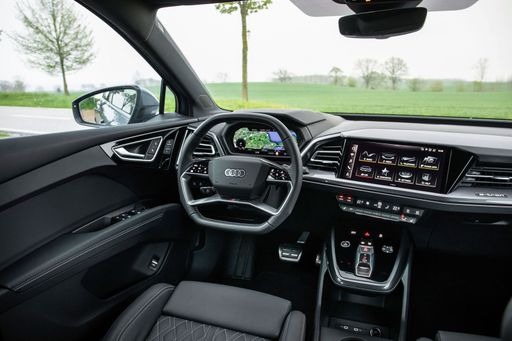
The Audi Q4 e-tron brings Audi polish into the electric crossover scene, pairing a sleek exterior with a refined, airy interior that makes everyday driving feel distinctly premium. It’s an easy-to-live-with EV that balances comfort and real-world usability with intuitive tech, making it a smart choice for buyers who want electric mobility without giving up Audi character — and yes, it still looks good in the driveway.

details
Volvo EC40
Audi Q4 e-tron

Costs and Consumption

Price
46,600 - 59,000 £
Price
39,600 - 58,800 £
Consumption L/100km
-
Consumption L/100km
-
Consumption kWh/100km
16.2 - 17.3 kWh/100km
Consumption kWh/100km
15.9 - 17.4 kWh/100km
Electric Range
488 - 584 km
Electric Range
406 - 554 km
Battery Capacity
67 - 79 kWh
Battery Capacity
77 kWh
co2
0 g/km
co2
0 g/km
Fuel tank capacity
-
Fuel tank capacity
-

Dimensions and Body

Body Type
SUV
Body Type
SUV
Seats
5
Seats
5
Doors
5
Doors
5
Curb weight
2,065 - 2,185 kg
Curb weight
2,035 - 2,235 kg
Trunk capacity
404 L
Trunk capacity
520 - 535 L
Length
4,440 mm
Length
4,588 mm
Width
1,873 mm
Width
1,865 mm
Height
1,591 mm
Height
1,614 - 1,632 mm
Max trunk capacity
1,196 L
Max trunk capacity
1,460 - 1,490 L
Payload
395 - 435 kg
Payload
505 - 515 kg

Engine and Performance

Engine Type
Electric
Engine Type
Electric
Transmission
Automatic
Transmission
Automatic
Transmission Detail
Reduction Gearbox
Transmission Detail
Reduction Gearbox
Drive Type
Rear-Wheel Drive, All-Wheel Drive
Drive Type
Rear-Wheel Drive, All-Wheel Drive
Power HP
238 - 442 HP
Power HP
204 - 340 HP
Acceleration 0-100km/h
4.6 - 7.3 s
Acceleration 0-100km/h
5.4 - 8.1 s
Max Speed
180 km/h
Max Speed
180 km/h
Torque
420 - 670 Nm
Torque
310 - 679 Nm
Number of Cylinders
-
Number of Cylinders
-
Power kW
175 - 325 kW
Power kW
150 - 250 kW
Engine capacity
-
Engine capacity
-

General

Model Year
2,024
Model Year
2,023 - 2,025
CO2 Efficiency Class
A
CO2 Efficiency Class
A
Brand
Volvo
Brand
Audi
DriveDuel uses data analysis and artificial intelligence to evaluate vehicle data and create content. Content is regularly reviewed and improved. The displayed prices are estimates based on German list prices, adjusted to the respective country’s VAT. Country-specific registration taxes are not included. This information is not legally binding.