VS

Volvo EX30 vs Jeep Avenger comparison

Compare performance (428 HP vs 156 HP), boot space and price (33,000 £ vs 22,500 £ ) at a glance. Find out which car is the better choice for you – Volvo EX30 or Jeep Avenger?

Volvo EX30 vs Jeep Avenger: Key differences

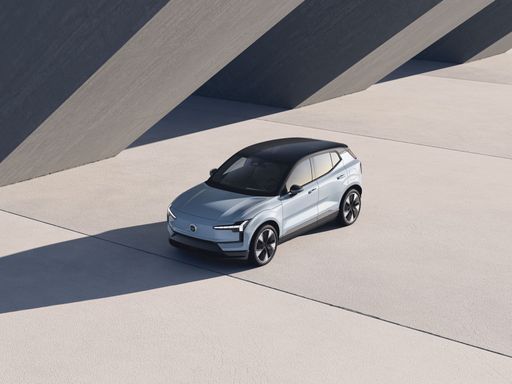
Volvo EX30

3.6 (5 Reviews)
rate
  • substantially more power
  • moderately more electric range
  • significantly quicker 0–100 km/h

Jeep Avenger

4.2 (4 Reviews)
rate
  • clearly cheaper
  • marginally more efficient
  • considerably lighter
  • a bit more trunk space

All details on performance, efficiency, range and trunk space can be found in the technical comparison below – including user reviews for both models.

EX30

Jeep Avenger vs. Volvo EX30: A Comprehensive Comparison

When it comes to the compact SUV market, two standout contending models are the Jeep Avenger and the Volvo EX30. Both vehicles offer unique designs, impressive technology, and advanced innovations in electric mobility. Let's dive into the details to see how they stack up against each other in various parameters.

Avenger

Powertrain and Performance

The Jeep Avenger offers versatility with a choice of powertrains, including electric, petrol mild hybrid, and petrol engines. The electric variant provides up to 156 HP and an impressive torque of 260 Nm. With 0-100 km/h acceleration times as quick as 9 seconds and a maximum speed of 150 km/h, the Avenger is no slouch. The vehicle is offered in both Front-Wheel Drive (FWD) and All-Wheel Drive (AWD) configurations, with a choice of manual or automatic transmission.

On the other hand, the Volvo EX30 is exclusively electric, boasting a powerful setup with options reaching up to 428 HP and torque peaking at an impressive 543 Nm, delivering a thrilling 0-100 km/h time in as little as 3.6 seconds. The EX30 utilizes a reduction gearbox and offers both Rear-Wheel Drive (RWD) and AWD, ensuring excellent handling and performance across various terrains.

EX30

Battery and Range

In terms of battery capacity, the Jeep Avenger comes with a 51 kWh battery that enables an electric range of up to 400 km. Its efficient consumption of 15.4 kWh/100 km positions it as a practical choice for urban commuting.

Conversely, the Volvo EX30 offers two battery options: a 49 kWh version for a range of up to 339 km and a larger 65 kWh option that extends the range to a remarkable 476 km. However, it is worth noting that it has a higher consumption rate, measuring between 17 to 18.7 kWh/100 km, depending on the variant. This makes the EX30 a suitable option for drivers looking for extended journeys without frequent recharging stops.

Avenger

Dimensions and Cargo Space

In terms of size, the Jeep Avenger measures 4084 mm in length, 1776 mm in width, and 1528 mm in height, providing a compact yet spacious feel for urban driving. Its trunk capacity is generous, ranging from 325 to 380 liters, making it practical for daily chores and weekend getaways.

The Volvo EX30 is slightly larger, measuring 4233 mm in length and 1837 mm in width, with heights varying from 1549 to 1567 mm. However, its trunk capacity at 318 liters is narrower than the Avenger's options. This might be a consideration for those prioritizing cargo space over a slightly larger overall dimension.

EX30

Interior and Technology

Beneath the surface, both models showcase impressive technology and safety features. The Jeep Avenger comes equipped with an intuitive infotainment system, a suite of driver assistance technologies, and comfortable seating for five, making it an excellent choice for families.

In contrast, the Volvo EX30 leans more towards minimalist Scandinavian design, emphasizing user-friendly interfaces and high-quality materials. Volvo's commitment to safety is apparent, with numerous technological innovations that help ensure passenger protection during any drive.

Avenger

Environmental Considerations

Both the Jeep Avenger and Volvo EX30 are designed with sustainability in mind. The Avenger’s electric variant emits zero CO2, while even its petrol options present competitive emissions ratings, with the lowest at 111 g/km. The EX30 also proudly boasts zero emissions, aligning with Volvo’s broader green initiatives.

EX30

Conclusion: Which SUV Reigns Supreme?

Choosing between the Jeep Avenger and Volvo EX30 ultimately comes down to personal preference and specific driving needs. The Avenger is ideal for those who appreciate varied powertrain options, practicality, and ample cargo space. However, for drivers prioritizing performance, electric range, and advanced technology, the Volvo EX30 stands out as a formidable contender.

Both SUVs represent a shift towards more sustainable and efficient driving solutions, showcasing what the future of the automotive industry holds. Whichever you choose, you're investing in a vehicle that embodies innovation and forward-thinking design.

Here’s where it gets real: The technical differences in detail

EX30

Costs and Efficiency:

Price and efficiency are often the first things buyers look at. Here it becomes clear which model has the long-term edge – whether at the pump, the plug, or in purchase price.

Jeep Avenger is clearly cheaper – starting at 22,500 £ , while the Volvo EX30 costs 33,000 £ . That’s a price difference of around 10,449 £.

In terms of energy consumption, the Jeep Avenger is marginally more efficient: consuming 15.5 kWh/100km compared to 17 kWh/100km for the Volvo EX30. That’s a difference of about 1.5 kWh/100km.

As for electric range, the Volvo EX30 offers moderately more range – reaching up to 476 km, about 76 km more than the Jeep Avenger.

Avenger

Engine and Performance:

Power, torque and acceleration are the classic benchmarks for car enthusiasts – and here, some clear differences start to show.

When it comes to engine power, the Volvo EX30 offers substantially more power – delivering 428 HP compared to 156 HP. That’s roughly 272 HP more horsepower.

When accelerating from 0 to 100 km/h, the Volvo EX30 is significantly quicker – completing the sprint in 3.6 s, while the Jeep Avenger takes 9 s. That’s about 5.4 s quicker.

Looking at top speed, the Jeep Avenger is very slightly faster – reaching 194 km/h, while the Volvo EX30 tops out at 180 km/h. The difference is around 14 km/h.

There’s also a difference in torque: the Volvo EX30 delivers substantially more torque with 543 Nm compared to 260 Nm. That’s about 283 Nm more.

EX30

Space and Everyday Use:

Cabin size, boot volume and payload all play a role in everyday practicality. Here, comfort and flexibility make the difference.

Both vehicles offer seating for 5 people.

In terms of curb weight, Jeep Avenger is considerably lighter – 1,180 kg compared to 1,840 kg. The difference is around 660 kg.

Looking at boot space, the Jeep Avenger offers a bit more boot space – 380 L compared to 318 L. That’s a difference of about 62 L.

For maximum load capacity, the Jeep Avenger offers markedly more capacity – up to 1,277 L, about 277 L more than the Volvo EX30.

When it comes to payload, the Jeep Avenger carries clearly more – 502 kg compared to 390 kg. That’s a difference of about 112 kg.

Who wins the race in the data check?

The Volvo EX30 stands well ahead of its rival in the objective data comparison.
This result only shows which model scores more points on paper – not which of the two cars feels right for you.

from £33,000
EX30

Volvo EX30

  • Engine Type : Electric
  • Transmission : Automatic
  • Drive Type : Rear-Wheel Drive, All-Wheel Drive
  • Power HP : 272 - 428 HP
  • Consumption kWh/100km : 17 - 18.3 kWh/100km
  • Electric Range : 339 - 476 km
Volvo EX30
Jeep Avenger

Costs and Consumption

View detailed analysis

Engine and Performance

View detailed analysis

Dimensions and Body

View detailed analysis

Volvo EX30

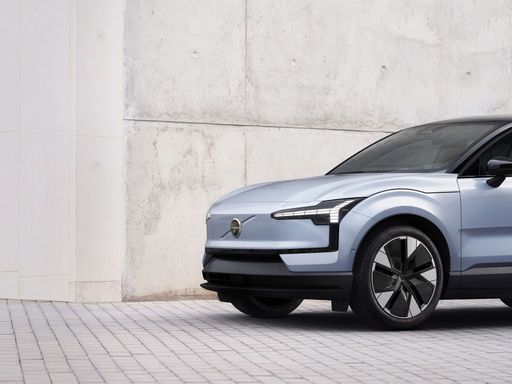
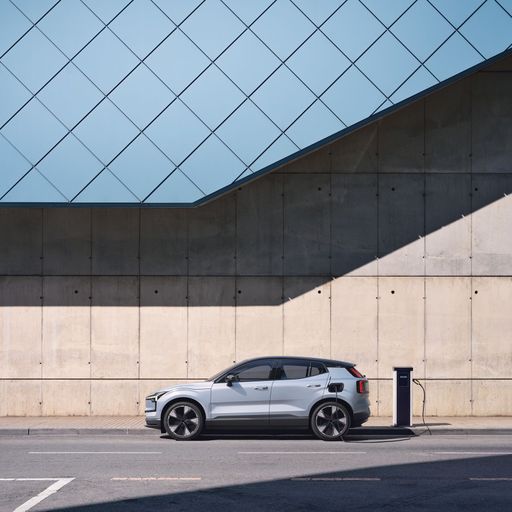
The Volvo EX30 arrives as a compact electric with crisp Scandinavian design and a cheeky personality, proving you can be serious about safety and still enjoy a grin on your commute. Its cabin is cleverly packaged and delightfully easy to live with, offering smart tech and practical touches that make it feel like a grown-up's city car with a sense of fun.

details

Jeep Avenger

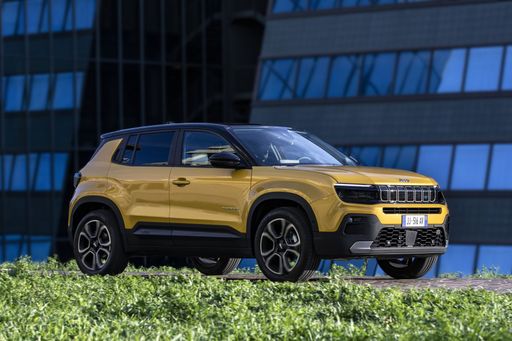
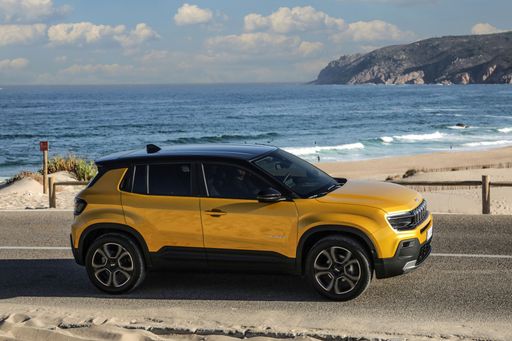
The Jeep Avenger shrinks Jeep's boxy, adventurous styling into a city-friendly electric crossover that looks just as at home on tight streets as it does on muddy weekend lanes. It's a savvy pick for drivers who want go-anywhere attitude without the truck-size ego — practical inside, lively around town and ready to tackle a bit of rough stuff when the mood strikes.

details
Volvo EX30
Jeep Avenger

Costs and Consumption

Price
33,000 - 49,100 £
Price
22,500 - 36,900 £
Consumption L/100km
-
Consumption L/100km
4.9 - 5.7 L/100km
Consumption kWh/100km
17 - 18.3 kWh/100km
Consumption kWh/100km
15.5 kWh/100km
Electric Range
339 - 476 km
Electric Range
400 km
Battery Capacity
49 - 65 kWh
Battery Capacity
51 kWh
co2
0 g/km
co2
0 - 129 g/km
Fuel tank capacity
-
Fuel tank capacity
44 L

Dimensions and Body

Body Type
SUV
Body Type
SUV
Seats
5
Seats
5
Doors
5
Doors
5
Curb weight
1,840 - 1,960 kg
Curb weight
1,180 - 1,520 kg
Trunk capacity
318 L
Trunk capacity
325 - 380 L
Length
4,233 mm
Length
4,084 - 4,088 mm
Width
1,838 mm
Width
1,776 mm
Height
1,550 mm
Height
1,527 - 1,541 mm
Max trunk capacity
1,000 L
Max trunk capacity
1,218 - 1,277 L
Payload
370 - 390 kg
Payload
494 - 502 kg

Engine and Performance

Engine Type
Electric
Engine Type
Electric, Petrol MHEV, Petrol
Transmission
Automatic
Transmission
Automatic, Manuel
Transmission Detail
Reduction Gearbox
Transmission Detail
Reduction Gearbox, Dual-Clutch Automatic, Manual Gearbox
Drive Type
Rear-Wheel Drive, All-Wheel Drive
Drive Type
Front-Wheel Drive, All-Wheel Drive
Power HP
272 - 428 HP
Power HP
100 - 156 HP
Acceleration 0-100km/h
3.6 - 5.7 s
Acceleration 0-100km/h
9 - 10.6 s
Max Speed
180 km/h
Max Speed
150 - 194 km/h
Torque
343 - 543 Nm
Torque
205 - 260 Nm
Number of Cylinders
-
Number of Cylinders
3
Power kW
200 - 315 kW
Power kW
74 - 115 kW
Engine capacity
-
Engine capacity
1,199 cm3

General

Model Year
2,024 - 2,025
Model Year
2,023 - 2,026
CO2 Efficiency Class
A
CO2 Efficiency Class
A, C, D
Brand
Volvo
Brand
Jeep
DriveDuel uses data analysis and artificial intelligence to evaluate vehicle data and create content. Content is regularly reviewed and improved. The displayed prices are estimates based on German list prices, adjusted to the respective country’s VAT. Country-specific registration taxes are not included. This information is not legally binding.