VS

Volvo XC40 vs Audi Q5 comparison

Compare performance (197 HP vs 367 HP), boot space and price (36,800 £ vs 46,400 £ ) at a glance. Find out which car is the better choice for you – Volvo XC40 or Audi Q5?

Volvo XC40 vs Audi Q5: Key differences

Volvo XC40

5 (4 Reviews)
rate
  • visibly cheaper
  • a bit lighter

Audi Q5

4.4 (5 Reviews)
rate
  • clearly more power
  • considerably more efficient
  • clearly quicker 0–100 km/h
  • a bit more trunk space

All details on performance, efficiency, range and trunk space can be found in the technical comparison below – including user reviews for both models.

XC40

Comparing Luxury Compact SUVs: Audi Q5 vs Volvo XC40

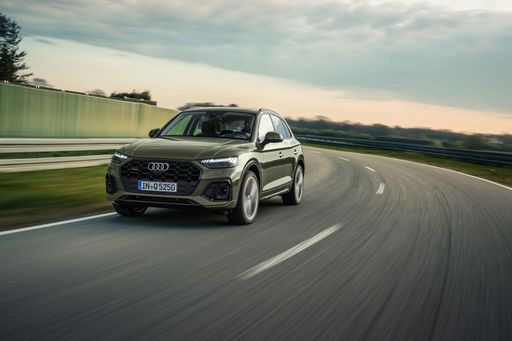
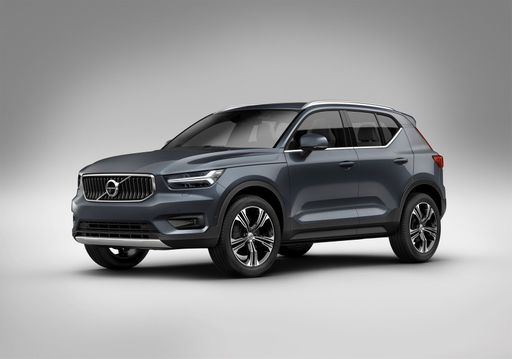
In the competitive landscape of luxury compact SUVs, the Audi Q5 and Volvo XC40 stand out as two premium choices. Both vehicles offer a unique blend of performance, technology, and comfort, appealing to discerning drivers. This comparison will delve into technical specifications and innovations that set these two SUVs apart, helping potential buyers make an informed decision.
Q5

Performance and Engine Options

The Audi Q5 boasts a diverse engine lineup that includes diesel MHEV, petrol MHEV, and plug-in hybrid options. Engine performance ranges from 163 hp to a powerful 367 hp, allowing for a generous choice depending on driving preferences. With a quick acceleration from 0 to 100 km/h in as low as 4.5 seconds, the Q5 demonstrates raw power paired with efficiency, delivering a consumption rate as low as 5.6 L/100km.

In contrast, the Volvo XC40 focuses solely on petrol MHEV powertrains with outputs ranging from 163 hp to 197 hp. With a slightly slower acceleration time of 7.6 seconds for the more powerful variant, the XC40 achieves a commendable fuel consumption of around 6.5 L/100km. Despite being less potent than the Q5, the XC40’s performance is robust, making it suitable for urban and rural driving alike.

XC40

Transmission and Drive Type

Both SUVs feature automatic transmission systems with dual-clutch technology, ensuring smooth and responsive gear shifts. The Audi Q5 offers versatility with available all-wheel drive (AWD) and front-wheel drive configurations, catering to diverse driving conditions. The XC40, however, is limited to front-wheel drive, which might restrict its off-road capabilities compared to the more agile Q5.

Q5

Dimensions and Comfort

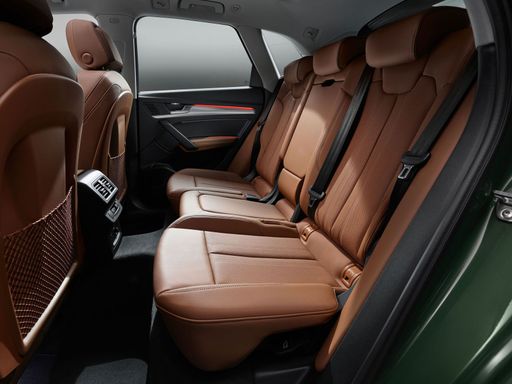
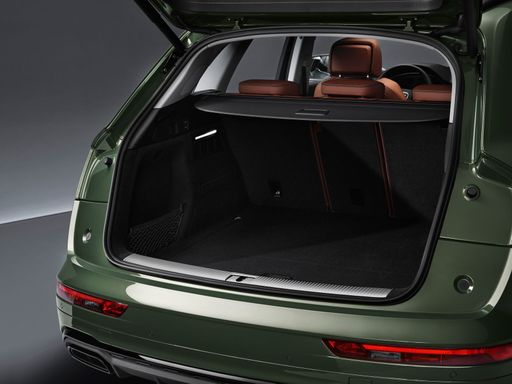
When it comes to dimensions, the Audi Q5 is notably larger, measuring 4717 mm in length and 1900 mm in width, while the Volvo XC40 is more compact at 4425 mm in length and 1863 mm wide. This translates into a more spacious interior and trunk capacity in the Q5, offering up to 520 liters compared to XC40’s 452 liters. Both models comfortably accommodate five passengers, but the Q5 allows for more legroom and cargo space, making it ideal for family outings and longer trips.

XC40

Technological Innovations

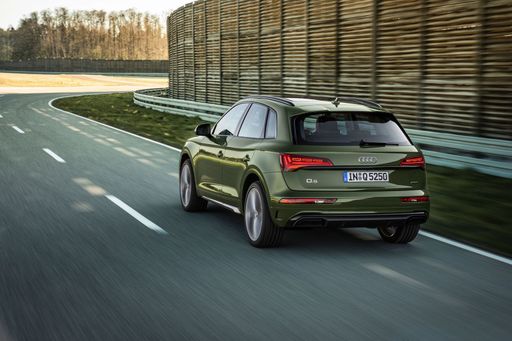
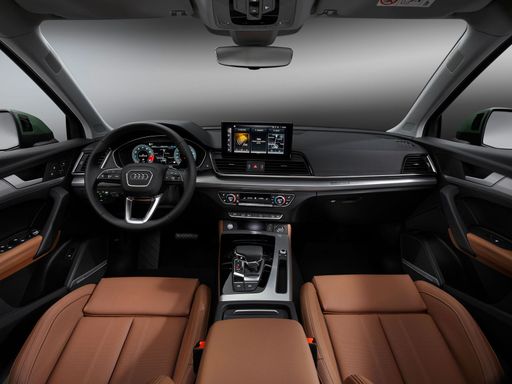
Two of the most important aspects in the modern SUV market are safety and technology integration. The Q5 showcases cutting-edge technology with its Virtual Cockpit, which replaces traditional gauge displays with a fully digital interface that offers navigation, media, and driver assistance features directly within the driver’s line of sight. Furthermore, the Audi connect services offer enhanced connectivity, delivering real-time information to drivers.

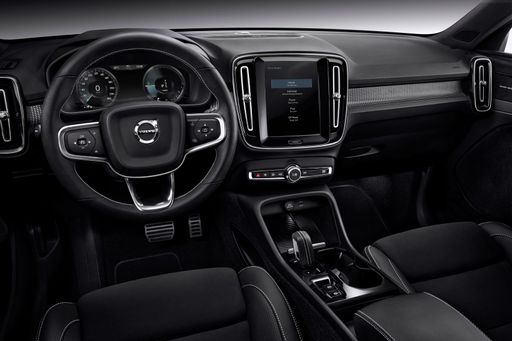
The Volvo XC40 leans heavily on its Scandinavian roots, marrying safety with practicality. The XC40 is equipped with advanced safety systems like Pilot Assist and City Safety, which include features such as lane-keeping assistance and automatic emergency braking. Additionally, the infotainment system is built around Google’s Android platform, delivering user-friendly technology that seamlessly integrates with smartphones.

Q5

Environmental Considerations

When examining CO2 emissions, the XC40 has an edge with lower emissions ranging from 147 to 148 g/km, affirming Volvo's commitment to environmental sustainability. The Q5, while more powerful, emits between 146 to 213 g/km depending on the specific engine variant chosen. For eco-conscious buyers, both brands offer hybrid solutions that lower the carbon footprint while maintaining performance.

XC40

Conclusion: Which One Reigns Supreme?

The decision between the Audi Q5 and Volvo XC40 fundamentally rests on individual preferences. The Q5 shines with its superior engine options, spacious interior, and advanced technological innovations, making it the better choice for those prioritizing performance and space. Meanwhile, the XC40 stands out for buyers seeking a compact SUV that emphasizes safety, environmental considerations, and a user-friendly tech interface.

Ultimately, both vehicles present unique advantages that can cater to varying lifestyles and driving needs, ensuring that shoppers can find a premium SUV that perfectly fits their requirements.

Here’s where it gets real: The technical differences in detail

XC40

Costs and Efficiency:

When it comes to price and running costs, the biggest differences usually appear. This is often where you see which car fits your budget better in the long run.

Volvo XC40 is visibly cheaper – starting at 36,800 £ , while the Audi Q5 costs 46,400 £ . That’s a price difference of around 9,609 £.

Fuel consumption also shows a difference: the Audi Q5 uses 2.5 L/100km and is considerably more efficient than the Volvo XC40 with 6.5 L/100km. The difference is about 4 L/100km.

Q5

Engine and Performance:

Under the bonnet, it becomes clear which model is tuned for sportiness and which one takes the lead when you hit the accelerator.

When it comes to engine power, the Audi Q5 offers clearly more power – delivering 367 HP compared to 197 HP. That’s roughly 170 HP more horsepower.

When accelerating from 0 to 100 km/h, the Audi Q5 is clearly quicker – completing the sprint in 4.5 s, while the Volvo XC40 takes 7.6 s. That’s about 3.1 s quicker.

There’s also a difference in torque: the Audi Q5 delivers significantly more torque with 580 Nm compared to 300 Nm. That’s about 280 Nm more.

XC40

Space and Everyday Use:

Whether family car or daily driver – which one offers more room, flexibility and comfort?

Both vehicles offer seating for 5 people.

In terms of curb weight, Volvo XC40 is a bit lighter – 1,688 kg compared to 1,910 kg. The difference is around 222 kg.

Looking at boot space, the Audi Q5 offers a bit more boot space – 520 L compared to 452 L. That’s a difference of about 68 L.

When it comes to payload, the Audi Q5 carries only slightly more – 565 kg compared to 532 kg. That’s a difference of about 33 kg.

Who wins the race in the data check?

The Audi Q5 is clearly superior overall in the objective data comparison.
This result only shows which model scores more points on paper – not which of the two cars feels right for you.

from £46,400
Q5

Audi Q5

  • Engine Type : Plugin Hybrid, Petrol MHEV, Diesel MHEV
  • Transmission : Automatic
  • Drive Type : All-Wheel Drive, Front-Wheel Drive
  • Power HP : 204 - 367 HP
  • Consumption L/100km : 2.5 - 8.3 L/100km
  • Electric Range : 92 - 100 km
Volvo XC40
Audi Q5

Costs and Consumption

View detailed analysis

Engine and Performance

View detailed analysis

Dimensions and Body

View detailed analysis

Volvo XC40

The Volvo XC40 wraps Scandinavian minimalism into a compact, city-ready SUV with a premium cabin that feels both practical and grown-up. It will suit buyers who prize safety, clever storage and a composed ride, proving that small dimensions don't mean small personality.

details

Audi Q5

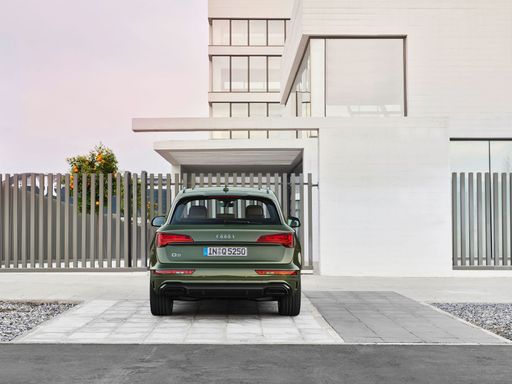
The Audi Q5 feels like the sensible luxury choice — polished cabin materials, a calm ride and enough tech to keep commuters and weekend adventurers equally pleased. It won't shout for attention but will quietly check the boxes for buyers who want refinement, space and everyday usability with a dash of Audi charisma.

details
Volvo XC40
Audi Q5

Costs and Consumption

Price
36,800 - 47,200 £
Price
46,400 - 79,600 £
Consumption L/100km
6.5 L/100km
Consumption L/100km
2.5 - 8.3 L/100km
Consumption kWh/100km
-
Consumption kWh/100km
-
Electric Range
-
Electric Range
92 - 100 km
Battery Capacity
-
Battery Capacity
-
co2
147 - 148 g/km
co2
56 - 189 g/km
Fuel tank capacity
54 L
Fuel tank capacity
-

Dimensions and Body

Body Type
SUV
Body Type
SUV
Seats
5
Seats
5
Doors
5
Doors
-
Curb weight
1,688 kg
Curb weight
1,910 - 2,245 kg
Trunk capacity
452 L
Trunk capacity
433 - 520 L
Length
4,425 mm
Length
-
Width
1,863 mm
Width
1,900 mm
Height
1,652 mm
Height
-
Max trunk capacity
1,328 L
Max trunk capacity
-
Payload
532 kg
Payload
490 - 565 kg

Engine and Performance

Engine Type
Petrol MHEV
Engine Type
Plugin Hybrid, Petrol MHEV, Diesel MHEV
Transmission
Automatic
Transmission
Automatic
Transmission Detail
Dual-Clutch Automatic
Transmission Detail
Dual-Clutch Automatic
Drive Type
Front-Wheel Drive
Drive Type
All-Wheel Drive, Front-Wheel Drive
Power HP
163 - 197 HP
Power HP
204 - 367 HP
Acceleration 0-100km/h
7.6 - 8.6 s
Acceleration 0-100km/h
4.5 - 8.6 s
Max Speed
180 km/h
Max Speed
-
Torque
265 - 300 Nm
Torque
340 - 580 Nm
Number of Cylinders
4
Number of Cylinders
4 - 6
Power kW
120 - 145 kW
Power kW
150 - 270 kW
Engine capacity
1,969 cm3
Engine capacity
1,968 - 2,995 cm3

General

Model Year
2,024
Model Year
2,025
CO2 Efficiency Class
E
CO2 Efficiency Class
B, E, F, G
Brand
Volvo
Brand
Audi
DriveDuel uses data analysis and artificial intelligence to evaluate vehicle data and create content. Content is regularly reviewed and improved. The displayed prices are estimates based on German list prices, adjusted to the respective country’s VAT. Country-specific registration taxes are not included. This information is not legally binding.