VS

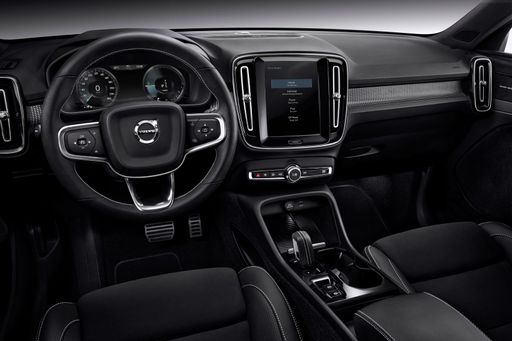
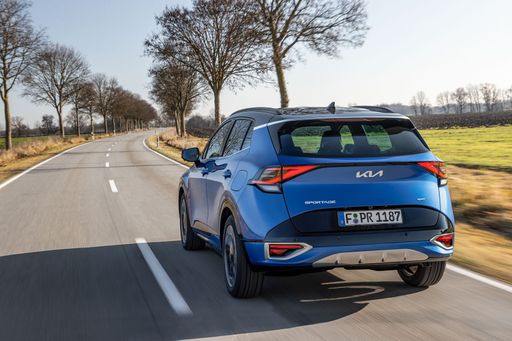
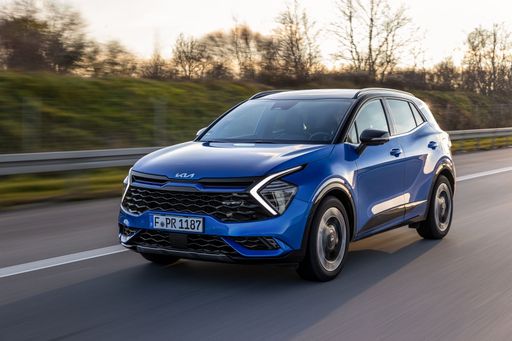
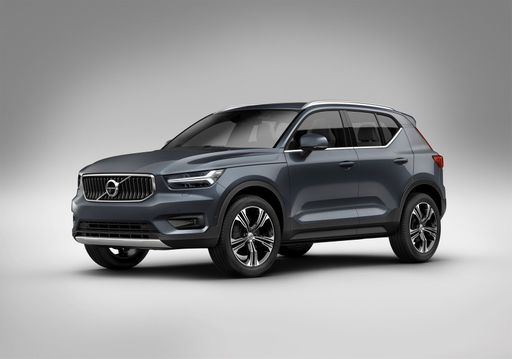
Volvo XC40 vs Kia Sportage comparison

Compare performance (197 HP vs 288 HP), boot space and price (41,900 £ vs 29,100 £ ) at a glance. Find out which car is the better choice for you – Volvo XC40 or Kia Sportage?

Volvo XC40 vs Kia Sportage: Key differences

Volvo XC40

4.9 (8 Reviews)
rate
details

Kia Sportage

5 (3 Reviews)
rate
  • substantially cheaper
  • visibly more power
  • significantly more efficient
  • barely quicker 0–100 km/h
  • marginally lighter
details

All details on performance, efficiency, range and trunk space can be found in the technical comparison below – including user reviews for both models.

By Achim Sedelmaier

XC40

Head-to-head: Kia Sportage VS Volvo XC40 — who suits you?

The Kia Sportage and the Volvo XC40 are two compact SUVs aimed at buyers who want comfort and practicality with different emphases. The Kia Sportage leans into roomy practicality and long‑distance calm, while the Volvo XC40 prioritises a premium, safety‑led feel and everyday composure. If you care most about rear‑seat space and flexible loading the Sportage immediately stands out; if you prize a tidy, Scandinavian cabin and clever storage tricks the XC40 feels more considered. This comparison looks beyond badges to how each car behaves in daily life, city running and on long trips so you can match strengths to your priorities.
Sportage

Character and driving dynamics

The Kia Sportage drives with a more assertive character when you ask for performance, whereas the Volvo XC40 prefers smoothness and predictability. The Kia Sportage rewards a firmer right foot with a sense of shove and a planted feel, but it can sound and feel busier under heavy load. The Volvo XC40 trades that shove for a composed, more relaxed delivery that makes it easier to cruise without fuss. Drivers who want a car that feels lively will lean toward the Sportage, while those who want easy, confidence‑inspiring progress will prefer the XC40.

XC40

Comfort and long‑distance behavior

Both cars are designed for motorway miles, but they achieve comfort in different ways: the Kia Sportage soaks up distance with a spacious rear and supportive seats, and the Volvo XC40 delivers a quieter, more floating sensation. The Sportage’s rear passengers benefit from extra legroom and reclining rearbacks that make long journeys less of a chore, while the XC40’s refinement and seat ergonomics create a calm cocoon for the front occupants. On rougher surfaces the Sportage can become firmer with larger wheels, whereas the XC40 keeps a consistently composed ride. For regular long trips with passengers and luggage the Sportage’s space gives it an edge; for solo or two‑up comfortable cruising the XC40’s serenity is hard to beat.

Sportage

Usability and family practicality

Usability is where the Kia Sportage most clearly differentiates itself from the Volvo XC40: the Sportage prioritises flexible layouts and a genuinely large boot, while the XC40 focuses on well‑thought‑out, everyday details. The Sportage’s split rear seats and double‑floor options make loading awkward items and arranging child seats simpler, which is a real boon for families. The Volvo XC40 answers with smart door pockets, hooks and a folding floor that keep groceries and small items tidy, but it can feel tighter when you need to carry bulky kit. Families needing maximum usable space will gravitate to the Sportage, whereas smaller households who value organisation and clever touches will appreciate the XC40.

XC40

Cabin feel, perceived quality and infotainment

The Volvo XC40 projects a more premium cabin atmosphere with clean lines and quality materials, while the Kia Sportage offers a roomier, functional interior with reassuringly solid finishes and a longer warranty package. The XC40’s Scandinavian simplicity feels intentionally restrained and gives a sense of quality to everyday interactions, though its screen and mirror connectivity choices can frustrate tech‑savvy users. The Sportage places more emphasis on practicality and visible features, but some touch‑sensitive controls ask for a bit of learning. If tactile refinement and a premium badge matter more, the XC40 wins on feel; if usable space, feature content and long‑term value are higher on your list, the Sportage will feel smarter in daily use.

Sportage

Buyer fit and which car to consider next

Choosing between the Kia Sportage and the Volvo XC40 comes down to a simple trade‑off: maximum usable space and long‑distance practicality with the Sportage versus a slightly more premium, safety‑centred and composed everyday experience with the XC40. The Kia Sportage suits families who regularly carry passengers or bulky loads and who value warranty and equipment for the money, while the Volvo XC40 suits buyers who prioritise cabin refinement, easy city handling and a calm driving experience. Both cars are comfortable and safe, but each fits different lifestyles — the Sportage for space‑first buyers, the XC40 for those seeking polished simplicity. The technical comparison that follows will help you pin down which drivetrain, boot layout and feature set best match the choice you’re leaning toward.

Here’s where it gets real: The technical differences in detail

XC40

Costs and Efficiency:

Price and efficiency are often the first things buyers look at. Here it becomes clear which model has the long-term edge – whether at the pump, the plug, or in purchase price.

Kia Sportage is substantially cheaper – starting at 29,100 £ , while the Volvo XC40 costs 41,900 £ . That’s a price difference of around 12,771 £.

Fuel consumption also shows a difference: the Kia Sportage uses 2.9 L/100km and is significantly more efficient than the Volvo XC40 with 6.5 L/100km. The difference is about 3.6 L/100km.

Sportage

Engine and Performance:

Power, torque and acceleration say a lot about how a car feels on the road. This is where you see which model delivers more driving dynamics.

When it comes to engine power, the Kia Sportage offers visibly more power – delivering 288 HP compared to 197 HP. That’s roughly 91 HP more horsepower.

When accelerating from 0 to 100 km/h, the Kia Sportage is barely quicker – completing the sprint in 7.5 s, while the Volvo XC40 takes 7.6 s. That’s about 0.1 s quicker.

There’s also a difference in torque: the Kia Sportage delivers markedly more torque with 380 Nm compared to 300 Nm. That’s about 80 Nm more.

XC40

Space and Everyday Use:

Beyond pure performance, interior space and usability matter most in daily life. This is where you see which car is more practical and versatile.

Both vehicles offer seating for 5 people.

In terms of curb weight, Kia Sportage is marginally lighter – 1,552 kg compared to 1,688 kg. The difference is around 136 kg.

When it comes to payload, the Kia Sportage carries only slightly more – 580 kg compared to 532 kg. That’s a difference of about 48 kg.

Who wins the race in the data check?

The Kia Sportage holds a decisive overall lead in the objective data comparison.
This result only shows which model scores more points on paper – not which of the two cars feels right for you.

from £29,100
Sportage

Kia Sportage

  • Engine Type Petrol, Full Hybrid, Diesel MHEV, Plugin Hybrid
  • Transmission Manuel, Automatic
  • Drive Type Front-Wheel Drive, All-Wheel Drive
  • Power HP 136 - 288 HP
  • Consumption L/100km 2.9 - 7.8 L/100km
  • Electric Range 63 - 66 km
Volvo XC40
Kia Sportage

Costs and Consumption

View detailed analysis

Engine and Performance

View detailed analysis

Dimensions and Body

View detailed analysis

Volvo XC40

The Volvo XC40 blends Scandinavian design with practical versatility, offering a compact luxury crossover that feels composed and easy to live with. It’s refined and focused on safety with a high-quality interior, making it a smart choice for daily city driving and weekend escapes.

details

Kia Sportage

The Kia Sportage is a roomy, well-equipped compact SUV that balances comfort and practicality for daily driving. It delivers a modern interior, composed ride, and strong value for buyers who want versatility without fuss.

details
Volvo XC40
Kia Sportage

Costs and Consumption

Price
41,900 - 46,100 £
Price
29,100 - 47,100 £
Consumption L/100km
6.5 L/100km
Consumption L/100km
2.9 - 7.8 L/100km
Consumption kWh/100km
-
Consumption kWh/100km
-
Electric Range
-
Electric Range
63 - 66 km
Battery Capacity
-
Battery Capacity
-
co2
148 g/km
co2
67 - 177 g/km
Fuel tank capacity
-
Fuel tank capacity
-

Dimensions and Body

Body Type
SUV
Body Type
SUV
Seats
5
Seats
5
Doors
-
Doors
-
Curb weight
1,688 kg
Curb weight
1,552 - 1,896 kg
Trunk capacity
-
Trunk capacity
526 - 587 L
Length
-
Length
-
Width
1,863 mm
Width
1,865 mm
Height
-
Height
-
Max trunk capacity
-
Max trunk capacity
-
Payload
532 kg
Payload
533 - 580 kg

Engine and Performance

Engine Type
Petrol MHEV
Engine Type
Petrol, Full Hybrid, Diesel MHEV, Plugin Hybrid
Transmission
Automatic
Transmission
Manuel, Automatic
Transmission Detail
Dual-Clutch Automatic
Transmission Detail
Manual Gearbox, Dual-Clutch Automatic, Automatic Gearbox
Drive Type
Front-Wheel Drive
Drive Type
Front-Wheel Drive, All-Wheel Drive
Power HP
163 - 197 HP
Power HP
136 - 288 HP
Acceleration 0-100km/h
7.6 - 8.6 s
Acceleration 0-100km/h
7.5 - 11.6 s
Max Speed
-
Max Speed
-
Torque
265 - 300 Nm
Torque
250 - 380 Nm
Number of Cylinders
4
Number of Cylinders
4
Power kW
120 - 145 kW
Power kW
100 - 212 kW
Engine capacity
1,969 cm3
Engine capacity
1,598 cm3

General

Model Year
2026
Model Year
2,025 - 2,026
CO2 Efficiency Class
E
CO2 Efficiency Class
F, D, E, G, B
Brand
Volvo
Brand
Kia
DriveDuel uses data analysis and artificial intelligence to evaluate vehicle data and create content. Content is regularly reviewed and improved. The displayed prices are estimates based on German list prices, adjusted to the respective country’s VAT. Country-specific registration taxes are not included. This information is not legally binding.