VS

Volvo XC60 vs Volvo V90 comparison

Compare performance (455 HP vs 455 HP), boot space and price (49,200 £ vs 62,300 £ ) at a glance. Find out which car is the better choice for you – Volvo XC60 or Volvo V90?

Volvo XC60 vs Volvo V90: Key differences

Volvo XC60

4.8 (6 Reviews)
rate
  • clearly cheaper
  • marginally lighter

Volvo V90

  • clearly more efficient
  • only slightly more electric range
  • only slightly quicker 0–100 km/h
  • only slightly more trunk space
XC60

Volvo XC60 vs Volvo V90: Which Scandinavian Star Shines Brighter?

The Volvo brand has long been synonymous with safety, luxury, and Scandinavian design. Today we delve into a comparison between two standout models in Volvo's lineup: the Volvo XC60 and the Volvo V90. Both vehicles, while sharing the same badge, appeal to different audiences with unique needs. Here, we break down their technical specifications, performance, and innovative features to determine which one might fit your lifestyle best.
V90

Sleek & Sturdy: Design and Build

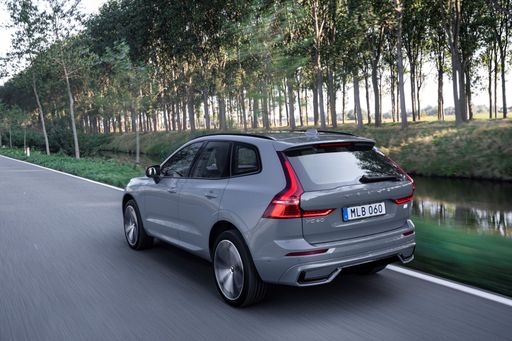
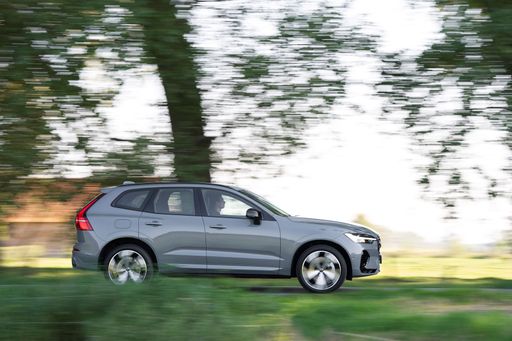
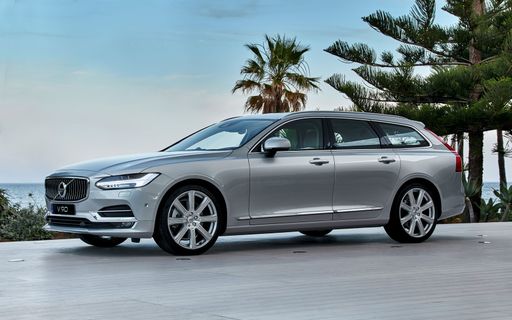
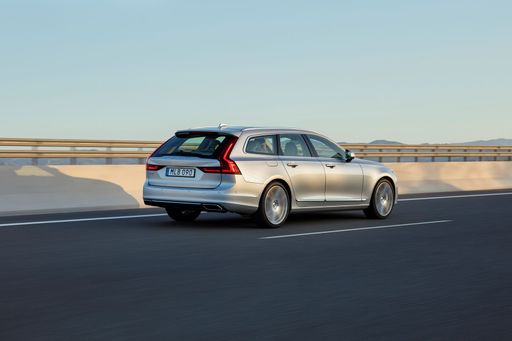
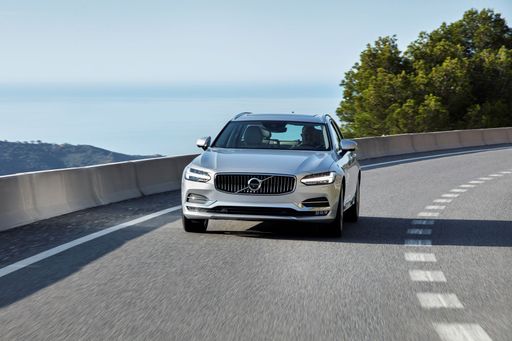
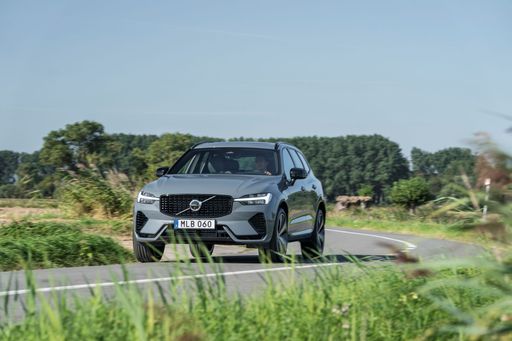
The Volvo XC60 is a refined SUV characterized by robust styling that appeals especially to those looking for all-wheel drive functionality. Its dimensions stand at a length of 4688 mm, a width of 1902 mm, and a height of 1658 mm. Meanwhile, the Volvo V90, a striking wagon, stretches further with a length of 4945 mm and a width of 1879 mm, but it sits lower to the ground with a height range of 1472-1537 mm.

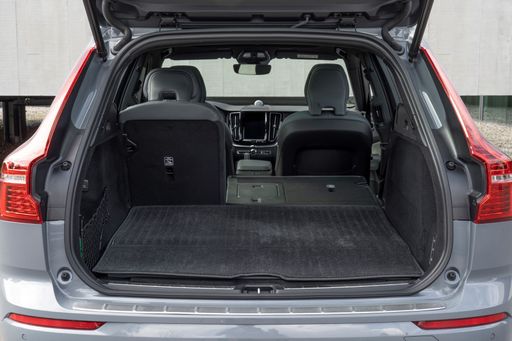
Both models come equipped with five doors and comfortably accommodate up to five passengers, yet the V90 provisions slightly more trunk space starting at 507 liters compared to the XC60's 483 liters.

XC60

Power and Performance: What's Under the Hood?

Delving into the powertrains, the XC60 offers a range of engines including a Petrol MHEV and Plugin Hybrid with power outputs of 250 to 455 HP. The V90, showcasing more versatility, offers Petrol MHEV, Diesel MHEV, and Plugin Hybrid options, also ranging up to an impressive 455 HP.

Acceleration is slightly quicker in the XC60, achieving 0-100 km/h in as fast as 4.9 seconds. The V90 follows closely with a top speed capability of 180 km/h, matched closely by multiple engine choices capable of acceleration from 0-100 km/h in about 4.8 seconds.

V90

Efficiency and Range: The Green Edge

Efficiency is a hallmark of both vehicles, with Plugin Hybrid versions stealing the show. The XC60 boasts an electric range of approximately 80 km and a combined consumption rate as low as 0.9 L/100km. In contrast, the V90 offers a superior electric range of 88 km, with its fuel consumption reaching as low as 0.8 L/100km in hybrid mode.

Both models include a 14.7 kWh battery capacitor, presenting a sustainable option for eco-conscious drivers. The CO2 emissions retain a similar efficiency with the XC60 emitting between 22 to 174 g/km compared to the V90's range of 18 to 175 g/km.

XC60

Practicality and Comfort: Everyday Usability

The practicality of both vehicles cannot be overstated. The XC60's appeal lies in its SUV body type offering higher ground clearance, making it favorable for drivers seeking versatility in both urban and rugged environments. Its all-wheel-drive feature ensures robust handling, whether tackling snowy roads or countryside trails.

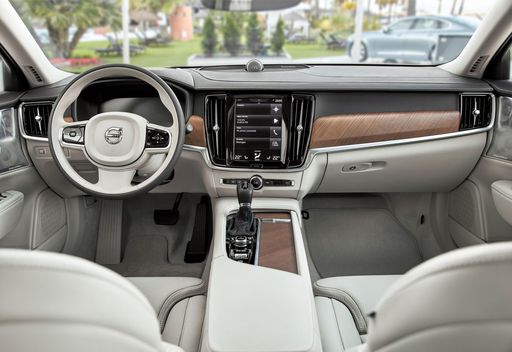
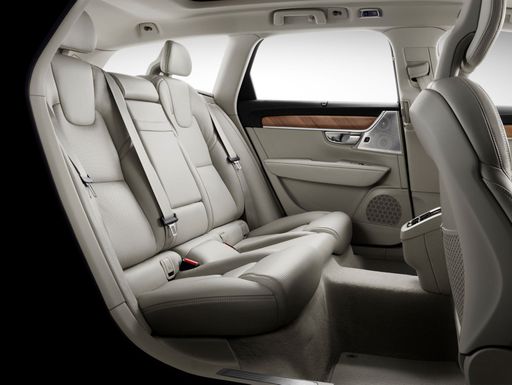
The V90, being a wagon, offers ease in maneuvering urban settings with a high-quality interior finish and ample passenger space, making it ideal for longer road trips. Practicalities such as ample cargo space and fuel tank capacities (up to 71 liters) ensure comfort during travel.

V90

Conclusion: Choosing Your Volvo Companion

Choosing between the Volvo XC60 and V90 essentially boils down to your preference in ride height, versatility, and driving dynamics. If you are leaning towards outdoor adventures or urban versatility with a preference for a higher seating position, the Volvo XC60 will suit your lifestyle. However, for those who appreciate the sleek aesthetics of a wagon combined with robust performance, the Volvo V90 stands as a formidable contender.

Both vehicles exemplify Volvo's commitment to blending luxury with functionality and safety, ensuring you cannot go wrong with either choice. As always, your lifestyle and driving needs will guide you towards making the right decision, whether it be the commanding presence of the XC60 or the elegant practicalities of the V90.

Here’s where it gets real: The technical differences in detail

XC60

Costs and Efficiency:

Price and efficiency are often the first things buyers look at. Here it becomes clear which model has the long-term edge – whether at the pump, the plug, or in purchase price.

Volvo XC60 is clearly cheaper – starting at 49,200 £ , while the Volvo V90 costs 62,300 £ . That’s a price difference of around 13,114 £.

Fuel consumption also shows a difference: the Volvo V90 uses 0.8 L/100km and is clearly more efficient than the Volvo XC60 with 2.8 L/100km. The difference is about 2 L/100km.

As for electric range, the Volvo V90 offers only slightly more range – reaching up to 88 km, about 6 km more than the Volvo XC60.

V90

Engine and Performance:

Power, torque and acceleration are the classic benchmarks for car enthusiasts – and here, some clear differences start to show.

Both models deliver identical power – 455 HP each.

When accelerating from 0 to 100 km/h, the Volvo V90 is only slightly quicker – completing the sprint in 4.8 s, while the Volvo XC60 takes 4.9 s. That’s about 0.1 s quicker.

There’s no difference in top speed – both reach 180 km/h.

Both models offer the same torque – 709 Nm.

XC60

Space and Everyday Use:

Cabin size, boot volume and payload all play a role in everyday practicality. Here, comfort and flexibility make the difference.

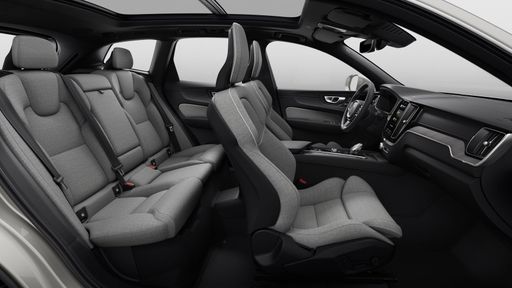
Both vehicles offer seating for 5 people.

In terms of curb weight, Volvo XC60 is marginally lighter – 1,900 kg compared to 2,075 kg. The difference is around 175 kg.

Looking at boot space, the Volvo V90 offers only slightly more boot space – 488 L compared to 483 L. That’s a difference of about 5 L.

For maximum load capacity, the Volvo XC60 offers very slightly more capacity – up to 1,543 L, about 89 L more than the Volvo V90.

When it comes to payload, the Volvo XC60 carries only slightly more – 550 kg compared to 515 kg. That’s a difference of about 35 kg.

Who wins the race in the data check?

The Volvo V90 is decisively ahead in the objective data comparison.
This result only shows which model scores more points on paper – not which of the two cars feels right for you.

from £62,300
V90

Volvo V90

  • Engine Type : Plugin Hybrid
  • Transmission : Automatic
  • Drive Type : All-Wheel Drive
  • Power HP : 398 - 455 HP
  • Consumption L/100km : 0.8 L/100km
  • Electric Range : 88 km
Volvo XC60
Volvo V90

Costs and Consumption

View detailed analysis

Engine and Performance

View detailed analysis

Dimensions and Body

View detailed analysis

Volvo XC60

The Volvo XC60 blends Scandinavian calm with confident presence, offering a cabin that feels plush without shouting for attention. It’s a smart pick for buyers after a composed ride, clever practicality and thoughtful safety touches — it even makes running the family shuttle feel almost serene, which is a small miracle.

details

Volvo V90

The Volvo V90 blends Scandinavian elegance with estate practicality, delivering a composed ride and an interior that's both luxurious and perfectly sensible. Packed with clever storage and top-flight safety kit, it's the choice for buyers who want to look classy while hauling life's chaos — without making a fuss about it.

details
Volvo XC60
Volvo V90

Costs and Consumption

Price
49,200 - 75,100 £
Price
62,300 - 71,700 £
Consumption L/100km
2.8 - 7.5 L/100km
Consumption L/100km
0.8 L/100km
Consumption kWh/100km
-
Consumption kWh/100km
-
Electric Range
74 - 82 km
Electric Range
88 km
Battery Capacity
-
Battery Capacity
14.7 kWh
co2
64 - 169 g/km
co2
18 g/km
Fuel tank capacity
71 L
Fuel tank capacity
60 L

Dimensions and Body

Body Type
SUV
Body Type
Estate
Seats
5
Seats
5
Doors
5
Doors
5
Curb weight
1,900 - 2,150 kg
Curb weight
2,075 kg
Trunk capacity
468 - 483 L
Trunk capacity
488 L
Length
4,708 mm
Length
4,945 mm
Width
1,902 mm
Width
1,879 mm
Height
1,655 mm
Height
1,472 mm
Max trunk capacity
1,543 L
Max trunk capacity
1,454 L
Payload
510 - 550 kg
Payload
515 kg

Engine and Performance

Engine Type
Petrol MHEV, Plugin Hybrid
Engine Type
Plugin Hybrid
Transmission
Automatic
Transmission
Automatic
Transmission Detail
Automatic Gearbox
Transmission Detail
Automatic Gearbox
Drive Type
All-Wheel Drive
Drive Type
All-Wheel Drive
Power HP
250 - 455 HP
Power HP
398 - 455 HP
Acceleration 0-100km/h
4.9 - 6.9 s
Acceleration 0-100km/h
4.8 - 5.5 s
Max Speed
180 km/h
Max Speed
180 km/h
Torque
350 - 709 Nm
Torque
659 - 709 Nm
Number of Cylinders
4
Number of Cylinders
4
Power kW
184 - 335 kW
Power kW
293 - 335 kW
Engine capacity
1,969 cm3
Engine capacity
1,969 cm3

General

Model Year
2,025
Model Year
2,024
CO2 Efficiency Class
F, B
CO2 Efficiency Class
B
Brand
Volvo
Brand
Volvo
DriveDuel uses data analysis and artificial intelligence to evaluate vehicle data and create content. Content is regularly reviewed and improved. The displayed prices are estimates based on German list prices, adjusted to the respective country’s VAT. Country-specific registration taxes are not included. This information is not legally binding.