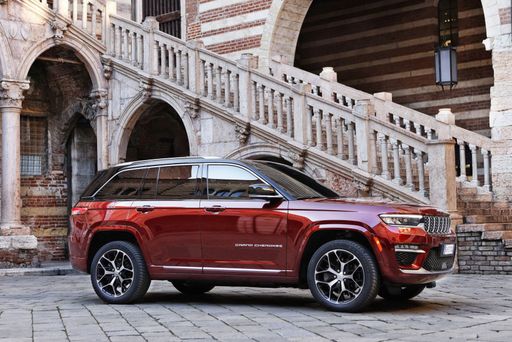
VS

Volvo XC90 vs Jeep Grand Cherokee comparison

Compare performance (455 HP vs 380 HP), boot space and price (69,800 £ vs 85,600 £ ) at a glance. Find out which car is the better choice for you – Volvo XC90 or Jeep Grand Cherokee?

Volvo XC90 vs Jeep Grand Cherokee: Key differences

Volvo XC90

5 (1 Reviews)
rate
  • visibly cheaper
  • moderately more power
  • clearly more electric range
  • moderately quicker 0–100 km/h
  • somewhat lighter

Jeep Grand Cherokee

  • clearly more efficient
  • substantially more trunk space

All details on performance, efficiency, range and trunk space can be found in the technical comparison below – including user reviews for both models.

XC90

The Ultimate SUV Showdown: Jeep Grand Cherokee vs. Volvo XC90

The SUV market continues to flourish with a multitude of options for discerning motorists looking for performance, innovation, and style. Today, we set our sights on a comparison between two titans in this field: the Jeep Grand Cherokee and the Volvo XC90. Both from the 2024 model year, these vehicles set the standard for luxury and capability, but which one stands out as the superior choice? Let's delve into the technical aspects and innovations of each.
Grand Cherokee

Power and Performance

The Jeep Grand Cherokee is equipped with a plugin hybrid engine producing an impressive 380 horsepower and 637 Nm of torque. This power is transmitted via an all-wheel drive system through an automatic gearbox, allowing the Grand Cherokee to accelerate from 0 to 100 km/h in just 6.3 seconds. It boasts a top speed of 210 km/h, ensuring an exhilarating driving experience.

On the other hand, the Volvo XC90 offers two engine options: a petrol MHEV and a plugin hybrid. The hybrid variant delivers an astounding 455 horsepower and 709 Nm of torque. Similar to the Grand Cherokee, the XC90 features an all-wheel drive system and an automatic transmission. In terms of acceleration, the XC90 edges over the Grand Cherokee, reaching 0 to 100 km/h in a brisk 5.4 seconds, though it tops out at a slightly lower speed of 180 km/h.

XC90

Efficiency and Environmental Impact

In terms of fuel efficiency, both vehicles offer significant environmental considerations given their hybrid technology. The Jeep Grand Cherokee has a consumption rate as low as 2.9 liters per 100 km with CO2 emissions ranging from 65 to 71 g/km, earning it a CO2 efficiency class rating of B.

The Volvo XC90, with its plugin hybrid variant, stands out with a remarkably low fuel consumption of just 1.2 liters per 100 km and CO2 emissions of 30 g/km, also categorized under the CO2 efficiency class B. Furthermore, the XC90 offers a greater electric-only range of 71 km, compared to the Grand Cherokee's range of up to 45 km.

Grand Cherokee

Interior and Comfort

Interior space and comfort are crucial for any SUV, and both vehicles excel in these areas. The Jeep Grand Cherokee offers seating for five passengers with a spacious trunk capacity of 520 liters. Its dimensions measure 4914 mm in length, 1968 mm in width, and has a variable height between 1795 and 1858 mm.

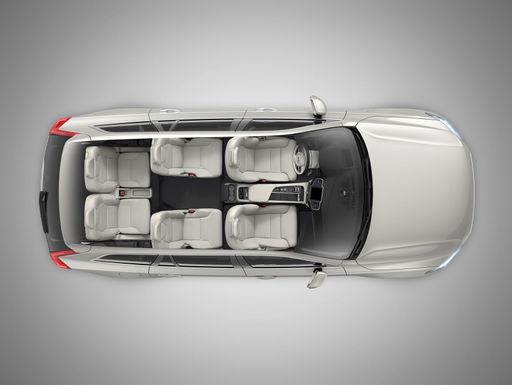
Contrastingly, the Volvo XC90 provides accommodation for seven passengers, making it more suitable for larger families. Despite the reduced trunk space of 302 liters (plugin hybrid variant), its exterior dimensions of 4953 mm in length and 1923 mm in width, with a height of 1771 mm, ensure a solid presence on the road.

XC90

Conclusion: Which Reigns Supreme?

Choosing between the Jeep Grand Cherokee and the Volvo XC90 depends largely on individual preferences and needs. The Grand Cherokee stands out with its robust and powerful drive, ideal for those seeking off-road versatility coupled with hybrid efficiency. In contrast, the XC90 offers unmatched luxury and space for families, alongside leading-edge hybrid technology that ensures environmental sustainability.

Both models embody the pinnacle of modern automotive engineering and design, leaving potential buyers to ponder what elements are most critical in their driving experience. Whether prioritizing power and adventure or luxury and efficiency, both the Grand Cherokee and the XC90 pose compelling options in the 2024 SUV arena.

Here’s where it gets real: The technical differences in detail

XC90

Costs and Efficiency:

Price and efficiency are key factors when choosing a car – and this is often where the real differences emerge.

Volvo XC90 is visibly cheaper – starting at 69,800 £ , while the Jeep Grand Cherokee costs 85,600 £ . That’s a price difference of around 15,866 £.

Fuel consumption also shows a difference: the Jeep Grand Cherokee uses 2.9 L/100km and is clearly more efficient than the Volvo XC90 with 3.5 L/100km. The difference is about 0.6 L/100km.

As for electric range, the Volvo XC90 offers clearly more range – reaching up to 71 km, about 26 km more than the Jeep Grand Cherokee.

Grand Cherokee

Engine and Performance:

Under the bonnet, it becomes clear which model is tuned for sportiness and which one takes the lead when you hit the accelerator.

When it comes to engine power, the Volvo XC90 offers moderately more power – delivering 455 HP compared to 380 HP. That’s roughly 75 HP more horsepower.

When accelerating from 0 to 100 km/h, the Volvo XC90 is moderately quicker – completing the sprint in 5.4 s, while the Jeep Grand Cherokee takes 6.3 s. That’s about 0.9 s quicker.

Looking at top speed, the Jeep Grand Cherokee is moderately faster – reaching 210 km/h, while the Volvo XC90 tops out at 180 km/h. The difference is around 30 km/h.

There’s also a difference in torque: the Volvo XC90 delivers moderately more torque with 709 Nm compared to 637 Nm. That’s about 72 Nm more.

XC90

Space and Everyday Use:

Beyond pure performance, interior space and usability matter most in daily life. This is where you see which car is more practical and versatile.

Seats: Volvo XC90 offers more seats – 7 vs 5.

In terms of curb weight, Volvo XC90 is somewhat lighter – 2,080 kg compared to 2,434 kg. The difference is around 354 kg.

Looking at boot space, the Jeep Grand Cherokee offers substantially more boot space – 520 L compared to 302 L. That’s a difference of about 218 L.

For maximum load capacity, the Jeep Grand Cherokee offers barely more capacity – up to 2,004 L, about 148 L more than the Volvo XC90.

When it comes to payload, the Volvo XC90 carries very slightly more – 710 kg compared to 641 kg. That’s a difference of about 69 kg.

Who wins the race in the data check?

The Volvo XC90 is clearly superior overall in the objective data comparison.
This result only shows which model scores more points on paper – not which of the two cars feels right for you.

from £69,800
XC90

Volvo XC90

  • Engine Type : Petrol MHEV, Plugin Hybrid
  • Transmission : Automatic
  • Drive Type : All-Wheel Drive
  • Power HP : 250 - 455 HP
  • Consumption L/100km : 3.5 - 8.5 L/100km
  • Electric Range : 71 km
Volvo XC90
Jeep Grand Cherokee

Costs and Consumption

View detailed analysis

Engine and Performance

View detailed analysis

Dimensions and Body

View detailed analysis

Volvo XC90

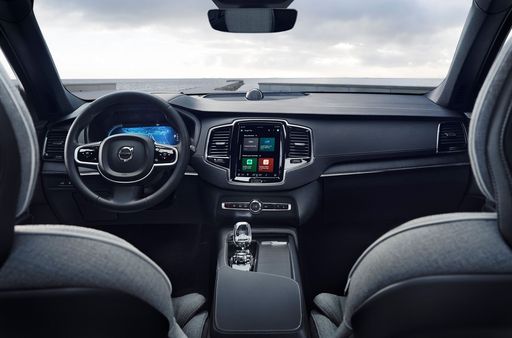
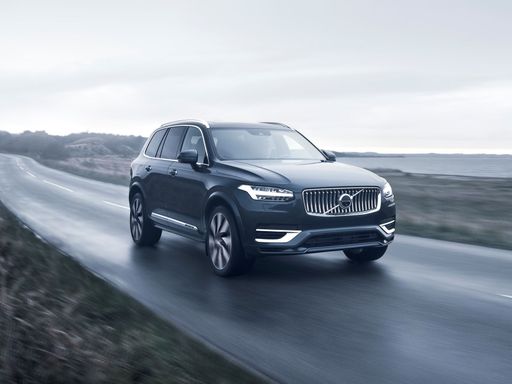
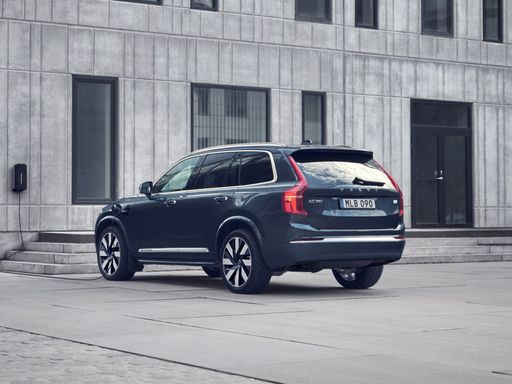
The Volvo XC90 is a serene Scandinavian SUV that mixes minimalist luxury with a composed, confidence-inspiring presence — ideal for buyers who want family practicality without sacrificing style. Inside it serves up a calm, well-crafted cabin and user-friendly tech that keeps long journeys pleasant and tantrums to a minimum, making the XC90 a smart, stylish pick for sensible drivers.

details

Jeep Grand Cherokee

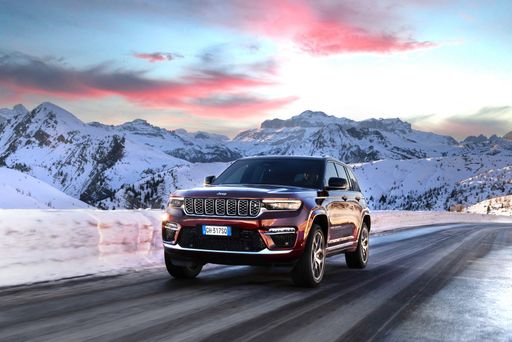
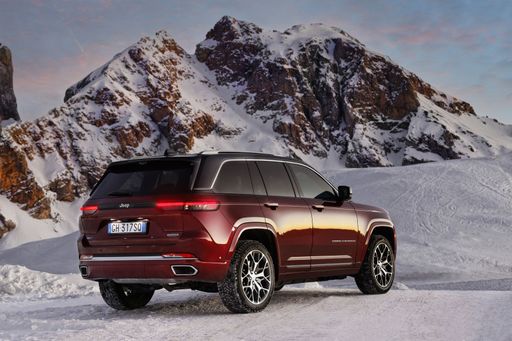
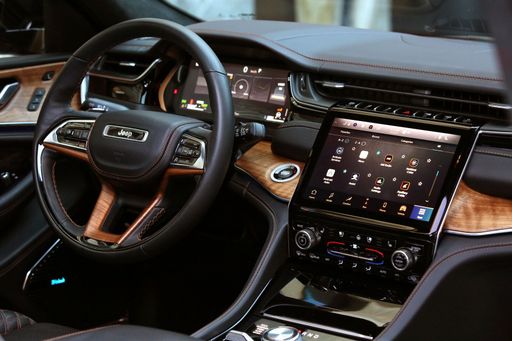
The Jeep Grand Cherokee wears its trail-ready roots proudly while wrapping them in a surprisingly civilized and upscale package, so it can tackle rough tracks and the school run with the same swagger. Inside, plush materials and intuitive tech make it a comfortable place to spend time, giving buyers a practical yet characterful SUV that doesn’t take itself too seriously.

details
Volvo XC90
Jeep Grand Cherokee

Costs and Consumption

Price
69,800 - 84,600 £
Price
85,600 £
Consumption L/100km
3.5 - 8.5 L/100km
Consumption L/100km
2.9 L/100km
Consumption kWh/100km
-
Consumption kWh/100km
-
Electric Range
71 km
Electric Range
45 km
Battery Capacity
-
Battery Capacity
-
co2
79 - 191 g/km
co2
65 g/km
Fuel tank capacity
71 L
Fuel tank capacity
72 L

Dimensions and Body

Body Type
SUV
Body Type
SUV
Seats
7
Seats
5
Doors
5
Doors
5
Curb weight
2,080 - 2,297 kg
Curb weight
2,434 kg
Trunk capacity
262 - 302 L
Trunk capacity
520 L
Length
4,953 mm
Length
4,914 mm
Width
1,923 mm
Width
1,968 mm
Height
1,771 mm
Height
1,858 mm
Max trunk capacity
1,856 L
Max trunk capacity
2,004 L
Payload
653 - 710 kg
Payload
641 kg

Engine and Performance

Engine Type
Petrol MHEV, Plugin Hybrid
Engine Type
Plugin Hybrid
Transmission
Automatic
Transmission
Automatic
Transmission Detail
Automatic Gearbox
Transmission Detail
Automatic Gearbox
Drive Type
All-Wheel Drive
Drive Type
All-Wheel Drive
Power HP
250 - 455 HP
Power HP
380 HP
Acceleration 0-100km/h
5.4 - 7.7 s
Acceleration 0-100km/h
6.3 s
Max Speed
180 km/h
Max Speed
210 km/h
Torque
360 - 709 Nm
Torque
637 Nm
Number of Cylinders
4
Number of Cylinders
4
Power kW
184 - 335 kW
Power kW
280 kW
Engine capacity
1,969 cm3
Engine capacity
1,995 cm3

General

Model Year
2,024 - 2,025
Model Year
2,024
CO2 Efficiency Class
G, B
CO2 Efficiency Class
B
Brand
Volvo
Brand
Jeep
DriveDuel uses data analysis and artificial intelligence to evaluate vehicle data and create content. Content is regularly reviewed and improved. The displayed prices are estimates based on German list prices, adjusted to the respective country’s VAT. Country-specific registration taxes are not included. This information is not legally binding.