VS

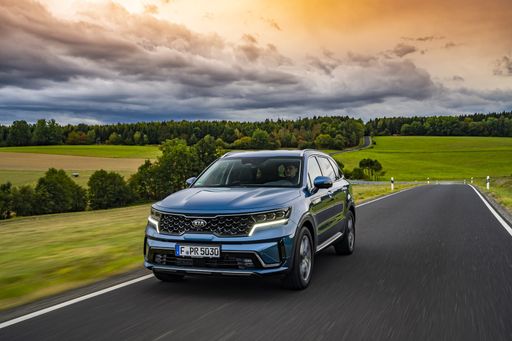
Volvo XC90 vs Kia Sorento comparison

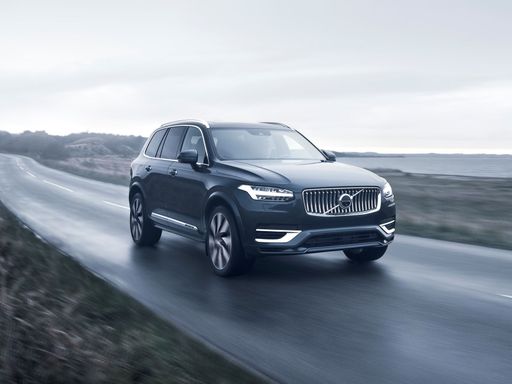
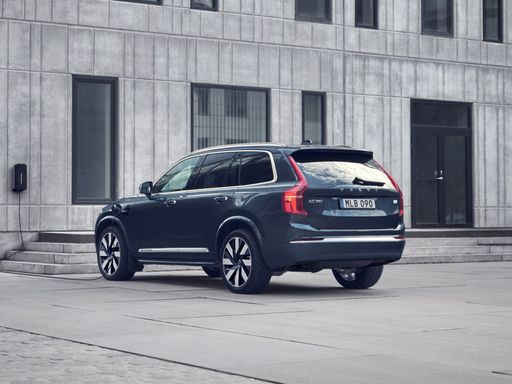
Compare performance (455 HP vs 252 HP), boot space and price (69,800 £ vs 46,900 £ ) at a glance. Find out which car is the better choice for you – Volvo XC90 or Kia Sorento?

Volvo XC90 vs Kia Sorento: Key differences

Volvo XC90

5 (1 Reviews)
rate
  • significantly more power
  • somewhat more efficient
  • visibly more electric range
  • considerably quicker 0–100 km/h

Kia Sorento

  • clearly cheaper
  • moderately lighter
  • substantially more trunk space

All details on performance, efficiency, range and trunk space can be found in the technical comparison below – including user reviews for both models.

XC90

The automotive landscape is increasingly dominated by innovative SUVs, and two contenders that have made waves are the Kia Sorento and the Volvo XC90. Both models offer a unique blend of style, technology, and performance, but they differ significantly in design philosophy, technical specifications, and innovations. In this comparison, we’ll delve into what each SUV brings to the table for the 2024 model year.

Sorento

Design and Dimensions

The Kia Sorento stands at a length of 4,815 mm, with a width of 1,900 mm and a height of 1,695 mm. Its bold and rugged design is aimed at appealing to adventurous families, providing ample space for up to seven passengers. The cabin is complemented by a practical trunk capacity ranging from 175 to 705 liters, depending on the seating configuration.

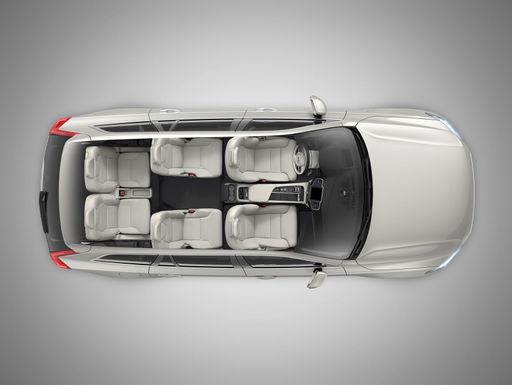
On the other hand, the Volvo XC90 is larger, measuring 4,953 mm in length, 1,923 mm in width, and 1,771 mm in height. This size translates into a more luxurious interior experience, accommodating seven passengers with ease. However, it has a smaller trunk capacity, offering between 262 to 302 liters, which may be a consideration for families needing extra cargo space.

XC90

Powertrains and Performance

The Kia Sorento offers a more diverse lineup of powertrains, including plugin hybrids, full hybrids, and a diesel option. Its engine range provides power outputs from 194 HP to 252 HP, coupled with torque figures reaching up to 440 Nm. The Sorento boasts impressive fuel consumption figures, with hybrid variants achieving as low as 1.6 L/100 km and a CO2 emission rating as efficient as 37 g/km.

In contrast, the Volvo XC90 showcases a two-engine setup, with a petrol mild-hybrid and a potent plugin hybrid option offering an astonishing 455 HP. The XC90's electric range is rated at up to 71 km, making it an appealing choice for environmentally conscious drivers. The performance specifications are equally compelling, with the XC90 achieving 0-100 km/h in just 5.4 seconds, establishing itself as the sportier option of the two.

Sorento

Driving Experience and Handling

Both SUVs feature all-wheel drive systems, enhancing traction and stability. The Kia Sorento offers various driving modes that allow drivers to adapt to different conditions and preferences. The automatic transmission facilitates smooth gear transitions, ensuring a pleasant driving experience whether navigating city streets or taking on off-road trails.

Volvo, renowned for its focus on safety and refinement, does not disappoint with the XC90. The ride quality is plush and composed, with an emphasis on comfort that makes it ideal for long-distance journeys. Its higher curb weight of 2,080 kg (or 2,297 kg for the PHEV) contributes to a feeling of robustness on the road.

XC90

Technology and Safety Innovations

In terms of technological innovations, both SUVs come equipped with an array of advanced features. The Kia Sorento is bolstered by a user-friendly infotainment system, integrating Apple CarPlay and Android Auto, along with advanced driver-assistance systems that enhance overall safety.

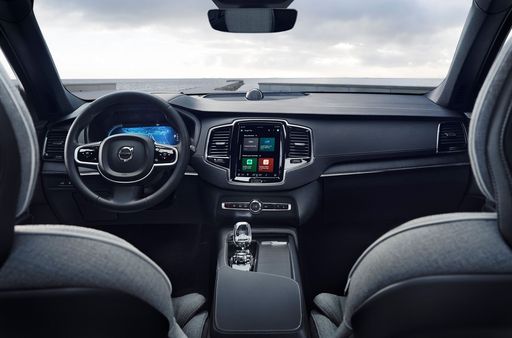
Meanwhile, the Volvo XC90 is laden with premium technology offerings, including a high-quality sound system and a cutting-edge interface that features over-the-air updates for software improvements. The XC90 also places a high premium on safety, with numerous active and passive features that have contributed to its excellent safety ratings worldwide.

Sorento

Conclusion

Choosing between the Kia Sorento and the Volvo XC90 ultimately boils down to personal preference and priorities. The Sorento presents itself as a versatile family SUV with a range of engine options and impressive fuel economy, while the XC90 is the epitome of luxury and performance, coupled with state-of-the-art safety technology. As both brands continue to innovate, drivers can expect even more exciting developments in the years ahead in the world of SUVs.

Here’s where it gets real: The technical differences in detail

XC90

Costs and Efficiency:

When it comes to price and running costs, the biggest differences usually appear. This is often where you see which car fits your budget better in the long run.

Kia Sorento is clearly cheaper – starting at 46,900 £ , while the Volvo XC90 costs 69,800 £ . That’s a price difference of around 22,885 £.

Fuel consumption also shows a difference: the Volvo XC90 uses 3.5 L/100km and is somewhat more efficient than the Kia Sorento with 3.9 L/100km. The difference is about 0.4 L/100km.

As for electric range, the Volvo XC90 offers visibly more range – reaching up to 71 km, about 16 km more than the Kia Sorento.

Sorento

Engine and Performance:

Under the bonnet, it becomes clear which model is tuned for sportiness and which one takes the lead when you hit the accelerator.

When it comes to engine power, the Volvo XC90 offers significantly more power – delivering 455 HP compared to 252 HP. That’s roughly 203 HP more horsepower.

When accelerating from 0 to 100 km/h, the Volvo XC90 is considerably quicker – completing the sprint in 5.4 s, while the Kia Sorento takes 8 s. That’s about 2.6 s quicker.

There’s also a difference in torque: the Volvo XC90 delivers clearly more torque with 709 Nm compared to 440 Nm. That’s about 269 Nm more.

XC90

Space and Everyday Use:

Whether family car or daily driver – which one offers more room, flexibility and comfort?

Both vehicles offer seating for 7 people.

In terms of curb weight, Kia Sorento is moderately lighter – 1,855 kg compared to 2,080 kg. The difference is around 225 kg.

Looking at boot space, the Kia Sorento offers substantially more boot space – 705 L compared to 302 L. That’s a difference of about 403 L.

When it comes to payload, the Volvo XC90 carries only slightly more – 710 kg compared to 685 kg. That’s a difference of about 25 kg.

Who wins the race in the data check?

The Volvo XC90 is far ahead overall in the objective data comparison.
This result only shows which model scores more points on paper – not which of the two cars feels right for you.

from £69,800
XC90

Volvo XC90

  • Engine Type : Petrol MHEV, Plugin Hybrid
  • Transmission : Automatic
  • Drive Type : All-Wheel Drive
  • Power HP : 250 - 455 HP
  • Consumption L/100km : 3.5 - 8.5 L/100km
  • Electric Range : 71 km
Volvo XC90
Kia Sorento

Costs and Consumption

View detailed analysis

Engine and Performance

View detailed analysis

Dimensions and Body

View detailed analysis

Volvo XC90

The Volvo XC90 is a serene Scandinavian SUV that mixes minimalist luxury with a composed, confidence-inspiring presence — ideal for buyers who want family practicality without sacrificing style. Inside it serves up a calm, well-crafted cabin and user-friendly tech that keeps long journeys pleasant and tantrums to a minimum, making the XC90 a smart, stylish pick for sensible drivers.

details

Kia Sorento

The Kia Sorento blends roomy practicality with smart tech and an unexpectedly composed highway manner, making it an easy choice for families who want comfort without fuss. It presents classy interior touches and sensible packaging at a realistic price, proving you don't need to shout to be noticed in the SUV crowd.

details
Volvo XC90
Kia Sorento

Costs and Consumption

Price
69,800 - 84,600 £
Price
46,900 - 60,100 £
Consumption L/100km
3.5 - 8.5 L/100km
Consumption L/100km
3.9 - 7 L/100km
Consumption kWh/100km
-
Consumption kWh/100km
-
Electric Range
71 km
Electric Range
55 km
Battery Capacity
-
Battery Capacity
-
co2
79 - 191 g/km
co2
87 - 174 g/km
Fuel tank capacity
71 L
Fuel tank capacity
-

Dimensions and Body

Body Type
SUV
Body Type
SUV
Seats
7
Seats
5 - 7
Doors
5
Doors
-
Curb weight
2,080 - 2,297 kg
Curb weight
1,855 - 2,110 kg
Trunk capacity
262 - 302 L
Trunk capacity
175 - 705 L
Length
4,953 mm
Length
-
Width
1,923 mm
Width
1,900 mm
Height
1,771 mm
Height
-
Max trunk capacity
1,856 L
Max trunk capacity
-
Payload
653 - 710 kg
Payload
162 - 685 kg

Engine and Performance

Engine Type
Petrol MHEV, Plugin Hybrid
Engine Type
Full Hybrid, Diesel, Plugin Hybrid
Transmission
Automatic
Transmission
Automatic
Transmission Detail
Automatic Gearbox
Transmission Detail
Automatic Gearbox, Dual-Clutch Automatic
Drive Type
All-Wheel Drive
Drive Type
Front-Wheel Drive, All-Wheel Drive
Power HP
250 - 455 HP
Power HP
194 - 252 HP
Acceleration 0-100km/h
5.4 - 7.7 s
Acceleration 0-100km/h
8 - 9.7 s
Max Speed
180 km/h
Max Speed
-
Torque
360 - 709 Nm
Torque
380 - 440 Nm
Number of Cylinders
4
Number of Cylinders
4
Power kW
184 - 335 kW
Power kW
142 - 212 kW
Engine capacity
1,969 cm3
Engine capacity
1,598 - 2,151 cm3

General

Model Year
2,024 - 2,025
Model Year
2,025 - 2,026
CO2 Efficiency Class
G, B
CO2 Efficiency Class
E, F, B
Brand
Volvo
Brand
Kia
DriveDuel uses data analysis and artificial intelligence to evaluate vehicle data and create content. Content is regularly reviewed and improved. The displayed prices are estimates based on German list prices, adjusted to the respective country’s VAT. Country-specific registration taxes are not included. This information is not legally binding.