VS

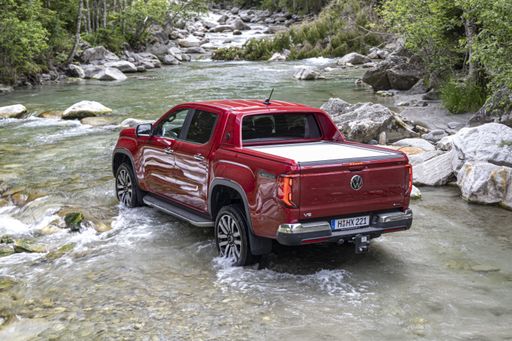
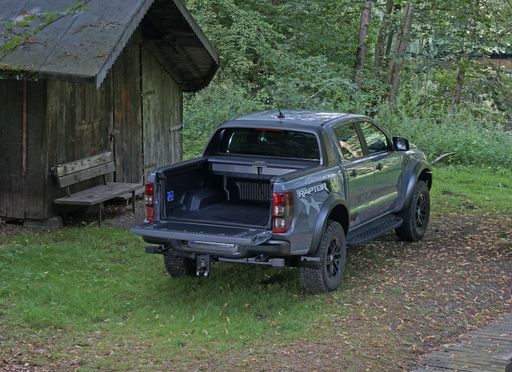
VW Amarok vs Ford Ranger comparison

Compare performance (240 HP vs 292 HP), boot space and price (43,200 £ vs 45,600 £ ) at a glance. Find out which car is the better choice for you – VW Amarok or Ford Ranger?

VW Amarok vs Ford Ranger: Key differences

VW Amarok

  • barely cheaper
  • only slightly lighter
details

Ford Ranger

  • moderately more power
  • considerably more efficient
  • slightly quicker 0–100 km/h
details

By Achim Sedelmaier

Amarok

Ford Ranger vs VW Amarok: The Pickup Showdown

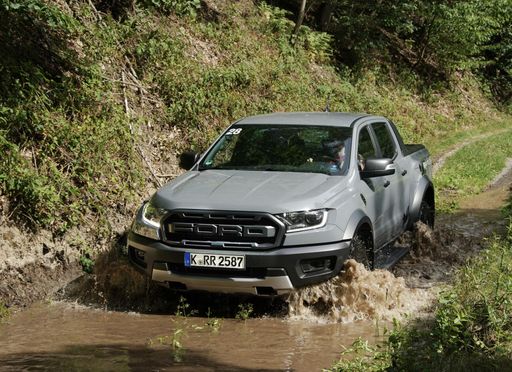
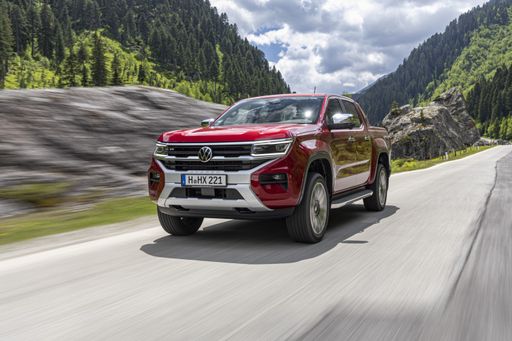
In the world of pickups, the Ford Ranger and VW Amarok are two strong contenders, each with its distinct features and innovations. Both hailed for their robust performance, they cater to different user needs with their range of specifications and capabilities. This article delves into the details of these two models to help you decide which one is right for you.
Ranger

Engine and Power

The Ford Ranger offers a broader range of engine options, including both diesel and petrol variants. With power output ranging from 170 to 292 HP, the Ranger provides versatility in terms of performance. In contrast, the VW Amarok is equipped with diesel engines, with power outputs between 170 and 240 HP. This makes the Amarok a solid choice for diesel enthusiasts.

Amarok

Performance and Efficiency

When it comes to acceleration, both pickups are quite competitive. The Ranger's acceleration from 0 to 100 km/h ranges between 7.9 and 12.1 seconds, while the Amarok ranges from 8.8 to 11.6 seconds. As for maximum speed, both vehicles reach up to 190 km/h.

Fuel consumption is a critical aspect of any vehicle. The Ford Ranger boasts a consumption range of 8.4 to 13.8 L/100km, while the Amarok is slightly more efficient, with a range of 8.6 to 10.3 L/100km. Both models feature a fuel tank capacity of 80 liters, ensuring long driving ranges.

Ranger

Design and Dimensions

In terms of dimensions, the Ford Ranger is available in lengths ranging from 5370 to 5420 mm, whereas the Amarok offers a slightly shorter length of 5350 mm. Both pickups are similar in width, with the Ranger measuring up to 1968 mm and the Amarok at 1910 mm. The height varies slightly, with the Ranger standing between 1868 and 1922 mm and the Amarok at a consistent 1871 to 1884 mm.

Amarok

Capability and Load

Payload capacity is a significant factor for pickup users. The Ranger's payload capacity spans from 676 kg to 1108 kg, while the Amarok offers a slightly higher range of 883 kg to 983 kg. This makes the Amarok a potentially better choice for those who need to carry heavier loads regularly.

Conclusion

The Ford Ranger and VW Amarok both offer strong performances, with certain features tailored to specific user needs. The Ranger excels in versatility with its engine options and range of powers, making it suitable for a variety of terrains and uses. Meanwhile, the Amarok's diesel efficiency and higher payload capacity might appeal to users who prioritize load-carrying capability and fuel economy.

Your choice between the two will largely depend on your preference for engine type, power needs, and load-bearing requirements. Both are excellent choices in their own right, making them leaders in the pickup segment.

Here’s where it gets real: The technical differences in detail

Amarok

Costs and Efficiency:

When it comes to price and running costs, the biggest differences usually appear. This is often where you see which car fits your budget better in the long run.

VW Amarok is barely cheaper – starting at 43,200 £ , while the Ford Ranger costs 45,600 £ . That’s a price difference of around 2,346 £.

Fuel consumption also shows a difference: the Ford Ranger uses 3.1 L/100km and is considerably more efficient than the VW Amarok with 8.6 L/100km. The difference is about 5.5 L/100km.

Ranger

Engine and Performance:

Power, torque and acceleration are the classic benchmarks for car enthusiasts – and here, some clear differences start to show.

When it comes to engine power, the Ford Ranger offers moderately more power – delivering 292 HP compared to 240 HP. That’s roughly 52 HP more horsepower.

When accelerating from 0 to 100 km/h, the Ford Ranger is slightly quicker – completing the sprint in 7.9 s, while the VW Amarok takes 8.8 s. That’s about 0.9 s quicker.

There’s no difference in top speed – both reach 190 km/h.

There’s also a difference in torque: the Ford Ranger delivers a bit more torque with 697 Nm compared to 600 Nm. That’s about 97 Nm more.

Amarok

Space and Everyday Use:

Whether family car or daily driver – which one offers more room, flexibility and comfort?

Both vehicles offer seating for 5 people.

In terms of curb weight, VW Amarok is only slightly lighter – 2,262 kg compared to 2,405 kg. The difference is around 143 kg.

When it comes to payload, the Ford Ranger carries barely more – 989 kg compared to 983 kg. That’s a difference of about 6 kg.

Who wins the race in the data check?

The Ford Ranger stands well ahead of its rival in the objective data comparison.
This result only shows which model scores more points on paper – not which of the two cars feels right for you.

from £45,600
Ranger

Ford Ranger

  • Engine Type : Diesel, Petrol, Plugin Hybrid
  • Transmission : Automatic
  • Drive Type : All-Wheel Drive
  • Power HP : 210 - 292 HP
  • Consumption L/100km : 3.1 - 13.8 L/100km
  • Electric Range : 42 km
VW Amarok
Ford Ranger

Costs and Consumption

View detailed analysis

Engine and Performance

View detailed analysis

Dimensions and Body

View detailed analysis

VW Amarok

The VW Amarok is a surprisingly refined pickup that blends rugged capability with car-like comfort, feeling equally at home on a worksite or a weekend escape. Practical, well‑mannered and a little bit charismatic, it’s a smart choice for buyers who need honest utility without sacrificing everyday drivability — and yes, it can be oddly addictive to drive.

details

Ford Ranger

The Ford Ranger is a workhorse with the manners of a grown-up pickup—practical, tough, and surprisingly civilized on the road. It’s the sort of truck that laughs at mud on the weekend and performs like a sensible daily driver during the week, making it an easy sell for buyers who want capability without theatrics.

details
VW Amarok
Ford Ranger

Costs and Consumption

Price
43,200 - 64,100 £
Price
45,600 - 71,900 £
Consumption L/100km
8.6 - 10.3 L/100km
Consumption L/100km
3.1 - 13.8 L/100km
Consumption kWh/100km
-
Consumption kWh/100km
-
Electric Range
-
Electric Range
42 km
Battery Capacity
-
Battery Capacity
11.8 kWh
co2
226 - 270 g/km
co2
70 - 315 g/km
Fuel tank capacity
80 L
Fuel tank capacity
80 L

Dimensions and Body

Body Type
Pickup
Body Type
Pickup
Seats
5
Seats
4 - 5
Doors
4
Doors
4
Curb weight
2,262 - 2,423 kg
Curb weight
2,405 - 2,511 kg
Trunk capacity
-
Trunk capacity
-
Length
5,350 mm
Length
5,370 - 5,381 mm
Width
1,910 mm
Width
1,918 - 1,968 mm
Height
1,871 - 1,884 mm
Height
1,884 - 1,922 mm
Max trunk capacity
-
Max trunk capacity
-
Payload
883 - 983 kg
Payload
676 - 989 kg

Engine and Performance

Engine Type
Diesel
Engine Type
Diesel, Petrol, Plugin Hybrid
Transmission
Manuel, Automatic
Transmission
Automatic
Transmission Detail
Manual Gearbox, Automatic Gearbox
Transmission Detail
Automatic Gearbox
Drive Type
All-Wheel Drive
Drive Type
All-Wheel Drive
Power HP
170 - 240 HP
Power HP
210 - 292 HP
Acceleration 0-100km/h
8.8 - 11.6 s
Acceleration 0-100km/h
7.9 - 9.2 s
Max Speed
180 - 190 km/h
Max Speed
180 - 190 km/h
Torque
405 - 600 Nm
Torque
491 - 697 Nm
Number of Cylinders
4 - 6
Number of Cylinders
4 - 6
Power kW
125 - 177 kW
Power kW
154 - 215 kW
Engine capacity
1,996 - 2,993 cm3
Engine capacity
1,996 - 2,993 cm3

General

Model Year
2023
Model Year
2,022 - 2,025
CO2 Efficiency Class
G
CO2 Efficiency Class
G, B
Brand
VW
Brand
Ford
DriveDuel uses data analysis and artificial intelligence to evaluate vehicle data and create content. Content is regularly reviewed and improved. The displayed prices are estimates based on German list prices, adjusted to the respective country’s VAT. Country-specific registration taxes are not included. This information is not legally binding.