VS

VW Golf vs Mazda CX-30 comparison

Compare performance (333 HP vs 186 HP), boot space and price (25,200 £ vs 25,200 £ ) at a glance. Find out which car is the better choice for you – VW Golf or Mazda CX-30?

VW Golf vs Mazda CX-30: Key differences

VW Golf

4.6 (1 Reviews)
rate
  • only slightly cheaper
  • significantly more power
  • considerably more efficient
  • clearly quicker 0–100 km/h
  • slightly lighter

Mazda CX-30

4.6 (3 Reviews)
rate
  • moderately more trunk space

All details on performance, efficiency, range and trunk space can be found in the technical comparison below – including user reviews for both models.

Golf

As the automotive market continues to evolve, consumers are increasingly faced with choosing between versatile SUVs and practical hatchbacks. In the latest showdown, we explore the Mazda CX-30 and the VW Golf, two models that have carved their niches in the compact car segment. While both vehicles are designed for the modern driver, their approaches to style, performance, and technology set them apart.

CX-30

Design and Dimensions

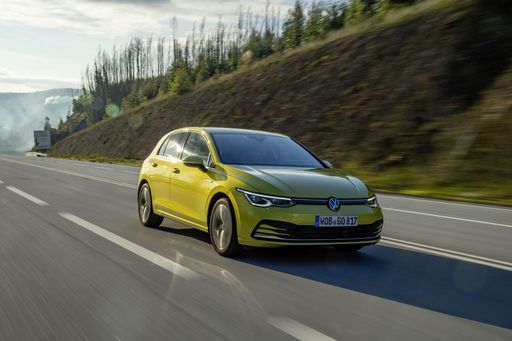
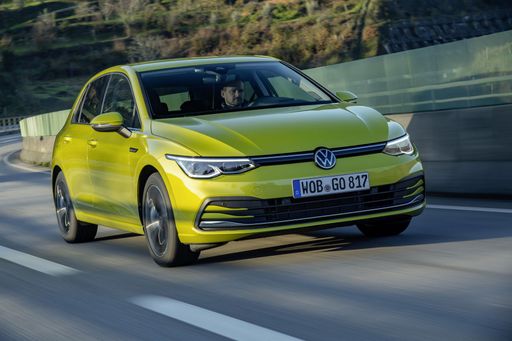
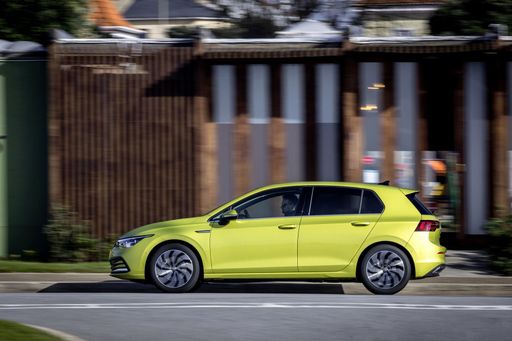
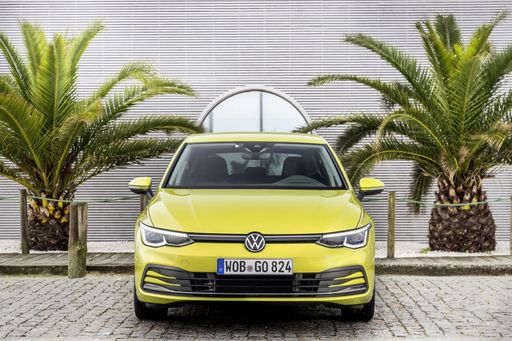
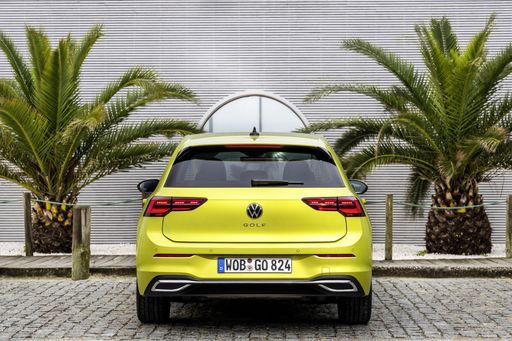
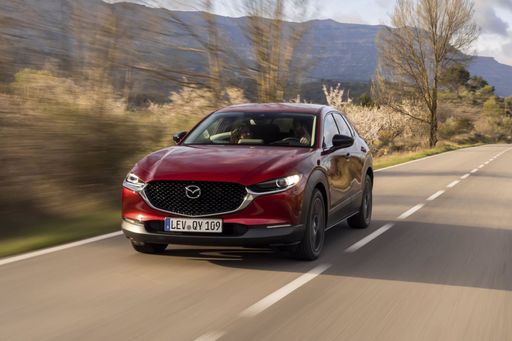
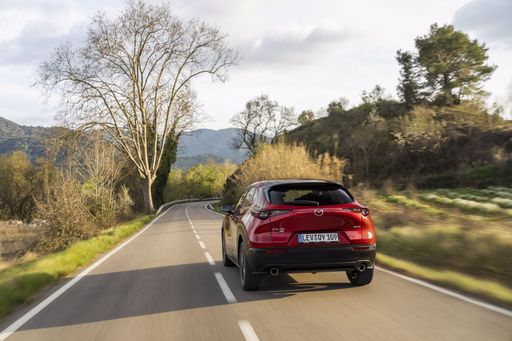
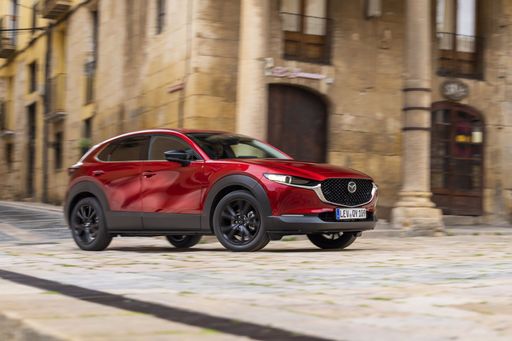
The Mazda CX-30 showcases a sleek and muscular SUV design that reflects Mazda's Kodo design philosophy. With an overall length of 4,395 mm, width of 1,795 mm, and height of 1,540 mm, it offers a commanding presence on the road. In contrast, the VW Golf, a traditional hatchback, measures approximately 4,282 mm to 4,292 mm in length, with a width of 1,789 mm and a height ranging from 1,456 mm to 1,483 mm. The Golf's design emphasizes practicality and aerodynamics, appealing to those who value function alongside style.

Golf

Performance: Engine and Transmission

Under the hood, the CX-30 boasts a range of petrol MHEV options, producing between 140 and 186 HP, with a torque of 240 Nm. This power comes from a 2.0-litre engine, offering an acceleration of 0-100 km/h in approximately 8.3 to 10.3 seconds, depending on the variant. The CX-30 is available with both manual and automatic transmission, and consumers can choose between front-wheel drive (FWD) and all-wheel drive (AWD), providing flexibility based on driving conditions.

The VW Golf, on the other hand, offers a more diverse engine lineup that includes petrol, diesel, and plug-in hybrid variants, with power outputs ranging from 116 HP to an impressive 333 HP from its performance-focused models. Acceleration times can be as low as 4.6 seconds for the high-performance versions, thanks to its efficient dual-clutch automatic transmission. Golf's range of engine options allows it to appeal to both eco-conscious drivers and those looking for spirited performance.


CX-30

Fuel Efficiency and Emissions

Fuel efficiency is a critical consideration for many buyers today. The CX-30 records consumption figures between 5.7 to 6.6 L/100km, with CO2 emissions ranging from 129 to 148 g/km. In comparison, the VW Golf outshines in this department, with consumption as low as 4.3 L/100km and CO2 emissions starting from 113 g/km, particularly impressive in its hybrid configurations. Both models are equipped to appeal to environmentally conscious individuals but the Golf clearly takes the lead in efficiency.

Golf

Interior Amenities and Technology

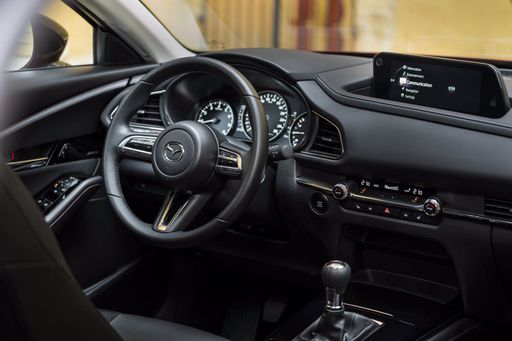
When it comes to interior features, both the CX-30 and Golf provide comfortable accommodations for up to five passengers. The CX-30 boasts 430 liters of trunk capacity, which is advantageous for those needing space for luggage or other gear. The design focuses on high-quality materials and an intuitive infotainment system.

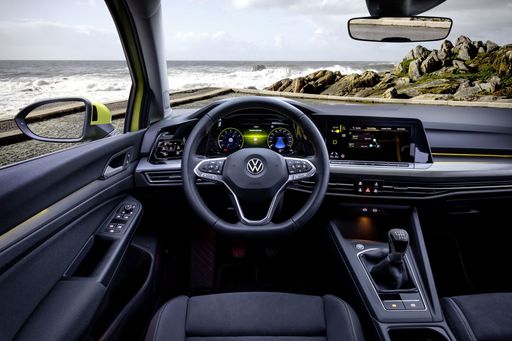
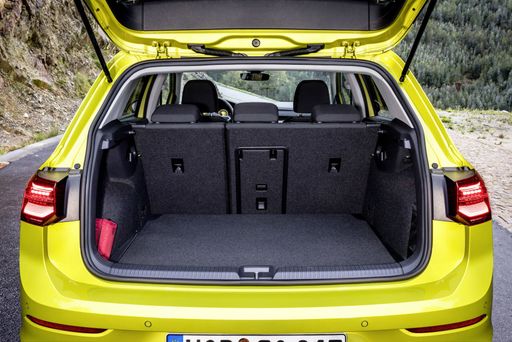
The VW Golf, while slightly lower in trunk space at 381 liters, counters with a user-friendly digital cockpit and several tech innovations like advanced connectivity options and driver-assistance systems. The integration of VW's latest MIB3 infotainment system offers seamless smartphone integration, ensuring a modern driving experience.

CX-30

Safety Features and Ratings

Safety is paramount for both automakers. The CX-30 comes equipped with a suite of advanced safety features, including adaptive cruise control, lane-keeping assist, and automated emergency braking. These technologies are designed to protect occupants and enhance driver confidence.

The Golf also emphasizes safety, offering similar features while benefiting from VW’s robust reputation in crash testing. Both vehicles have demonstrated strong safety ratings, providing peace of mind for families and individual drivers alike.

Golf

Final Verdict

In the battle between the Mazda CX-30 and VW Golf, the choice ultimately depends on the buyer's preferences. For those looking for a stylish SUV with ample cargo space and a smooth driving experience, the CX-30 is a great choice. Conversely, for drivers who prioritize performance, fuel efficiency, and cutting-edge technology in a compact hatchback, the VW Golf remains a formidable contender.

Both vehicles represent the best of their respective categories, each bringing unique strengths that cater to diverse consumer needs. Whether you lean towards the sleek versatility of the CX-30 or the dynamic capabilities of the Golf, one thing is clear: both options promise a rewarding driving experience.

Here’s where it gets real: The technical differences in detail

Golf

Costs and Efficiency:

Looking at overall running costs, both models reveal some interesting differences in everyday economy.

VW Golf is only slightly cheaper – starting at 25,200 £ , while the Mazda CX-30 costs 25,200 £ . That’s a price difference of around 39 £.

Fuel consumption also shows a difference: the VW Golf uses 1.1 L/100km and is considerably more efficient than the Mazda CX-30 with 5.7 L/100km. The difference is about 4.6 L/100km.

CX-30

Engine and Performance:

Power, torque and acceleration are the classic benchmarks for car enthusiasts – and here, some clear differences start to show.

When it comes to engine power, the VW Golf offers significantly more power – delivering 333 HP compared to 186 HP. That’s roughly 147 HP more horsepower.

When accelerating from 0 to 100 km/h, the VW Golf is clearly quicker – completing the sprint in 4.6 s, while the Mazda CX-30 takes 8.3 s. That’s about 3.7 s quicker.

There’s also a difference in torque: the VW Golf delivers significantly more torque with 420 Nm compared to 240 Nm. That’s about 180 Nm more.

Golf

Space and Everyday Use:

Whether family car or daily driver – which one offers more room, flexibility and comfort?

Both vehicles offer seating for 5 people.

In terms of curb weight, VW Golf is slightly lighter – 1,307 kg compared to 1,455 kg. The difference is around 148 kg.

Looking at boot space, the Mazda CX-30 offers moderately more boot space – 430 L compared to 381 L. That’s a difference of about 49 L.

When it comes to payload, the VW Golf carries barely more – 508 kg compared to 496 kg. That’s a difference of about 12 kg.

Who wins the race in the data check?

The VW Golf is far ahead overall in the objective data comparison.
This result only shows which model scores more points on paper – not which of the two cars feels right for you.

from £25,200
Golf

VW Golf

  • Engine Type : Petrol MHEV, Petrol, Diesel, Plugin Hybrid
  • Transmission : Automatic, Manuel
  • Drive Type : Front-Wheel Drive, All-Wheel Drive
  • Power HP : 116 - 333 HP
  • Consumption L/100km : 1.1 - 8.1 L/100km
  • Electric Range : 131 - 143 km
VW Golf
Mazda CX-30

Costs and Consumption

View detailed analysis

Engine and Performance

View detailed analysis

Dimensions and Body

View detailed analysis

VW Golf

The VW Golf remains the everyman’s favourite — cleverly balanced, composed and just posh enough to feel grown-up without pretending to be something it’s not. It slips through town and eats up longer trips with a refined cabin, practical layout and a kindly, capable character that turns everyday driving into something a little bit special.

details

Mazda CX-30

The Mazda CX-30 blends sleek coupe-like lines with the practicality of a compact crossover, feeling more premium than its price tag suggests. It’s a joy to drive for anyone who likes a taut chassis and an interior that treats daily commutes like a small luxury escape.

details
VW Golf
Mazda CX-30

Costs and Consumption

Price
25,200 - 47,600 £
Price
25,200 - 36,800 £
Consumption L/100km
1.1 - 8.1 L/100km
Consumption L/100km
5.7 - 6.6 L/100km
Consumption kWh/100km
-
Consumption kWh/100km
-
Electric Range
131 - 143 km
Electric Range
-
Battery Capacity
19.7 kWh
Battery Capacity
-
co2
25 - 184 g/km
co2
129 - 148 g/km
Fuel tank capacity
40 - 55 L
Fuel tank capacity
-

Dimensions and Body

Body Type
Hatchback
Body Type
SUV
Seats
5
Seats
5
Doors
5
Doors
-
Curb weight
1,307 - 1,662 kg
Curb weight
1,455 - 1,587 kg
Trunk capacity
273 - 381 L
Trunk capacity
422 - 430 L
Length
4,282 - 4,296 mm
Length
-
Width
1,789 mm
Width
1,795 mm
Height
1,454 - 1,483 mm
Height
-
Max trunk capacity
1,129 - 1,237 L
Max trunk capacity
-
Payload
438 - 508 kg
Payload
458 - 496 kg

Engine and Performance

Engine Type
Petrol MHEV, Petrol, Diesel, Plugin Hybrid
Engine Type
Petrol MHEV
Transmission
Automatic, Manuel
Transmission
Manuel, Automatic
Transmission Detail
Dual-Clutch Automatic, Manual Gearbox
Transmission Detail
Manual Gearbox, Automatic Gearbox
Drive Type
Front-Wheel Drive, All-Wheel Drive
Drive Type
Front-Wheel Drive, All-Wheel Drive
Power HP
116 - 333 HP
Power HP
140 - 186 HP
Acceleration 0-100km/h
4.6 - 10.2 s
Acceleration 0-100km/h
8.3 - 10.3 s
Max Speed
203 - 270 km/h
Max Speed
-
Torque
220 - 420 Nm
Torque
238 - 240 Nm
Number of Cylinders
4
Number of Cylinders
4
Power kW
85 - 245 kW
Power kW
103 - 137 kW
Engine capacity
1,498 - 1,984 cm3
Engine capacity
1,998 - 2,488 cm3

General

Model Year
2,024 - 2,025
Model Year
2,025
CO2 Efficiency Class
D, F, G, C, B
CO2 Efficiency Class
D, E
Brand
VW
Brand
Mazda
DriveDuel uses data analysis and artificial intelligence to evaluate vehicle data and create content. Content is regularly reviewed and improved. The displayed prices are estimates based on German list prices, adjusted to the respective country’s VAT. Country-specific registration taxes are not included. This information is not legally binding.