VS

VW ID.4 vs Mazda CX-6e comparison

Compare performance (299 HP vs 258 HP), boot space and price (34,800 £ vs 42,800 £ ) at a glance. Find out which car is the better choice for you – VW ID.4 or Mazda CX-6e?

VW ID.4 vs Mazda CX-6e: Key differences

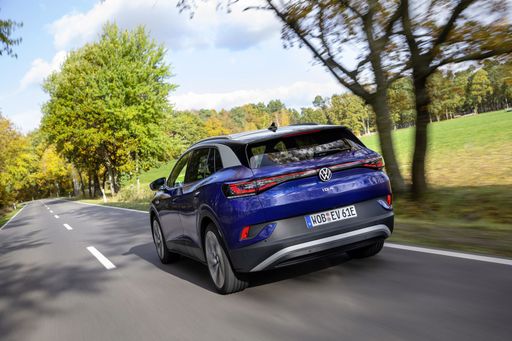
VW ID.4

4.4 (10 Reviews)
rate
  • clearly cheaper
  • moderately more power
  • markedly more efficient
  • slightly more electric range
  • clearly quicker 0–100 km/h
  • very slightly lighter
details

Mazda CX-6e

details

All details on performance, efficiency, range and trunk space can be found in the technical comparison below – including user reviews for both models.

By Achim Sedelmaier

ID.4

VW ID.4 VS Mazda CX-6e — a short introduction

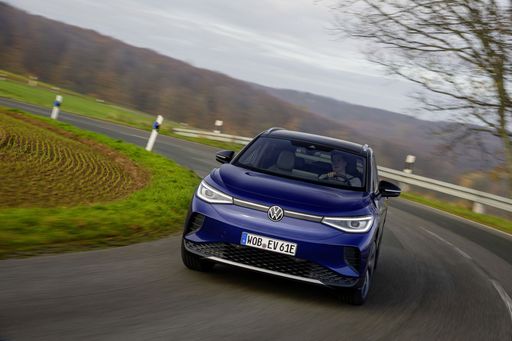
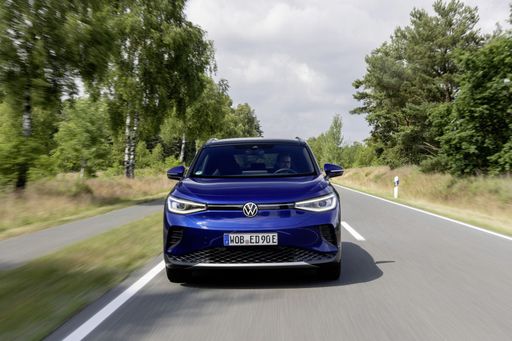
VW ID.4 VS Mazda CX-6e bring two distinct approaches to the electric SUV table: the VW ID.4 is a room-first, travel-focused package while the Mazda CX-6e aims for material quality, equipment and a modern cockpit. The ID.4 feels like a rational family choice — spacious, steady and tuned for relaxed highway miles — whereas the CX-6e trades some cargo room for a nicer cabin and a bolder, display‑led interface. Both cars will do everyday commuting and school runs without drama, but they reward different priorities: pure utility and long-distance calm in the ID.4, versus perceived quality and feature value in the CX-6e. Below we unpack how those differences show up where they matter for buyers.
CX-6e

Character and driving behaviour

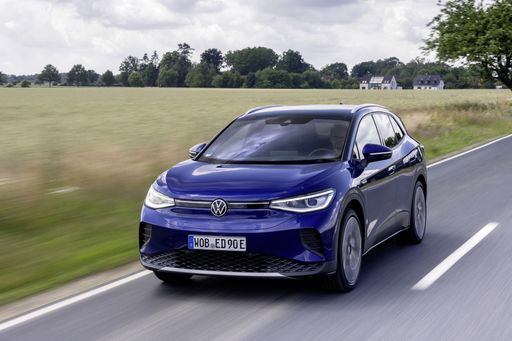
The VW ID.4 drives with a calm, composed personality that soaks up motorway miles and masks its mass rather than exploiting it for sport, while the Mazda CX-6e feels a touch lighter and more immediate in town and on twisty roads. The ID.4’s setup favors stability and predictability, which is reassuring on long runs and with a full load; the CX-6e prioritises steering feel and poise, giving a slightly livelier impression without trying to be a hot‑hatch. Traction and drivetrain choices matter: the CX-6e starts life as a rear‑wheel layout, so drivers in snowy or steep conditions may find the ID.4’s wider set of drivetrain options more confidence‑inspiring. In short, choose the ID.4 if you want steady, unfussy progress; pick the CX-6e if you want a more engaged, tactile everyday drive that still leans comfort‑first.

ID.4

Cabin comfort and perceived quality

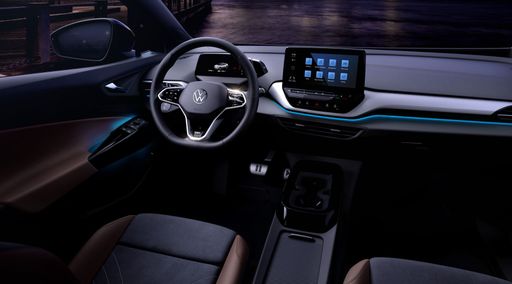
Inside, the VW ID.4 and Mazda CX-6e tell two different stories: the ID.4 delivers generous rear space and a pragmatic, airy layout, whereas the CX-6e aims for a warmer, more premium feel up front. The ID.4’s flat floor and roomy rear make long trips with adults or child seats noticeably easier, but its plastics and glossy finishes occasionally undercut the sense of luxury. The CX-6e counterpoints that with higher‑quality trim, a tidy ergonomic presence and a showy wide display that elevates first impressions, even if the touch‑centric controls can be fussy in daily use. Buyers who prize rear passenger comfort and utility will favor the ID.4, while those who value material feel and a studio‑like cockpit will gravitate to the CX-6e.

Practicality and everyday usability

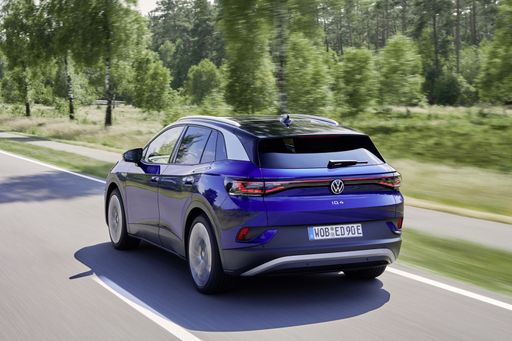
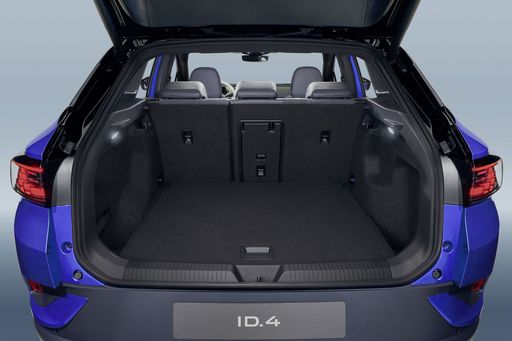
Practical differences are obvious the moment you load the car: the VW ID.4 wins on pure usable luggage volume and payload flexibility, making it the more straightforward family hauler, while the Mazda CX-6e compensates with an extra frunk and clever packaging that helps in everyday errands. The CX-6e’s additional front storage is a meaningful convenience for cables and small items, but the smaller rear boot and wider body make packing for holidays or squeezing into tight urban garages more of a consideration. The ID.4’s rear‑seat space and easier access make it better suited for regular school runs, car seats and adult passengers; the CX-6e suits buyers who want a neater cabin and extra small‑item storage but can live with slightly less rear cargo. Each car makes sensible trade‑offs — bigger load and easier second‑row life with the ID.4, smarter front storage and a tidier cabin with the CX-6e.

Long-distance behaviour, range and charging

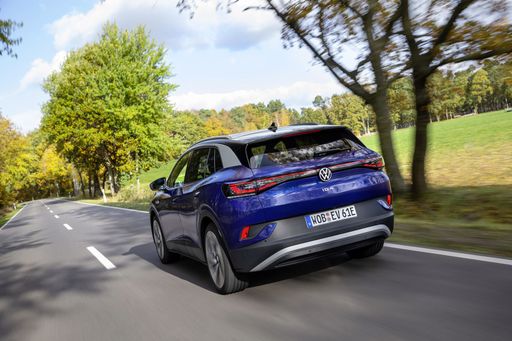
On long trips the two cars behave differently in ways you’ll notice without consulting spec sheets: the VW ID.4 tends to cover more ground between stops and hold a relaxed, composed demeanour on the motorway, while the Mazda CX-6e is efficient and comfortable but typically requires more frequent pauses. That means the ID.4 suits drivers who prioritise fewer charging interruptions and a settled highway experience, whereas the CX-6e’s real‑world efficiency and comfortable pace make it fine for mixed journeys if you accept extra stops. Neither car matches the charging pace of the newest 800‑volt rivals, so trip planning matters for both, but the ID.4’s longer reach gives it a tangible advantage on long itineraries. If your week includes lots of motorway miles, the ID.4 will feel more convenient; if most trips are shorter or you value a refined cabin over a longer range, the CX-6e remains competitive.

Buyer fit: who should pick which and why

Choosing between the VW ID.4 and Mazda CX-6e comes down to family needs and priorities: the ID.4 is better for buyers who put rear‑seat space, luggage capacity and long‑distance ease at the top of the list, while the CX-6e appeals to those who prize interior quality, equipment level and a modern, attractive cockpit. The CX-6e also brings a compelling warranty and a strong standard‑kit proposition, making it a smart value play for design‑minded buyers who can accept a narrower boot and no AWD at launch. If you tow, carry heavy loads or frequently drive long distances, the ID.4’s packaging and range advantages will be more useful in daily life. Below this editorial comparison we’ll move into the technical details so you can see how batteries, powertrains and charging choices translate into ownership realities for each car.

Here’s where it gets real: The technical differences in detail

ID.4

Costs and Efficiency:

When it comes to price and running costs, the biggest differences usually appear. This is often where you see which car fits your budget better in the long run.

VW ID.4 is clearly cheaper – starting at 34,800 £ , while the Mazda CX-6e costs 42,800 £ . That’s a price difference of around 8,066 £.

In terms of energy consumption, the VW ID.4 is markedly more efficient: consuming 15.4 kWh/100km compared to 18.9 kWh/100km for the Mazda CX-6e. That’s a difference of about 3.5 kWh/100km.

As for electric range, the VW ID.4 offers slightly more range – reaching up to 570 km, about 86 km more than the Mazda CX-6e.

CX-6e

Engine and Performance:

Power, torque and acceleration are the classic benchmarks for car enthusiasts – and here, some clear differences start to show.

When it comes to engine power, the VW ID.4 offers moderately more power – delivering 299 HP compared to 258 HP. That’s roughly 41 HP more horsepower.

When accelerating from 0 to 100 km/h, the VW ID.4 is clearly quicker – completing the sprint in 6.1 s, while the Mazda CX-6e takes 7.9 s. That’s about 1.8 s quicker.

There’s also a difference in torque: the VW ID.4 delivers substantially more torque with 545 Nm compared to 290 Nm. That’s about 255 Nm more.

ID.4

Space and Everyday Use:

Cabin size, boot volume and payload all play a role in everyday practicality. Here, comfort and flexibility make the difference.

Both vehicles offer seating for 5 people.

In terms of curb weight, VW ID.4 is very slightly lighter – 2,065 kg compared to 2,205 kg. The difference is around 140 kg.

When it comes to payload, the VW ID.4 carries markedly more – 554 kg compared to 385 kg. That’s a difference of about 169 kg.

Who wins the race in the data check?

The VW ID.4 stands well ahead of its rival in the objective data comparison.
This result only shows which model scores more points on paper – not which of the two cars feels right for you.

from £34,800
ID.4

VW ID.4

  • Engine Type Electric
  • Transmission Automatic
  • Drive Type Rear-Wheel Drive, All-Wheel Drive
  • Power HP 190 - 299 HP
  • Consumption kWh/100km 15.4 - 16.6 kWh/100km
  • Electric Range 425 - 570 km
VW ID.4
Mazda CX-6e

Costs and Consumption

View detailed analysis

Engine and Performance

View detailed analysis

Dimensions and Body

View detailed analysis

VW ID.4

The VW ID.4 is a practical, family-friendly electric SUV that balances everyday usability with a calm, composed driving character. It pairs a roomy, well-finished cabin and easy-to-use tech with predictable handling and convenient charging options, making it a sensible choice for buyers switching to electric.

details

Mazda CX-6e

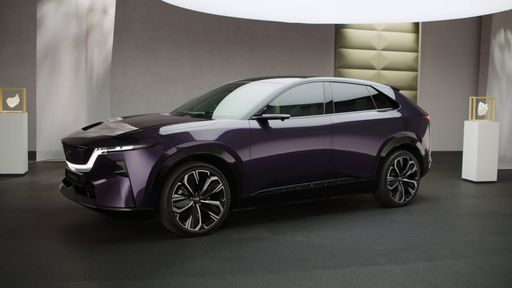
The Mazda CX-6e blends Mazda’s flowing coupe‑SUV silhouette with electric propulsion to deliver a surprisingly engaging and polished driving experience that feels more premium than its price suggests. Inside, the cabin is quietly refined and ergonomically smart, with modern tech and practical space that make it a stylish, sensible choice for drivers who want EV manners without the fanfare.

details
VW ID.4
Mazda CX-6e

Costs and Consumption

Price
34,800 - 47,600 £
Price
42,800 - 45,400 £
Consumption L/100km
-
Consumption L/100km
-
Consumption kWh/100km
15.4 - 16.6 kWh/100km
Consumption kWh/100km
18.9 - 19.4 kWh/100km
Electric Range
425 - 570 km
Electric Range
468 - 484 km
Battery Capacity
-
Battery Capacity
-
co2
0 g/km
co2
0 g/km
Fuel tank capacity
-
Fuel tank capacity
-

Dimensions and Body

Body Type
SUV
Body Type
SUV
Seats
5
Seats
5
Doors
-
Doors
-
Curb weight
2,065 - 2,219 kg
Curb weight
2,205 kg
Trunk capacity
-
Trunk capacity
468 L
Length
-
Length
-
Width
1,852 mm
Width
1,935 mm
Height
-
Height
-
Max trunk capacity
-
Max trunk capacity
-
Payload
525 - 554 kg
Payload
385 kg

Engine and Performance

Engine Type
Electric
Engine Type
Electric
Transmission
Automatic
Transmission
Automatic
Transmission Detail
Reduction Gearbox
Transmission Detail
Reduction Gearbox
Drive Type
Rear-Wheel Drive, All-Wheel Drive
Drive Type
Rear-Wheel Drive
Power HP
190 - 299 HP
Power HP
258 HP
Acceleration 0-100km/h
6.1 - 8.5 s
Acceleration 0-100km/h
7.9 s
Max Speed
-
Max Speed
-
Torque
310 - 545 Nm
Torque
290 Nm
Number of Cylinders
-
Number of Cylinders
-
Power kW
140 - 220 kW
Power kW
190 kW
Engine capacity
-
Engine capacity
-

General

Model Year
2026
Model Year
2026
CO2 Efficiency Class
A
CO2 Efficiency Class
A
Brand
VW
Brand
Mazda
DriveDuel uses data analysis and artificial intelligence to evaluate vehicle data and create content. Content is regularly reviewed and improved. The displayed prices are estimates based on German list prices, adjusted to the respective country’s VAT. Country-specific registration taxes are not included. This information is not legally binding.