
 Deutschland
 France
 Nederland
 Great Britain
 Sverige
 Norge
Norge Danmark
 Suomi
Suomi Italia
 Polska
 España
VS
VW ID.5 vs Toyota Urban Cruiser - Differences and prices compared
Compare performance (340 HP vs 184 HP), boot space and price (36800 £ vs 25700 £ ) at a glance. Find out which car is the better choice for you – VW ID.5 or Toyota Urban Cruiser?
ID.5
Costs and Efficiency:
Price and efficiency are often the first things buyers look at. Here it becomes clear which model has the long-term edge – whether at the pump, the plug, or in purchase price.
Toyota Urban Cruiser has a clearly advantage in terms of price – it starts at 25700 £ , while the VW ID.5 costs 36800 £ . That’s a price difference of around 11126 £.
In terms of energy consumption, the advantage goes to the Toyota Urban Cruiser: with 15 kWh per 100 km, it’s slight more efficient than the VW ID.5 with 15.70 kWh. That’s a difference of about 0.70 kWh.
As for electric range, the VW ID.5 performs noticeable better – achieving up to 559 km, about 133 km more than the Toyota Urban Cruiser.
ID.5
Engine and Performance:
Power, torque and acceleration say a lot about how a car feels on the road. This is where you see which model delivers more driving dynamics.
When it comes to engine power, the VW ID.5 has a decisively edge – offering 340 HP compared to 184 HP. That’s roughly 156 HP more horsepower.
In acceleration from 0 to 100 km/h, the VW ID.5 is distinct quicker – completing the sprint in 5.40 s, while the Toyota Urban Cruiser takes 7.40 s. That’s about 2 s faster.
In terms of top speed, the VW ID.5 performs to a small extent better – reaching 180 km/h, while the Toyota Urban Cruiser tops out at 150 km/h. The difference is around 30 km/h.
There’s also a difference in torque: VW ID.5 pulls convincingly stronger with 679 Nm compared to 307 Nm. That’s about 372 Nm difference.
Ad · Affiliate
As an Amazon Associate, we earn from qualifying purchases.
ID.5
Space and Everyday Use:
Cabin size, boot volume and payload all play a role in everyday practicality. Here, comfort and flexibility make the difference.
Both vehicles offer seating for 5 people.
In curb weight, Toyota Urban Cruiser is somewhat lighter – 1775 kg compared to 1963 kg. The difference is around 188 kg.
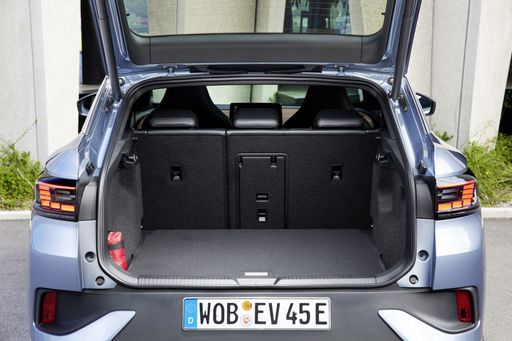
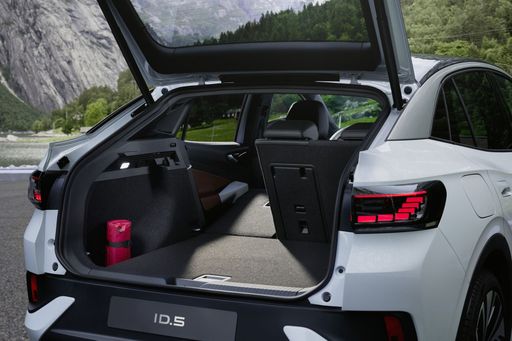
In terms of boot space, the VW ID.5 offers clearly more room – 549 L compared to 310 L. That’s a difference of about 239 L.
When it comes to payload, VW ID.5 noticeable takes the win – 549 kg compared to 421 kg. That’s a difference of about 128 kg.
Who comes out on top?
Overall, the VW ID.5 shows itself to be is largely superior and secures the title of DriveDuel Champion.
It convinces with the more balanced overall package and proves to be the more versatile choice for everyday use.
from about £36,800
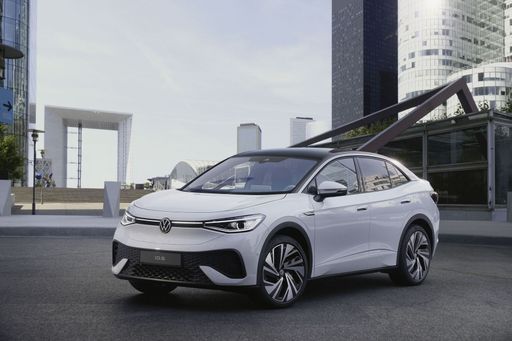
VW ID.5
VW ID.5
Toyota Urban Cruiser
Costs and Consumption
View detailed analysis
View detailed analysis
Engine and Performance
View detailed analysis
View detailed analysis
Dimensions and Body
View detailed analysis
View detailed analysis
VW ID.5
4.7 (1 Reviews)
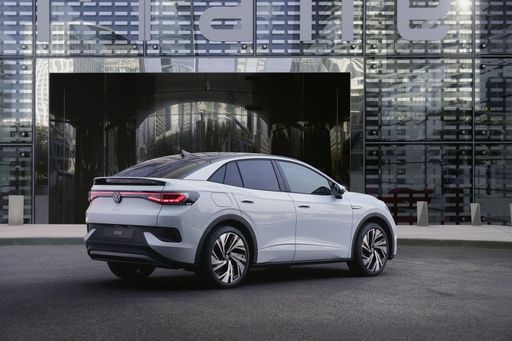
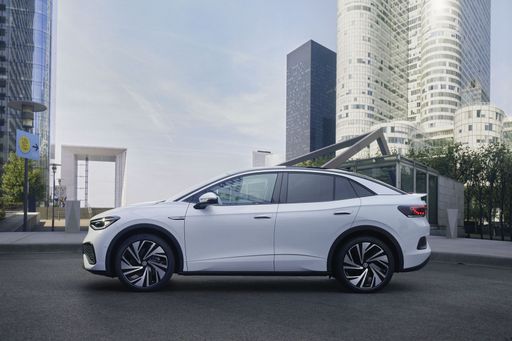
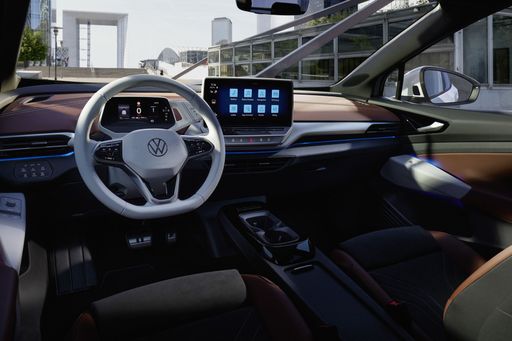
VW ID.5 dresses electric power in a sleek, coupe-like profile that turns sensible motoring into something a touch more stylish and smug. Inside it’s spacious and user-friendly, with calm, confidence-inspiring driving that suits buyers who want EV simplicity without the sci‑fi theatrics.
details
Toyota Urban Cruiser
The Toyota Urban Cruiser is a compact SUV that offers a blend of style and practicality, making it well-suited for urban living. It captures attention with its bold design, while providing a high driving position that enhances visibility and control on city roads. Inside, the Urban Cruiser offers comfortable seating and a range of features that cater to both driver and passengers, emphasizing convenience and everyday usability.
details
VW ID.5
Toyota Urban Cruiser
Costs and Consumption |
|
|---|---|
|
Price
36800 - 48400 £
|
Price
25700 - 38600 £
|
|
Consumption L/100km
-
|
Consumption L/100km
-
|
|
Consumption kWh/100km
15.7 - 16.6 kWh
|
Consumption kWh/100km
15 - 16.6 kWh
|
|
Electric Range
363 - 559 km
|
Electric Range
330 - 426 km
|
|
Battery Capacity
52 - 79 kWh
|
Battery Capacity
-
|
|
co2
0 g/km
|
co2
0 g/km
|
|
Fuel tank capacity
-
|
Fuel tank capacity
-
|
Dimensions and Body |
|
|---|---|
|
Body Type
SUV
|
Body Type
SUV
|
|
Seats
5
|
Seats
5
|
|
Doors
5
|
Doors
5
|
|
Curb weight
1963 - 2233 kg
|
Curb weight
1775 - 1939 kg
|
|
Trunk capacity
549 L
|
Trunk capacity
306 - 310 L
|
|
Length
4582 - 4599 mm
|
Length
4285 mm
|
|
Width
1852 mm
|
Width
1800 mm
|
|
Height
1601 - 1618 mm
|
Height
1635 mm
|
|
Max trunk capacity
1561 L
|
Max trunk capacity
-
|
|
Payload
517 - 549 kg
|
Payload
411 - 421 kg
|
Engine and Performance |
|
|---|---|
|
Engine Type
Electric
|
Engine Type
Electric
|
|
Transmission
Automatic
|
Transmission
Automatic
|
|
Transmission Detail
Reduction Gearbox
|
Transmission Detail
Reduction Gearbox
|
|
Drive Type
Rear-Wheel Drive, All-Wheel Drive
|
Drive Type
Front-Wheel Drive, All-Wheel Drive
|
|
Power HP
170 - 340 HP
|
Power HP
144 - 184 HP
|
|
Acceleration 0-100km/h
5.4 - 8.9 s
|
Acceleration 0-100km/h
7.4 - 9.6 s
|
|
Max Speed
160 - 180 km/h
|
Max Speed
150 km/h
|
|
Torque
310 - 679 Nm
|
Torque
193 - 307 Nm
|
|
Number of Cylinders
-
|
Number of Cylinders
-
|
|
Power kW
125 - 250 kW
|
Power kW
106 - 135 kW
|
|
Engine capacity
-
|
Engine capacity
-
|
General |
|
|---|---|
|
Model Year
2024 - 2025
|
Model Year
2025 - 2026
|
|
CO2 Efficiency Class
A
|
CO2 Efficiency Class
A
|
|
Brand
VW
|
Brand
Toyota
|
What drive types are available for the VW ID.5?
The VW ID.5 is available as Rear-Wheel Drive or All-Wheel Drive.
The prices shown are estimates based on German list prices, adjusted for local VAT. Local registration taxes (e.g. NoVA, BPM or CO2 malus) are not included. This information is not legally binding.